Lunch first
Having bought an adventure vehicle, I was clearly obliged to go on an adventure. It began with lunch at Froth, which presents itself as a coffee shop and gives you no indication whatsoever that it is in fact a miniature Chinese restaurant of very tasty quality. My girlfriend goes as far as to call it her favourite Chinese on the Island. She then had to go back to work, which left me with an afternoon and a car I had owned for about a day.
North to Ramsey
I had an urge to go to an antique shop, and decided on Ramsey, which meant the coast road, which is as good a test of a car as the Island offers. The verdict, and then I will stop, because this is not a car review: totally different to anything else I have had, quite agricultural, and yet very pleasant to drive, with leather seats and automatic headlights. Not a combination I had expected.
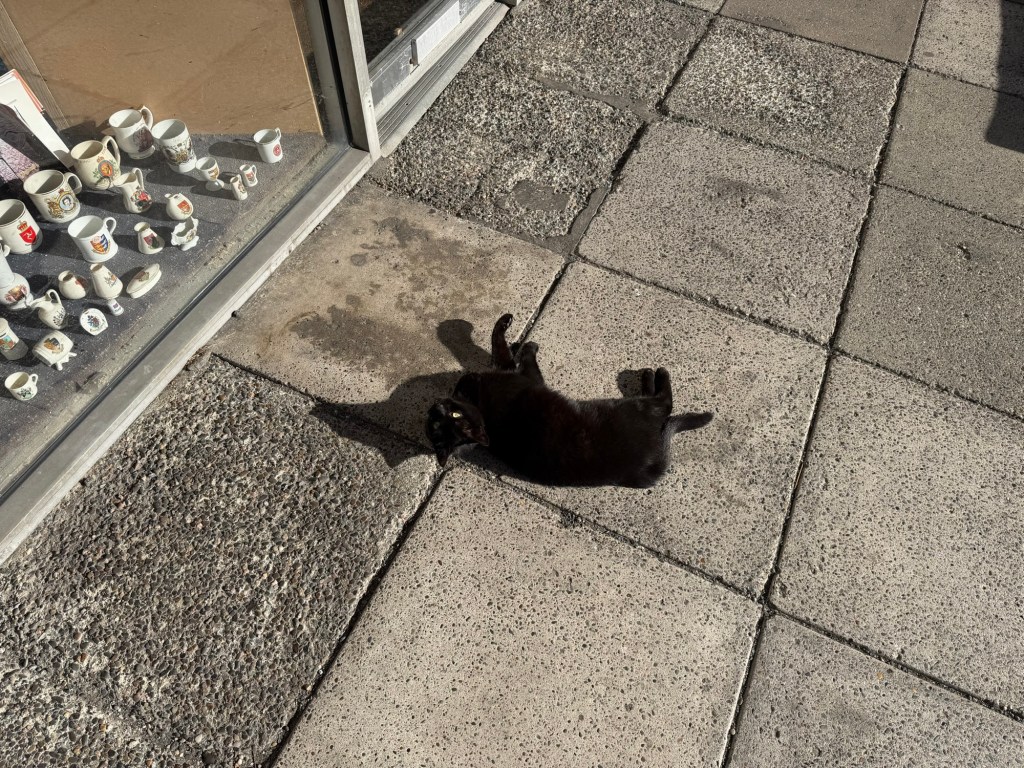
Ramsey has several excellent antique shops and I went round most of them. One shop has a cat, which was lying on its back on the warm flags outside the window, feet in the air, among the crested china.
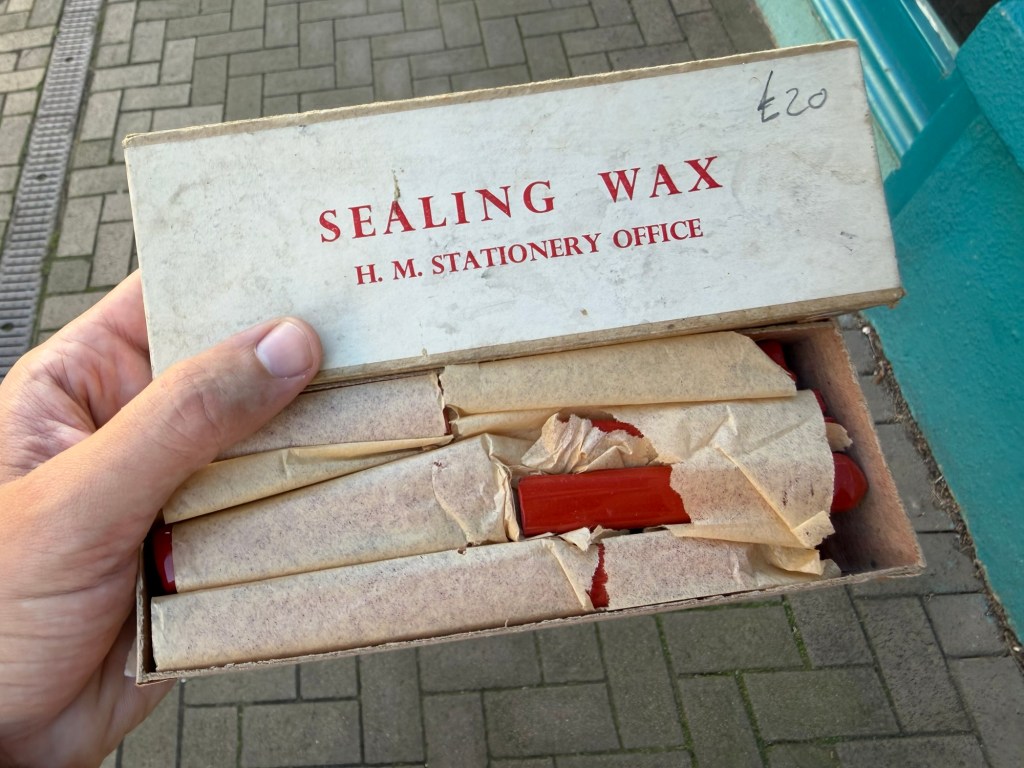
I found a nice silver coin, of course. More interestingly I found sealing wax from HM Stationery Office, 1971 vintage, the sticks still wrapped in their waxed paper and the lid pencilled at twenty pounds. I bought it with every intention of using it for its designated purpose.
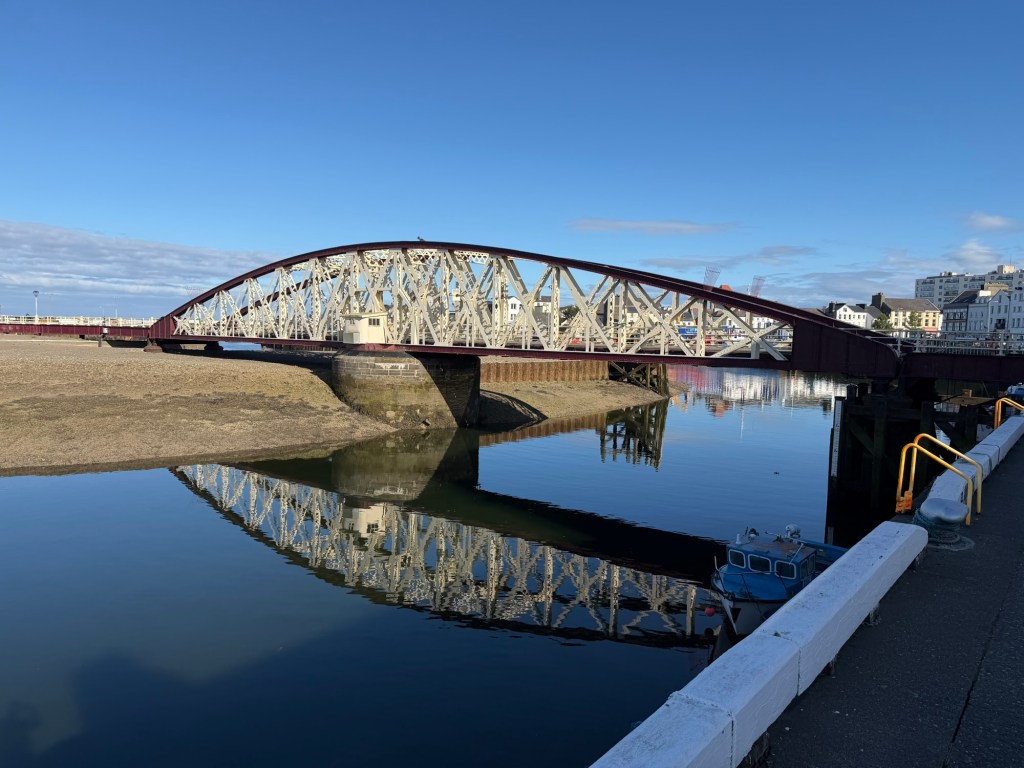
The tide was out when I got down to the harbour, the boats sitting on the mud, the swing bridge doubled in what water was left.
The telephone box
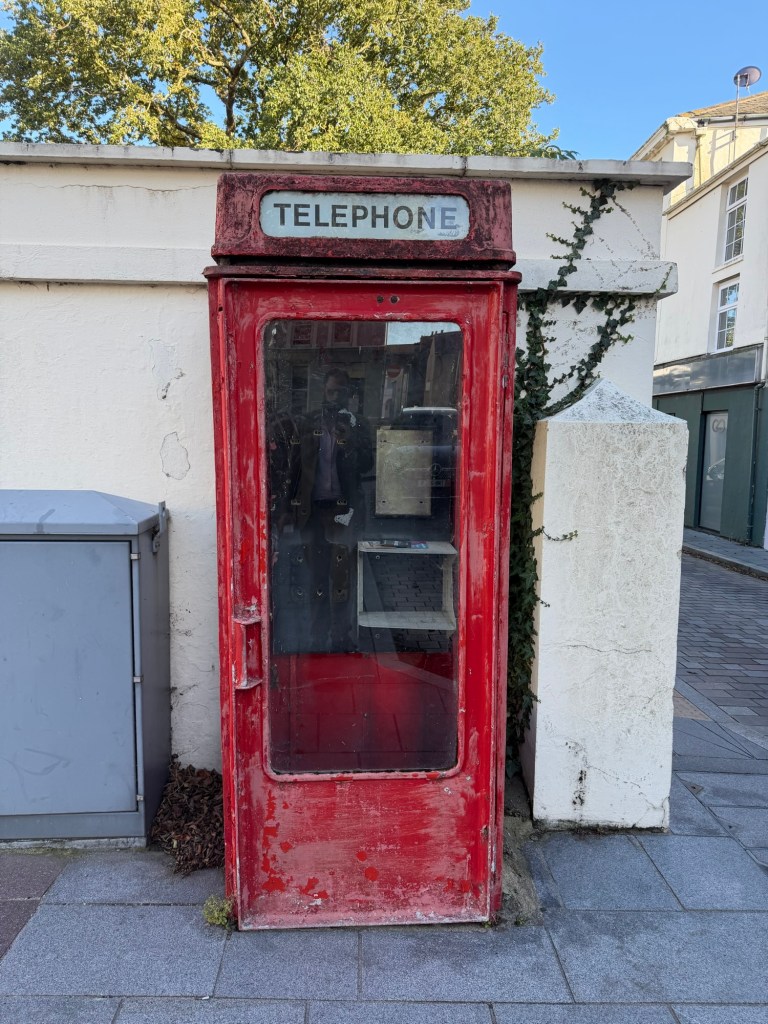
On the way back to the car I walked past a telephone box, tired to the point where nobody can be bothered to get rid of the thing, let alone restore it. The red has gone pink in patches, ivy is coming up one side, and the shelf inside is empty. I did not think it was especially old, perhaps a similar vintage to my sealing wax, and that turns out to be about right. The flat roof, the single large pane on each side, the illuminated sign slotted into the canopy and the complete absence of a crown make it a K8, designed by Bruce Martin for the GPO and first installed in July 1968. Around eleven thousand went up before production ended in 1983, and only a few dozen are known to survive, which makes the neglected one in Ramsey rather rarer than it looks.
The Point of Ayre
I then could not get rid of the itch to find out what the thing would do off a road. The only place I know on the Island where you can do any substantial amount of off-roading is the Point of Ayre, and both substantial and off-roading are doing a great deal of work in that sentence. It is heathland that has been designated as parking and worn into parking accordingly, with a few bumps left over. It was fun regardless, and I attempted some ditches I would definitely have left alone in the Jag.
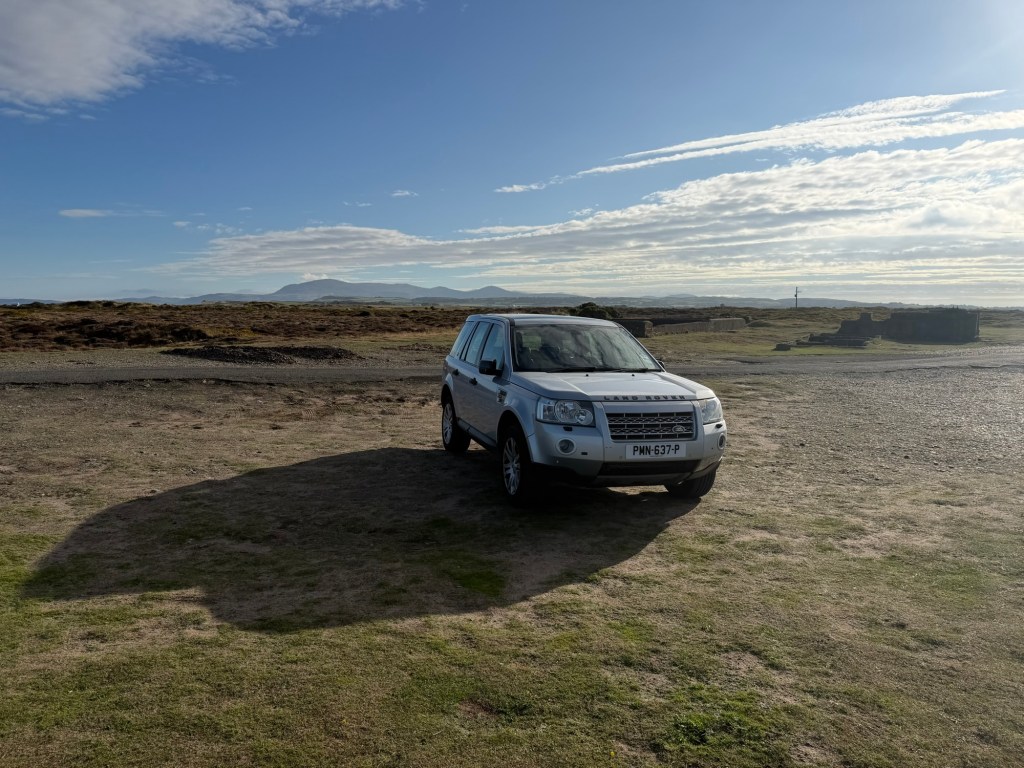
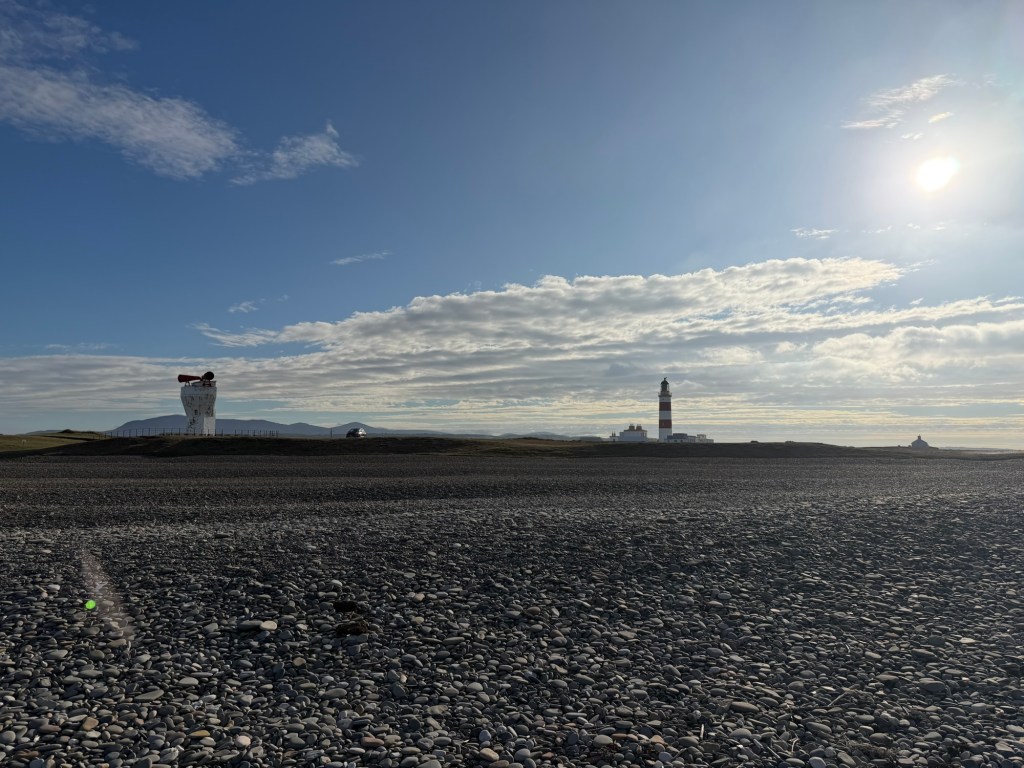
Having driven all that way it would have been stupid not to stand still for a while and enjoy the place. Ayre comes from the Norse eyrr, a gravel bank, which is precisely what it is: shingle as far as you can see, rearranged by every tide. Robert Stevenson built the tower at the end of it, first lit in 1818 and the oldest working light on the Island. The small red and white one standing further out on the gravel is the Winkie, put there late in the nineteenth century because the shingle kept growing seaward, shifted another 250 feet out around 1950 for the same reason, and switched off for good in April 2010.
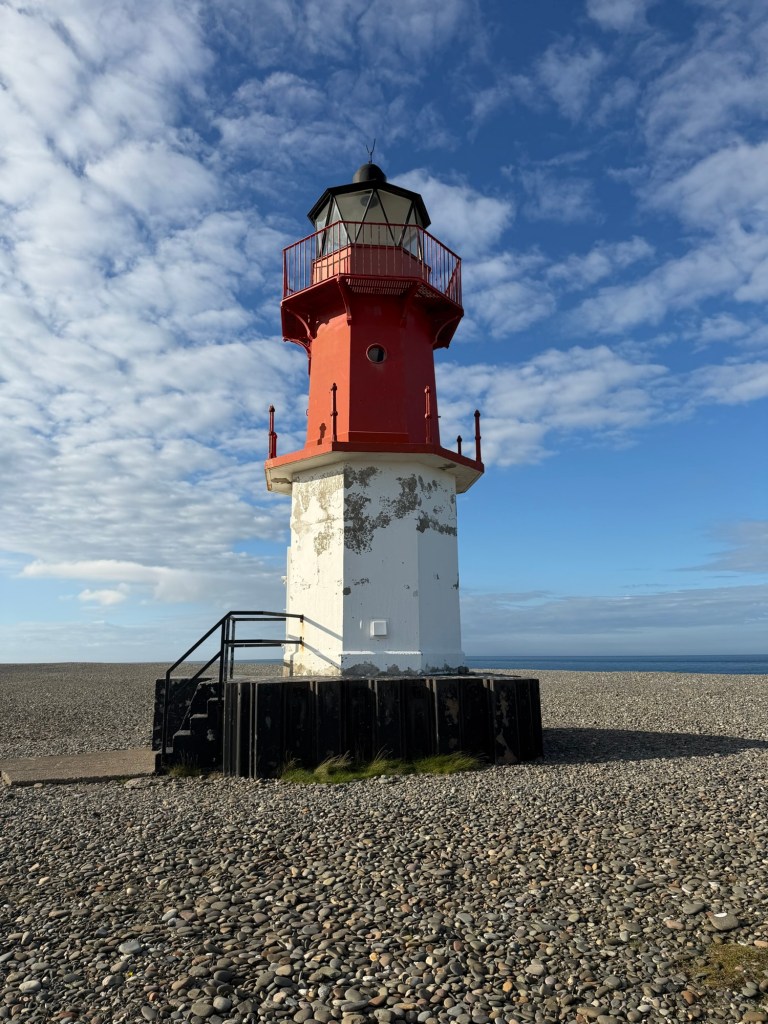
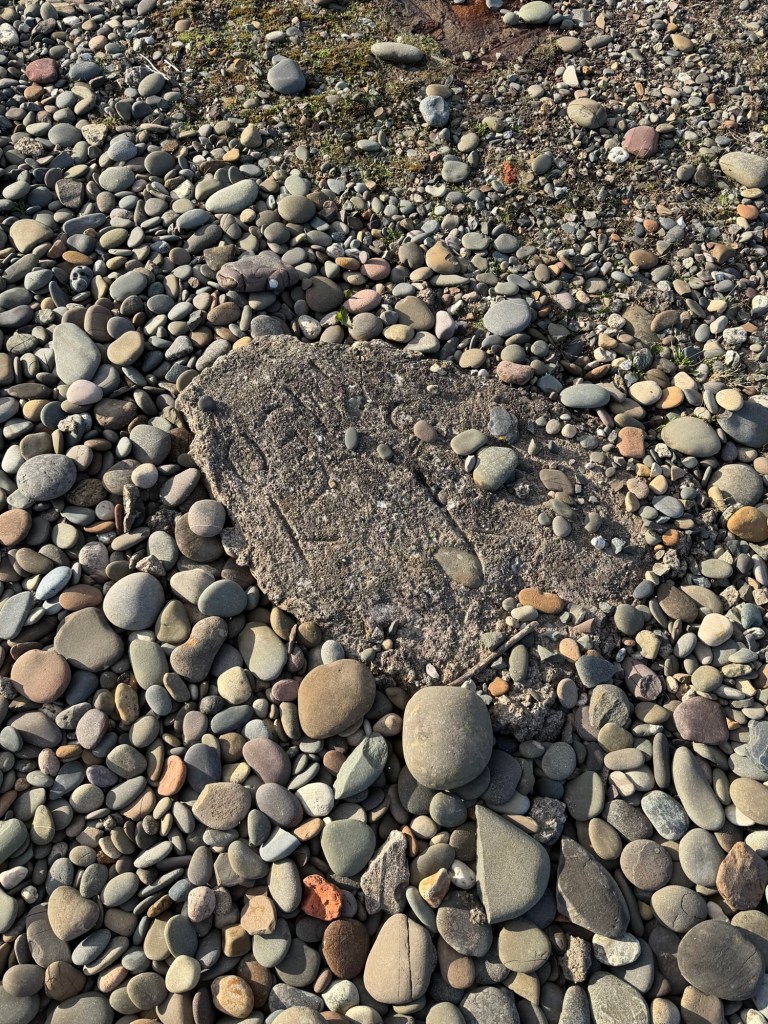
At the foot of the Winkie there is a slab of concrete with something cut into it, and I cannot read it. A closed loop about the size of a fist, one long incision running across the slab and changing direction halfway, and a few shorter strokes near the top. Half of it is under shingle, and the light was coming in flat from one side, which is the worst light there is for shallow cuts. It may be a date, it may be initials, and it may be nothing more than some form of graffiti. If the concrete went in when the tower was shifted seaward around 1950, a date would be from then rather than from the light’s own century. I would be glad to hear from anybody who can read it.
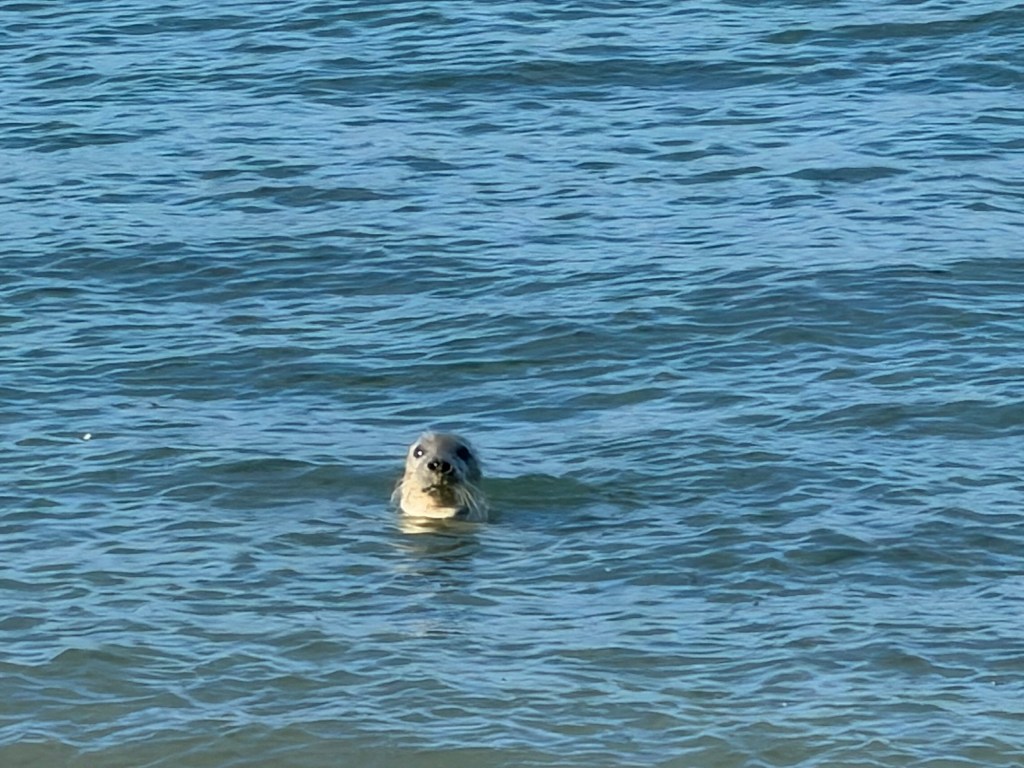
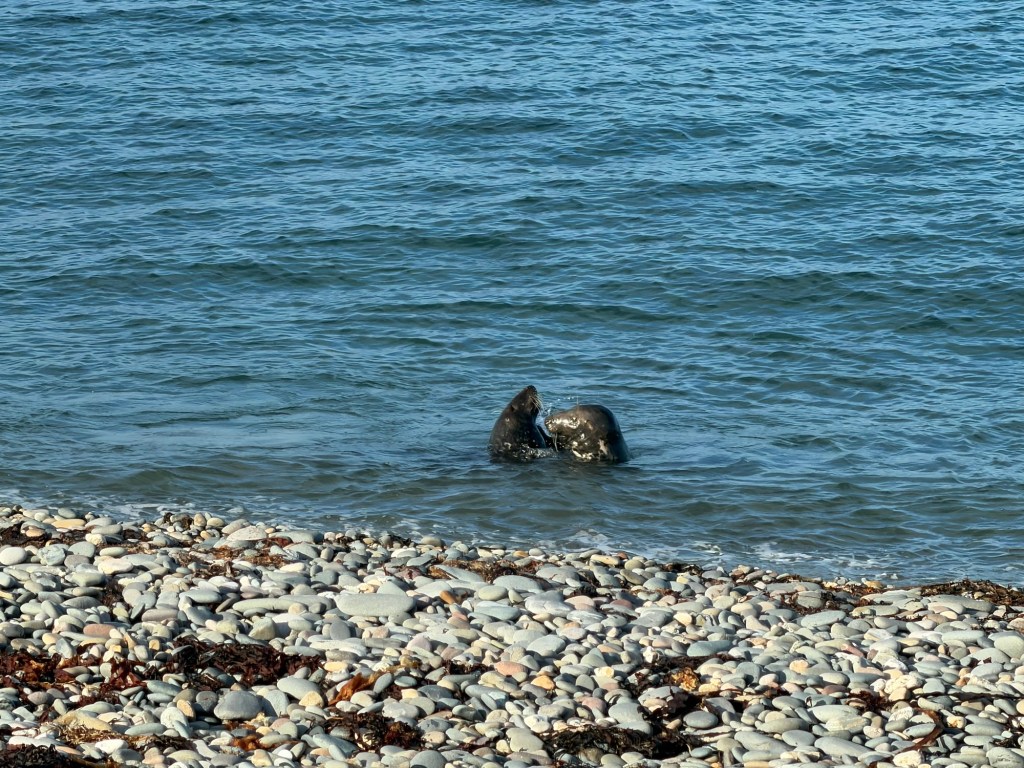
There were seals frolicking just off the beach edge, happy as Larry and totally unfazed by the world. I watched them through the binoculars, because the signs there caution you about getting too close and disturbing a seal is a criminal offence under the Wildlife Act 1990. Then a gannet, a cormorant, and a third rather stout seabird that dashed off before I could identify it.
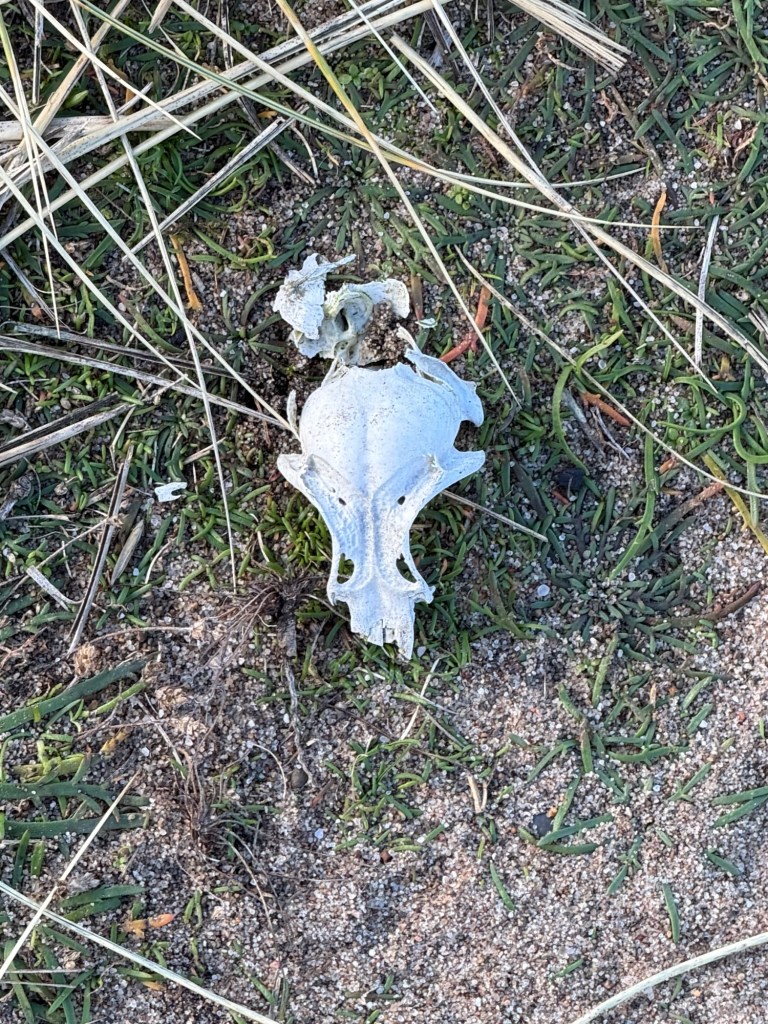
In the marram I found a seabird skull, which I would rather have kept had it still had its beak. It was a magnificently sunny and bright day up north, which is what the north does on the days the east coast has given up.
Bride
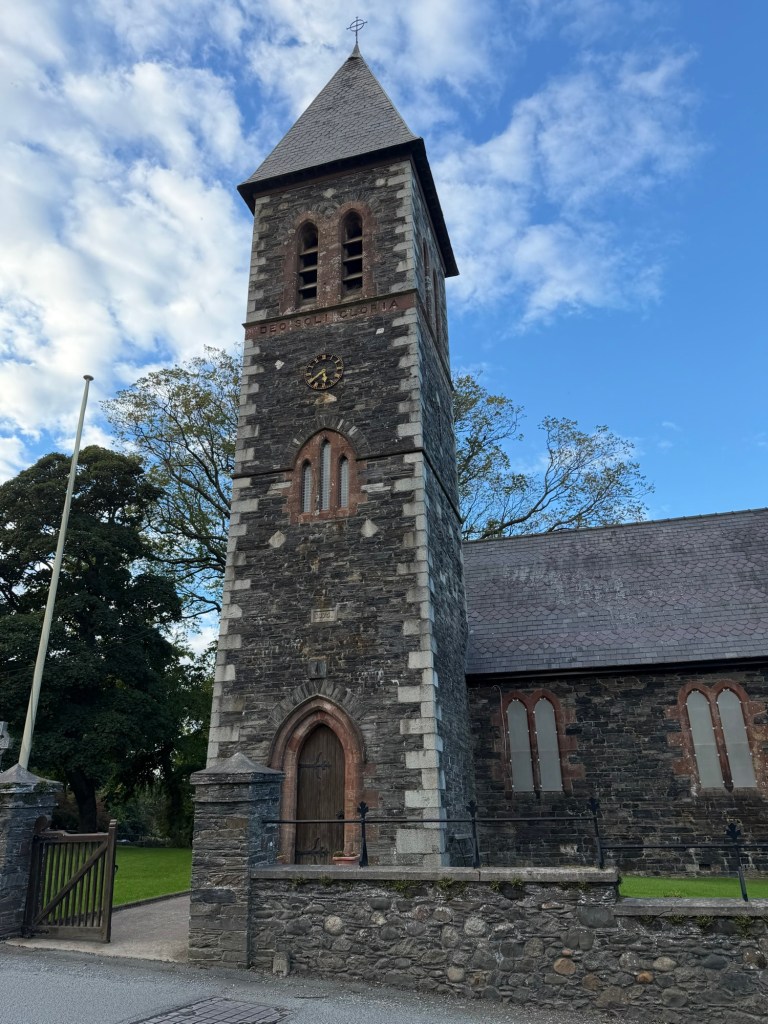
Back east for another lovely home cooked dinner, and on the way I went past the church at Bride, which I have always admired as a very pretty thing. Slate and red sandstone, a gold clock face, Deo soli gloria cut along the course beneath the belfry, and a date stone reading 1875.
And then, spotted from the car, at the foot of the wall, a broad arrow. It is on a purpose made concrete block of a kind I had not seen before: round topped, G.P.O. moulded across the top, the arrow beneath it, and at the base a recess with three bolt holes where a plate used to sit. That plate carried the distance in feet to the telephone cable buried in front of it. Which means the stone I stopped at yesterday on the way to Nobles Park, cut with an S, a 2, an FT and a broad arrow the wrong way up for a bench mark, was saying the same thing differently. One scored by hand, the other cast in a works and sent out with a number that bolted on. Both of them pointing at something underground that mattered enough to mark.
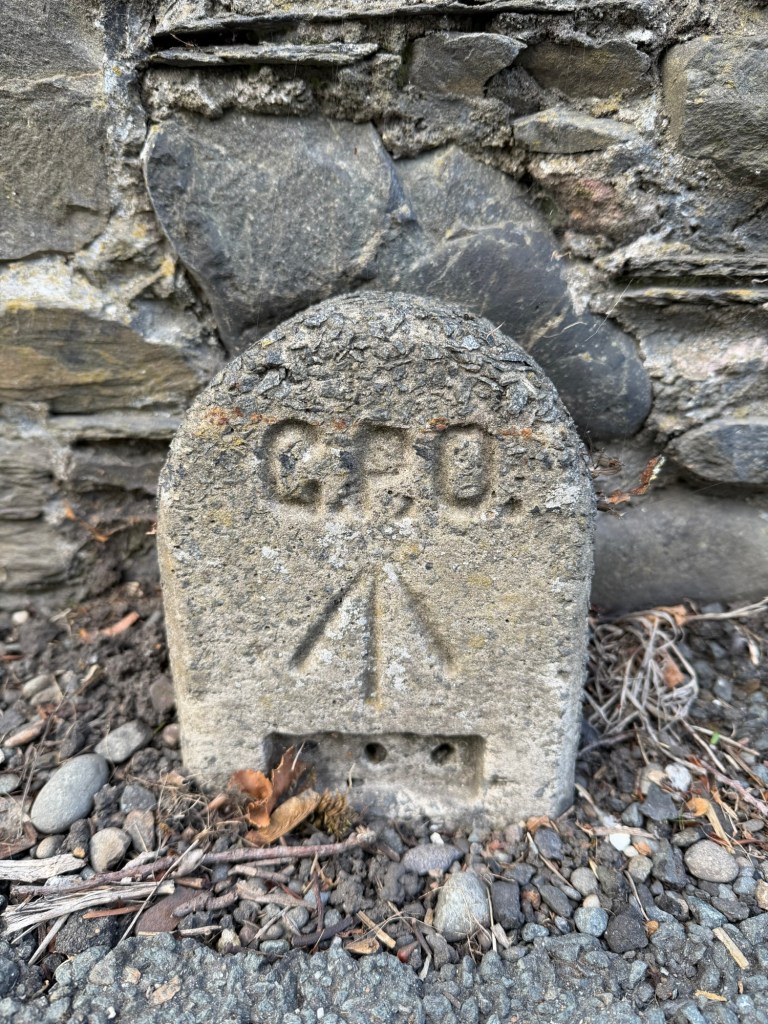
More modern, then, than the 1866 survey marks I tend to find locally, although the GPO put these out for a very long time and I would not care to date this one to a year. A pleasing end to a northern adventure, which was, as we say in German, klein aber fein.

