Down the promenade
Earlier in the week I had accepted it. Summer was finished, autumn had arrived, and there was no sense arguing with either of them. Then Saturday and Sunday the sun came back out for one last go, and it was glorious.
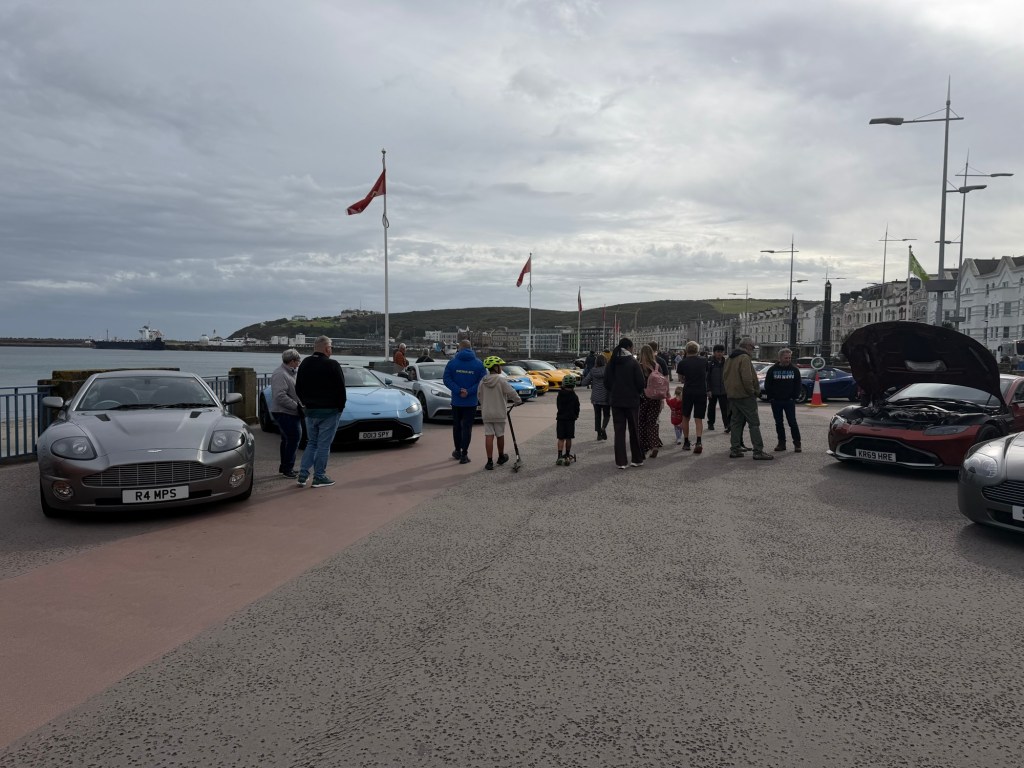
We walked down the prom on Saturday and found it lined with cars, which turned out to be the Festival of Motoring. The theme this year is Best of British, and on the Saturday the entry parks up on Loch Promenade for a few hours in the middle of the day. Astons everywhere, a great many Lotuses, and a good scattering of odd balls in between. Most of them were on UK plates, so presumably they had come over on the boat purely for this, which is precisely what they had done. Something like 250 cars were entered, among them around forty Astons and thirty five Lotuses.
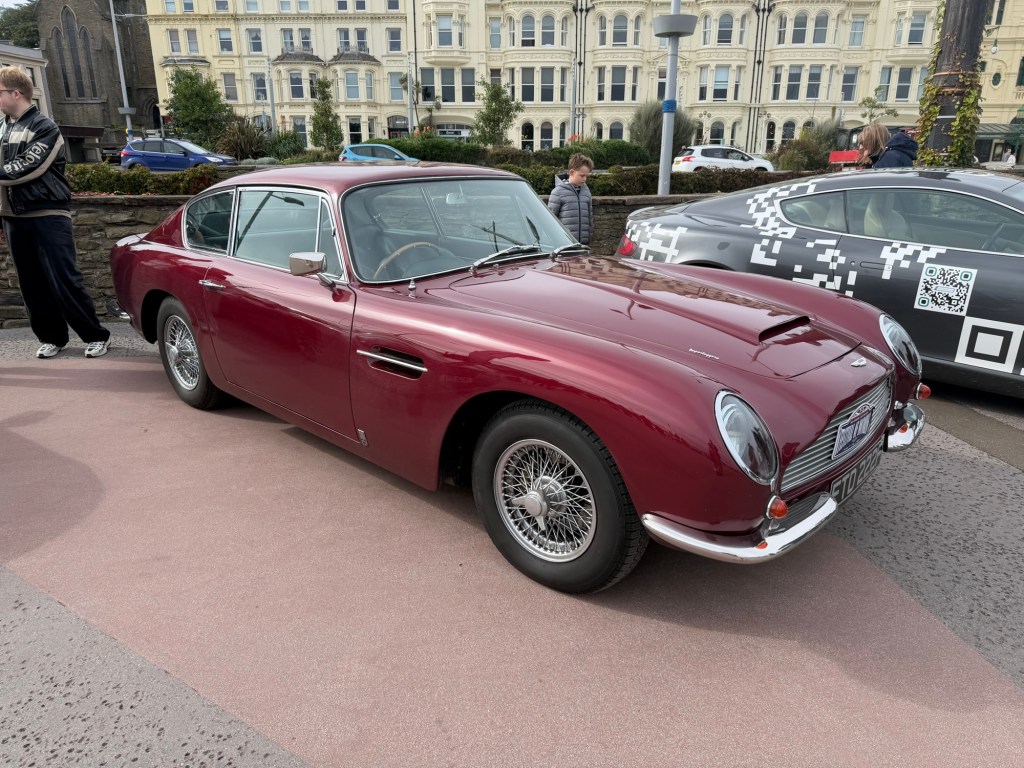
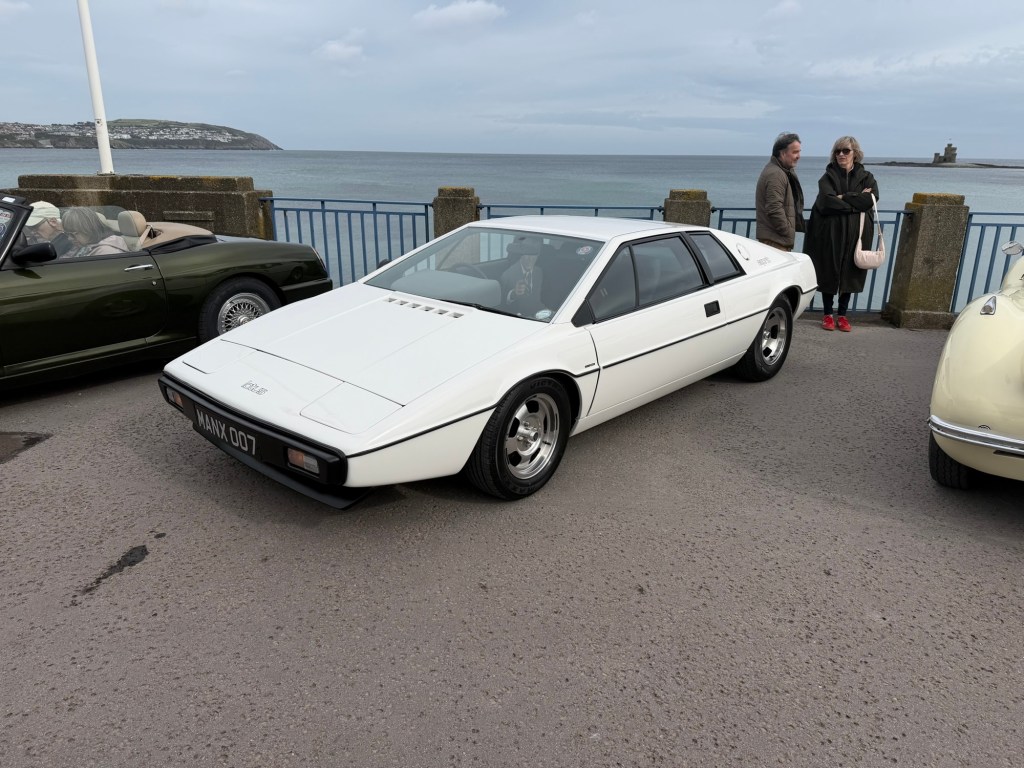
The one I kept going back to was a maroon coupe on wire wheels, Superleggera still lettered on the bonnet and a 1967 plate on the nose, parked next to something modern wrapped in black and white squares. Further along sat a white Lotus Esprit carrying the plate MANX 007, which is a joke available to precisely one island and was duly being photographed by everybody.
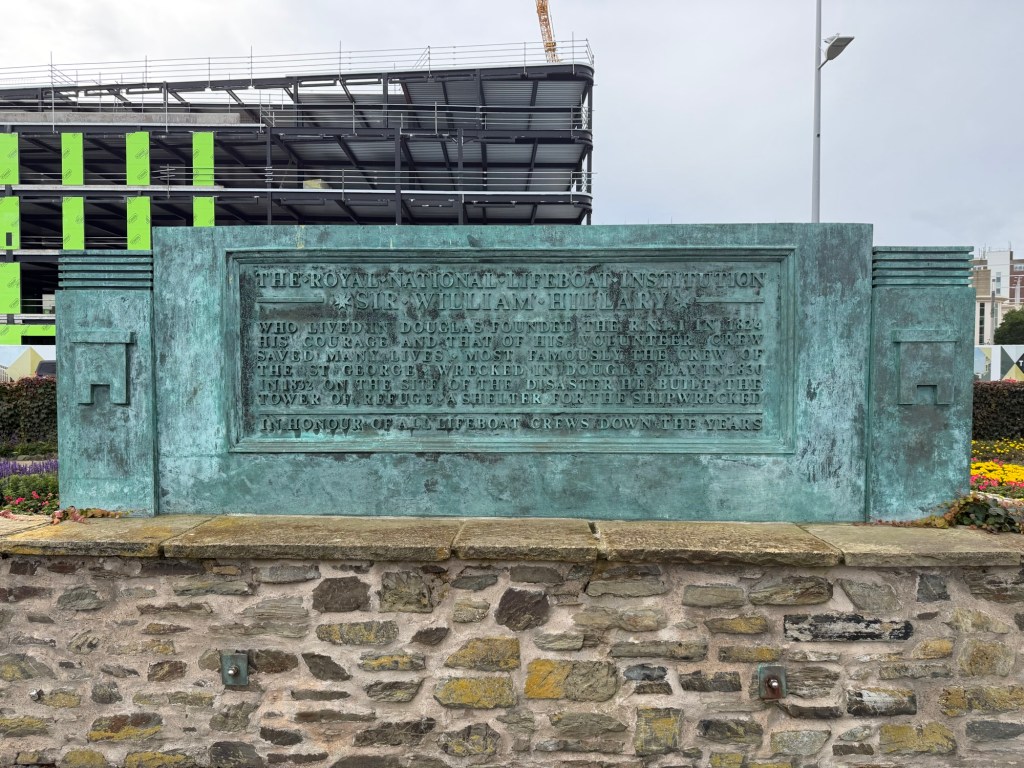
I stopped too at the big bronze on the prom, which has stood there for years and which I have walked past more times than I could count. It is worth actually reading. It records that Sir William Hillary lived in Douglas and founded the RNLI in 1824, that his courage and that of his volunteer crew saved many lives, most famously the crew of the St George when she was wrecked in Douglas Bay in 1830, and that in 1832 he built the Tower of Refuge on the site of the disaster as a shelter for the shipwrecked. Beneath all of that, set apart on its own line, in honour of all lifeboat crews down the years.
What the bronze does not bother to say is that every word of it happened within sight of where you stand to read it. Hillary lived at Fort Anne, on the Head across the harbour, and it was from there that he watched the Royal Mail steamer St George driven onto Conister Rock in the dark, in a gale, on the morning of 20 November 1830. He was close to sixty. He went out in the boat anyway, with his coxswain and fourteen volunteer boatmen, was washed overboard and broke ribs doing it, and every person aboard the wreck came off alive. Two years later there was a small castle standing on the rock, designed by John Welch, stocked with bread and fresh water for the next lot, and paid for largely by public subscription with Hillary making up the shortfall out of his own pocket.
Put in order, it amounts to this. The lifeboat service that now covers these islands was not founded in London or Liverpool or anywhere with a decent harbour. It was founded by a man living in Douglas who had watched too many people drown in front of his house, who wrote a pamphlet about it in 1823 that nobody had asked him for, and who then got into the boat himself. Two centuries on it still runs on the same two ideas, volunteer crews and voluntary money, and the rock is still out there. It is in the background of my photograph of the Esprit, tide off it, tower and all.
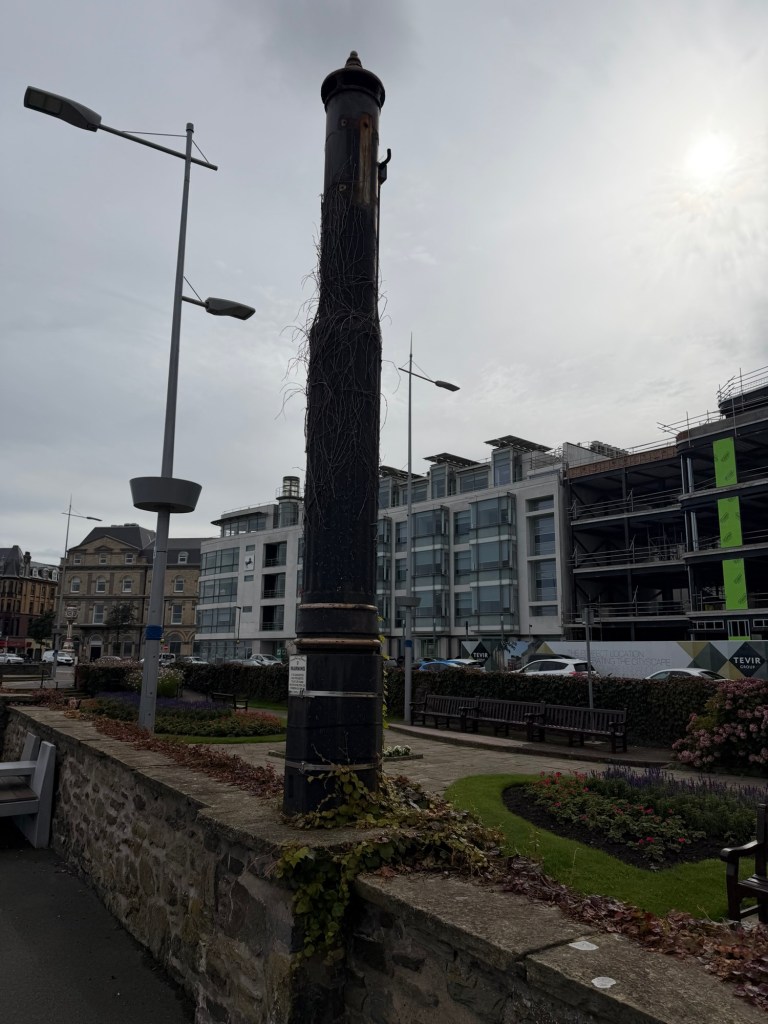
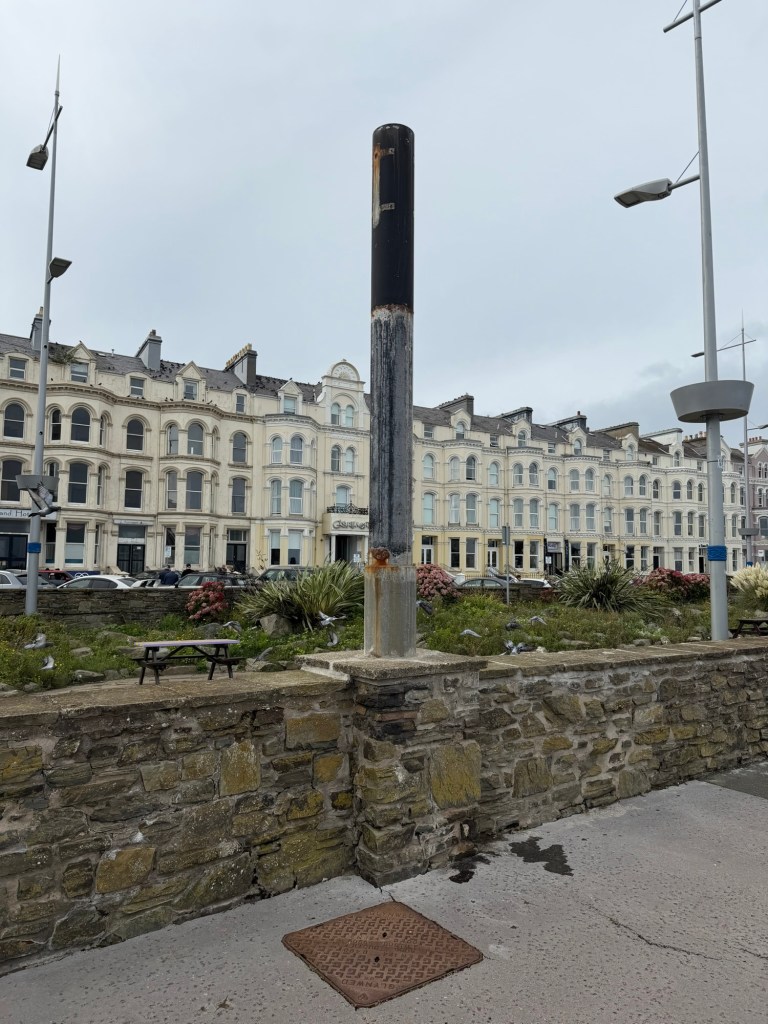
Less happily, the old vent columns along the promenade wall are going. One still stands somewhat complete, crowned head, ivy climbing the base and a council notice bolted to the shaft warning that it is dangerous and prohibited to sit or stand on the shelters or promenade walls. Another, further along, has been stripped, its fittings unbolted and left exposed.
On the same stretch of wall as a bronze honouring what people kept going down the years, these are being quietly unbolted. It seemed particularly bleak that weekend. Summer, at least, gets to come back. Once these go, they are gone.
A late lunch
Wine Down for a late lunch. Most places on the Island have given up by three o’clock, which is exactly when one wants feeding, but they have not, and I cannot think why I do not go more often. The food is excellent. Not excellent for the Isle of Man. Excellent. I had double beef: the beef koftas, beautifully sliced, and then the steak pie, washed down with a Jever, one of my favourite German beers, which they inexplicably keep bottled behind the bar.
Loading the Black Swan
Then home to pack for the Black Swan. She is a 32 foot ketch, a Buchanan designed Nantucket Clipper from 1980, and a fair bit bigger than old Sandpiper. When I got Sandpiper I stocked her somewhat overzealously, with equipment and fittings far too ambitious for her size. That has now worked out rather well, because most of it has simply transferred across to the Swan, without cannibalising Sandpiper unnecessarily or for the sake of it.
The Swan lies in Douglas, on the quay. Off we went with duffle bags in stow. We boarded, unloaded, stowed, and then walked back out for a late dinner at Mrs Yang’s, my favourite Chinese on the Island. Back aboard afterwards to arrange her new toys, and then a drink, some television, and down into the modest but cosy cabin.
Morning in the harbour
We woke early. The first thing you see from the saloon is other people’s boats, close enough to read their names, and then the hill behind them.
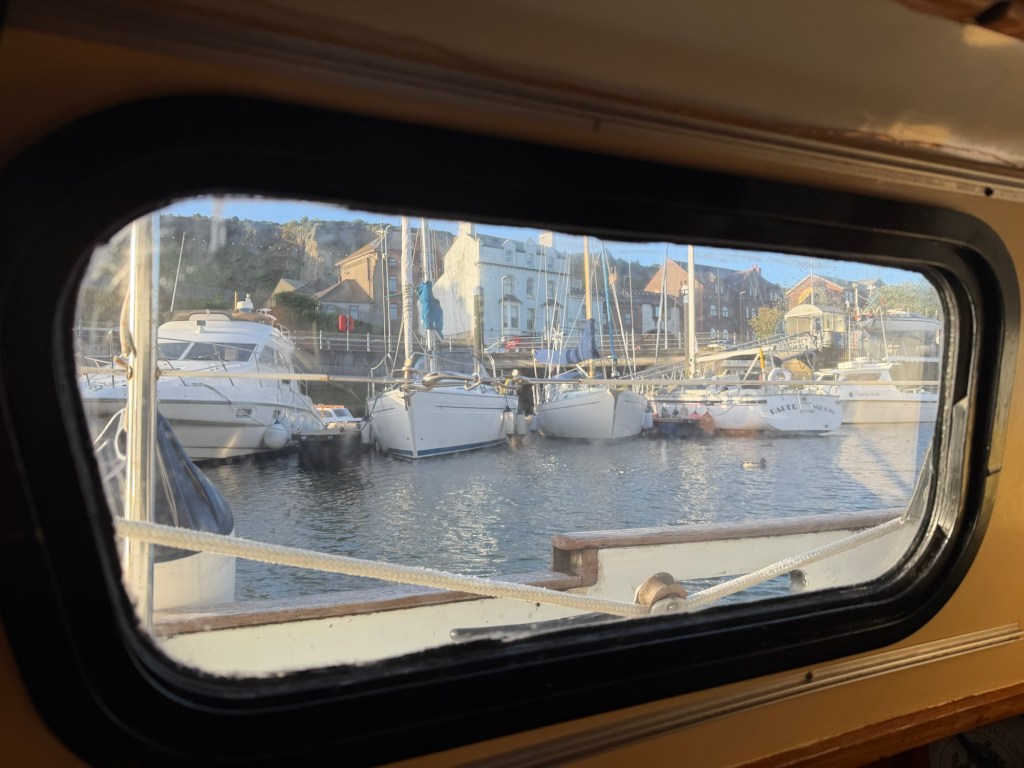
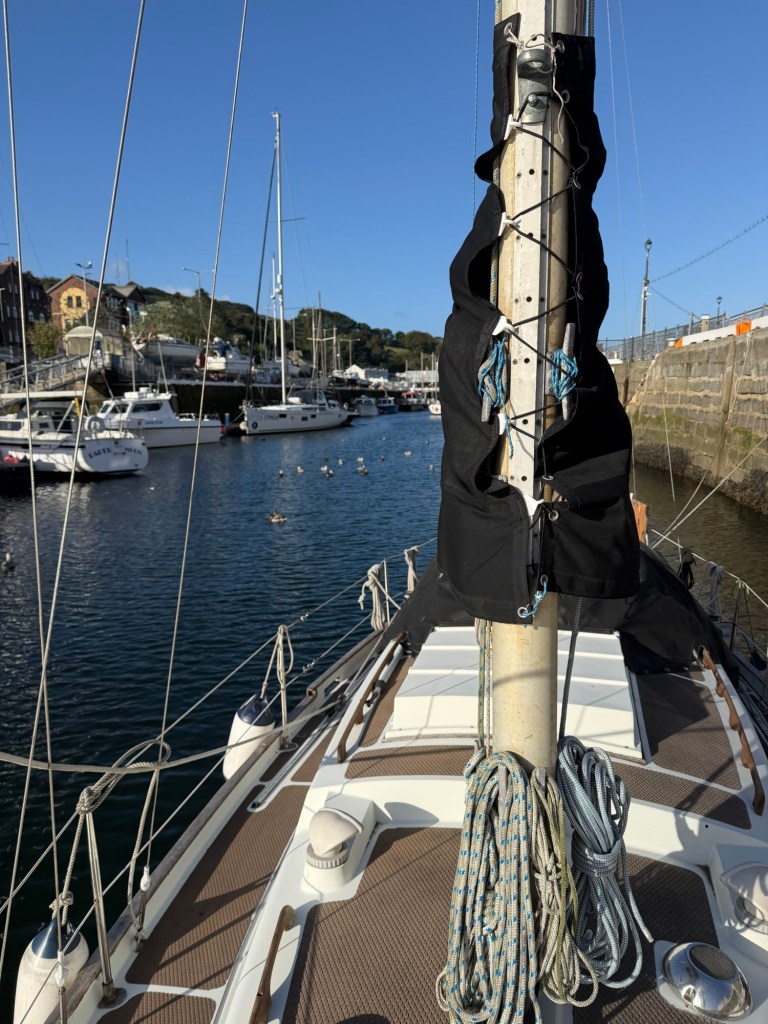
Coffee on deck, in company: ducks, gulls, and one swan going about its morning with tremendous concentration.
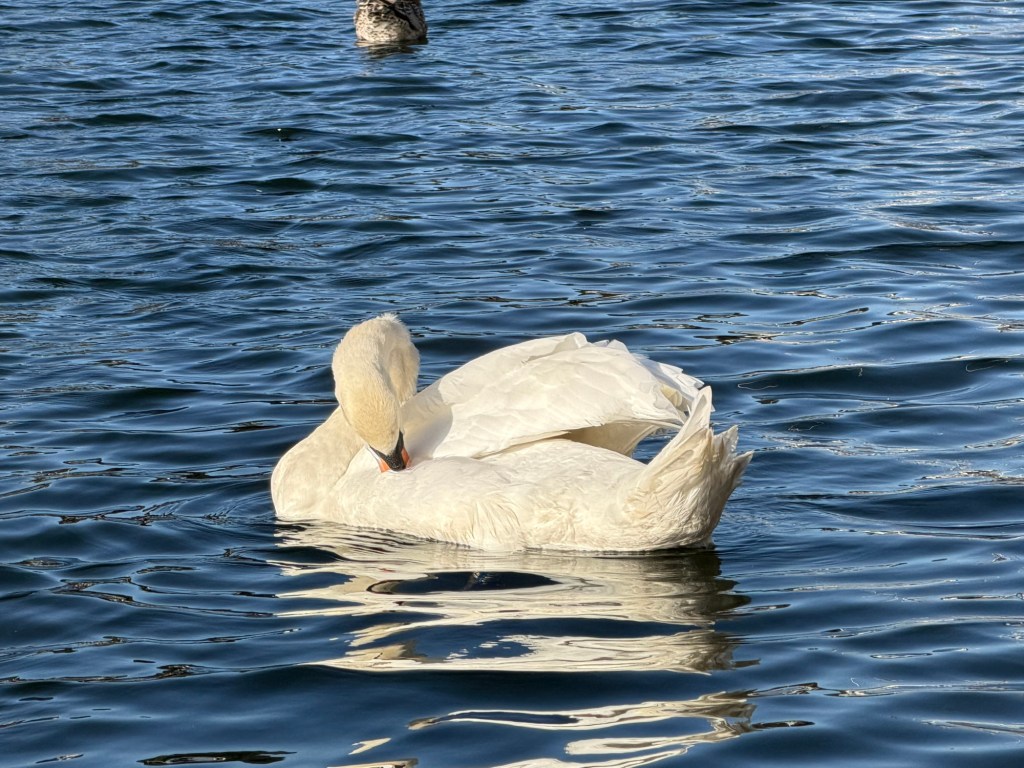
It was so consumed in its own grooming that it did not notice its raised wing was acting as a sail and carrying it steadily towards us. It collided with the Black Swan, was unsurprisingly startled by the encounter with its black counterpart, and swam off in some embarrassment, giving its little tail feathers a shake as it scurried away.
On the way up
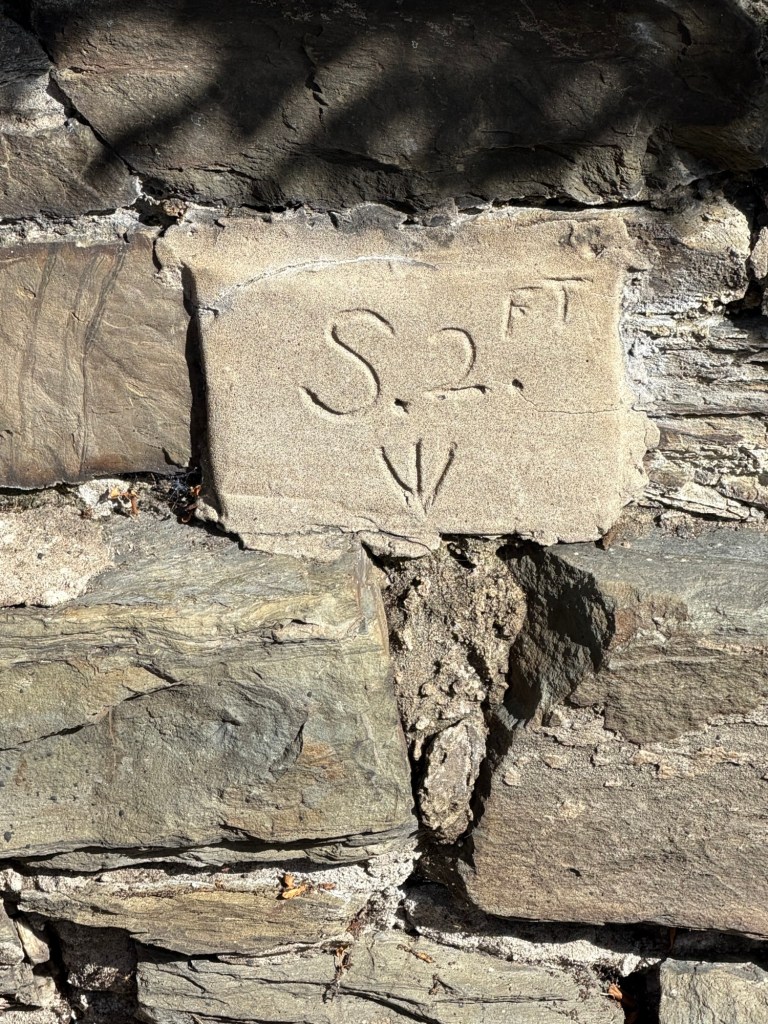
On the way up to Nobles Park we stopped at a wall, because there was something cut into it among the slate. A letter S, the figure 2 and FT, and beneath them a broad arrow pointing downwards. I like an Ordnance Survey mark, and I would have liked this to be one. It is not. This one has no bar, and the arrow is the other way up. What it looks like instead is a buried services marker. The arrow gives the direction and the 2 FT gives the distance, so something lies two feet from that stone that somebody once wanted to be able to find in a hurry. The S I cannot account for. Now presumably long forgotten, but once worth marking by whoever placed it there.
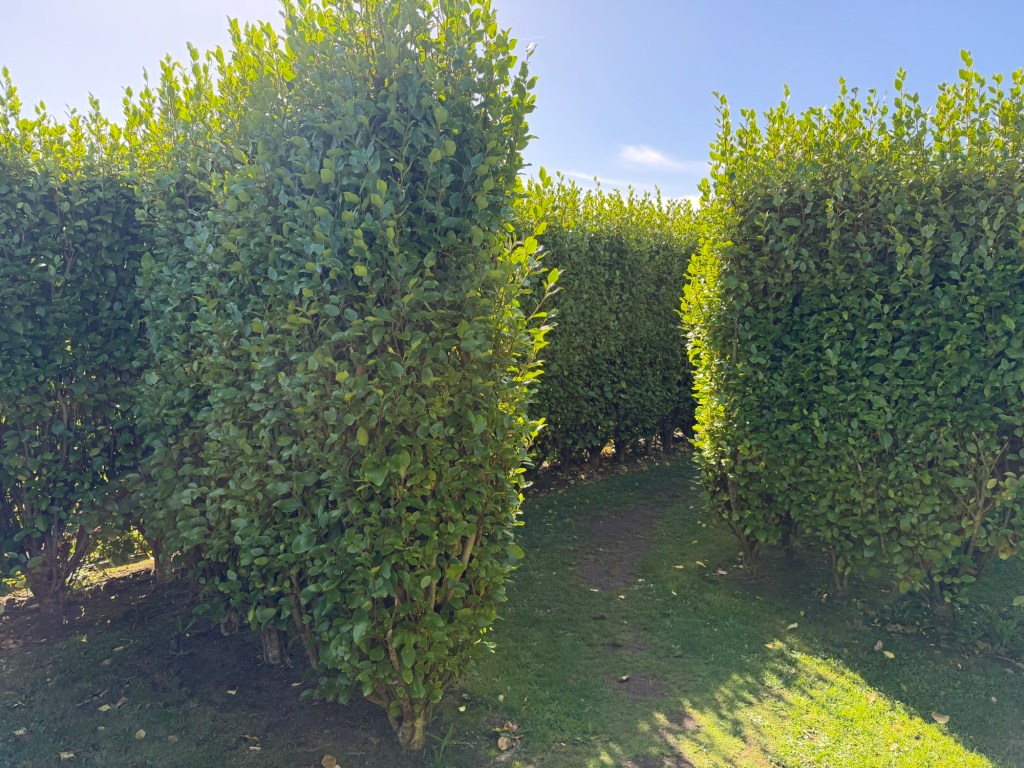
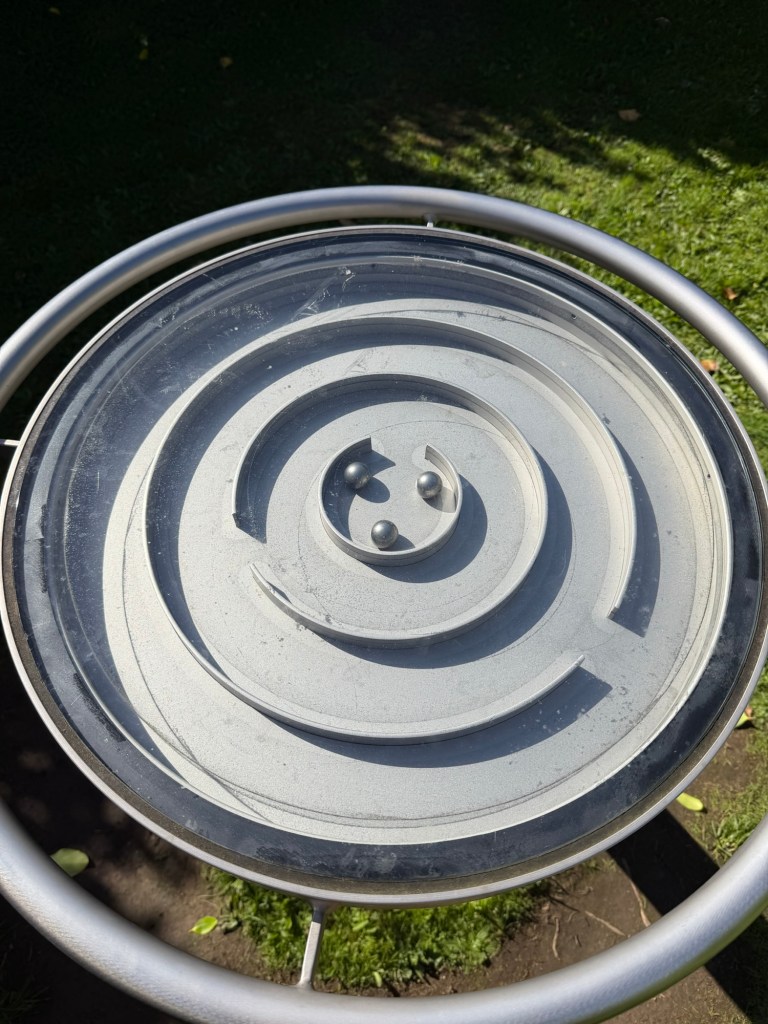
We wandered on to Dave’s Maze, which I have been meaning to do for ages, and now is the last chance before it closes for the winter. It went in a couple of summers ago on one of the park’s old tennis courts, as a tribute to the city council’s former head of parks, and it is properly good fun: hedges well over head height and enough wrong turnings to make you commit. In the middle there is a second maze, a shallow dish of spiral channels with three steel balls loose in it, tilted by the ring around the outside.
The Big Manx Feast
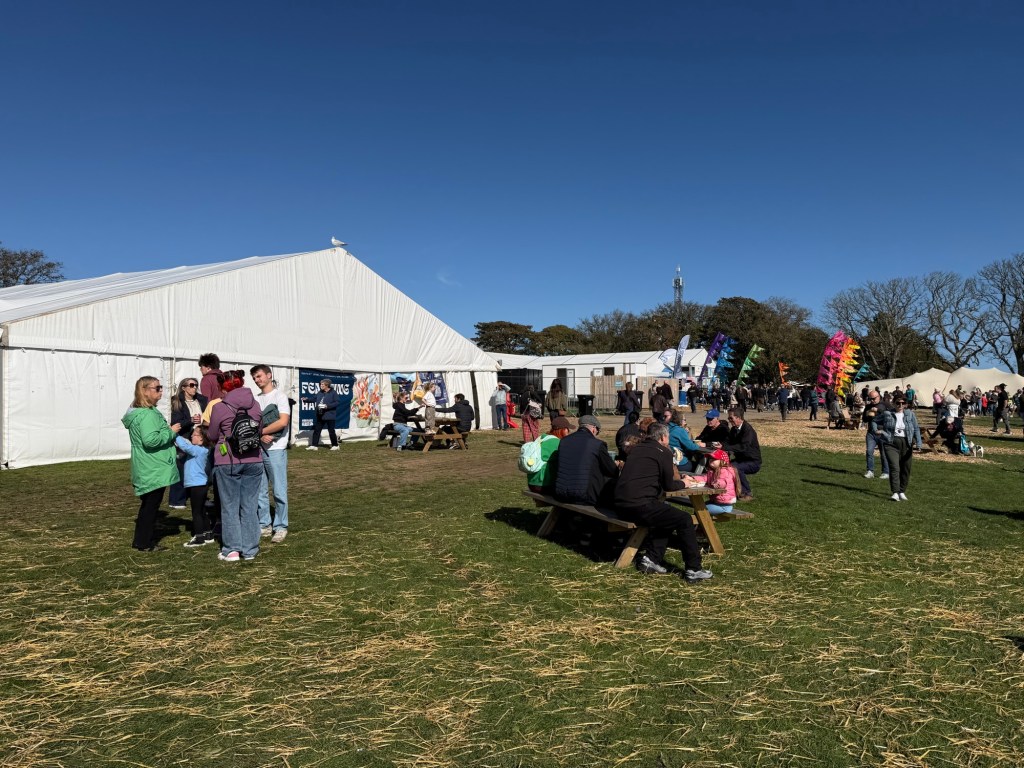
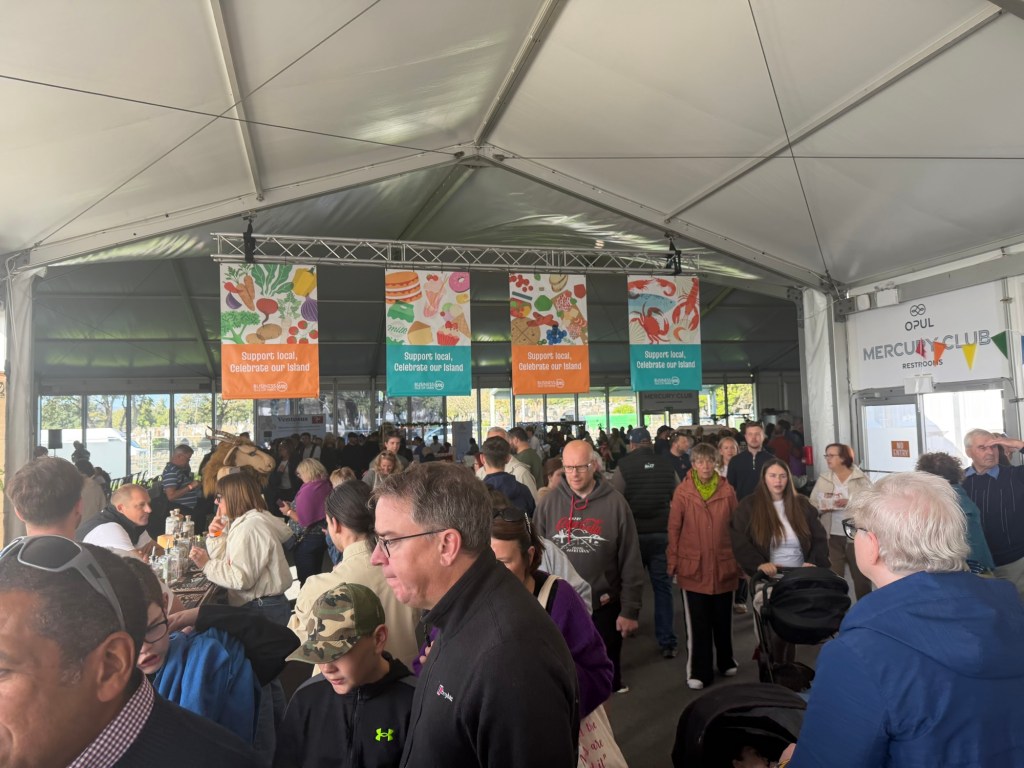
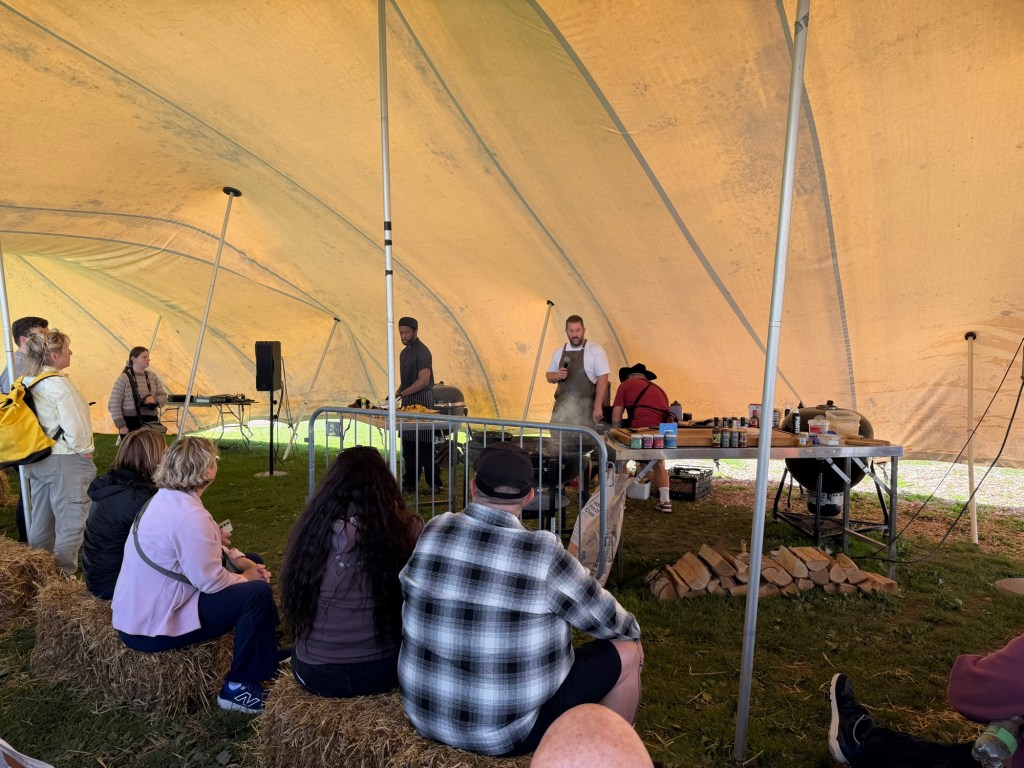
And then the food festival itself, which after a few years away has come back under a new name, the Big Manx Feast, on Nobles Park and themed on the Mheillea. A celebration of Manx produce, and a proper one. Marquees of stalls, a Bushy’s bar, cooking demonstrations going on under canvas at the top of the field, and local farmers and producers selling everything from Manx made cheese to meats and wines. I bought a bit of everything, the cheese and the wine included, and will be feasting on loaghtan for a week.
The name is not decoration. The Mheillea is the harvest home, the feast held here at the end of the cutting, when the last sheaf came out of the field to a good deal of shouting, was plaited into a small figure and set on the chimney piece, where it stayed until the following year. A party thrown precisely because the season is over, with something kept back on purpose for the winter.
The adventure vehicle
Which brings me, by a route I had not planned, to the Land Rover. After the feast, we went on and bought an old Freelander, somewhat battered, promptly dubbed the adventure vehicle, and it has finally given the kayak, the metal detectors and the rest of the clutter somewhere to live other than the back of my poor Jag.
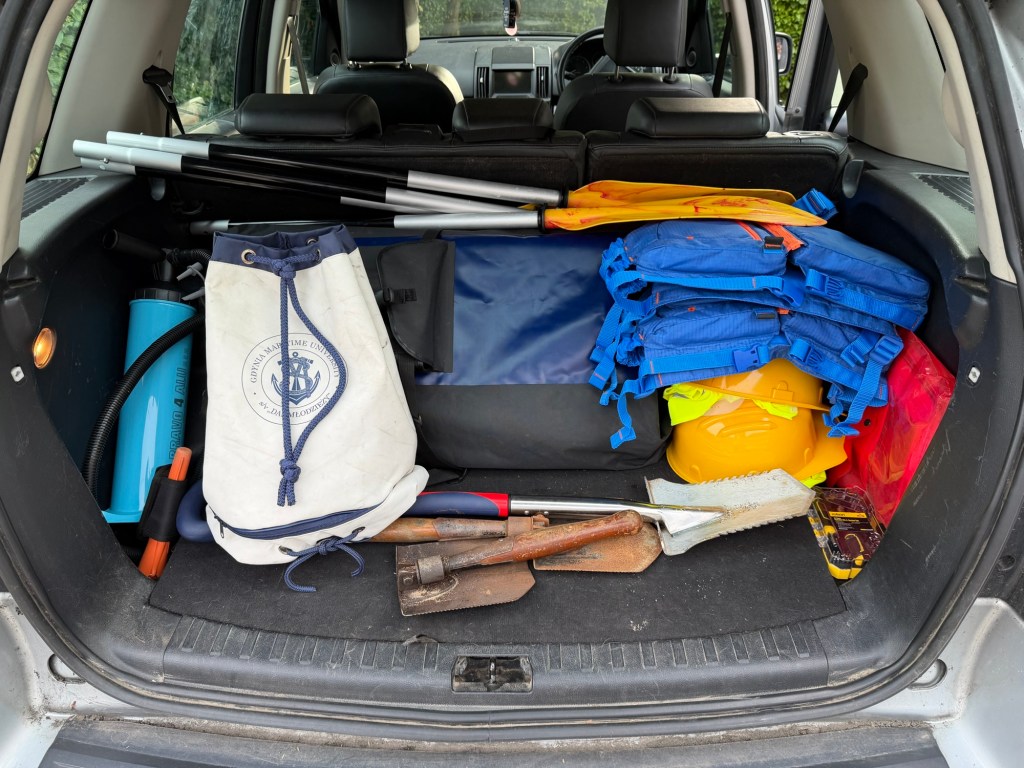
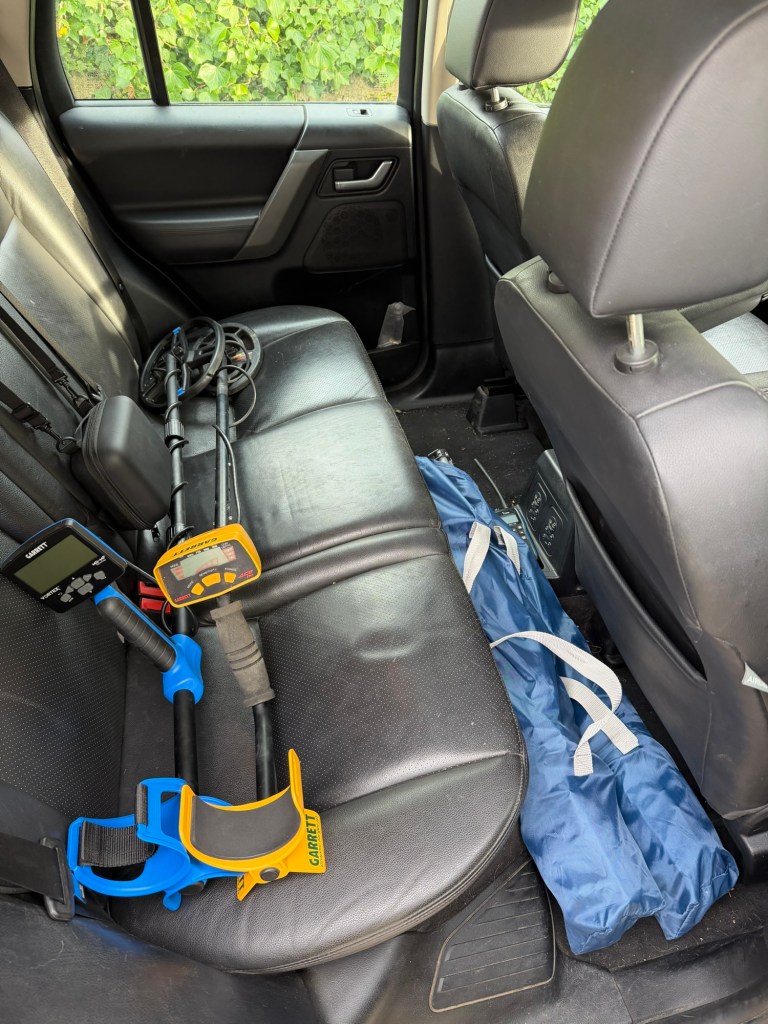
Because that, in the end, was the shape of the weekend. Summer is finished, whatever Saturday and Sunday were pretending, and the Island answered by putting on a show. A promenade of British metal on the Saturday, a field full of harvest on the Sunday, everything brought out at once because there is no more of it coming. The difference is that I am not putting anything on the chimney piece. The Swan is still in the water, the loaghtan is in the larder, and a battered Land Rover does not care in the slightest what the weather intends to do between now and April.

