Andreas
The tax return deadline is close, and I have been buried in client returns for weeks. This morning I took the Jag to Andreas, in the very north of the Island, to deliver a draft return by hand. I called in on another client at Baldrine on the way back. The client in Andreas is old school and has never had an email address, so the draft travels the way paperwork used to, and I rather like that some things still have to be put into somebody’s hands.
Douglas East
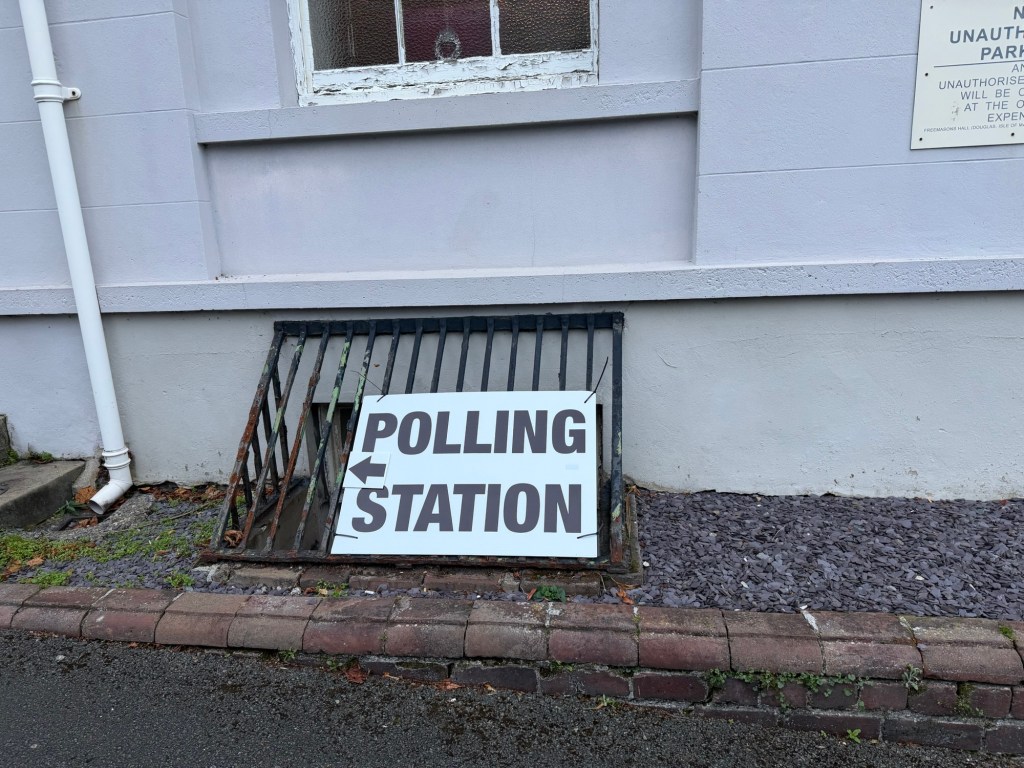
Then back to Douglas to vote, which is the part of the day I have thought about longest. The polling station was the dining room at Freemasons’ Hall, where I spent half of last winter and am settling in to do the same this one. For a Freemason, being sent there to vote is funnier than it ought to be. Douglas East returns two members to the House of Keys, and this time the candidates were Clare Barber, Joney Faragher, Andrew Forster, Dave Mackey and Andrew Saunders. I read all five manifestos and paid attention to who turned up.
The issue that decided it was the reserves. To balance this year’s Budget, £126m is being drawn from them, some 54% more than the £82.2m last year’s Budget had forecast for 2026-27. The headline figure of nearly £2bn sounds comfortable until you notice that a substantial share of it is earmarked for state pensions, the social security system and the health service. On the figures given in Tynwald, the more relevant General Reserve is nearer half a billion, and healthcare overspends are a large part of the pressure on it. That turned what I had thought was a tax question into a balance sheet question, and it was the test I applied to every candidate.
My two votes went to Dave Mackey and Andrew Saunders. They were the only two whose published positions matched mine on low tax, deregulation, business-centric government and controlled immigration. Mr Mackey turned thirty years in hospitality into actual asks: commercial rate reform with tiers of relief, off-peak travel incentives, and a veto for the health committee over budget top-ups. Mr Saunders matched me most closely on reforming government itself, with smaller and faster machinery, private sector expertise inside departments, all data and contracts published, and the plain statement that government should cut its own cloth before asking residents to pay more.
What I accepted in the trade is that, to me, both had the weakest delivery case in the field. Neither costed anything. For an accountant, voting for two uncosted programmes takes some explaining, and the explanation is that I weighted direction over proven capability, with my eyes open.
Andrew Forster was my second choice for most of the campaign and lost it on conduct rather than policy. No one knocked here, and his printed manifesto was the generic Change document covering every one of the party’s candidates, with nothing on him personally. The party’s website then went further than that manifesto on one of its biggest questions, and used markedly stronger language on another. The site would remove the members of the Legislative Council altogether and called for an end to mass immigration; the printed manifesto only took away their votes and objected to uncontrolled immigration. I could never be sure which document he would be held to.
Clare Barber has a proven record of delivery, but her own manifesto commits her to a Hate Crime Bill and a gender-affirming care pathway, which on speech and gender puts her opposite my position. Joney Faragher was capable and present throughout, and took her own Private Member’s Bill on free period products through Tynwald, where it now awaits Royal Assent, but for me she is headed in the wrong direction economically.
In the end I got there by reading five manifestos and noticing who showed up.
The results came through late at night. My preferred candidate, Andrew Saunders, topped the poll with 820 votes, Joney Faragher took the second seat with 682, and Dave Mackey missed it by 50. One of my two crosses, then, went to a winner.
Scarlett
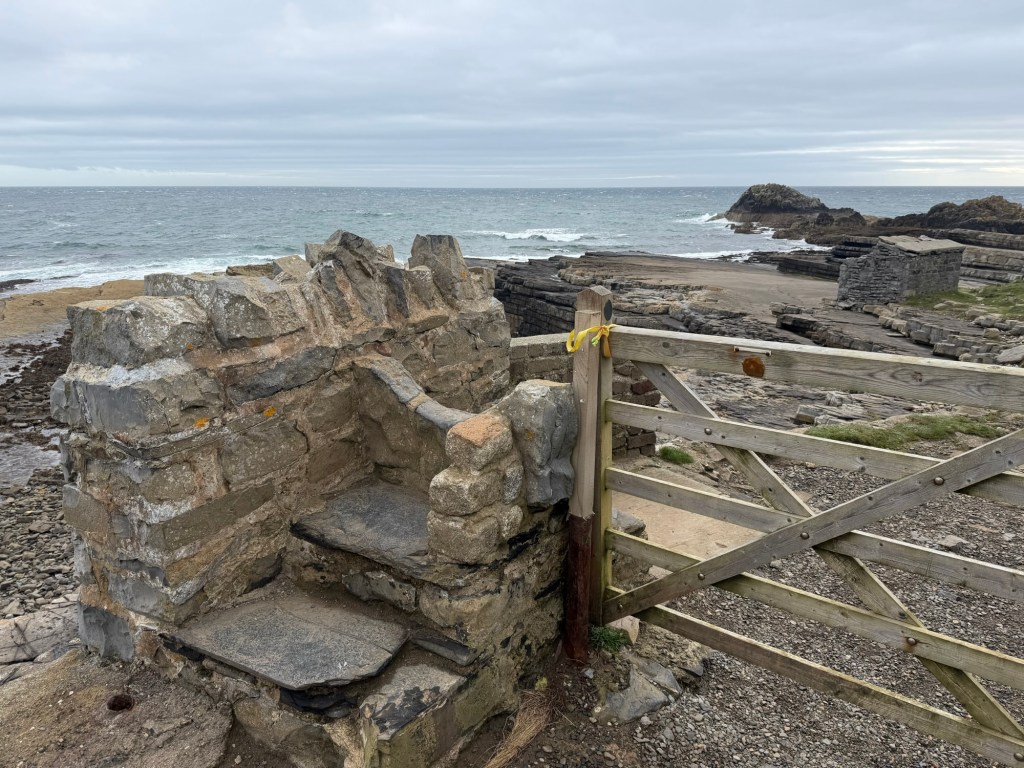
After voting, the Jag stays at home and the adventure vehicle comes out. My girlfriend and I head back to Scarlett, the headland of limestone and volcanic rock just south of Castletown. On 7 November 1834 the brig John Fairfield, on her maiden voyage from Liverpool to Havana, struck rocks in a gully on the Poyll Vaaish side of Scarlett head after her captain mistook lights ashore for Douglas harbour. Contemporary Methodist and chapel records mention wreckers, so the lights may have been set on purpose. Her cargo, valued at £30,000 to £50,000, included calico, linen, blankets, lamps, fowling pieces and earthenware.
The other day we came away with lots of blue and white pottery shards, a cabin hook, the gallery of a Victorian gas lampshade, and a 340 million year old rugose coral fossil. The lampshade cannot have gone down with the brig, because Victoria came to the throne three years after the wreck. Scarlett does not sort its finds by date. Today I wanted more shards, some musket flints (the fowling pieces make that less fanciful than it sounds) and whatever the detector may throw up.
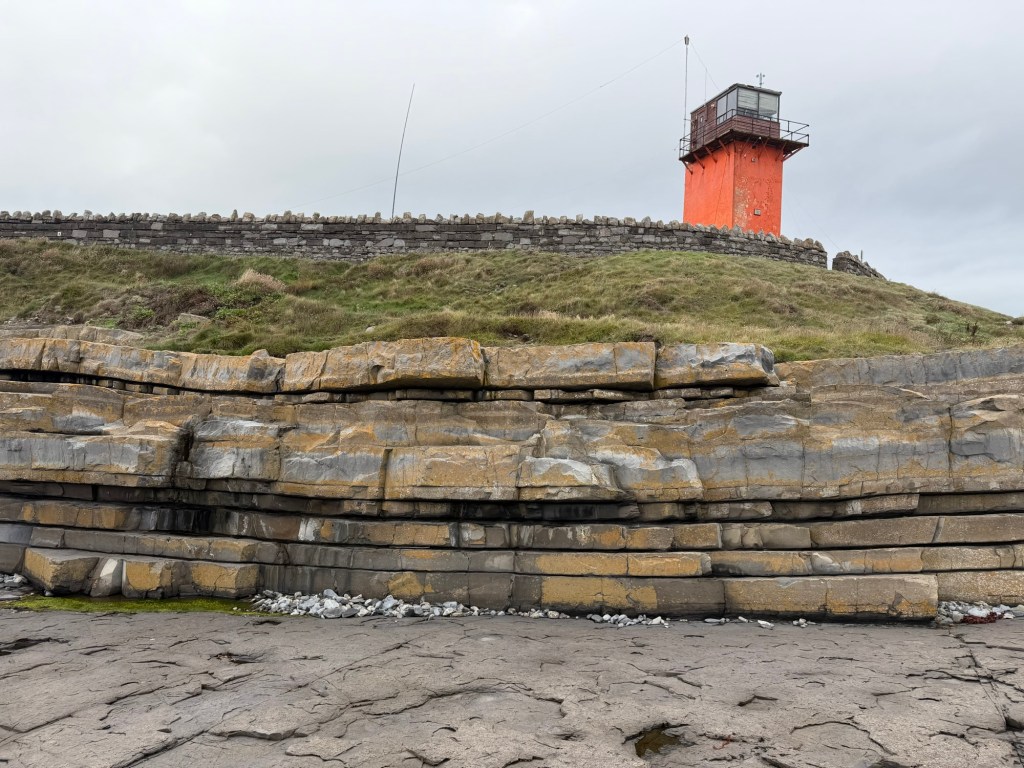
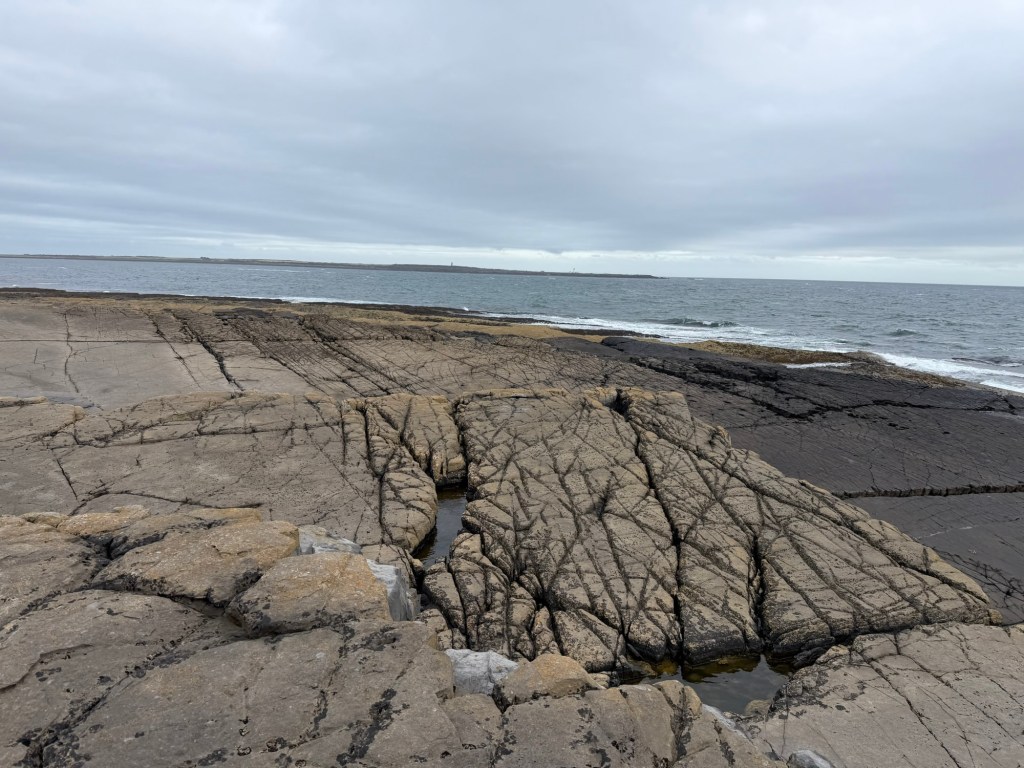
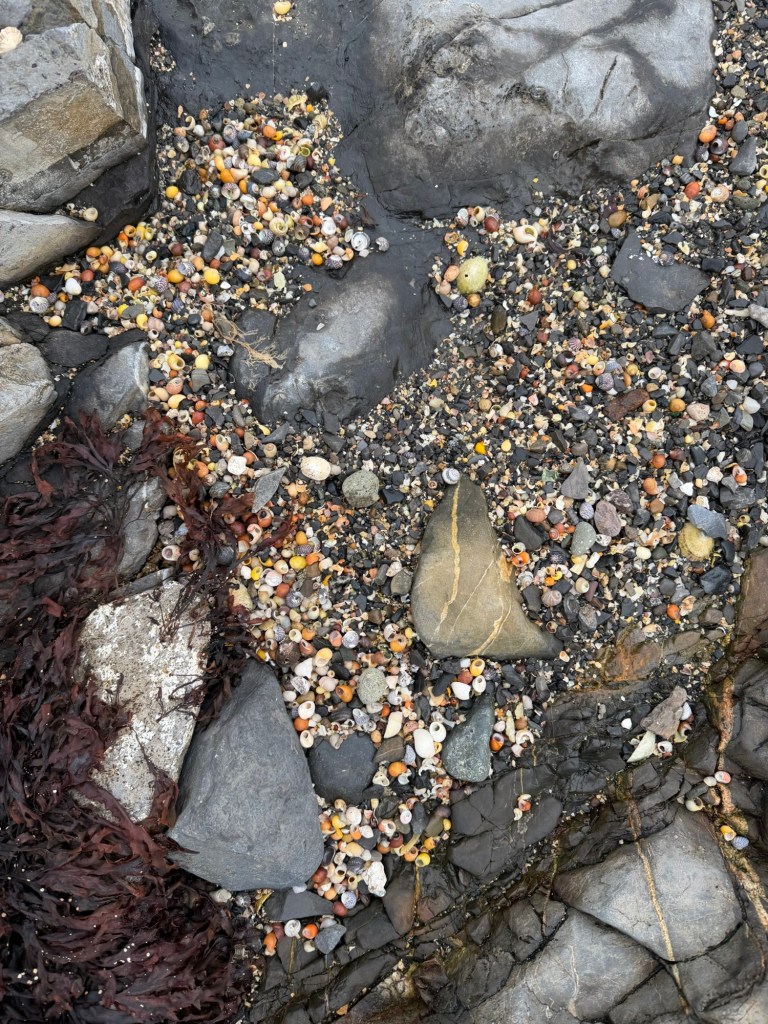
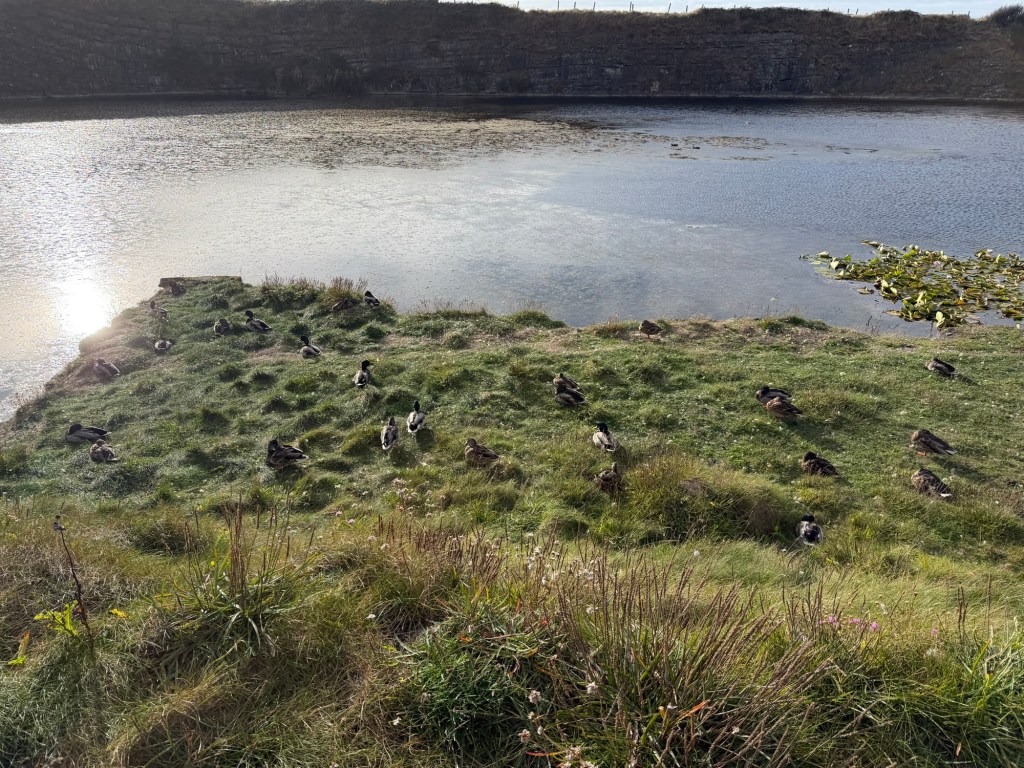
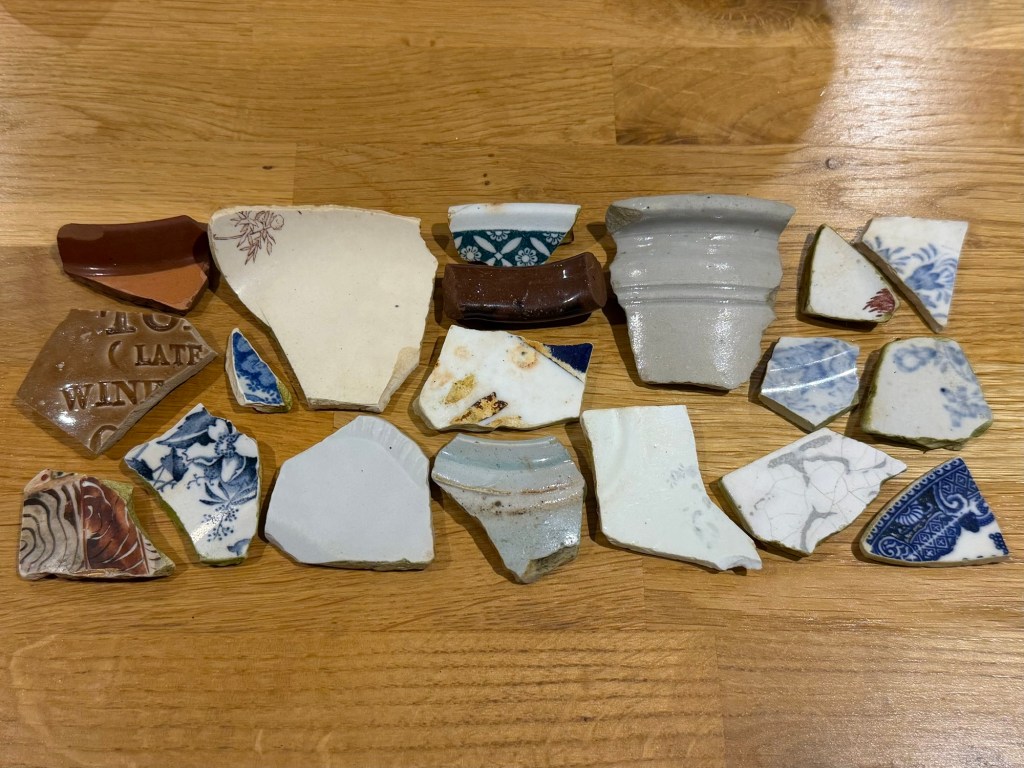
No flints, sadly. The best of today’s shards are below, and they are a mixed lot. Some are plainly late Victorian, and some could very well have come off the John Fairfield. Blue and white transfer-printed pieces are in the majority, including what looks like part of a Willow pattern border. My favourite is a piece of brown-glazed stoneware with part of an impressed stamp, where LATE and WINE are still readable. Merchants of the period often added “(late So-and-so)” to their name to show whose business they had taken over, so this was once a wine merchant’s jar, advertising who he had succeeded.
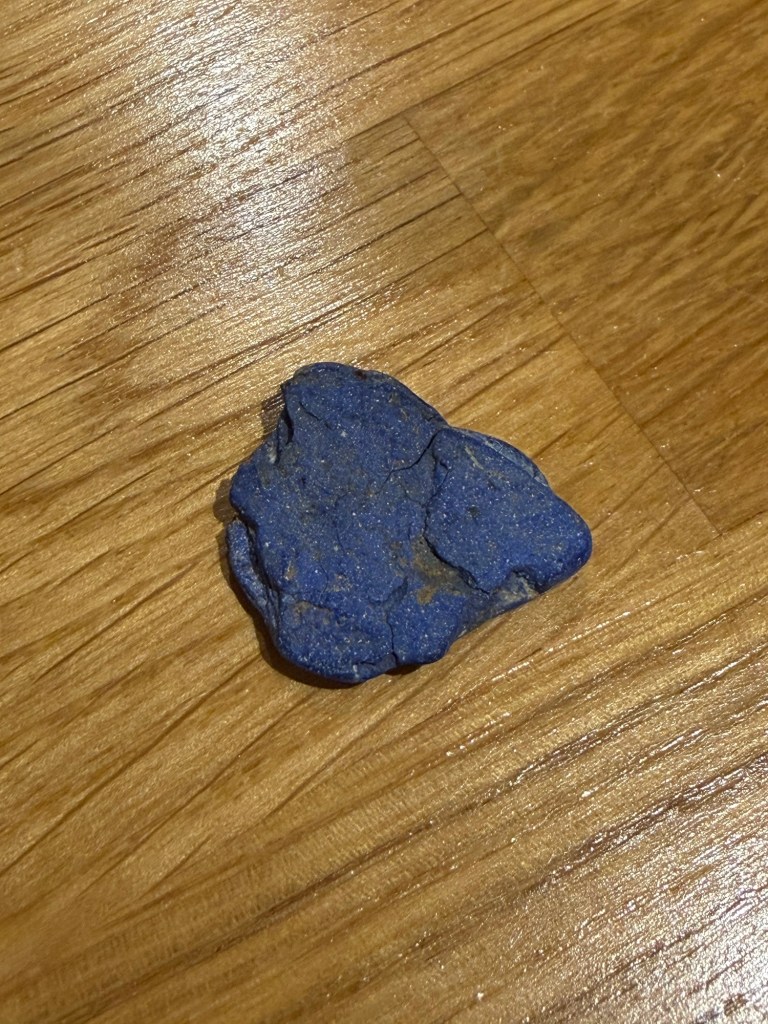
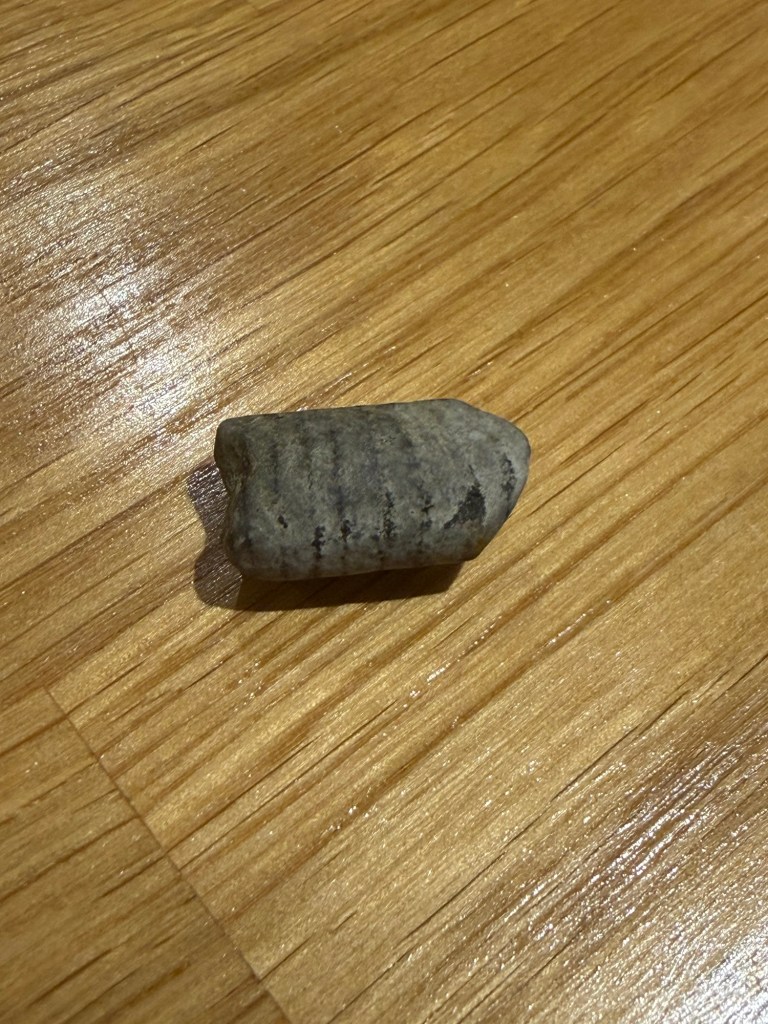
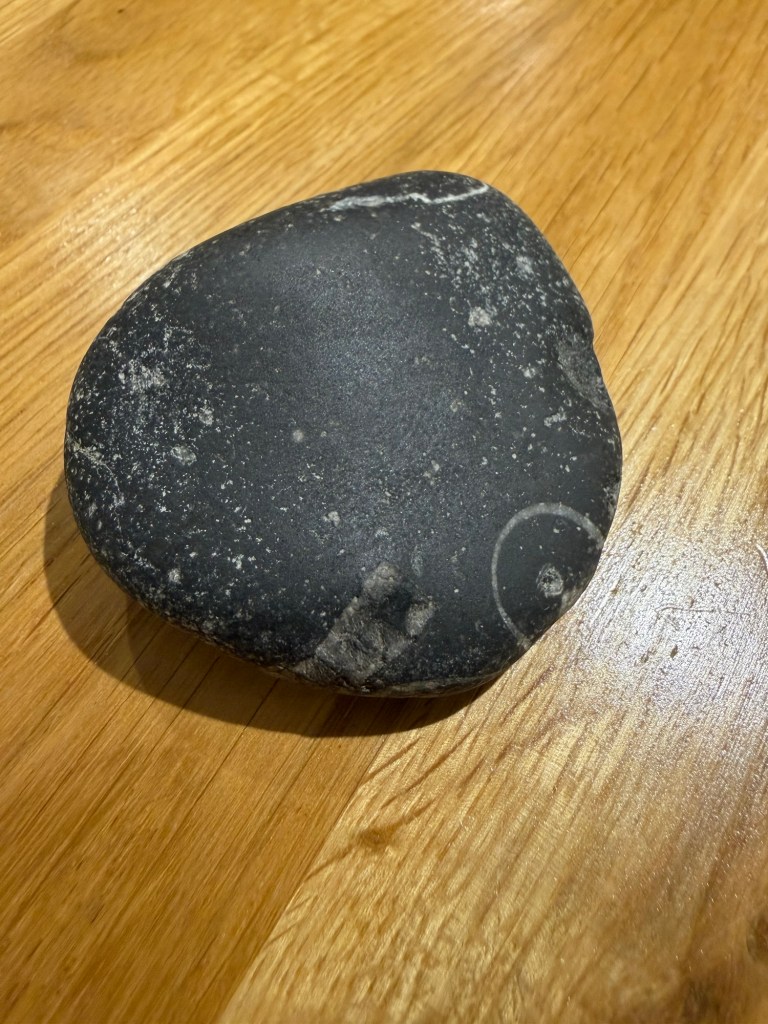
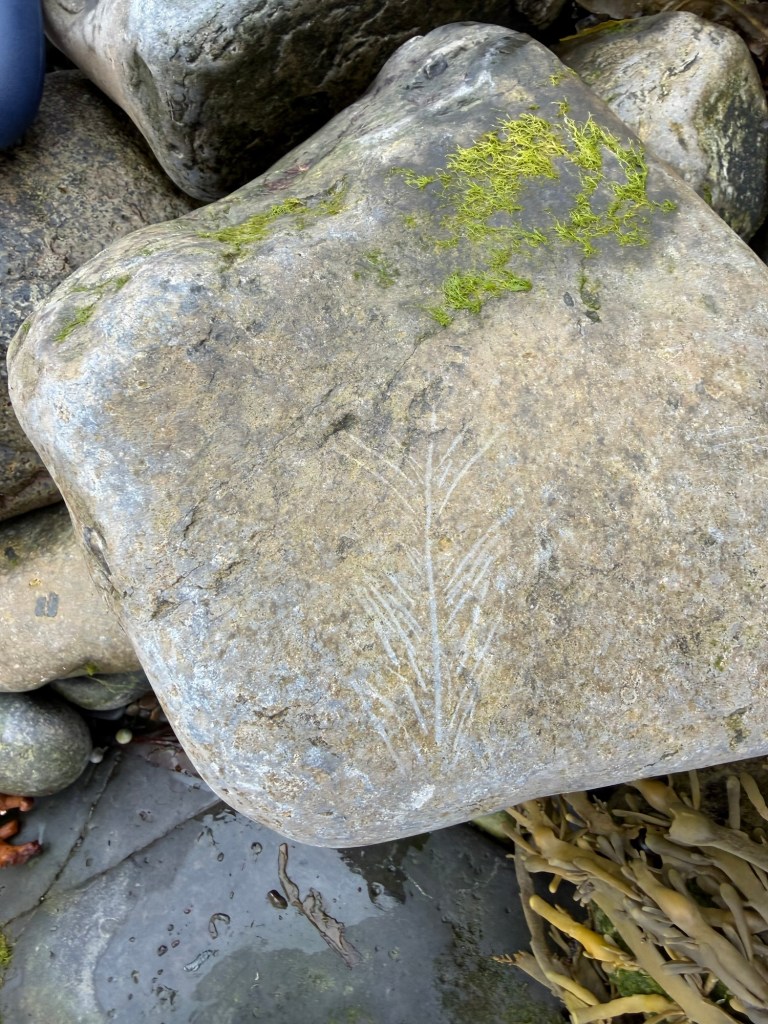
The oddest find was a lump of laundry blue, the ultramarine that Victorian households added to the rinse to make whites look whiter, still intact after who knows how long on the foreshore. The limestone gave up more besides: a short length of crinoid stem, the stalk of a sea lily, and a dark pebble with a coiled shell cut clean through on its surface, among other fragments. Both are the same age as the coral from our last visit.
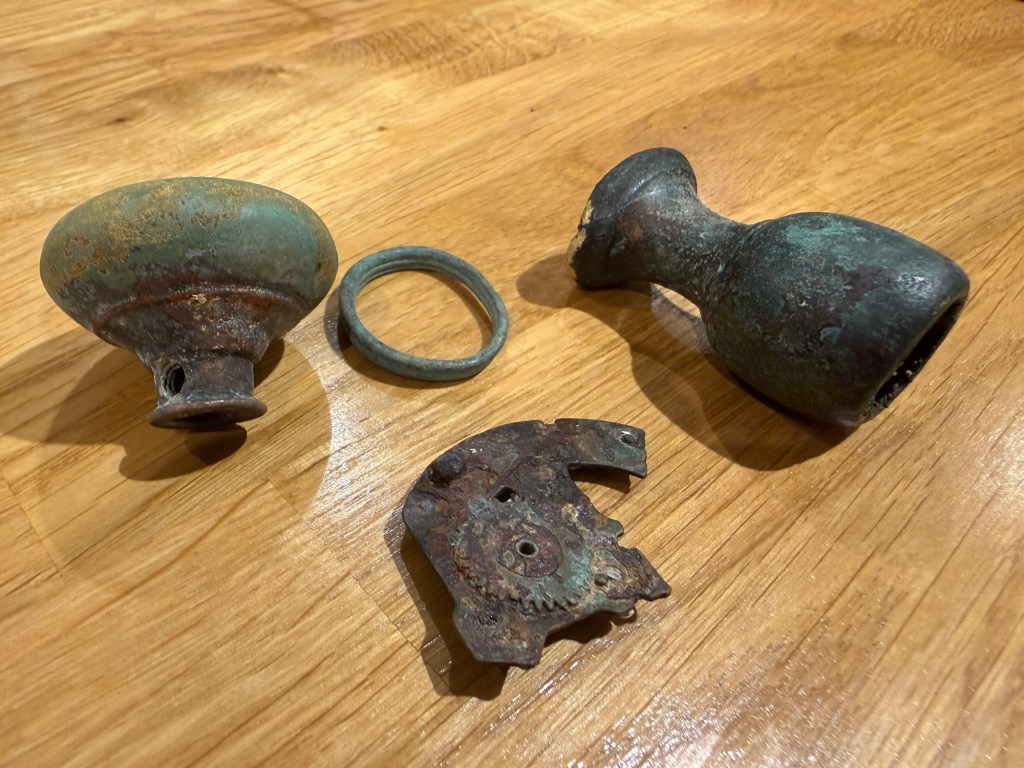
The detector’s contribution was a handful of brass odds and sods: what looks like a door knob, a grooved ring, a hollow bell-shaped fitting, and a corroded plate with a toothed wheel still in it, part of some mechanism I have yet to identify.
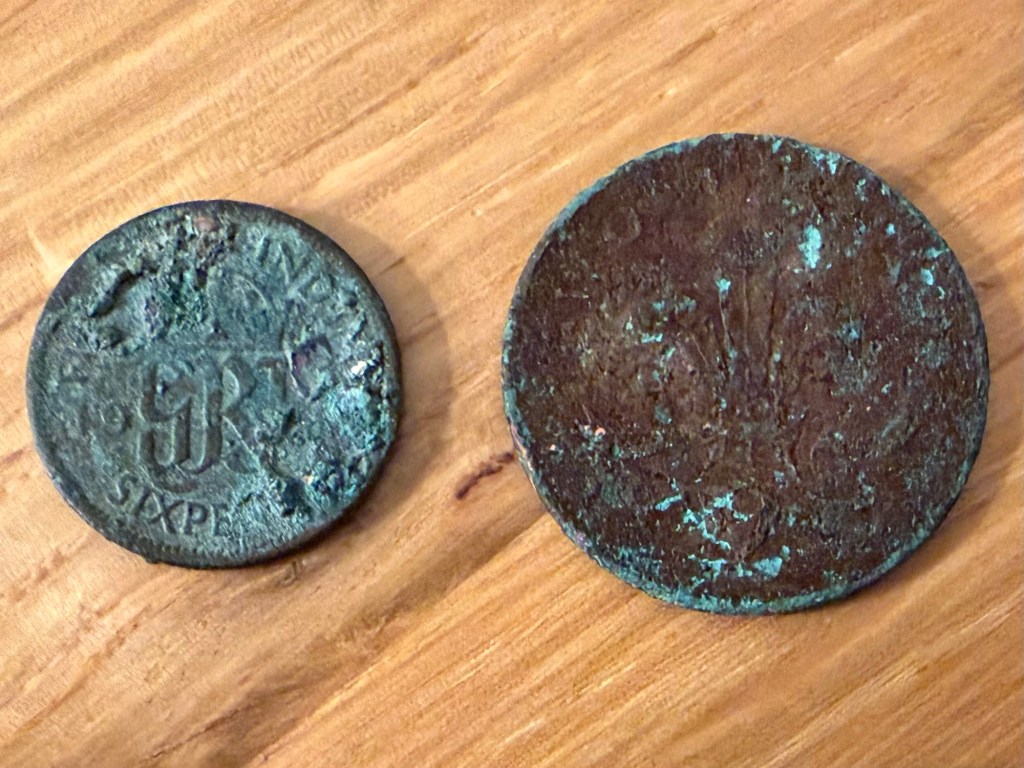
The star, though, was a George VI sixpence, its crowned cypher still clear. The date has gone, but it is cupro-nickel rather than silver, which means 1947 or later, and the legend still carries IND, for Emperor of India, which means 1948 or earlier. Between them, they pin it to 1947 or 1948. It had company in a decimal two pence piece, the Prince of Wales’s feathers just about visible. So both coins the detector found beside an 1834 shipwreck were made more than a century after she went down.