
A kayak in the boot
In Poland last month we spent four hours paddling down a river, and I enjoyed it enough to come home and buy a kayak. It is a Gumotex Seawave, Czech made, four and a half metres long and seventeen and a half kilos, and the whole thing lives in a bag in the boot. Fifteen minutes with the pump and it is a boat. I have not got over how good a trick that is.
We had read up on the old smugglers’ cave under Bradda Head, at the far end of Port Erin bay, where tea and brandy were once run ashore. The cave is said to have a hole in its roof, cut by eighteenth century smugglers to haul the goods up. So on Friday evening we drove down, inflated on the promenade, and set off. The metal detector came too, strapped aboard, on the grounds that smugglers’ treasure does not find itself.
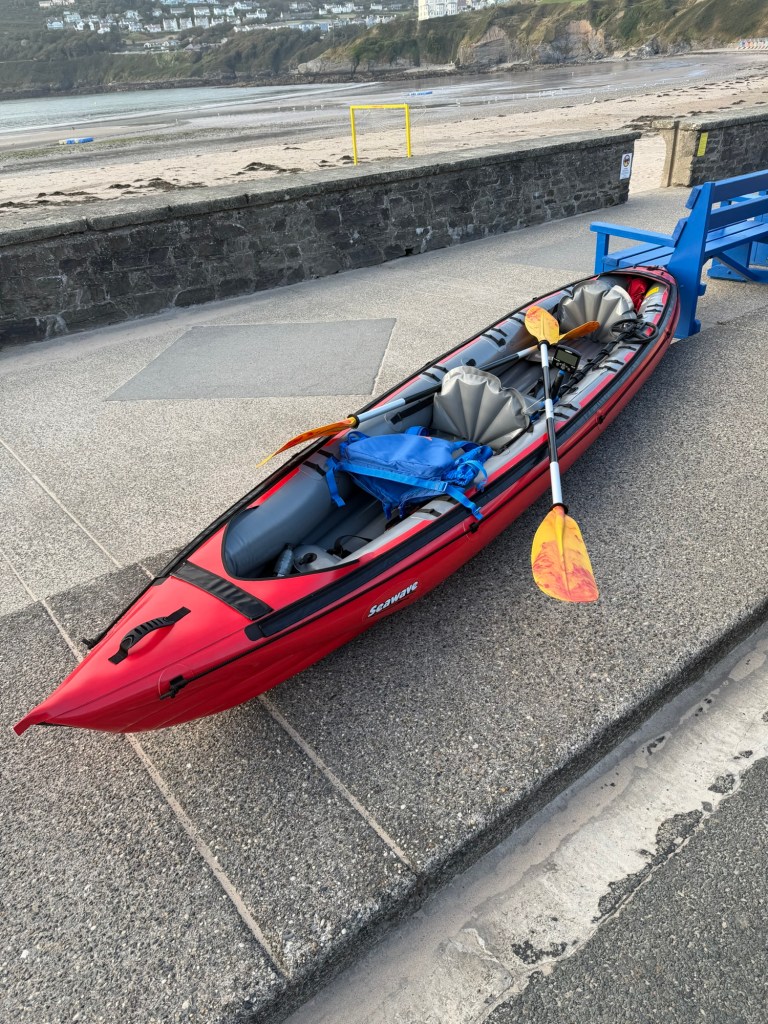
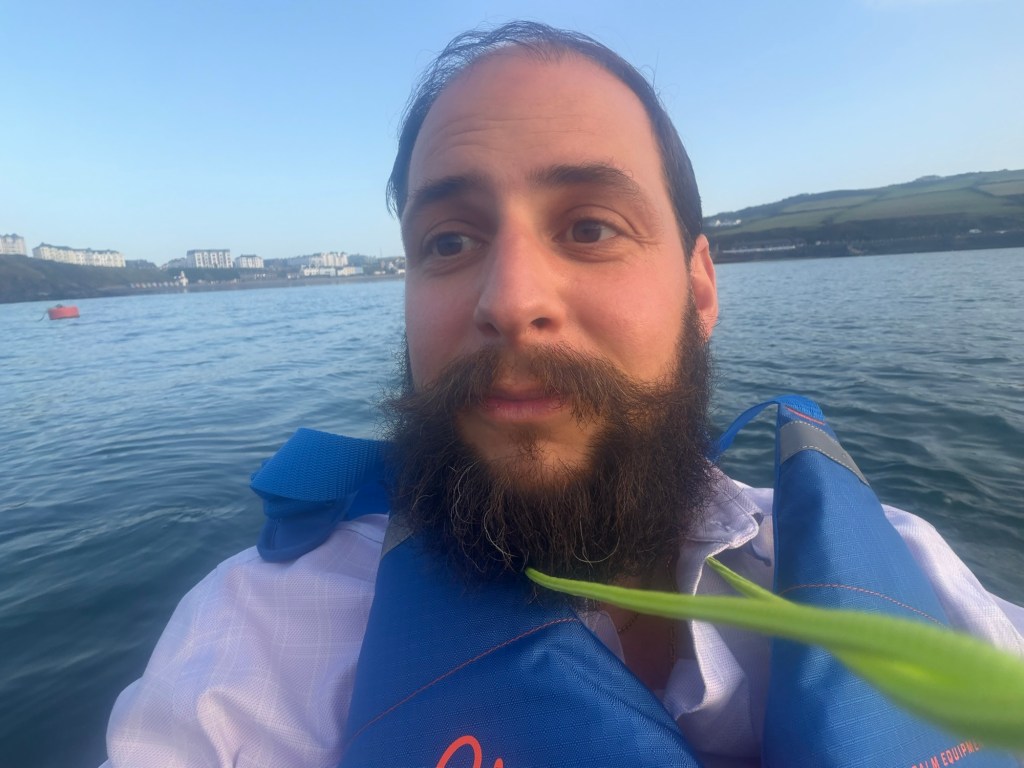
The sea is not the river. Even on a flat Friday evening there was a constant movement under us that a river never gives you, and enough of it to feel unsteady. You sit differently as well. On an inflatable you are perched higher and end up level with the water, where a rigid boat sets you down into it. None of which stopped it being superb, and I was very impressed with the boat.
Then, a few metres short of the cave mouth, I turned us round. I did not know how the kayak would behave side on to the waves, and I was not confident about threading a narrow entrance in a boat I was still getting to know. So I called it a practice outing. We did not drown, I enjoyed every minute of it, and the cave will wait.
Sandpiper on the bottom
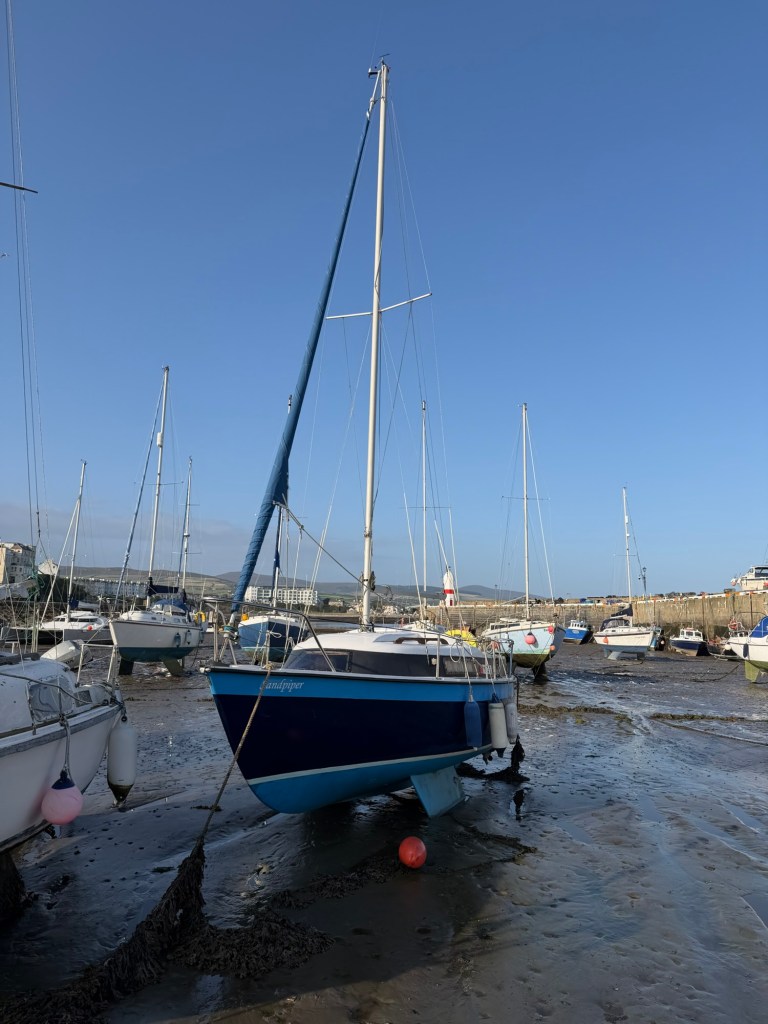
On the way back we stopped at Port St Mary to look in on Sandpiper. I had not been down to her for at least a month, with all the travelling. It was low tide and she was sat on the harbour bed, which is oddly convenient, because it meant walking out to her instead of rowing the dinghy. We sat aboard for a while and enjoyed the comfortable pad we have built into her.
She gets craned out later this month and will sit dry until April. Weather permitting, I would like one more sail out of her before the lift.
Saturday, which was admin
Saturday went on work and the house. In the evening my girlfriend cooked Polish. Cabbage rolls, gołąbki, but filled with buckwheat rather than the usual rice and mince, under a mushroom sauce. It was delicious. I recommend having a Polish partner to anybody.
Lobster on the prom
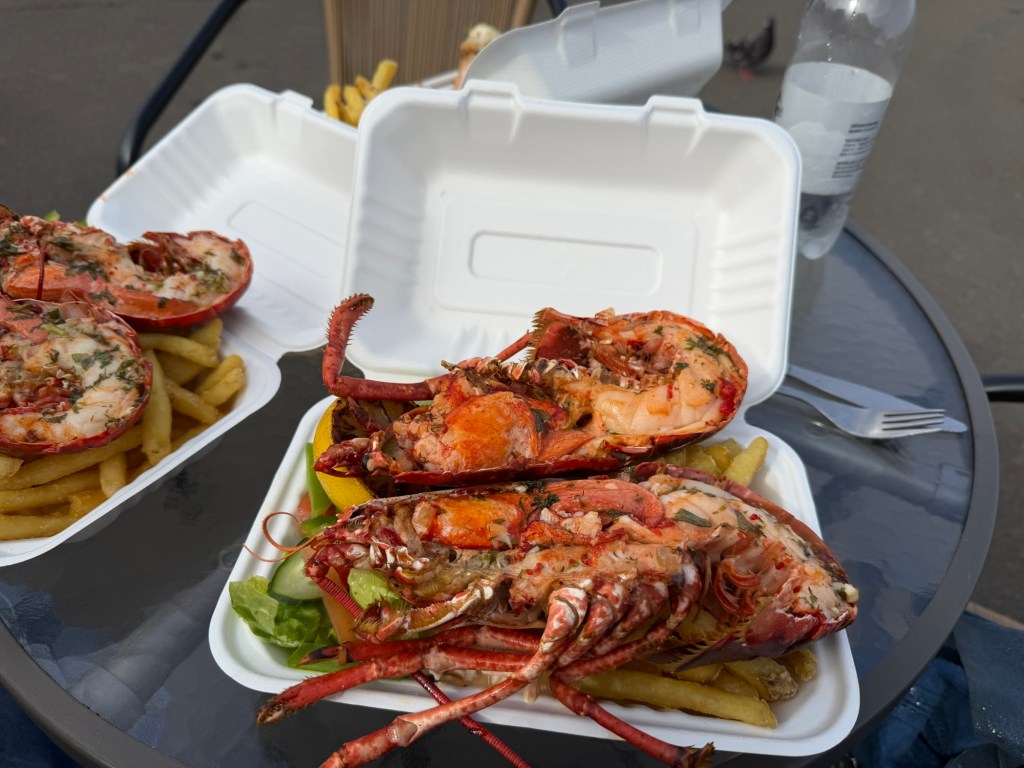
Sunday lunch was at the kiosk on Douglas promenade. Fresh Manx lobster, done simply with garlic, oil and a bit of chilli, chips and salad underneath it, in a box, at a table on the front, for a little over twenty pounds each. It came out of the same water we had been paddling about on two days earlier.
The Island looks after that fishery reasonably carefully. Pots set inside the three mile limit have to carry escape gaps so undersized animals can get themselves out, and the minimum landing size for lobster has been stepped up more than once in recent years. Manx produce is worth the fuss made about it.
The park
Then the main event. The Curraghs Wildlife Park is up at Ballaugh, sitting in the curraghs themselves, so it is a wildlife park in an actual wetland rather than a zoo with a wetland theme. The enclosures are large and a good number of them are open to the air. Adult admission is thirteen pounds, a pound of which is a conservation donation you can opt out of, and you will get most of a day out of it. I had not been in ages. It is great.
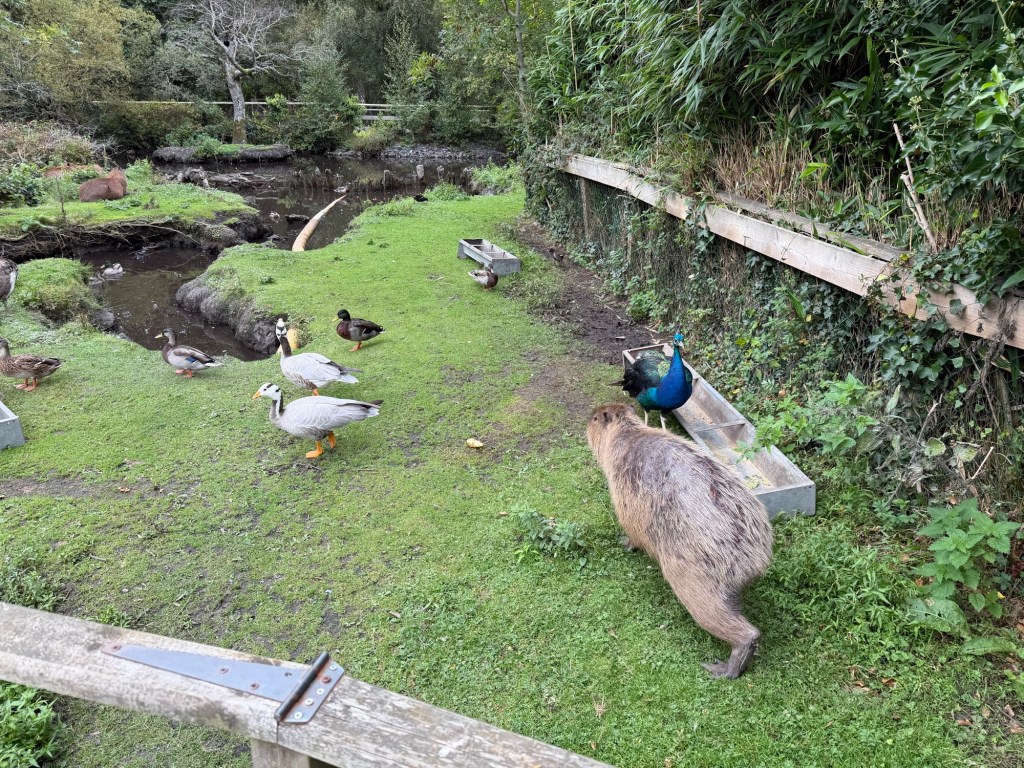
One pen has capybaras in it, along with peacocks and a pair of bar-headed geese, which the park points out are among the highest flying birds in the world and which spend their time here walking up and down a feed trough in Ballaugh. The capybara is the largest rodent on earth and a close cousin of the guinea pig, which you can see the moment one turns sideways.
A fair number of the birds are not the park’s at all. Mallards, moorhens and local geese have worked out that it is a very good spot and moved in, and the park has more or less given up and listed them with the collection.
Not pink yet
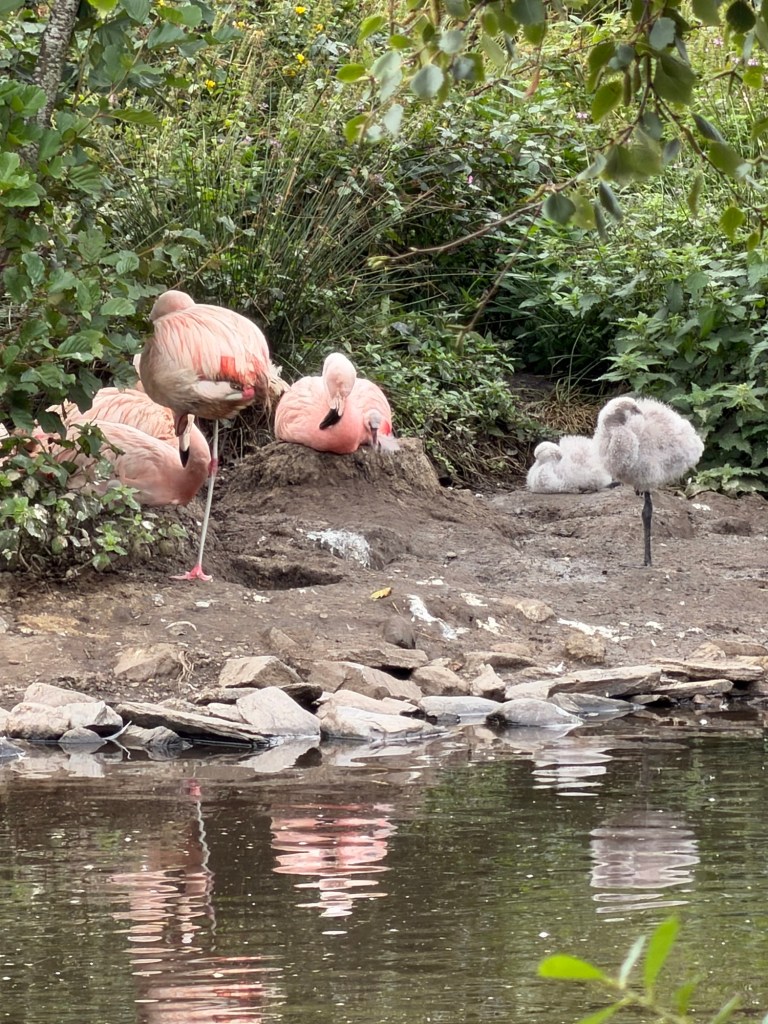
We had come for the flamingos. The park announced on 9 September that three Chilean flamingo chicks had hatched, with more eggs still to come, and it is a long while before any of them turn pink. They are grey, round and extremely fluffy, and standing next to the adults they look like a different species altogether.
One of the chicks put a wing out for a stretch. It is a hilariously small wing, barely more than a flap of grey, and nowhere near a thing that will one day carry the bird anywhere. Chilean flamingos are classed as vulnerable, and the park makes the point that wetland is the thing you actually have to protect, which reads differently when you are stood in one.
Upside down
The highlight, though, was the fishing cat.
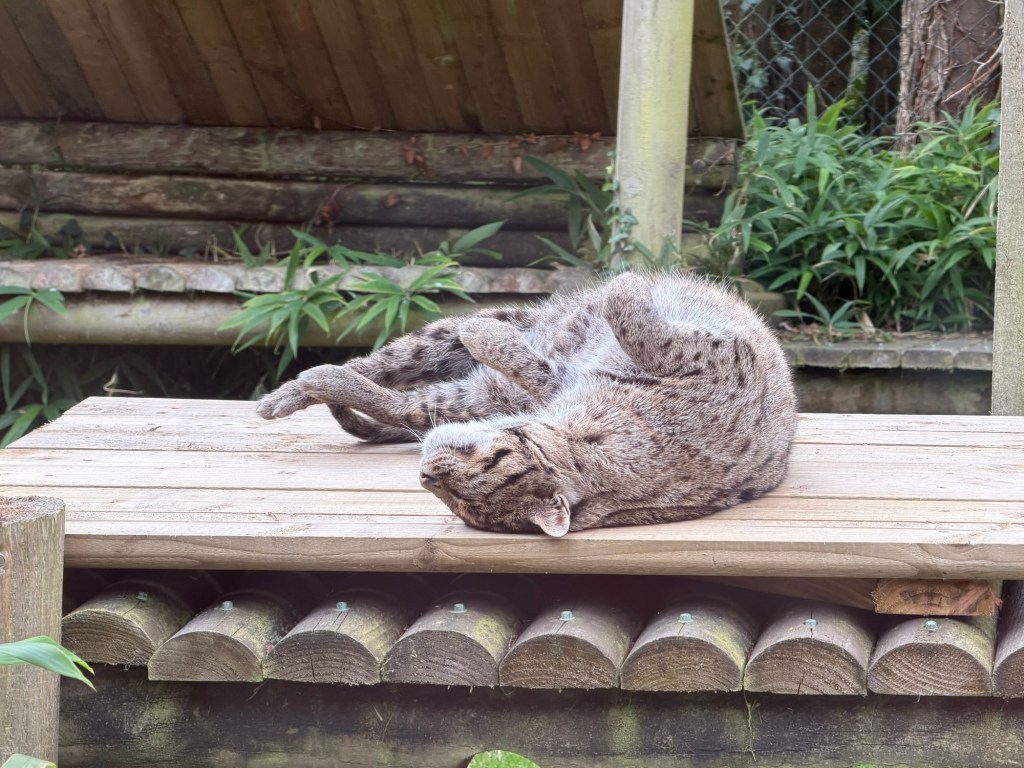
He is usually nowhere to be seen. On Sunday he was up on top of his wooden plinth having an enormous sleep, and while we watched he rolled over onto his back with his paws in the air, in exactly the position both of mine adopt at home. Fishing cats are one of the few cats that will go into water; they swim, and they go in after fish. All that specialist kit, and it still sleeps like a moggy on a sofa. A cat is just a cat.
None of it needs a kayak
I bought a boat because I wanted one, not because the day required it. A single kayak is seventeen pounds fifty an hour from the centre on Port Erin beach between May and September, and you can ring up on the morning and turn up. The park is thirteen pounds and will hold you for hours. Lunch was the expensive part of the weekend and it was lobster.
An outdoor adventure on the Friday, a day of admin and a home cooked meal on the Saturday, then fresh local produce and a family day out on the Sunday, all of it within half an hour of home. I have said it before and I will keep saying it: people who tell you there is nothing to do on the Isle of Man are either stupid or lazy.
A cave I did not go into, a boat sat on the bottom, a lobster off the promenade and a wild cat asleep on its back. One weekend, one small island, and not a single airport.

