Still there
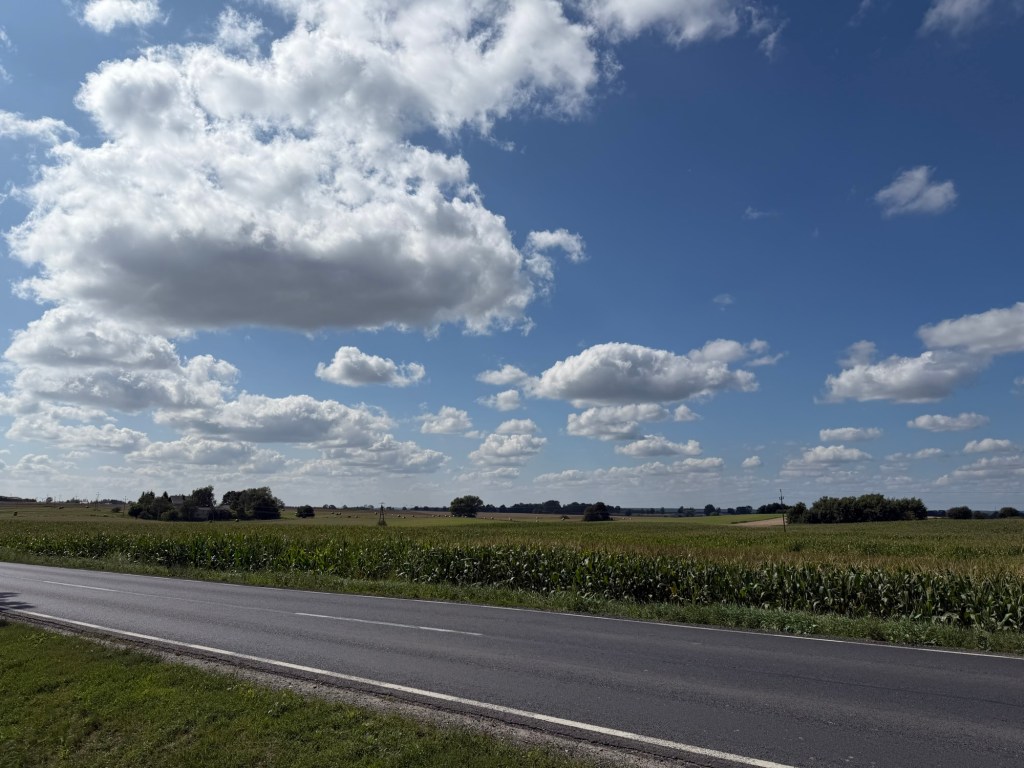
Five hours south west, most of it single carriageway between maize and hay bales, with three quarters of an hour taken out for lunch at a zajazd. We both had soup, which I now understand is not a way of starting a Polish meal but a fair proportion of it. It was the longest leg of the trip and the best of the driving. Somewhere in the past few days the business of sitting on the wrong side and steering from the wrong lane had stopped being something I was doing and become something that was simply happening.
Toruń at four. We were staying in the Spichrz, a granary of 1719 put up by a merchant named Jan Noggen, taken over by the Prussians in 1823 as a food store for their fortress and joined at that point to one of the towers of the medieval wall. The window of our room was a tunnel through a great thickness of brick, and at the end of the tunnel was the Vistula, running very low, with sandbanks standing out of it. My girlfriend explained the river to me. I had known it was long. I had not understood that it is the spine the rest of the country hangs off, and that Toruń is where the grain came down it.
Then we walked into the town, and the town was not ruined.
I am not sure what I had prepared myself for. A week in this country had trained me to read every old wall as a decision taken after 1945 by somebody working from a photograph. Toruń simply never stopped: several hundred houses with the Middle Ages still visible in them, two market squares, a cathedral, the oldest town walls in Poland, all in their own bricks and all in the right places. I stood in the middle of it feeling faintly foolish for being so surprised.
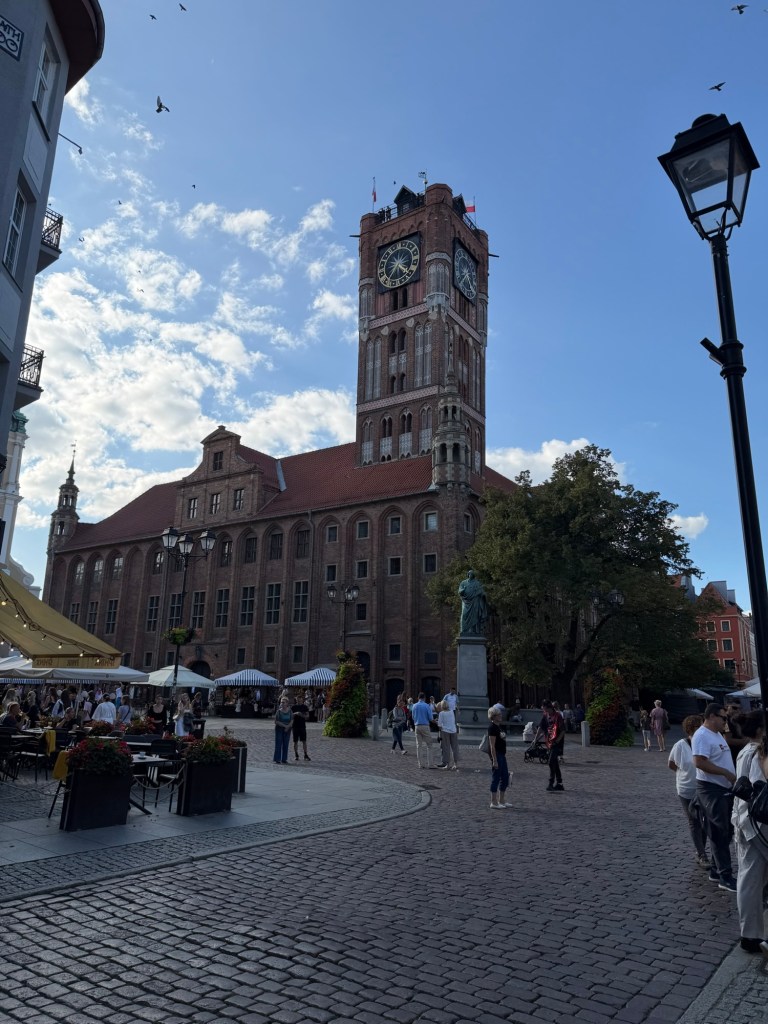
Copernicus is in front of the town hall and I knew him on sight, having been introduced in Warsaw along with the entire solar system. He was born in this town, although there is still an argument about which house.
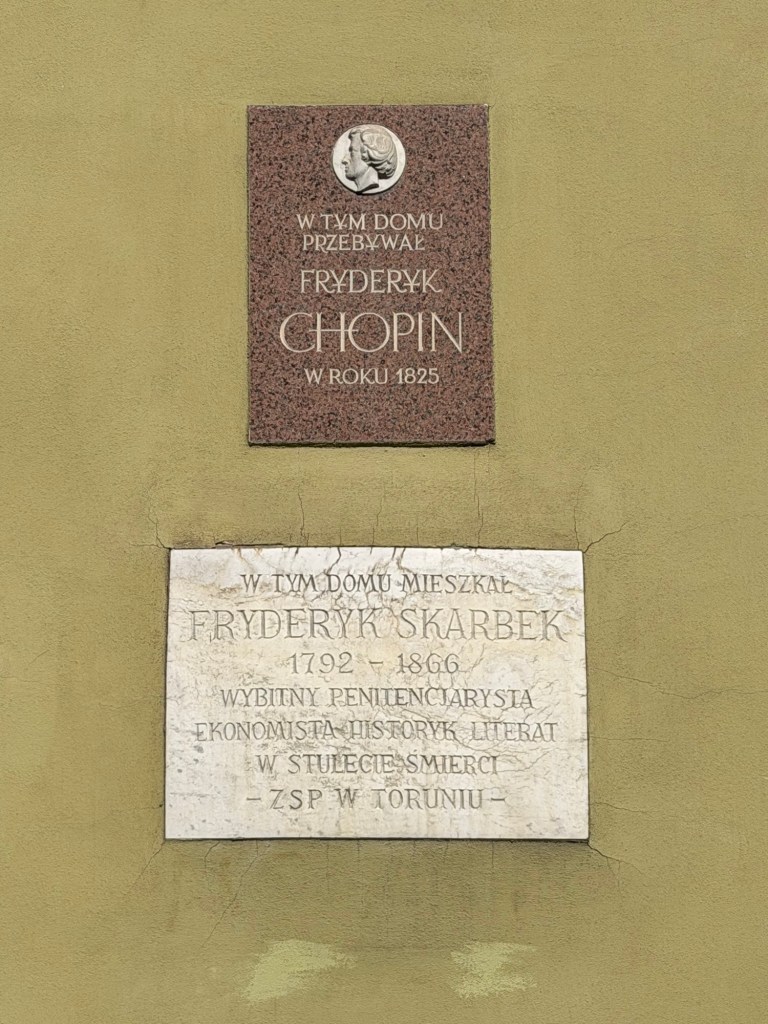
Chopin turned up on a wall in Mostowa. A plaque records that he stayed in the house in 1825, and underneath it a second one commemorates Fryderyk Skarbek, who was born in that building and who was his godfather. He has stopped being a coincidence and become a fixture, and I find I do not mind at all. There is also, further along, a bench with his name on it and a solar panel bolted to the seat.
We know what he made of the place, because he wrote about it from Szafarnia, where he was on holiday. He had seen the house Copernicus was born in, and he was extremely rude about the German who was living in it. Then he came to the point. The strongest impression made on him by the whole city, he wrote, was the gingerbread. He posted one to Warsaw.
Two hundred years later the town has not let this go. There are a great many shops selling gingerbread, of which several are the original, several are the first, and at least one is the true. There are also six or seven gingerbread museums.
What is written down
The streets have the history laid into them, and it takes a while to notice how much of it there is.
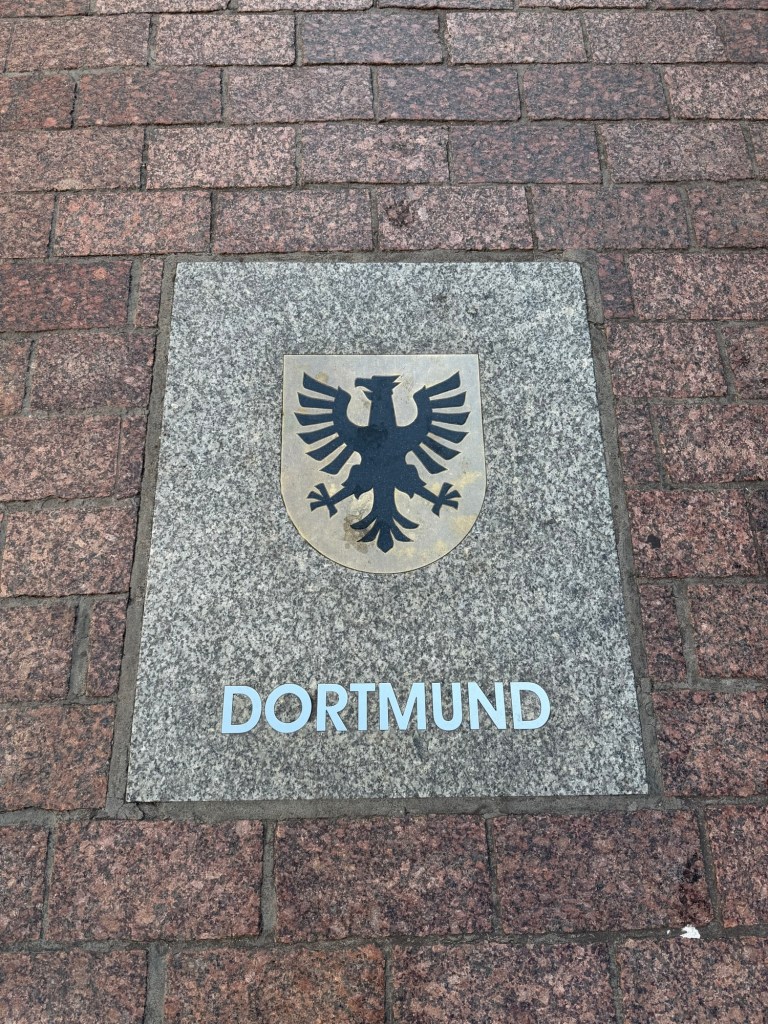
Set into the paving of Szeroka are twenty two town arms, copied from a heraldic frieze that once ran along the front of the old Artus Court. The first five are the Prussian towns, Chełmno and Toruń itself and Elbląg and Königsberg and Gdańsk. After that it is Lübeck, Hamburg, Bremen, Cologne, Dortmund, Rostock and most of the rest of the north German coast, with Wrocław and Erfurt inland among them. Two of the twenty two were never in the Hansa at all. Nuremberg and Leiden were the competition.
Eight more went down in 2010 at the New Town end, for places that had not been on the frieze: Kraków, Lwów, Dorpat, Riga, London, Bergen, Bruges and Novgorod. The last four are the Hansa’s four great foreign counting houses.
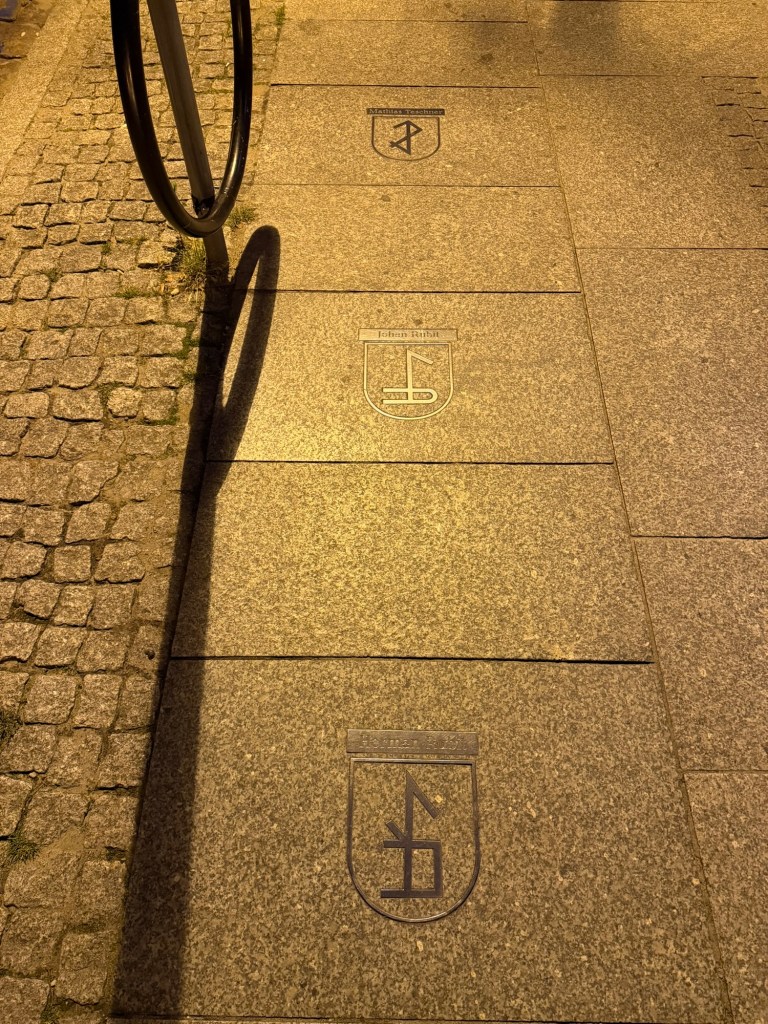
In Żeglarska the paving carries the merchants’ marks, the private ciphers used to sign a bale or a barrel, each one named: Mathias Teschner, Johan Rubit, Herman Rubit. The marks are fourteenth and fifteenth century. The pavement is not. On the lamp posts along the way are the arms of the patrician families who ran the place, in stained glass, taken from the hundred painted shields that hung in St Mary’s from 1596.
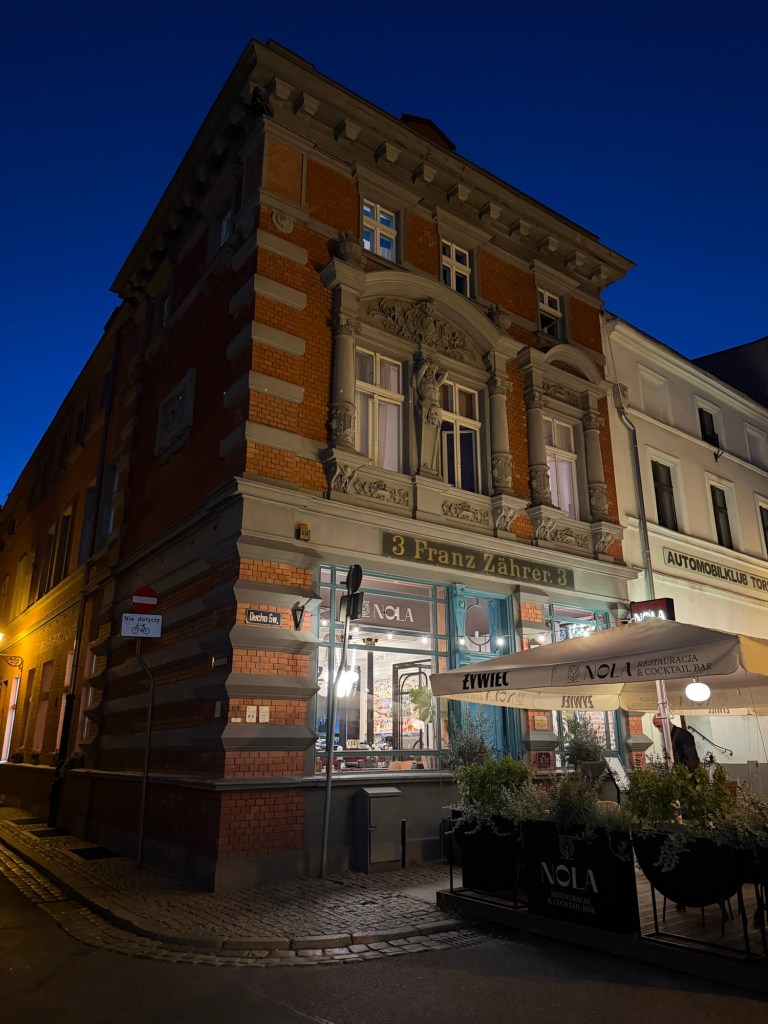
On Ducha Świętego, above what is now a bar, there is a shopfront sign in gold letters on black glass: 3 Franz Zährer 3. Zährer built the house in 1890 and sold ironmongery out of it, wholesale and retail, everything from safes and sinks to birdcages and building nails, and he had Toruń telephone number one. The sign was made for him in Berlin. At some point it was plastered over, and it stayed under the render for the better part of a century until a conservator’s chisel hit something in 2012 that was not brick. They uncovered it, cleaned it and left it up.
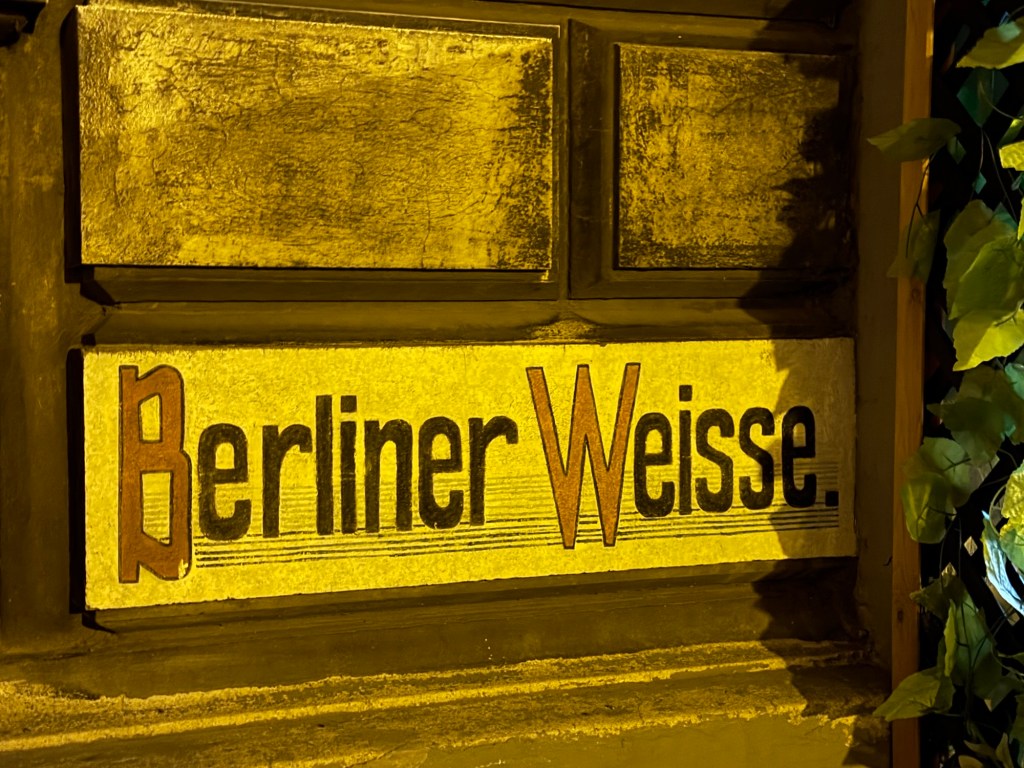
A little way along there is a painted panel that says Berliner Weisse, in lettering that looks a great deal older than the bar behind it. I could establish nothing about it at all.
Almost all of it German. Some of it Polish. Nobody is apologising for any of it and nobody is explaining it either. The city is setting down what it was, which for most of its life was a German speaking Hanseatic trading town under the Polish crown, and it is doing so with some pride. I found that unexpectedly cheering.
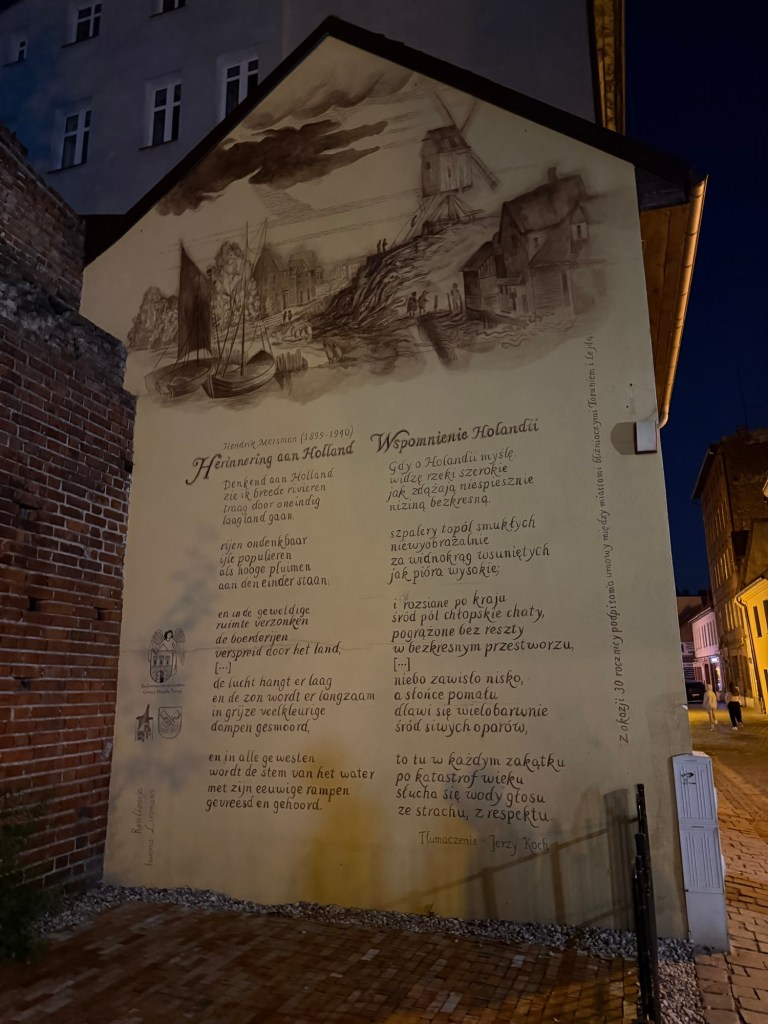
The list is not closed, either. On a gable end near the walls there is a poem in two columns, Dutch on the left and Polish on the right, put up for the thirtieth anniversary of the twinning of Toruń and Leiden. It is Hendrik Marsman thinking about Holland, the wide rivers going slowly through endless low country. Leiden is one of the twenty two shields in the pavement a few streets away. Somebody has been keeping track.
Three legs
One of the shields on the lamp posts stopped me.
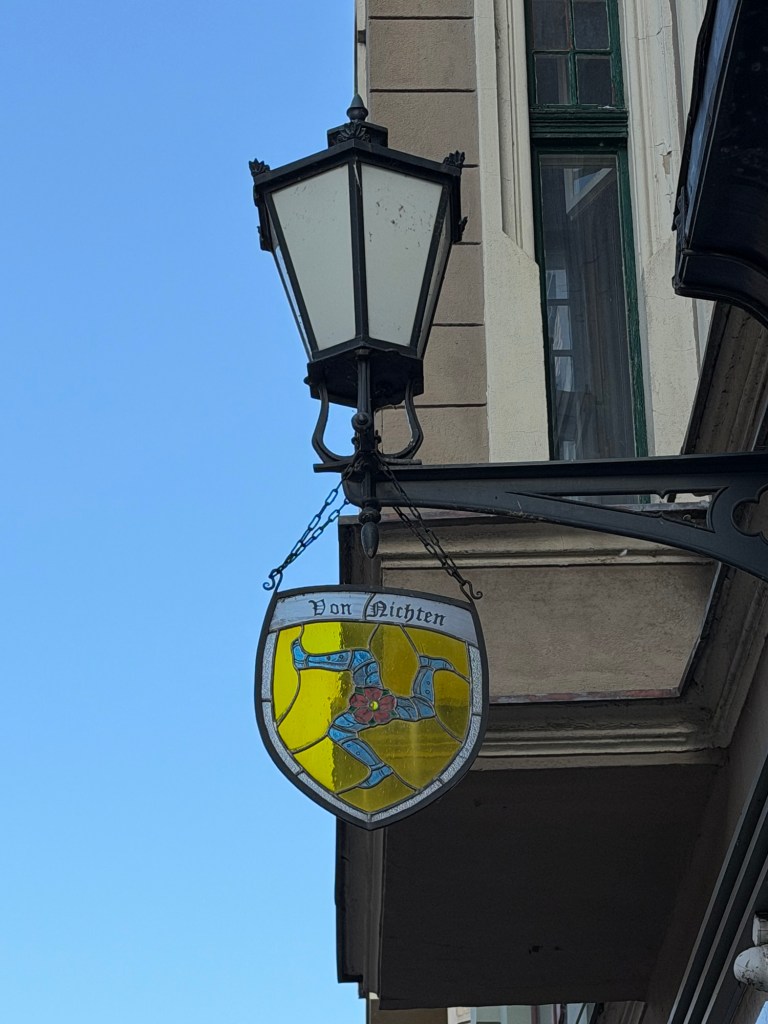
Three legs, armoured, bent at the knee, joined at the thigh and chasing each other round the shield. In the middle of them a red rose. All of it on gold.
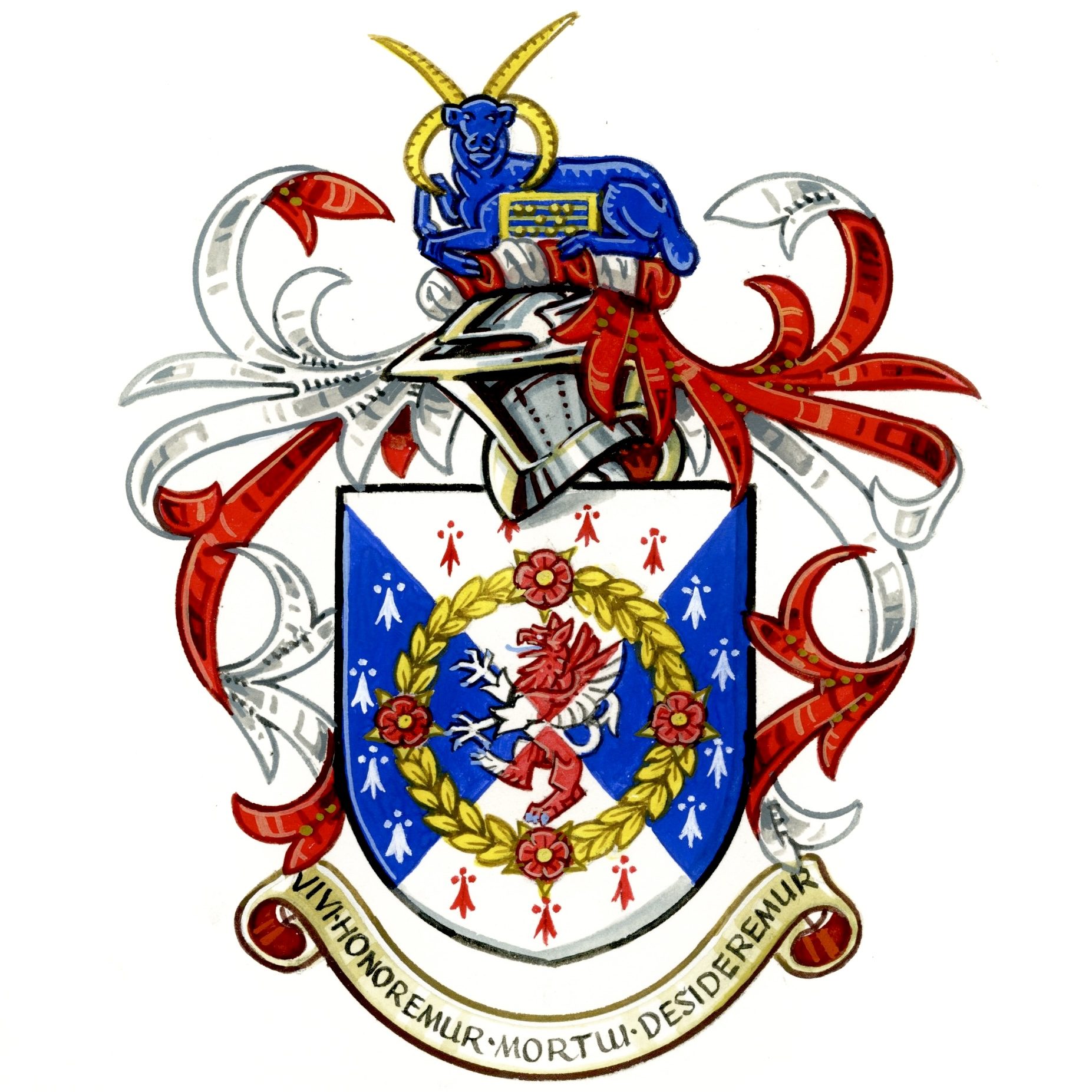
I have seen those legs nearly every day of my adult life. Ours are silver on red, spurred, and with the proud claim that whichever way you throw them, they will stand. The rose held me longer. A red rose, with a barb pointed downward, is the rose of Lippe – which is where my father was born and raised.
The family is Nichten, and their arms are a variant of the Polish coat of arms Drogomir, also called Borzym and the Golden Shank. The earliest known image of it is on a seal of 1297 belonging to a man called Raszko, and it appears again on a fifteenth century reliquary at Golub, half an hour up the road. A good many Polish families bear it. The Nichten version, silver legs on a gold field with a rosette where they meet, is recorded as theirs alone. How the name got here I cannot tell you. Whether a Polish house sent a branch north into a German town, or a German family married into the arms, the tables give the blazon and stop.
None of which has the slightest thing to do with an island in the Irish Sea or a rose in Westphalia.
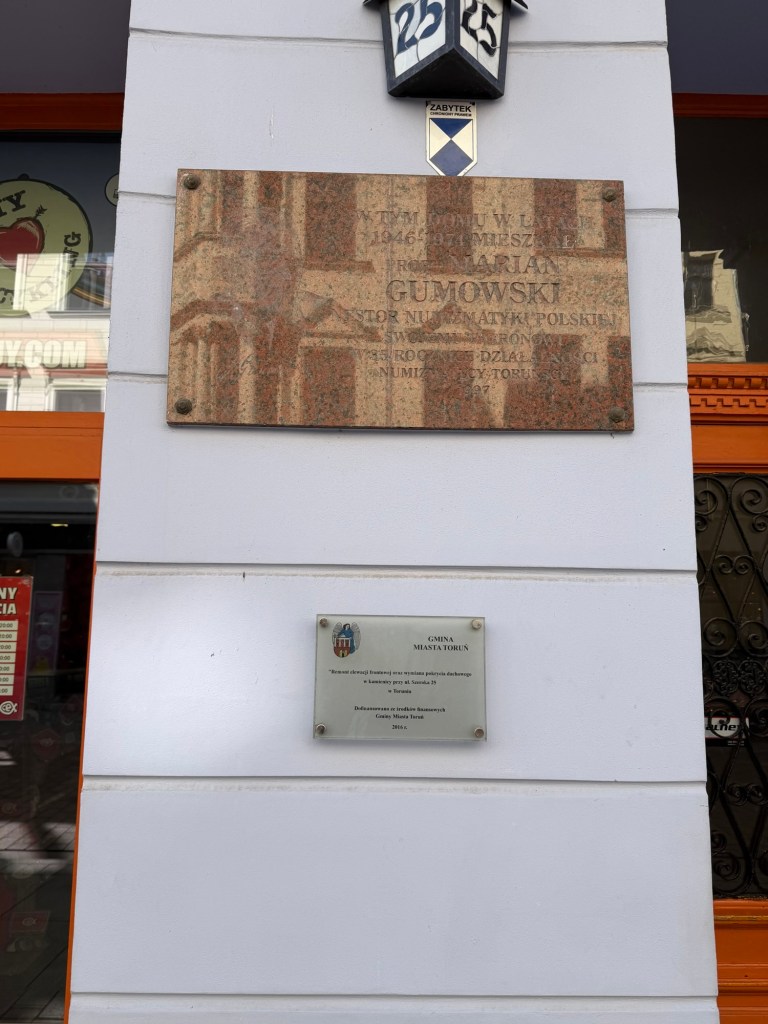
Forty yards up the same street there is a plaque to Marian Gumowski, who lived in the house from 1946 until his death in 1974, and whom the numismatists of Toruń, who put it up, call the nestor of Polish coin studies. He wrote something like four hundred things, one of them the armorial of the Toruń patriciate. He spent the last thirty years of his life a few doors from their shields.
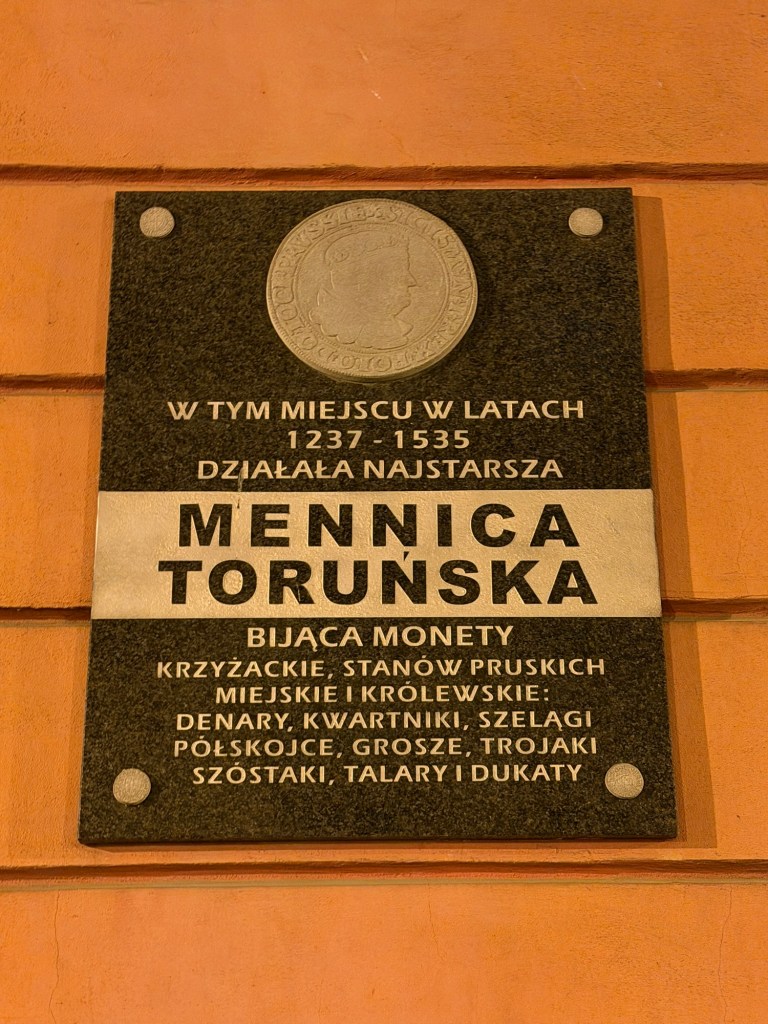
Round the corner from that, a plaque marks the site of the town mint, which struck coin here from 1237 to 1535: Teutonic Order money, then the money of the Prussian estates, then the town’s own and the king’s. It lists what came out of it. Denars, kwartniks, szelągs, półskojce, groszes, trojaks, szóstaks, thalers and ducats.
Given my weakness for old silver I took the whole arrangement, shield and armorial and mint inside two hundred yards, as a courtesy.
The town
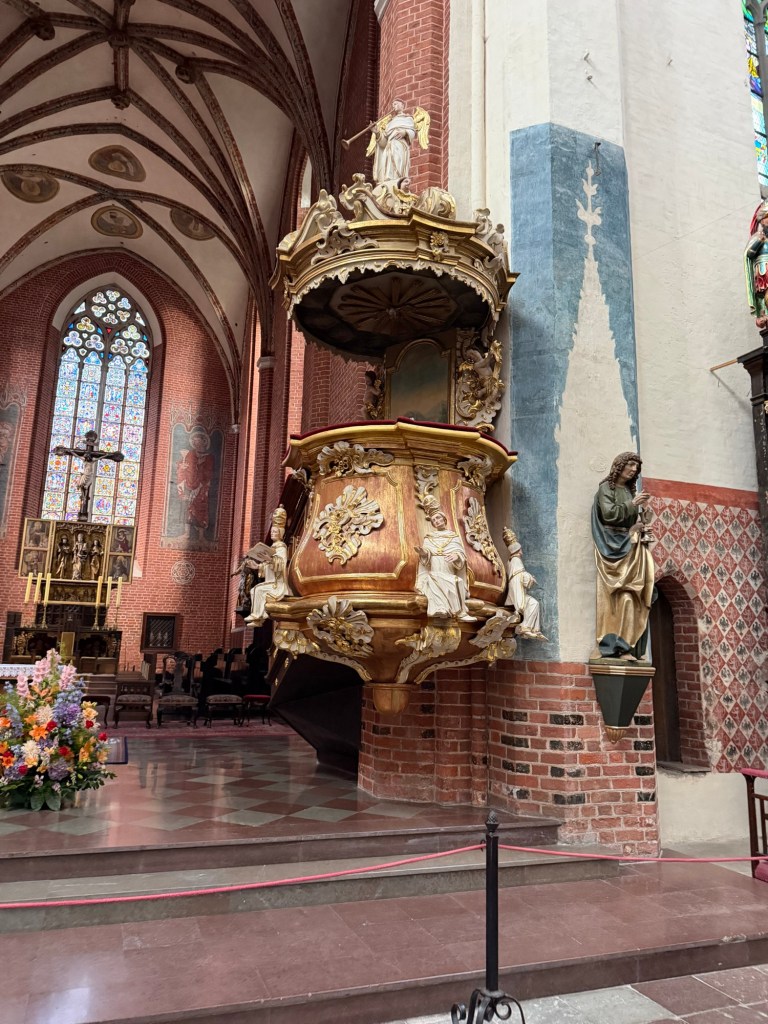
The cathedral is enormous and dark and full of altars, and in one corner of it the wall is painted from the floor to the height of a man in red and white lozenges, an eagle in one, a lion in the next, all the way along, with gothic figures standing on brackets in front of it.
We went up the town hall. The tower is the oldest part of the building and one of the oldest things of its kind anywhere: put up in 1274 to watch over the bread stalls, raised to its present forty metres in 1385, and reckoned the earliest market square tower in this half of Europe. It is a Flemish belfry that got as far east as belfries were ever going to get. A hundred and seventy five steps, and two clock bells at the top cast in 1728.
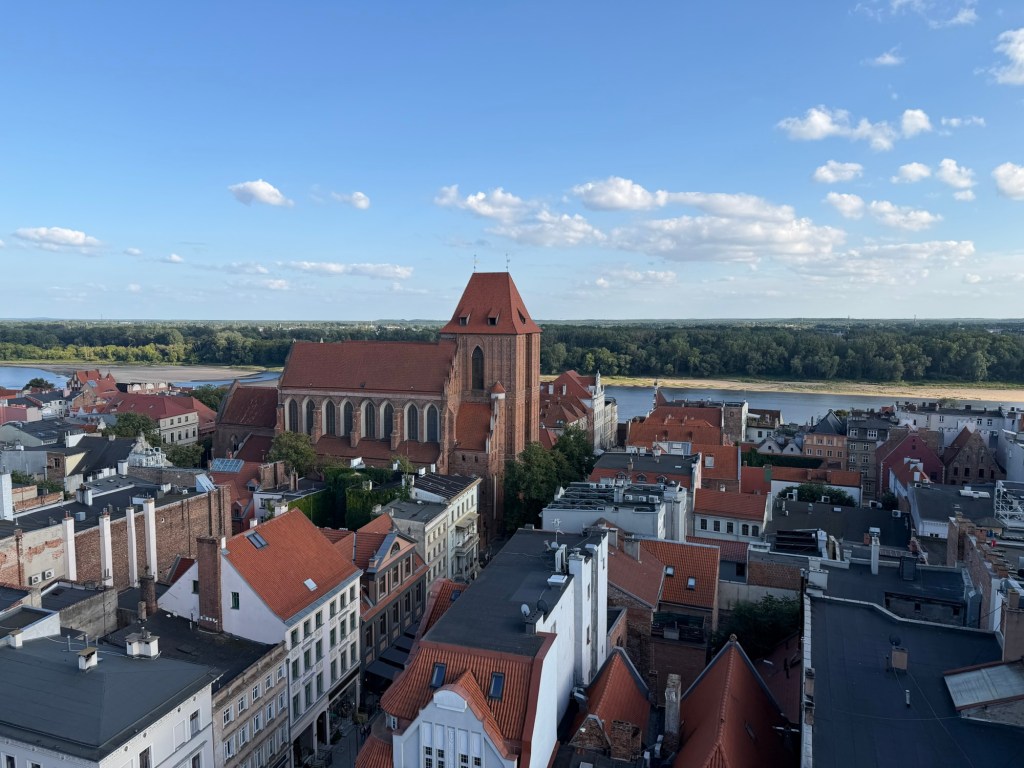
From up there the street plan reads like a drawing, and later, walking the edges of it, the outer shape came clear as well. Toruń threw off a Swedish assault in February 1629 and then spent a dozen years putting eight earthen bastions round itself, ten metres high, behind a wet ditch forty five metres across, in the old Dutch manner. It is the same star we had been walking about inside in Masuria, and the difference is what got put in the middle. There, a garrison. Here, a working town of merchants and brewers and bakers, who lived inside it for the next two hundred years.
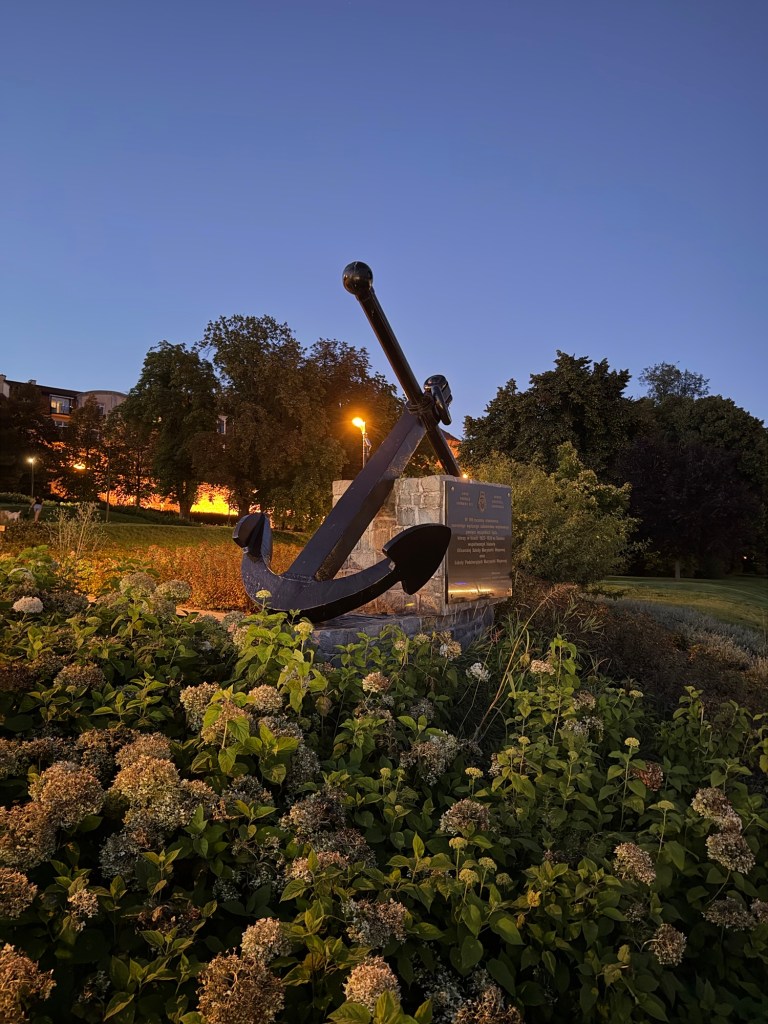
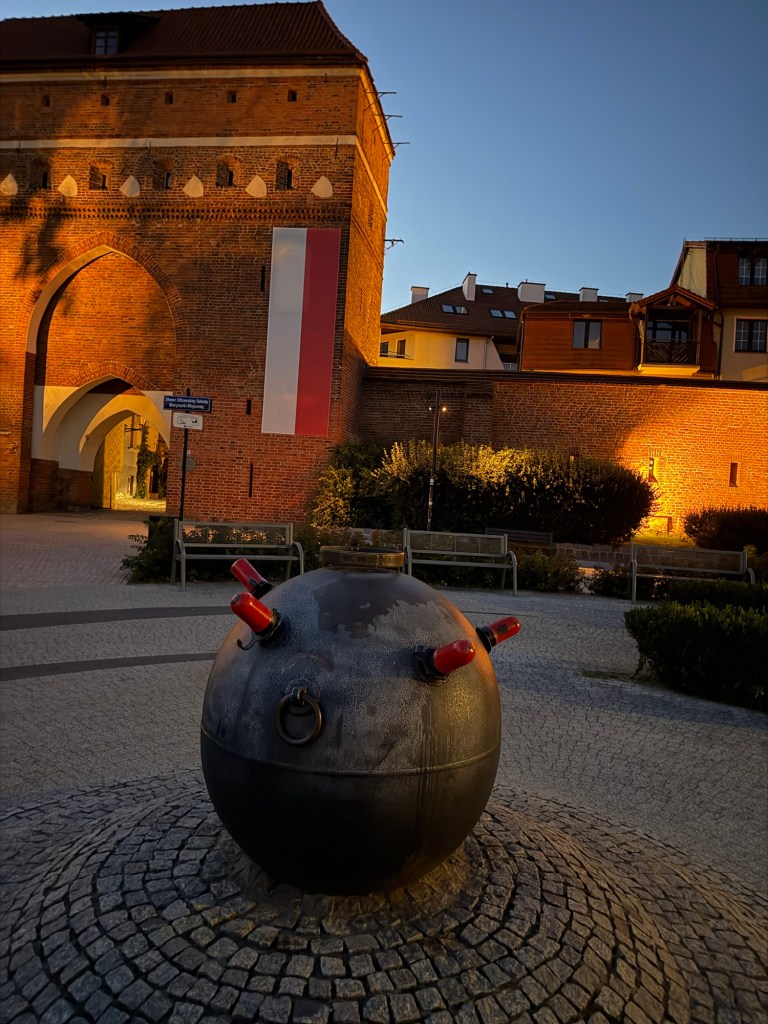
Down on the bank there is an anchor, and a little further along, sitting on the cobbles in a small square under one of the gates, a contact mine. Poland’s first naval officer school was in Toruń. The sea is about a hundred miles north of here, but the Vistula runs to it, Toruń was the first town in Pomerania handed back to Polish troops in January 1920, and the barracks were standing empty. So the navy started a long way inland and moved to the coast later, once there was a coast to move to.
Locked up
Down by the river wall stands the Leaning Tower. It is fifteen metres high and about a metre and a half off the vertical, and it is not a folly. It is one of some fifty two towers that stood in the town wall, of which nine survive, and it went over because the ground beneath it is clay. The low stretch of curtain running away from it, down at about head height where it meets the tower before it picks up again, is reckoned the oldest surviving town wall in the country, begun around 1246. The local test is to stand with your back against the tower and see whether you can hold your balance, which is held to say something about your character.
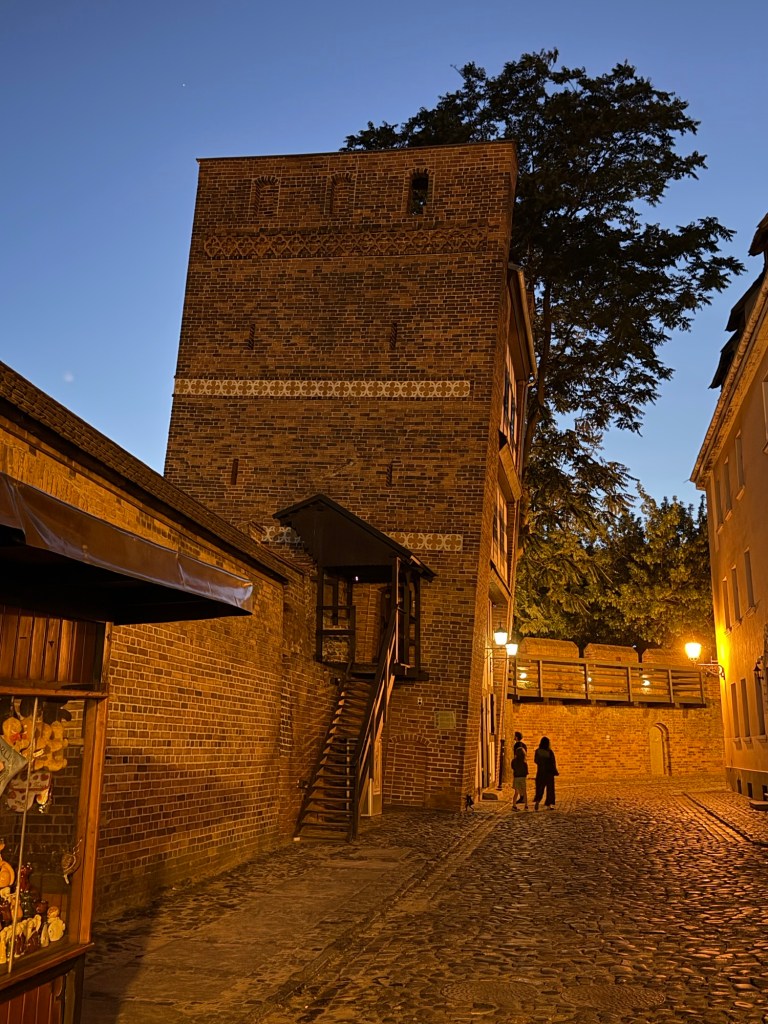
The tower itself had only three sides. The fourth, the one facing into the town, was left open all the way up, which made hauling ammunition to the upper floors a good deal easier. That gap was filled in during the eighteenth century, and once the tower had four walls the town put women in it as a cell. In the nineteenth it was a forge, and then somebody lived in it.
The medieval town gaol was somewhere else again, in the Pauline Gate.
And a few streets away, behind a high wall on Piekary, there is a round brick drum with battlements round the top, which I took for a piece of the fortifications. It is a prison, and it is the other thing entirely.
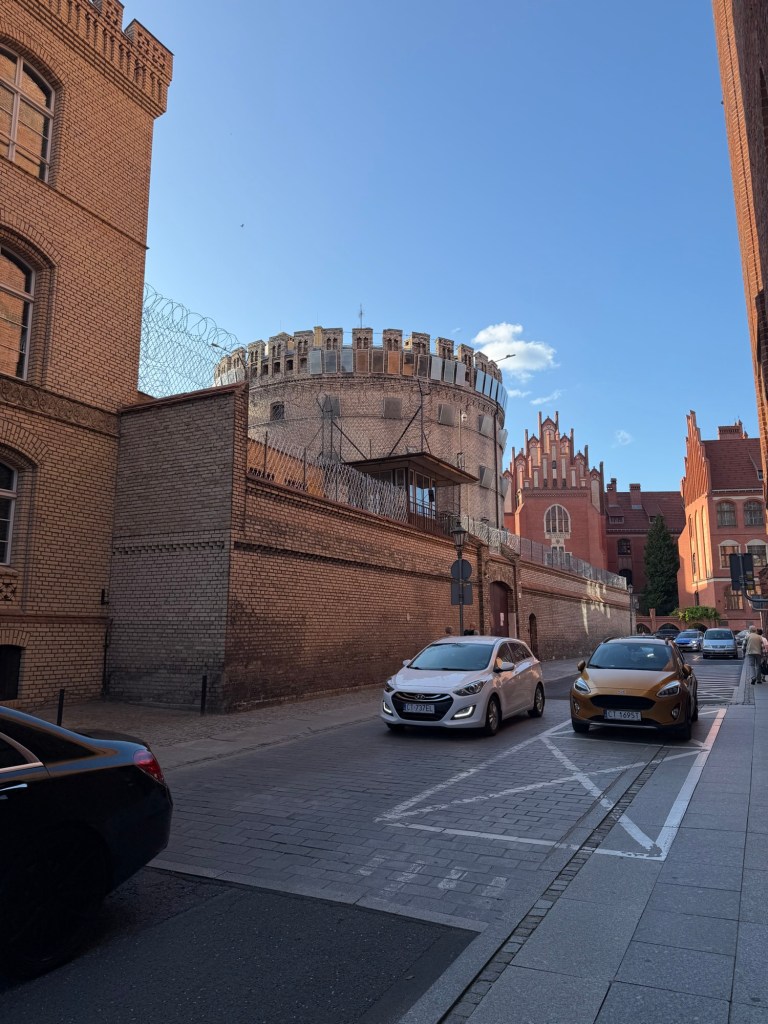
In 1842 Friedrich Wilhelm IV visited Pentonville, came home impressed, and ordered that Prussian prisons be built on the separate system. Toruń’s turn came around 1853; the drum went up between 1864 and 1866, eighteen metres across and twenty high, four floors of cells round a central stair with a viewing platform at every half landing. It is a panopticon, which is to say it is a piece of English Enlightenment theory about being watched, executed in brick, wearing the costume of a castle tower. It is the only round prison in Poland and it is still in use.
The plaques change their tone in this part of town. There is one on a building in the old town recording that soldiers of the Home Army garrison of Toruń were tried there in 1946 and sent to prison for years by the communist authorities. Not by the Germans. By what came next. There is another close by for a colonel who fought in the Warsaw Rising, went to prison under Stalinism, and came out and practised as an advocate.
And on Podmurna, outside the archive she founded, there is Elżbieta Zawacka, sitting in an armchair with her book set down on the table beside her and her glasses still in her hand. She was born in this town in 1909 and died in it in 2009, a few weeks short of a hundred. She crossed the German border more than a hundred times carrying post for the government in London, went out as an emissary in 1943 and came back the same year by parachute, the only woman among the Cichociemni. She fought in the Warsaw Rising. Then she was a political prisoner from 1951 to 1955, and the university closed her department, and she spent the rest of her life assembling the records of a resistance the state preferred not to discuss.
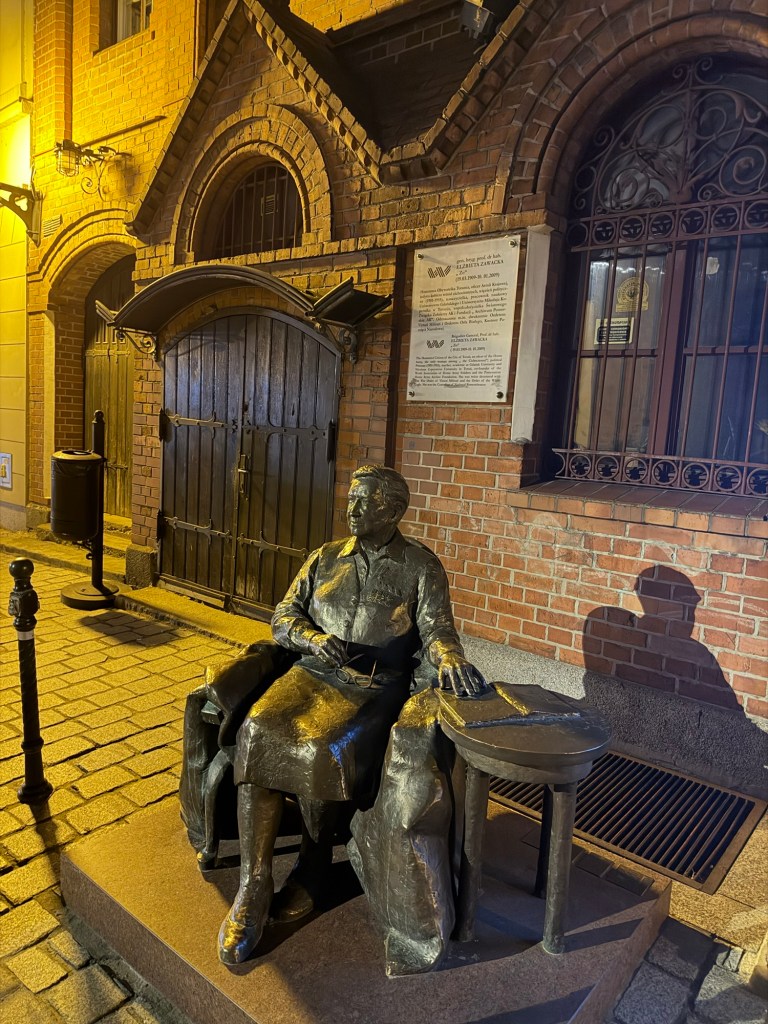
Toruń gives its freedom to people it wants to be associated with, which has nothing to do with where they were born and everything to do with what they did. Zawacka was given it in 1992, in the town she had lived in for most of her life. Marshal Foch was given it in 1923 without any of that, and there is a plaque for him on the town hall styling him Marshal of Poland, France and England. It went up after his death in 1929, the Germans took it down during the war, and what hangs there now is a copy of 2014.
Light
The building I liked best was the church on the market square, opposite the town hall. It is Catholic, and it looks very much like a church. It was built to be neither.
For two hundred years Toruń was a mostly Protestant town with a Jesuit college in the middle of it, and the two sides did not get on. In July 1724 a scuffle between boys from the Lutheran grammar school and boys from the college turned into a riot, and a Protestant crowd broke into the college and wrecked it. The king’s court came down on the town for it. The mayor and nine others were executed in the market square, half the seats on the council were handed to Catholics, and St Mary’s, the Lutherans’ main church, was taken off them and given to a Catholic order. Toruń was left with a Protestant majority and no Protestant church inside its walls.
Thirty years later they were allowed to build one, on the condition that it did not look like a church from the street. No tower. Nothing on the front to say what it was. They gave the work to Efraim Schröger, a Toruń man of twenty six who went on to become the leading architect of Polish classicism, and he built them something enormous and kept the outside quiet. It served as the Lutheran church of Toruń for the next hundred and ninety years. The tower went up in 1897, sixty four metres of it, by which time nobody was enforcing the ban.
After 1945 there was no German Lutheran congregation left in Toruń to use it, and the building was handed to the Jesuits. The same order whose college the crowd had wrecked in 1724 ended up with the church that riot obliged them to build.
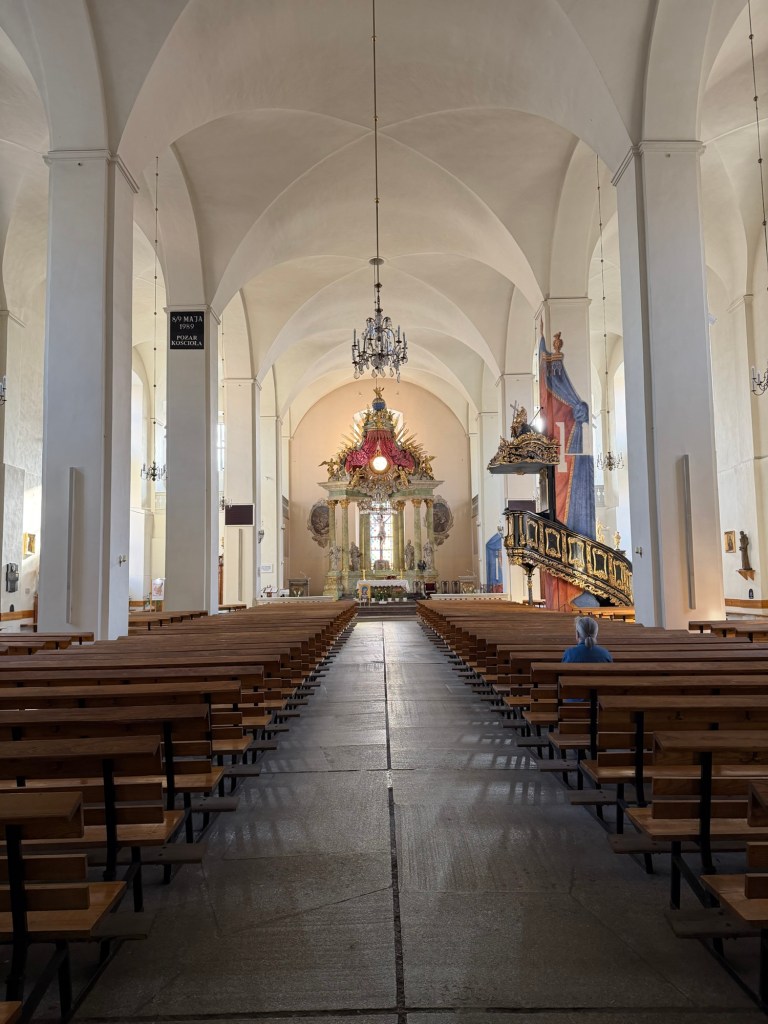
Inside it is plain, and after a week of gilt and marble and painted vaults that is the whole of the effect. White walls, grey flags, tall clear windows down both sides. The light comes in and does all the work, and does it better than a painter could have.
High on one of the piers there is a small black board: 8/9 May 1989, fire. It started in the night, the cause has never been established, and it took the rococo organ of 1756. The organ has since been rebuilt. The board stays up.
Birds
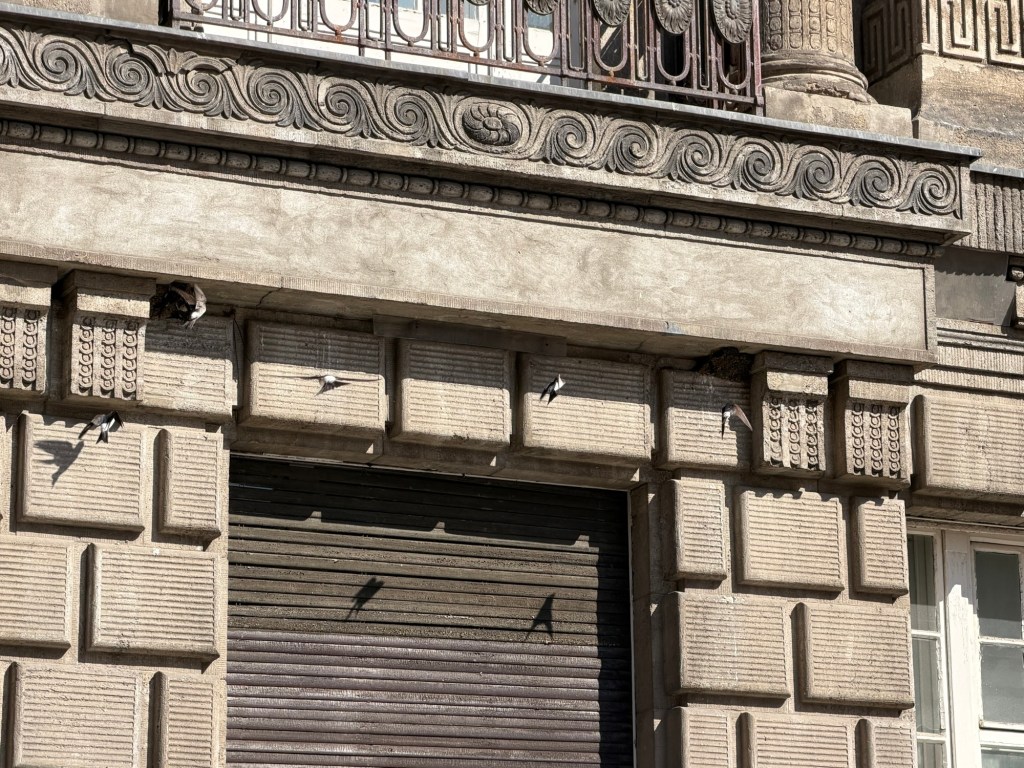
There were swallows over the town the entire time we were there, more of them than I have seen anywhere, going along the streets at head height in the evening as though they had somewhere to be, and nesting in the cornices of the nineteenth century blocks in numbers that would have the surveyors out at home. Somebody has painted a flight of them round the corner of a house on one of the streets, which struck me as a fair response.
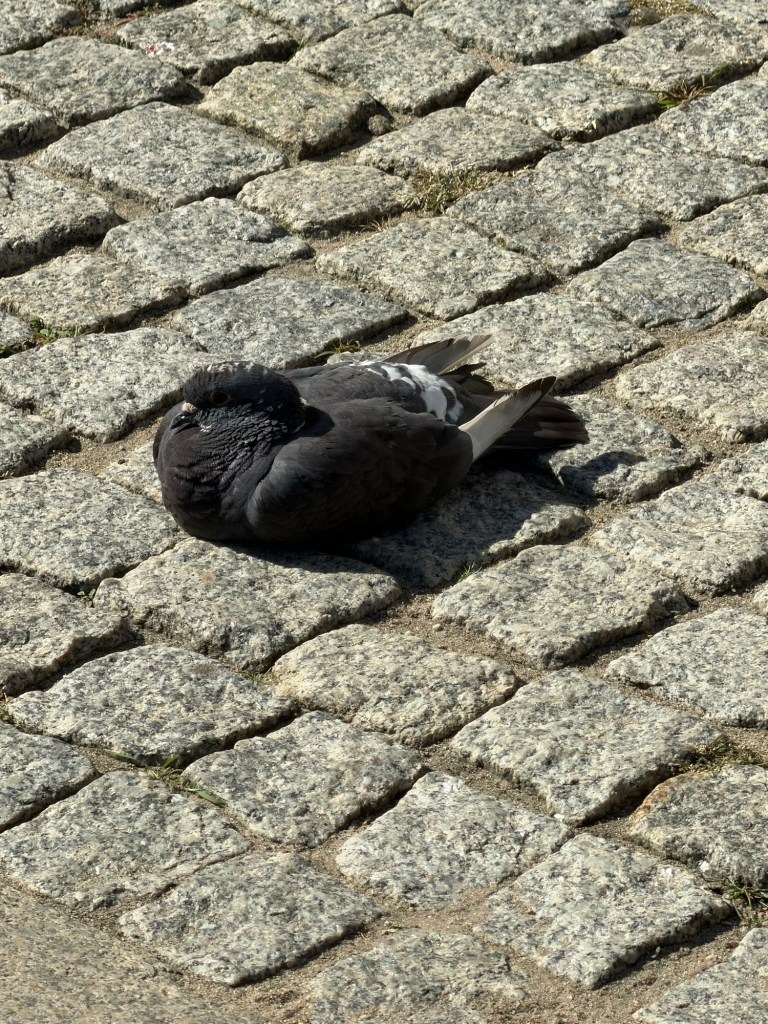
And on the last morning, before we got in the car, there was a pigeon.
It was sitting in the middle of the town on the cobbles, down on its front the way a cat sits, entirely unbothered and in no hurry to move for anyone. I have never seen a pigeon do that, although I have now seen a sparrow do it, asleep on the ground of a busy square in Warsaw with feet going past on every side. The last pigeon I had dealings with in this country had to be lifted out of a canal and wrapped up in a coat. This one had the manner of a creature that had never had a difficult day.
I think birds are happy in Poland.

