Two military installations in one day is more than most people would attempt, and it was not the plan. But the fortress is on the other side of the canal from the hotel, we had the whole afternoon, and I have never been much good at walking past that sort of thing.
Feste Boyen sits on the western edge of Giżycko. It was begun in 1844 and finished in 1856: an irregular six sided star covering a hundred hectares, wrapped in a brick and field stone wall a little over two and a quarter kilometres long, put there to plug the gap between the two lakes and keep the Russians out of East Prussia. Seventeen million bricks, brought up the canal by barge.
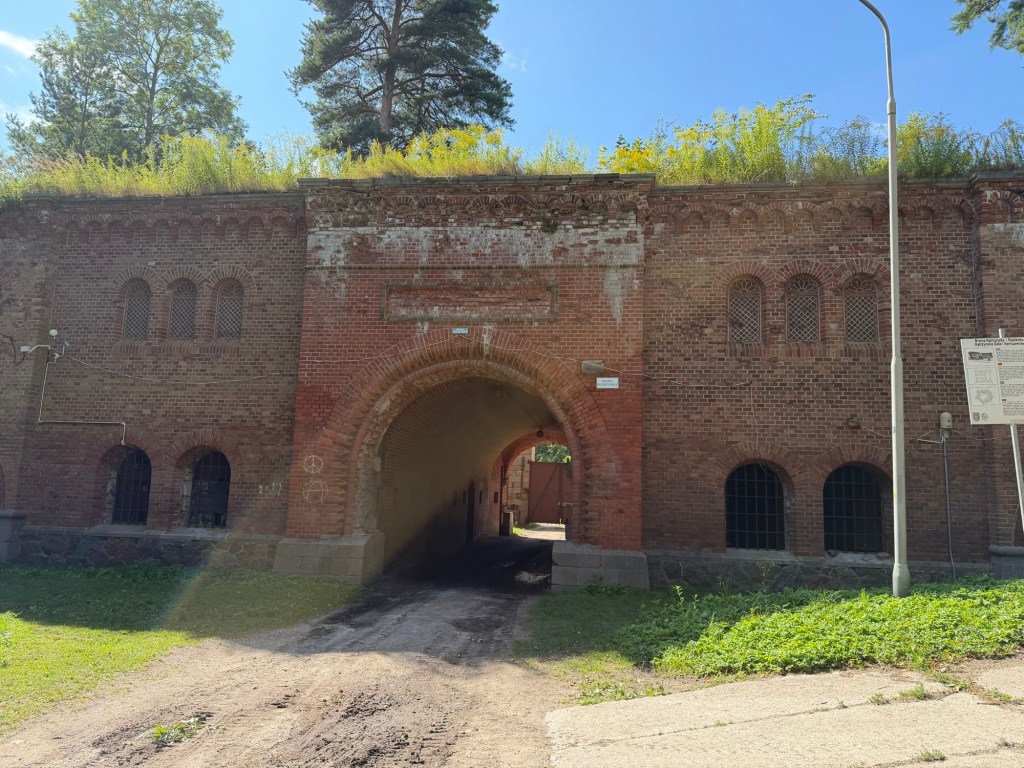
It is named after Hermann von Boyen, the war minister who argued for it and who came and laid the first stone himself in September 1844. The six bastions are named after him twice over. Three carry his forenames, Leopold, Hermann and Ludwig. The other three carry the words off his coat of arms: Schwert, Recht, Licht. Sword, law, light. I have to admire a man who gets his own motto built into the ground in brick and then has it garrisoned.
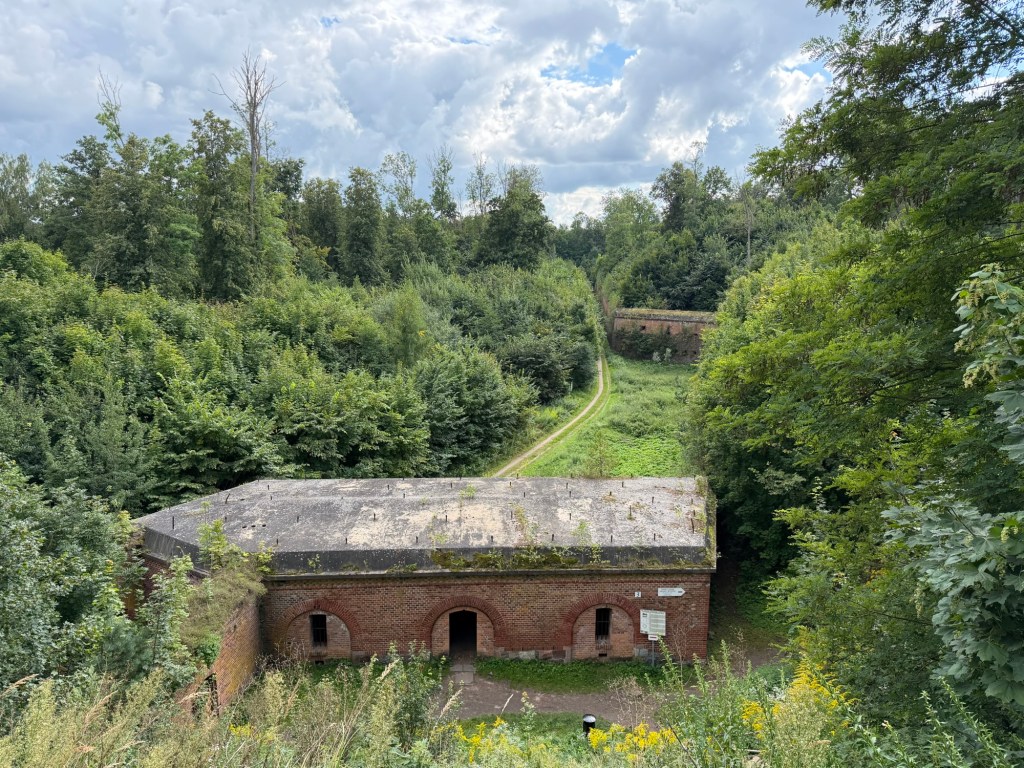
It is enormous and it is almost completely quiet. Ramparts thirty metres high with birch growing out of the top of them, ditches gone over to nettles, brick caponiers sitting at the bottom of a green trench with nobody in them and nothing to do.
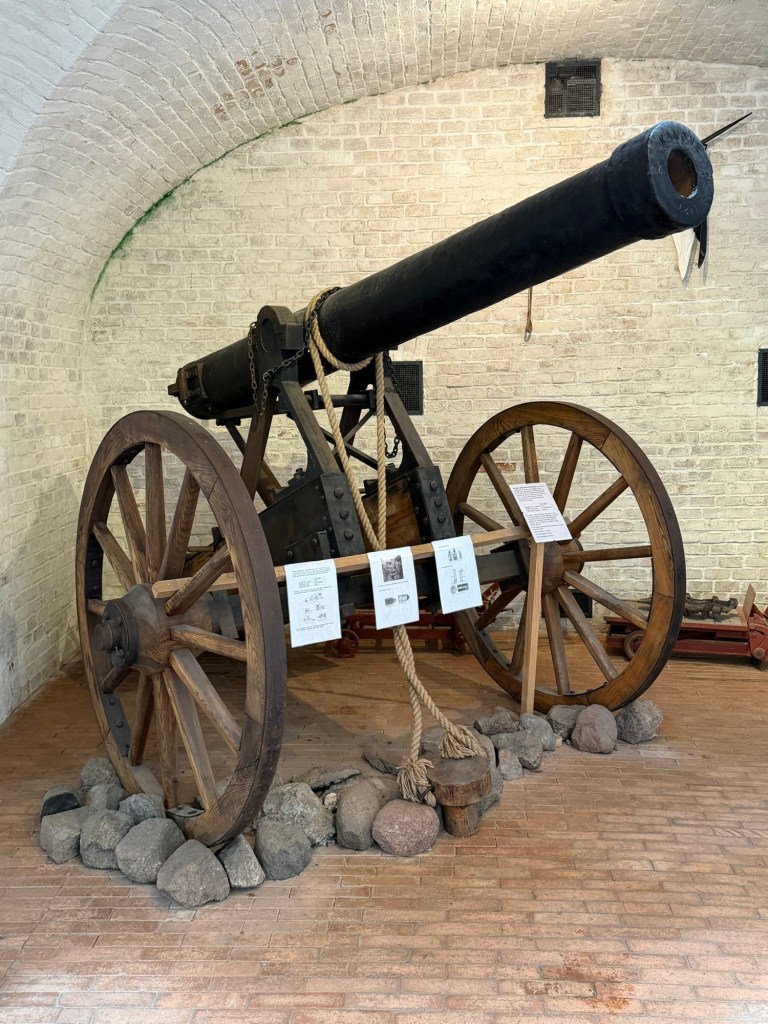
The place has never been taken. In August 1914 a garrison of about four thousand under a Colonel Busse held off Rennenkampf’s army, and that is the whole of its fighting record in a hundred and eighty years of standing there.
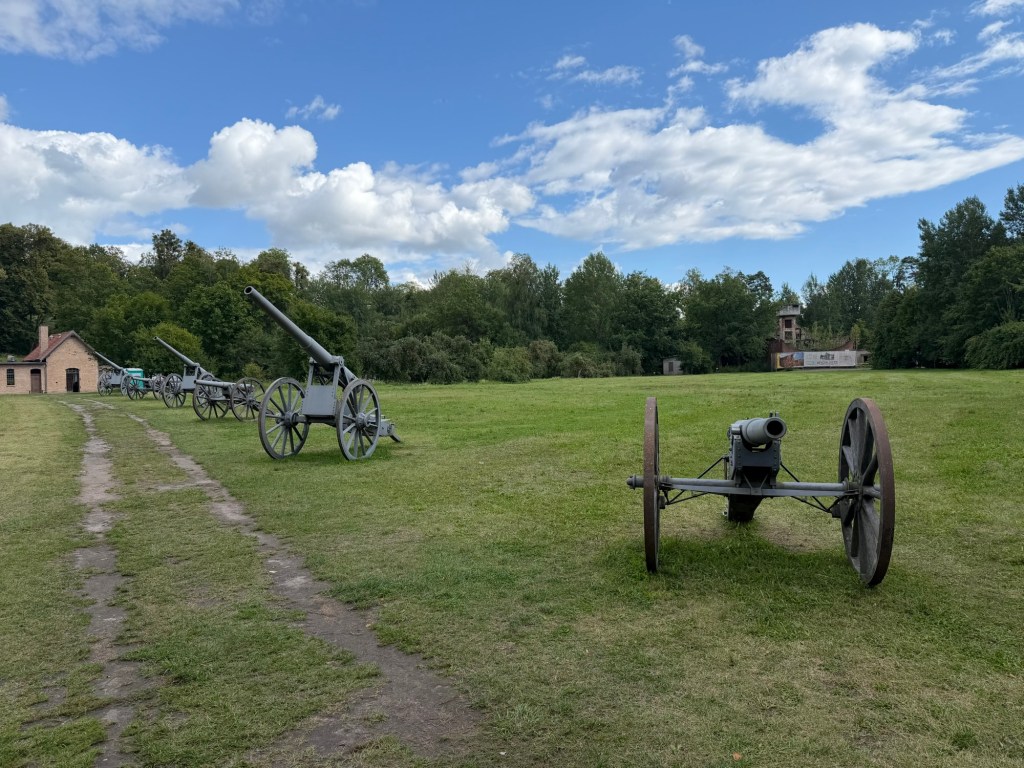
The second war gave it a shabbier career. It was one of the assembly points for the army that went into Poland in 1939, it held a hospital, and for much of the war it housed an Abwehr school where Russian officers taken prisoner were trained to go back and fight against their own side. Then in January 1945, with the front coming, the Germans walked out of it and left it standing, which is the only reason there is anything here to walk round. They were a good deal less restrained about the place we had spent the morning in.
On the way back we stopped at the war cemetery on the edge of town. Two hundred and forty three German soldiers and a hundred and seventy five Russian, from the first war. Not in separate plots. Side by side, in the same rows, as soldiers. There are Belgians here too, and I have not been able to account for them. Prisoners, most likely; there were Belgian prisoners in camps in this part of the world. Belgium also sent an armoured car unit to the Eastern Front in 1915, though it fought a long way south of here.
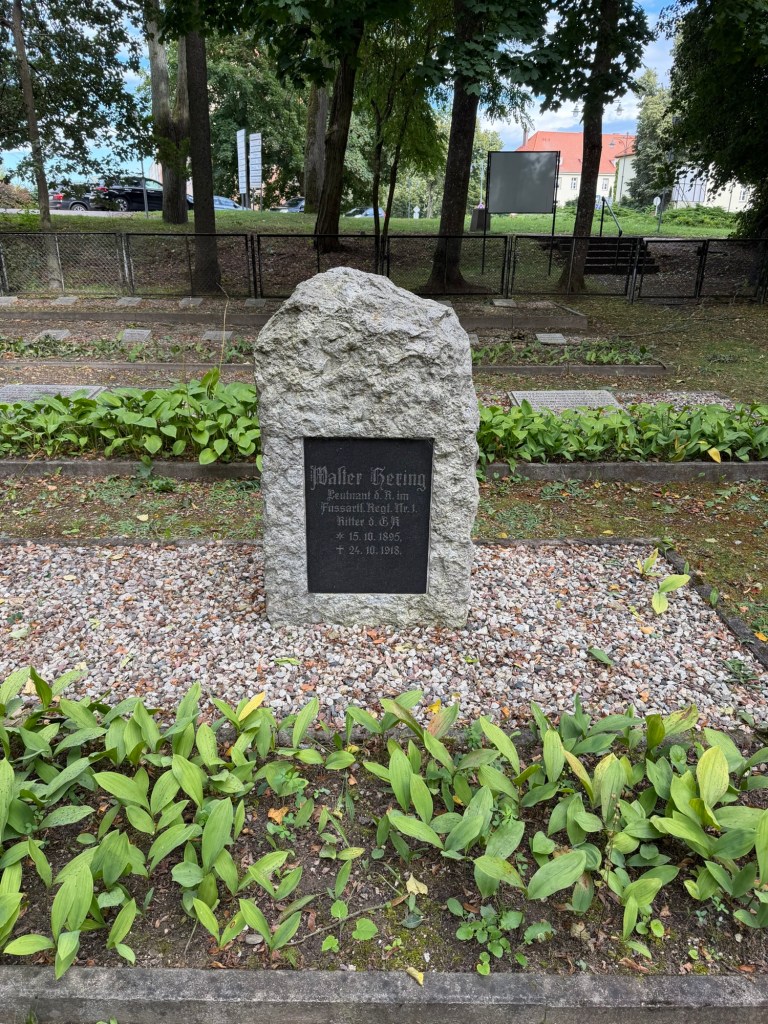
Walter Hering was a reserve lieutenant in the first regiment of foot artillery and held the Iron Cross. He was born in October 1895 and he died on 24 October 1918, eighteen days before the armistice, aged twenty three.
The stones are small concrete squares set flush into the gravel, and they are in German, because it was Germans who buried them. Most of them carry a name. It is the ones that do not that stop you.
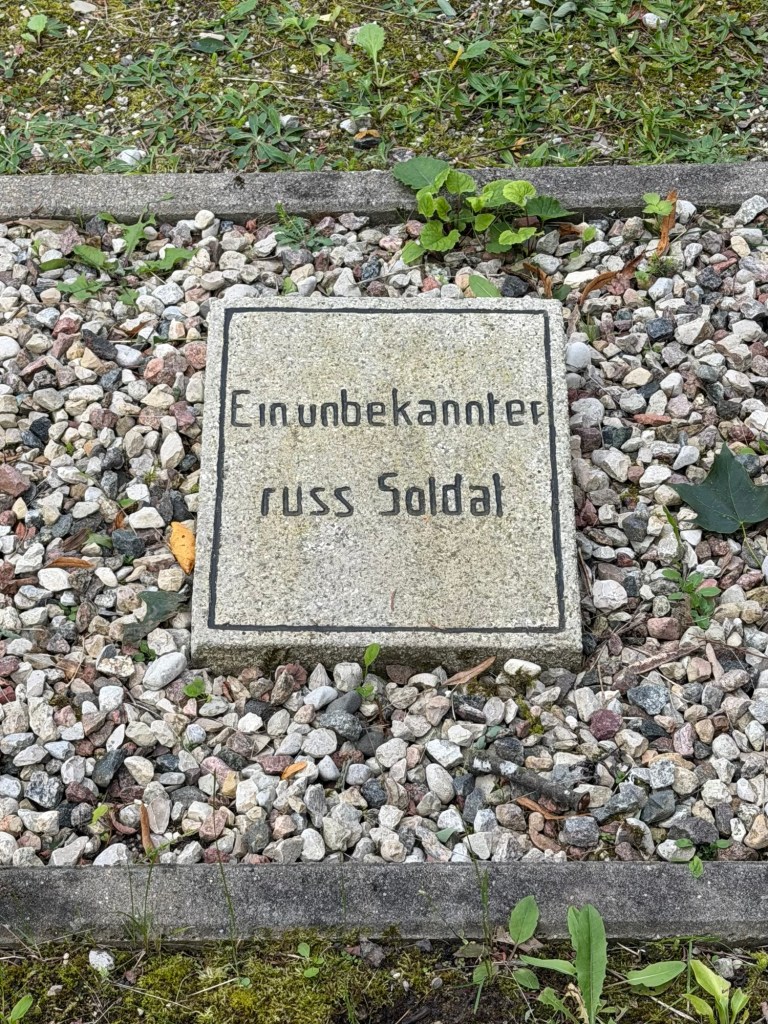
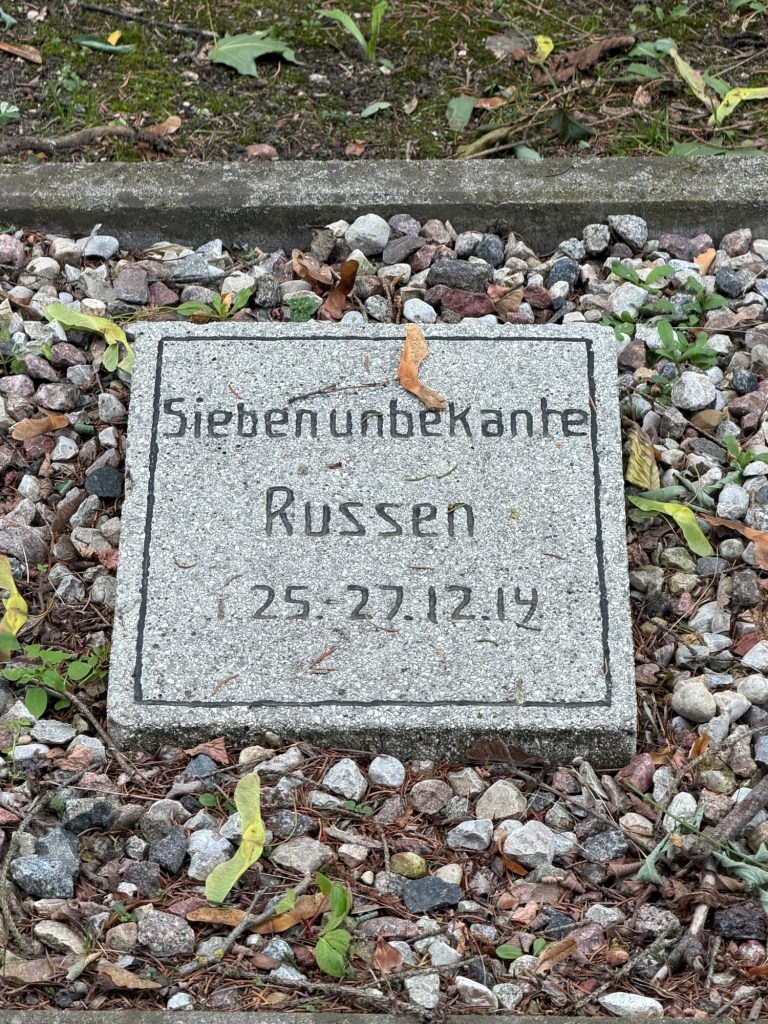
Whoever cut that second stone had the dates. The twenty fifth, the twenty sixth and the twenty seventh of December 1914. He did not have one of the seven names.
Walking back into the town my girlfriend stopped and pointed into the canal. A pigeon was in the water, flapping, trying to swim and getting nowhere, and the bank is a concrete wall it had no chance of getting up.
She went down to it without a pause and took her coat off. The bird saw her coming and started flapping towards her. It knew perfectly well she was there to help. She lifted it out and wrapped it up, I found a vet on my phone and ran back to the hotel for the car, and the three of us drove ten minutes across town.

The vet said it was young, uninjured, and had simply fallen in and worn itself out trying to get back out again. They would keep it overnight and let it go in the morning. The great Polish pigeon rescue.
That left the bridge. It was built in 1889 by Beuchelt of Grünberg in Silesia, and it was built to connect the town to the fortress, so the thing we had spent the afternoon walking round is the reason the bridge is there at all. It weighs over a hundred tonnes. It does not lift. It swings ninety degrees sideways and it is turned by one man with a crank, exactly as it was in the nineteenth century.
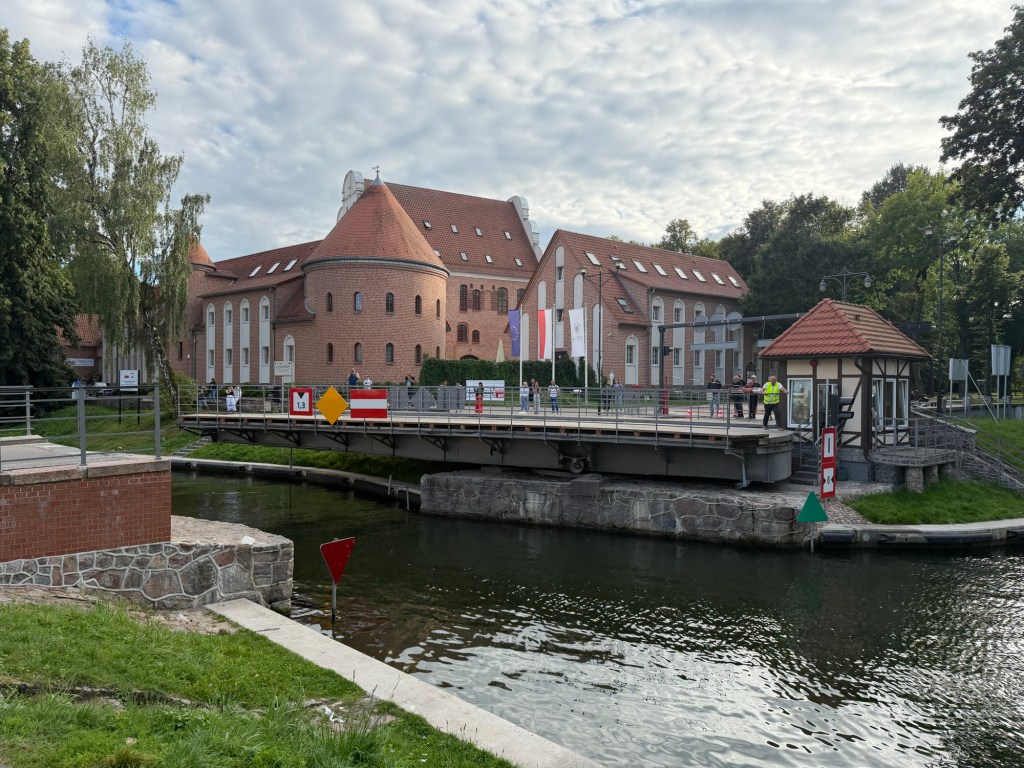
There was a queue of boats waiting by the time it went. The bridgekeeper had words with several of the skippers as they came through and I am told the substance of it was whether they were stupid or merely unable to see a red light. It is not every day you get a hundred and thirty seven year old machine and live theatre in the same five minutes.
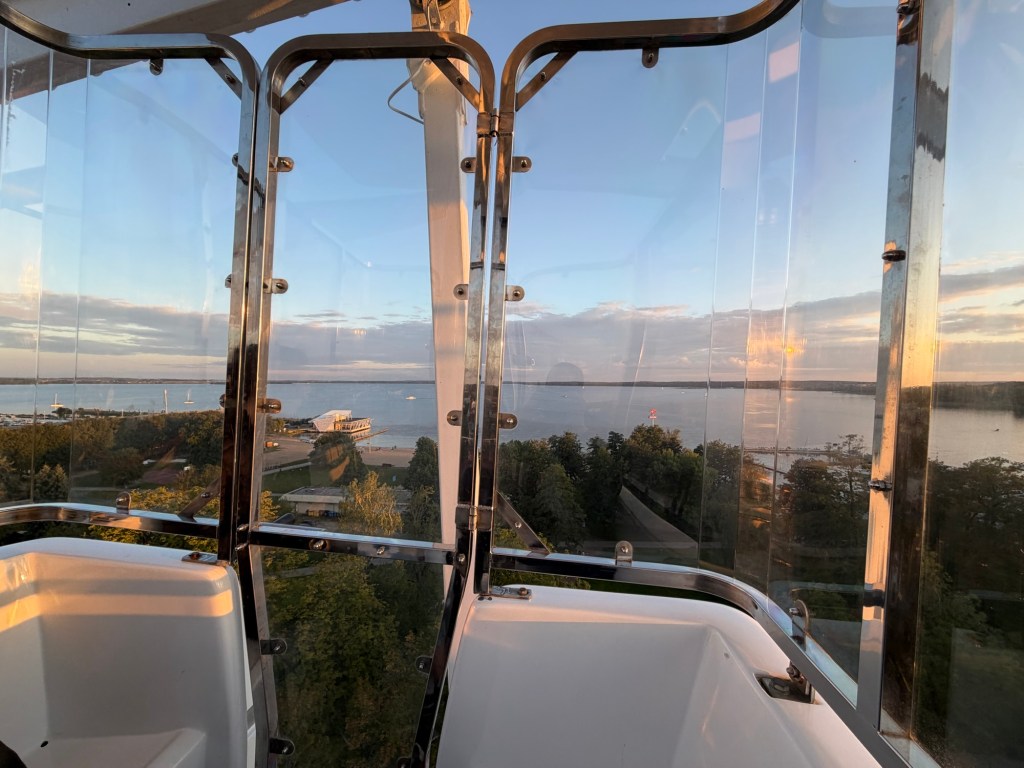
A wander round the town after that, a bar or two, and a turn on the big wheel, which gets you high enough to understand how much of Masuria is water.
Dinner back at the hotel and a nightcap. It had been a very long day and the best thing in it had feathers.

