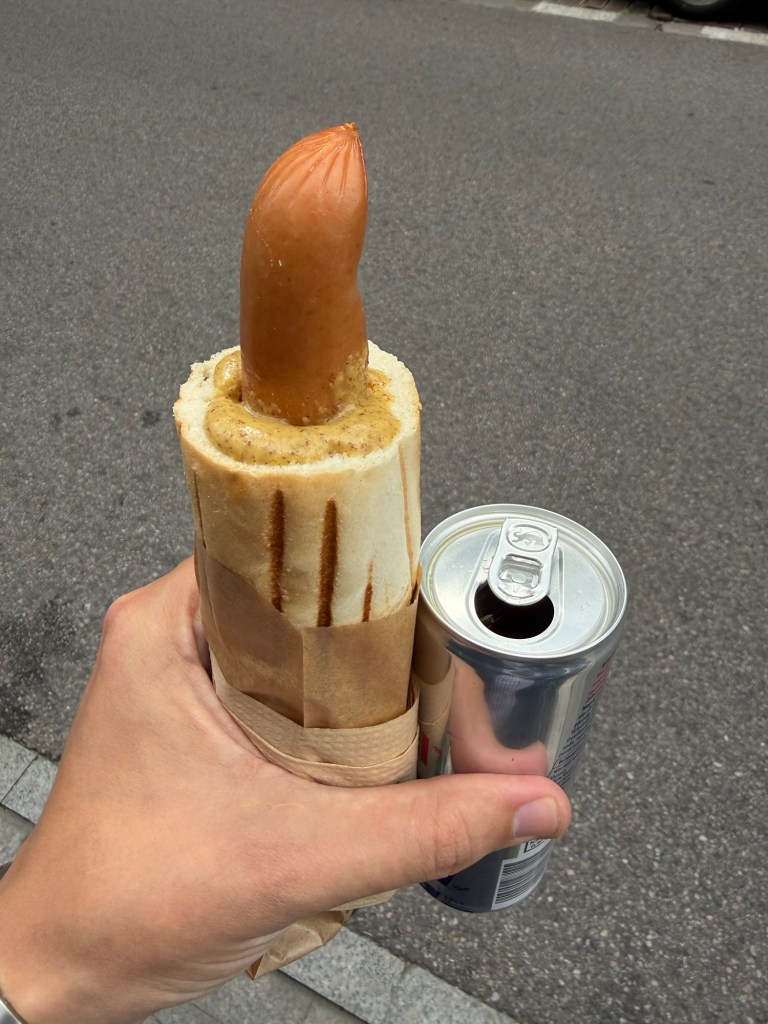
We checked out in the morning with the car still to collect and a whole day to fill. My girlfriend suggested I fortify myself first, and steered me into a Żabka.
For anyone who has not been to Poland, Żabka is the little green shop on the corner, and then on the corner after that. There are more than twelve thousand of them. What they are really selling is the hot dog. Eighty five million went over the counter in 2024, which is better than two apiece for everybody in the country.
It is not a hot dog as I understood the term. The bun is a small baguette, driven onto a heated spike to burn a hole down the middle. The sauce goes in first and lines the hole, and the sausage follows. You hold the finished article upright like a torch and eat downwards. It cost less than two pounds. It was, I am sorry to report, superb.
My girlfriend had found an open air concert and proposed we go to it. I was sceptical. I pictured a keyboard on a folding table and a dozen of us being polite about it. We took a car and went anyway.
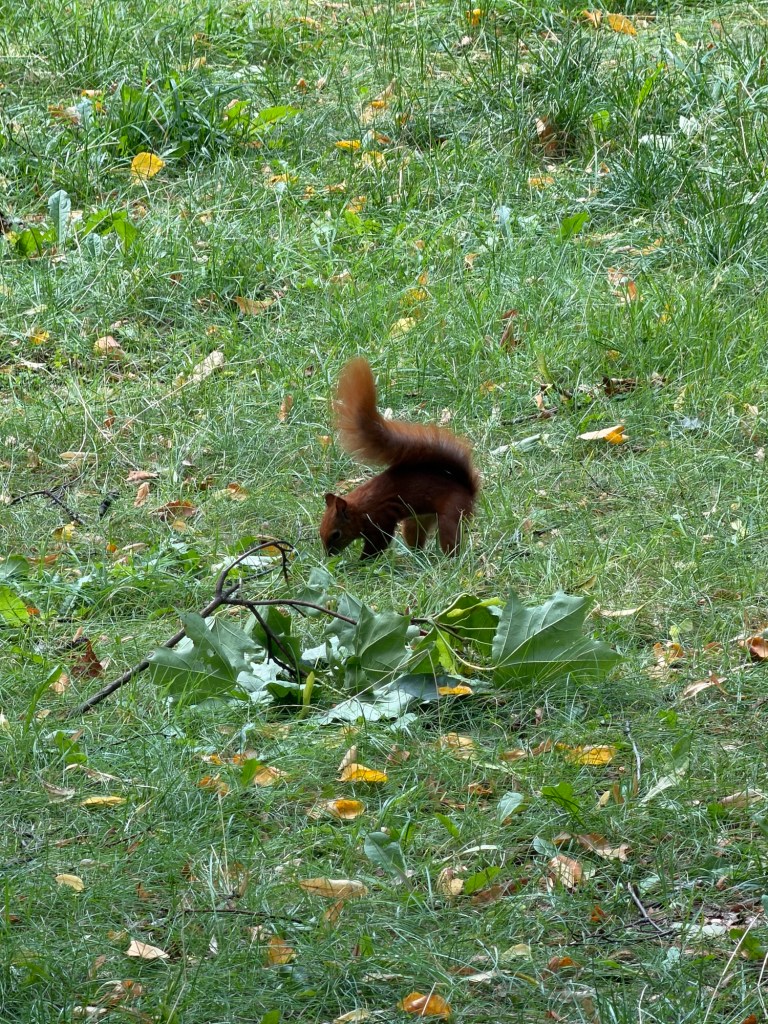
The park turned out to be the summer garden of the last king of Poland. On the way in a red squirrel worked through the grass a few feet from the path and let us watch.
I have spent a good part of this summer watching my mother feed the grey squirrels of St James’s Park. This was a different animal altogether. Smaller, redder, and carrying its tail up over its back like a plume. The Island has neither kind: the Manx Wildlife Trust lists the red and the grey together among the species you find in Britain and not with us. There was a government consultation about ten years ago on bringing reds over, which the Mammal Society opposed on the grounds that they had never been here in the first place. So both are exotic to me, and I have to leave home to be impressed by a rodent.
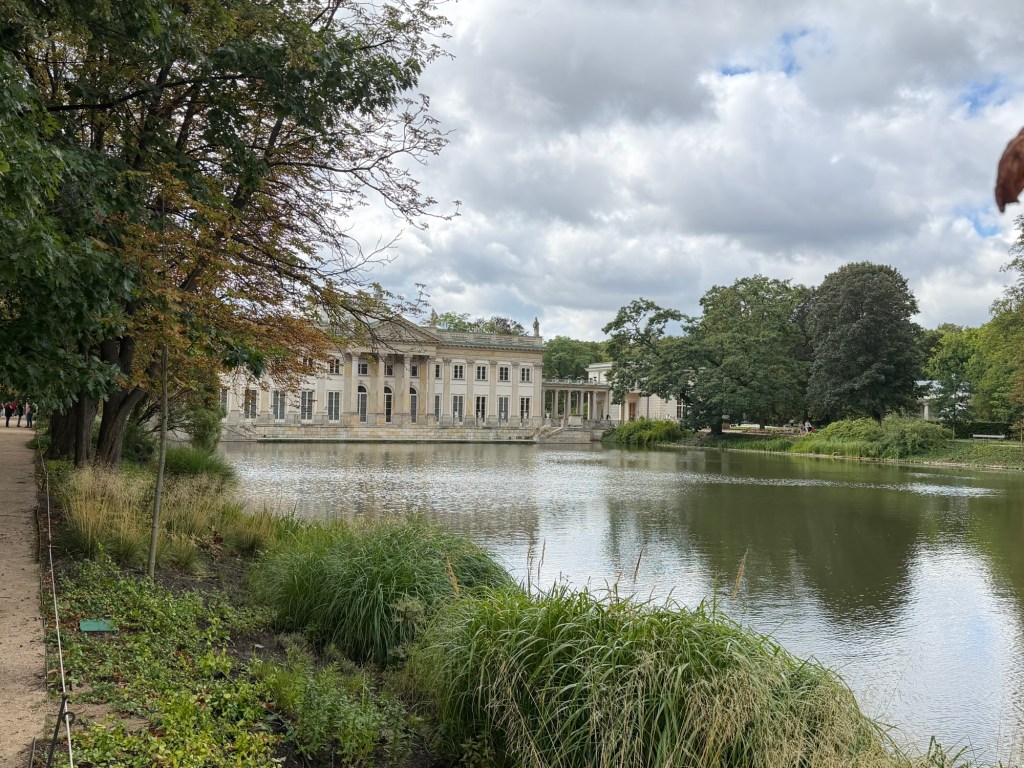
The palace sits on an island in an ornamental lake with a colonnaded bridge at either end. It began in the 1680s as a bathhouse built for Stanisław Herakliusz Lubomirski, and was turned into a neoclassical summer residence for Stanisław August Poniatowski between the 1770s and the 1790s. It is not large. I have looked at a fair number of grand buildings in London, Vienna, Venice and beyond, and I am not certain any of them is more beautiful than this.
Inside, the rooms are hung to the cornice with the king’s pictures, three and four deep, in the manner of the period.
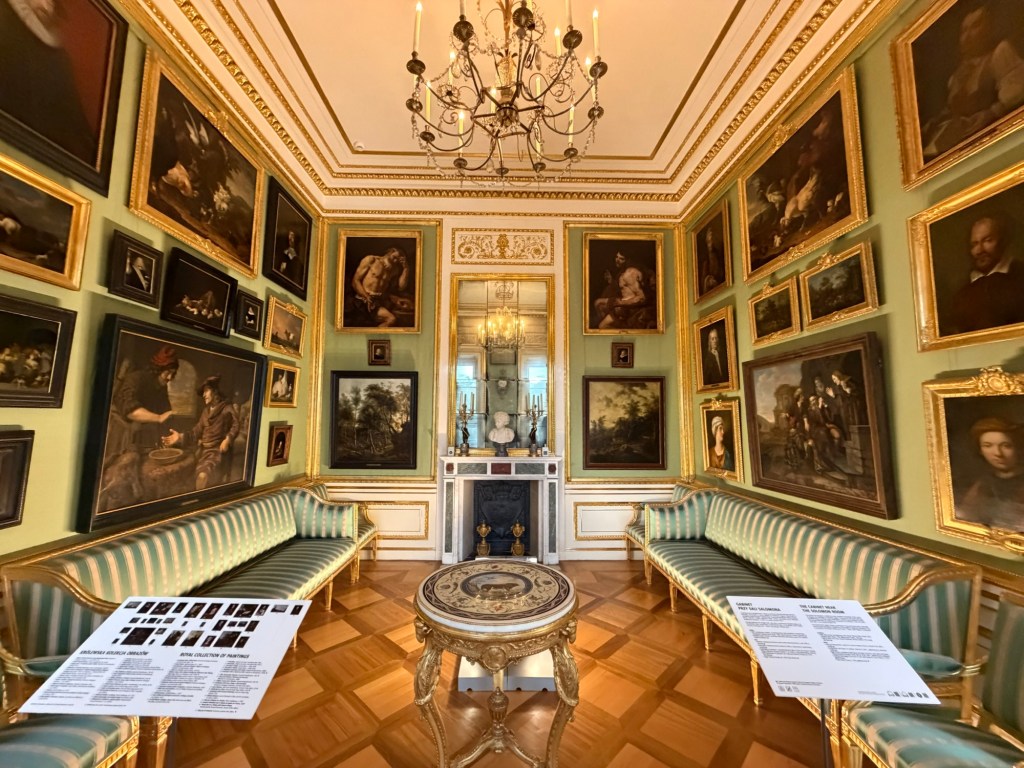
They are there because somebody moved them. The collection went into the stores of the National Museum when the war began; a large part of it was taken by the Germans in 1940, and sixteen wagons of it went to Austria in July 1944, of which ten came back. The palace itself was set on fire in 1944, during the destruction of the city after the Rising. The fire took the first floor, the wooden floors, the ceiling of the Bacchus Room, and in the Salle de Salomon the whole of Bacciarelli’s painted scheme, which was fixed into the walls and could not be carried anywhere. Holes were drilled through the building for explosive charges, and the front arrived before anyone set them off. The first rooms opened again in 1960.
So the pictures survived and the room that lost its paintings is the one they could not lift off the wall. How anyone sets fire to a building like this with no battle going on anywhere near it is beyond me.
We walked on through the park, and my girlfriend steered us towards the Chopin monument. It was not a folding table. There were thousands of people, on the grass, on the rim of the pool, on benches and in deckchairs among the roses.
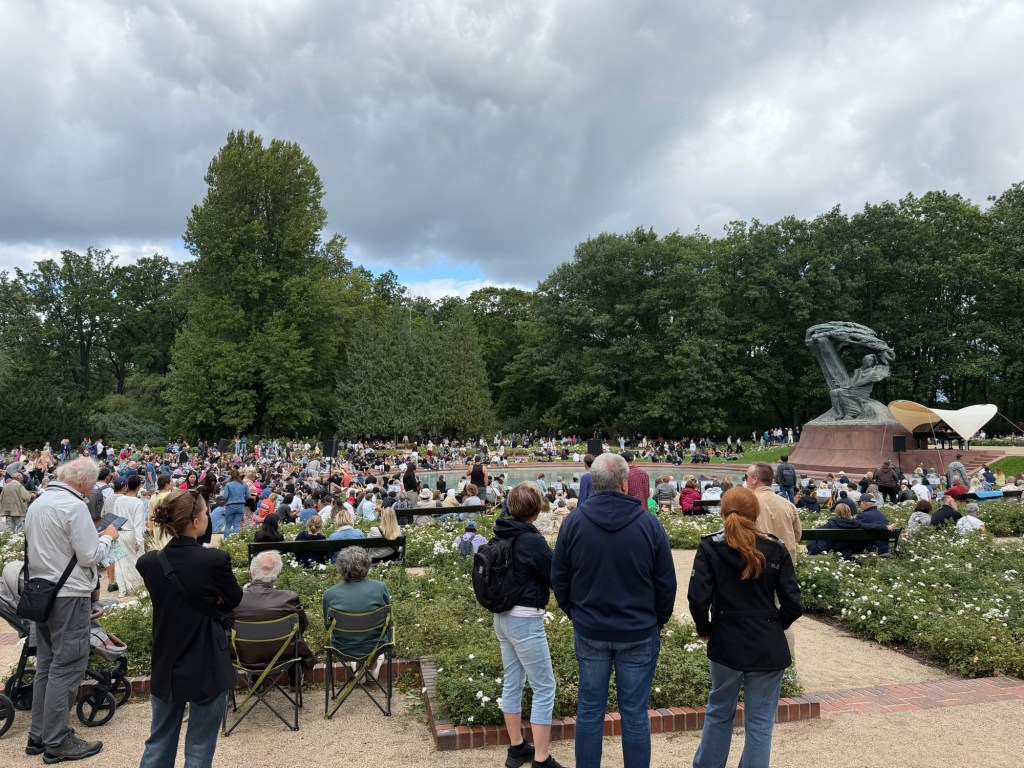
The bronze was unveiled in 1926, long after Wacław Szymanowski designed it. On 31 May 1940 the Germans took it apart and sent it to the furnaces, the first monument in the city they destroyed, and every piece of it went. In October 1946 the inscription was cut into the empty plinth, and it is a promise rather than a record: the Nation will rebuild. A head turned up in Wrocław that year and proved to be from a smaller trial cast. What made the rebuilding possible was a model found while clearing the rubble of the sculptor’s own house. The statue was recast from it, paid for by public subscription, and unveiled again in 1958. Beside the promise is a line from Mickiewicz. Fire will eat the painted histories and thieves will strip the treasures, but the song will come through whole.
Then she played.
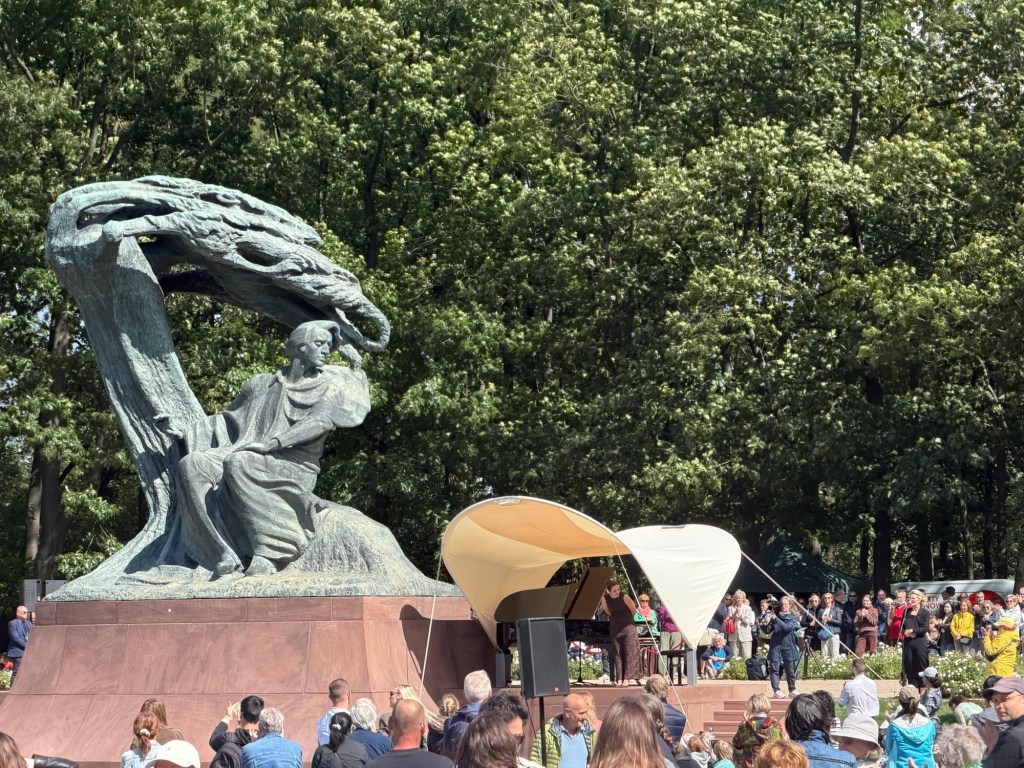
There have been free recitals at the foot of the monument every summer Sunday since 1959, at noon and at four. This year is the statue’s centenary and the garden had only reopened in July, after work on the basin and the plinth. The noon recital was given by Julia Łozowska, a Warsaw pianist in her twenties who took a share of third prize in last year’s national Chopin competition and went on to the international one in the autumn. She played wonderfully. It brought tears to my eyes.
He keeps arriving without being sent for. A beginning, an ending, and then a piece of him brought home: three things to stand in front of and read. The rose garden was not that. The bronze went into a German furnace in 1940 and the music did not, and if only a piece of him was ever carried back, it did not feel, sitting there, as though the soul of him had ever left. A fine way to leave a city.
We collected the car and drove four hours north into Masuria, and went to bed that night in a Teutonic castle in Giżycko.
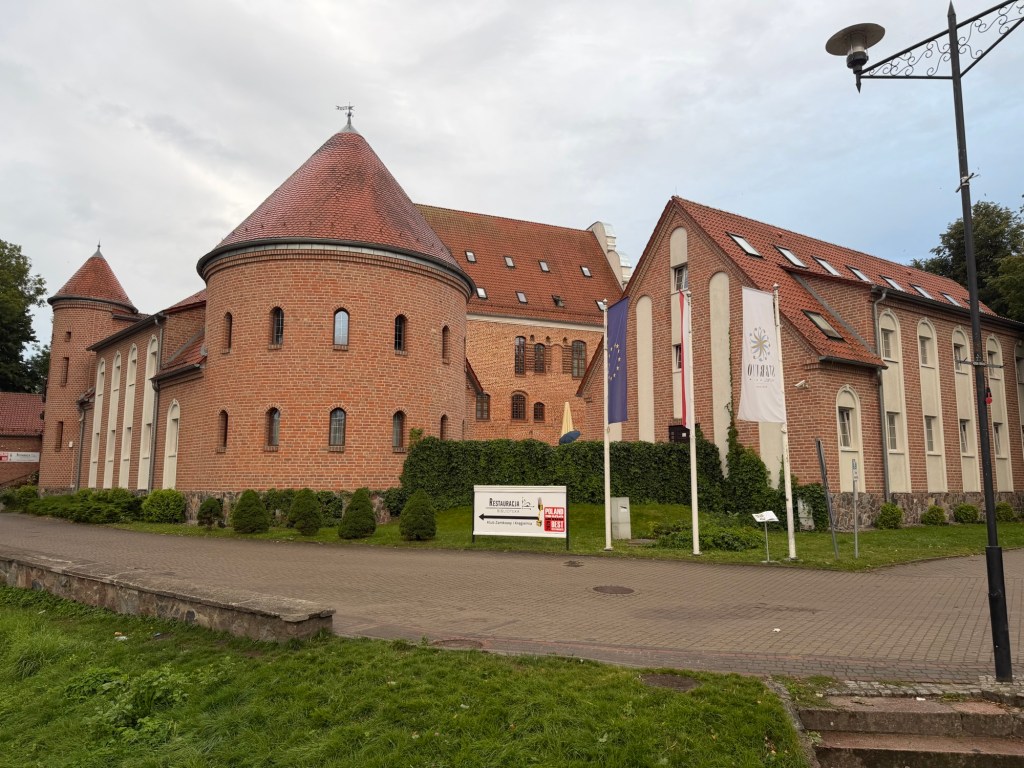
The Order appears here in a record of 1340, a procurator sitting at the castle with judicial and administrative work to do. It was a ducal hunting lodge after that, then attached to the fortress the Prussians built beside the town, then left to fall down, and it was rebuilt and opened as a hotel in 2011. Which is to say I spent three days looking at reconstructions and then went to bed in one. The room was as good as the building.
The Mickiewicz poem quoted on Chopin’s plinth is called Konrad Wallenrod, and its subject is a Grand Master of the Teutonic Order. I did not plan that.
The town was Lötzen until 1945. The hotel is named for Bruno of Querfurt, who was beheaded in 1009 while trying to convert the pagan Prussians, and Giżycko put up a cross on the hill above the lake in 1910 to say it happened here. That identification rests on a reading made by a historian a year or two before the cross went up, and it has not worn well. The earliest account of his death, in the annals kept at Quedlinburg, places it on the border of Rus and Lithuania. I am in no position to adjudicate and I slept extremely well.
The canal below the castle was dug between 1765 and 1772 to join the two lakes the town sits between, and you can walk the length of it. We found a traditional place on the water and ate properly: bread with lard and pickles, potato cakes with meat and local cottage cheese.
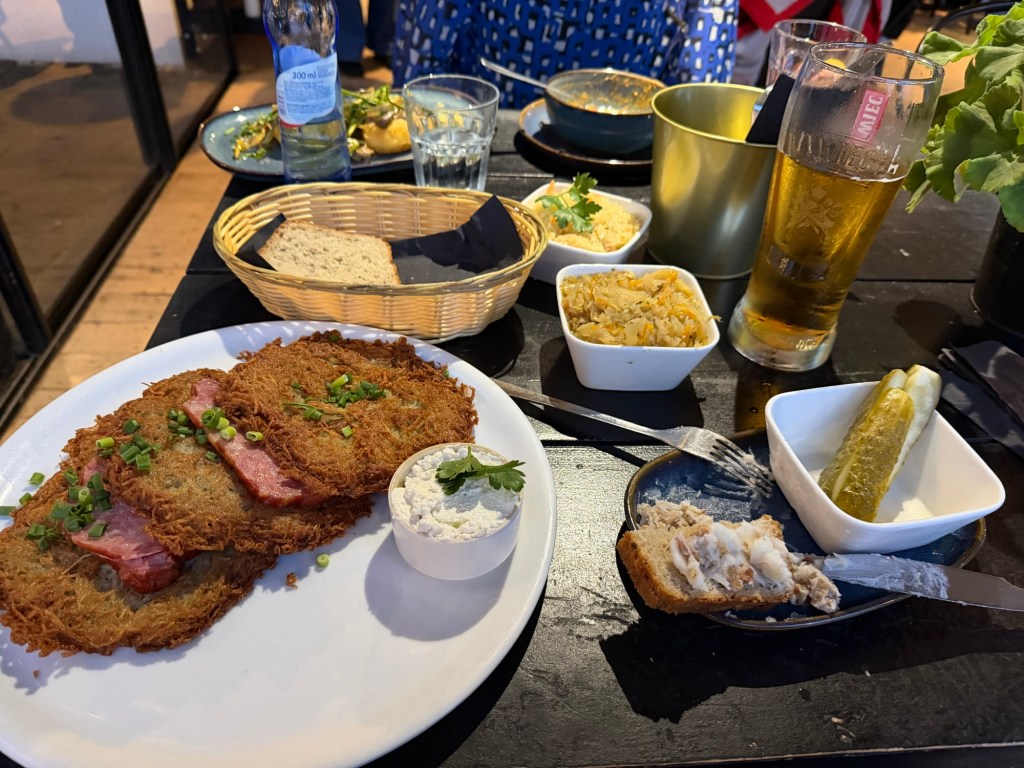
The potato cakes are the reason for this paragraph. They are gromperekichelcher, which we eat in Luxembourg with apple sauce, and they are kartoffelpuffer, which my grandmother made in Germany. The Schueberfouer had opened on Friday, so at that moment there were people on the Glacis eating the same thing standing up under a Ferris wheel. Three countries and one grated potato.
An early night. We came this far north for a reason, and it keeps until the morning.

