Her country
She arrived at lunchtime, having had a good deal of dental work done and not come through it altogether unscathed. Her spirits were undamaged, which was the part that mattered. We left her bag at the hotel and set off for the Old Town along the route I had walked yesterday, and I announced that I would be her guide for the afternoon, in her own country.
This lasted about twenty minutes.
I did have things to show her, and I showed them. Then we turned into Próżna, a few steps from the square where the demonstration against the Russians in 1904 is commemorated, and she stopped and pointed at a wall. Four street signs, one above the other. The same street four times over, in four different sets of clothes, the newest at the bottom in blue and red, and the oldest at the top in Cyrillic: ПОРОЖНЯЯ, with PRÓŻNA underneath it.
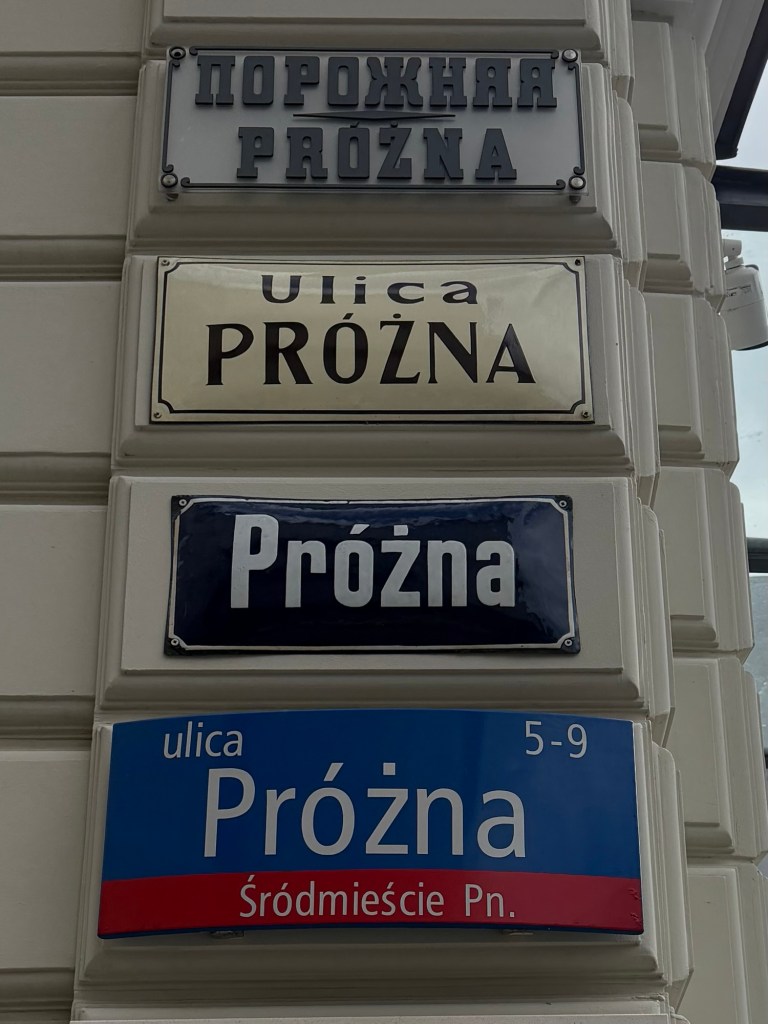
I had walked under it and seen nothing, which stings, because I spent a good part of yesterday one street away thinking about that alphabet and what my family did in it. Here it is again, screwed to a wall at the top of the pile.
The shape of a plaque
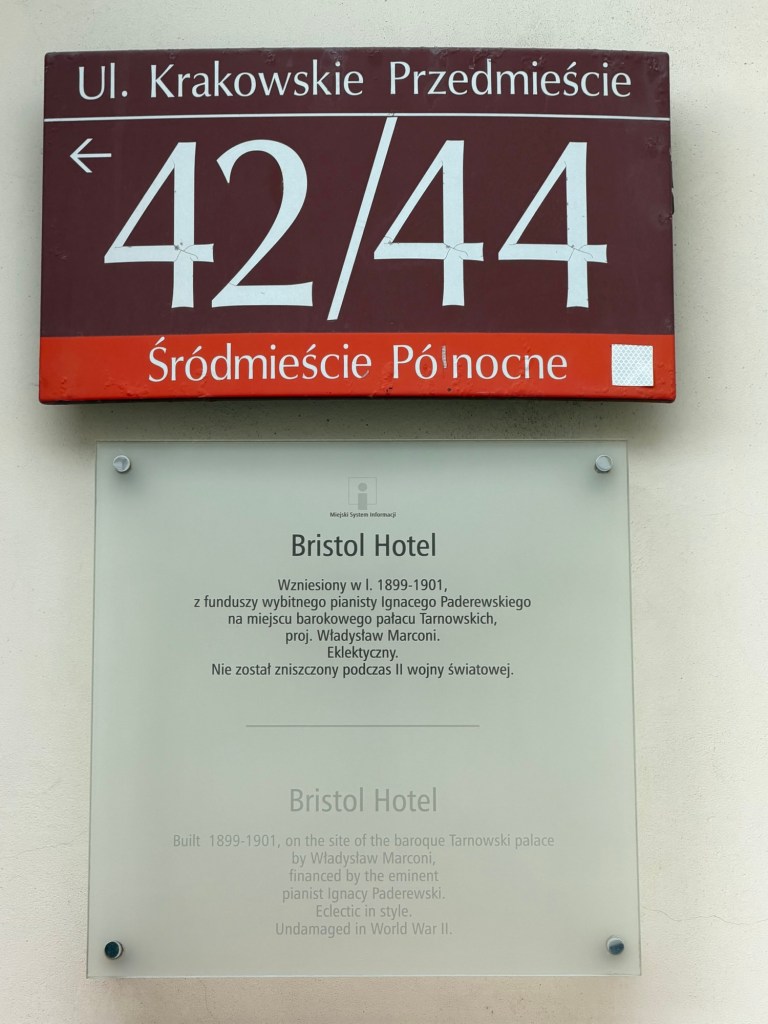
On Krakowskie Przedmieście she spotted a plaque on a wall, which by her standards was a discovery and by mine was, by now, more or less wallpaper. I told her I could tell her what it said without reading it: that the building had been something of consequence in the seventeen hundreds, that it burned in 1944, and that it was rebuilt some time around the nineteen fifties.
I was right, and she was briefly impressed, which I enjoyed more than I should have. It is not clairvoyance. Read a hundred of these and you learn their shape. There is a rhythm to the wording, and a rhythm to the dates, and once you have it you can read a wall at forty paces.
It was a cheerful moment about a very unfunny thing, which is roughly how this city works.
I did it several more times that afternoon, and then one of them caught me out. The Bristol Hotel, put up between 1899 and 1901, on the site of a baroque palace, eclectic in style. Then the last line, which is not on any of the others I have seen: Undamaged in World War II.
The heart
She then took us into a church I had not intended to visit, and would not have found, because I did not know it was there.
Set into a pillar inside the Church of the Holy Cross is a marble tablet, a bust above it, two figures either side, and beneath it a smaller plate in Polish and English. The heart of Fryderyk Chopin is in that pillar. Above the tablet, in Polish, the line from Matthew: where your treasure is, there will your heart be also.
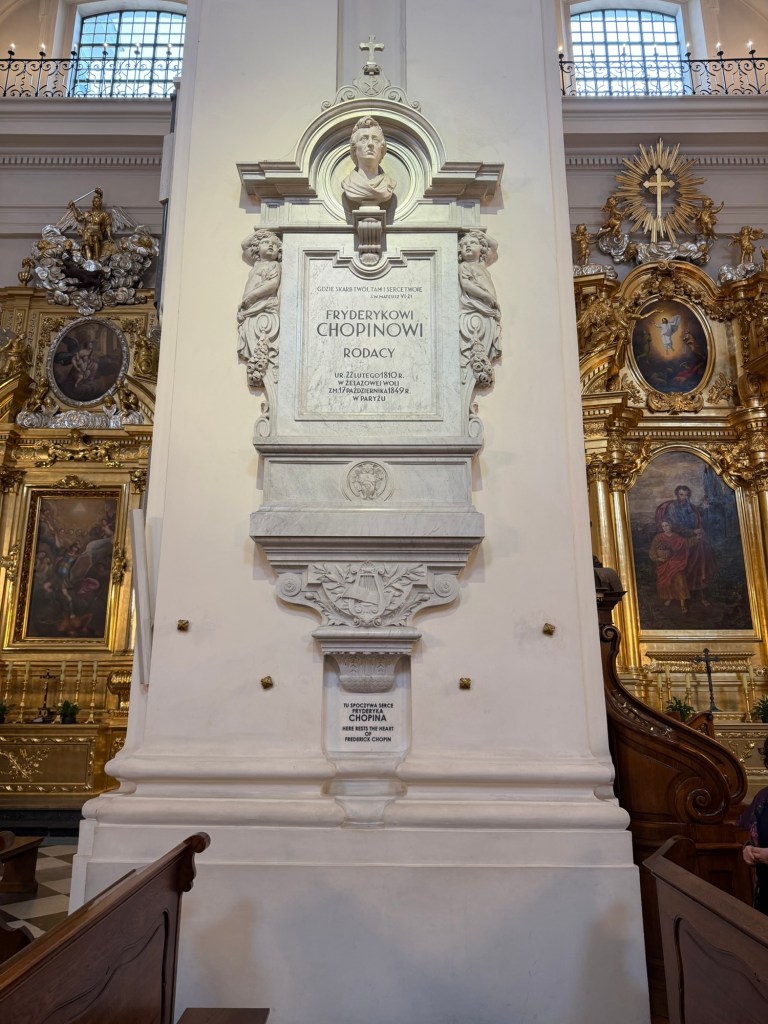
He died in Paris in 1849. The heart came back.
In a week I have found the wall where his playing began and the door he walked out of to end it, and now, without looking for it, the piece of him that came home.
Kopernik
At the end of the street there is a seated bronze figure holding a compass and an armillary sphere, and on the third day of this country I recognised him without needing the plinth. Copernicus, in front of the Staszic Palace, which carries Societas Scientiarum Varsaviensis across its front.
I was busy photographing the statue when she asked whether I had noticed what was under my feet. I had not. The whole square is laid out as his solar system, rings running out across the paving with the planets set into them, so that you approach the man across the thing he worked out.
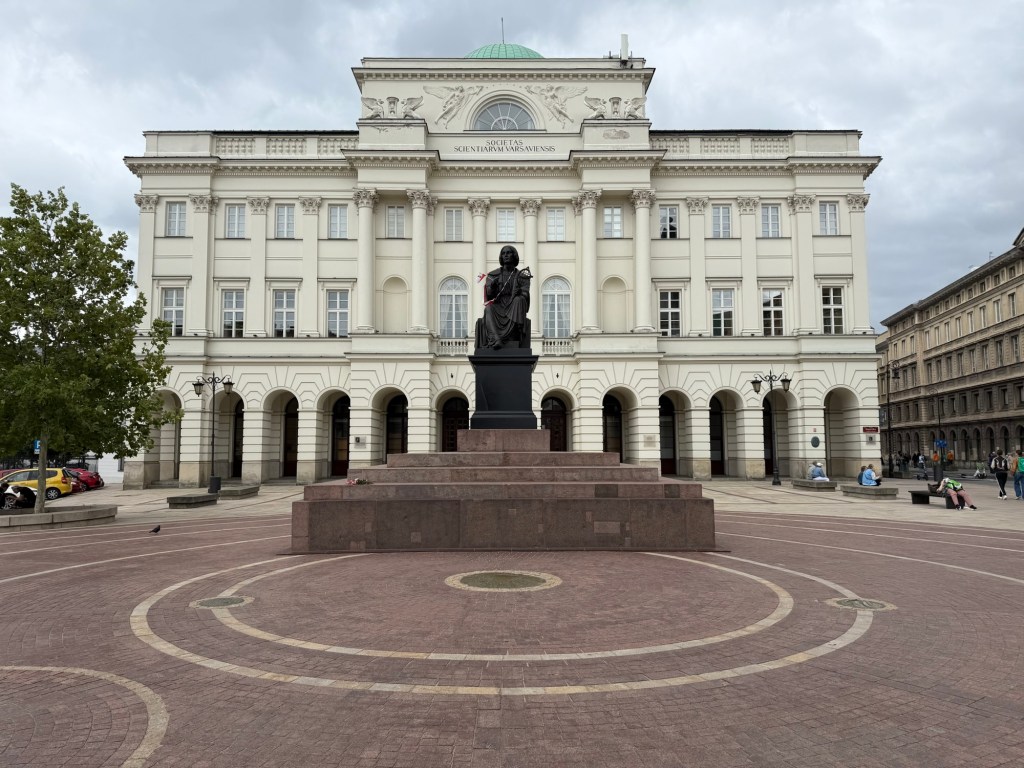
The statue is from 1830. The solar system was put in long afterwards, which explains why it is the part nobody photographs.
The pelican
More plaques on the way north. By this point I could estimate their contents from across the street and had rather run out of appetite for reading them, which I mention only because it happened, not because I am proud of it.
One thing did stop me. High on a Church on the Royal Route, above the words Res Sacra Miser, there is a pelican with her young.
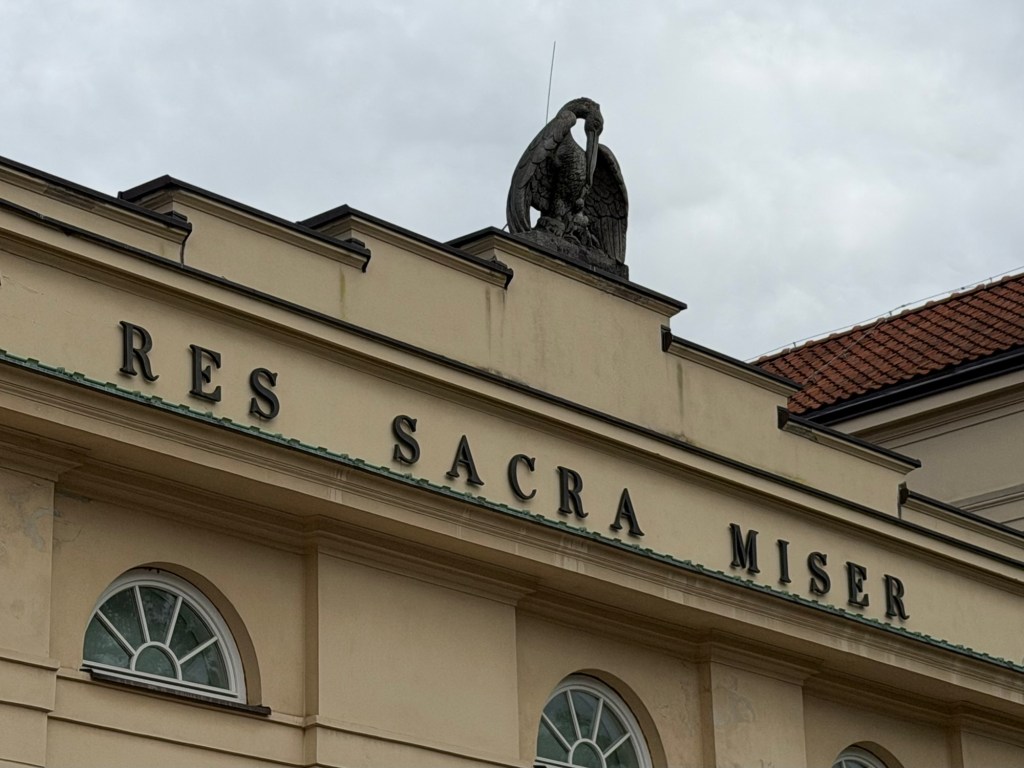
The pelican was long reputed to wound her own breast and feed her young on her own blood, saving them from starvation, as Christ shed his blood to save us from death eternal. I have that from the Rose Croix rather than from any Catholic upbringing, though the Church had it a very long time first. It is one I am always pleased to find on a wall.
The garden
She had a particular thing she wanted to see, in the garden behind the academic church of St Anne on Krakowskie Przedmieście, and it was the reason she had wanted to come this way at all.
Along the railings, a run of portraits. Women who fought in the Rising in 1944, each photograph recoloured and restored, each with a paragraph in Polish and English underneath giving their name, their code name, their unit and how they died. Most of them were medics and liaison officers. All of them were killed.
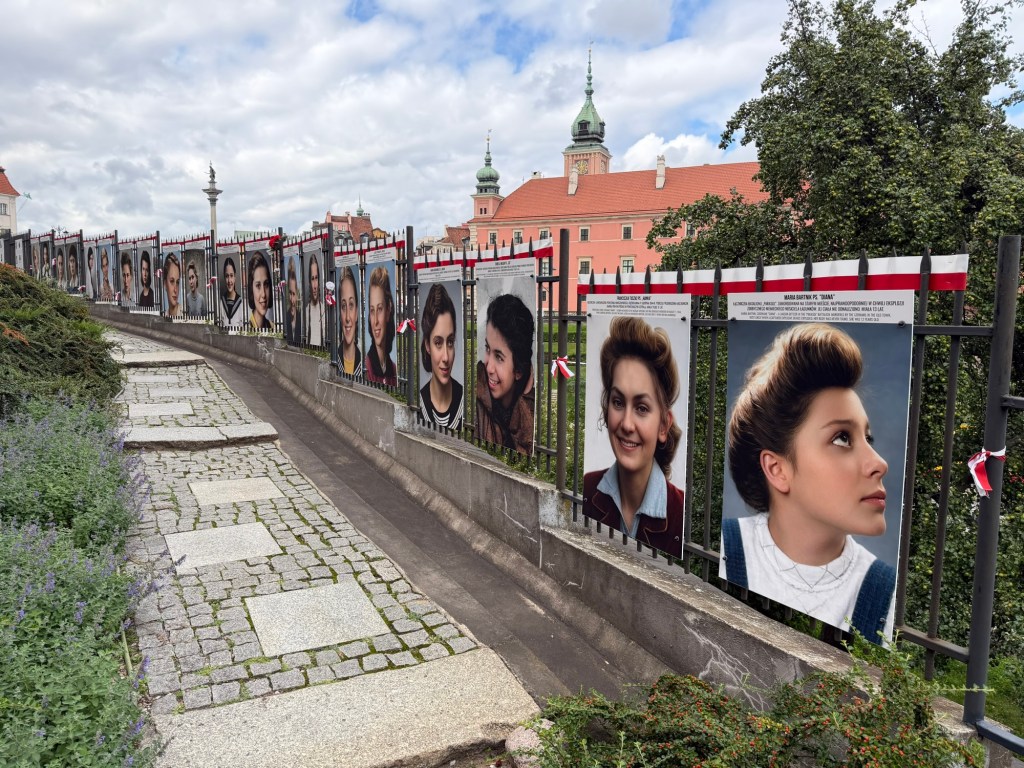
One of them was Maria Bartnik, code name Diana, a liaison officer in the Parasol battalion. Murdered by the Germans in the Old Town, the panel says. She was last seen on patrol along Długa Street, and most probably died when a captured German explosive device went off. Her body was never found. She was thirteen.
We read every single one, which took a long time and was the right thing to do. The sadness that has been sitting underneath this whole beautiful city was not lifted by any of it.
The cathedral, and lunch
We looked into the cathedral I had missed the previous day, with regimental memorials along the walls and somebody upstairs practising the organ, entirely for themselves and incidentally for us.
Then lunch in the market square, where we disgraced ourselves feeding the birds.
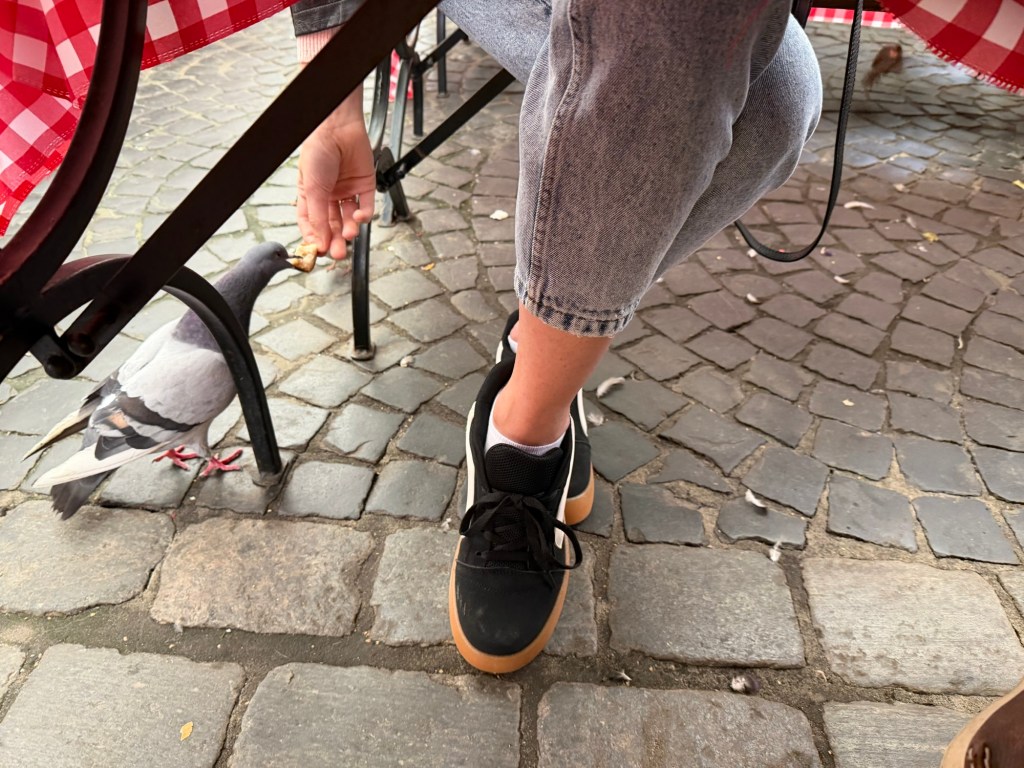
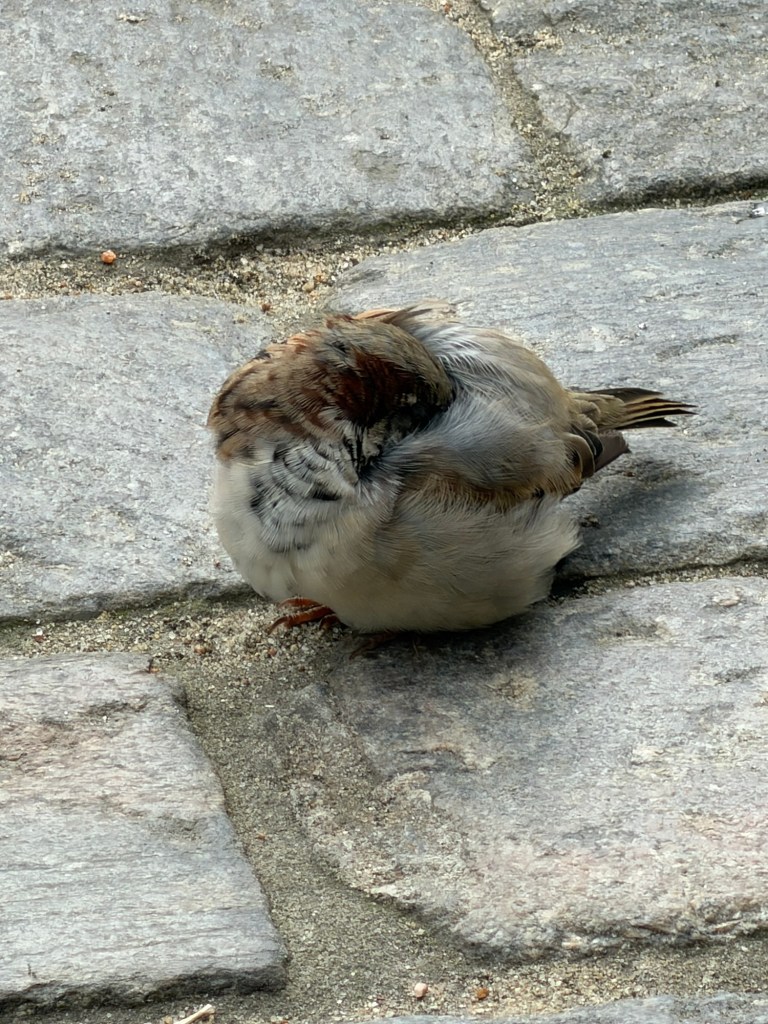
The sparrows here are enormous. We took this as good news rather than bad, house sparrows having had a thin few decades across most of Europe, and these ones plainly having found a business model. The best of them was asleep on the cobbles in the middle of a crowded square, sitting on his own feet, entirely round, without a care in the world.
Coins
We saw the rest of what she had not seen, and on the way back I found an antique shop and came out with a small number of old Polish silver coins, which is an ongoing condition rather than a decision.
Then back to the hotel, because she has had a day and I have a long drive north in the morning.

