The coach was to leave at seven o’clock sharp. Not seven, not shortly after seven. Sharp. This was for a journey that a reasonable person walks in ten minutes.
At half past seven one coach had gone and the rest of us were still in the lobby. Somebody suggested we walk. We walked. We arrived in good order and in less time than we had already spent waiting.
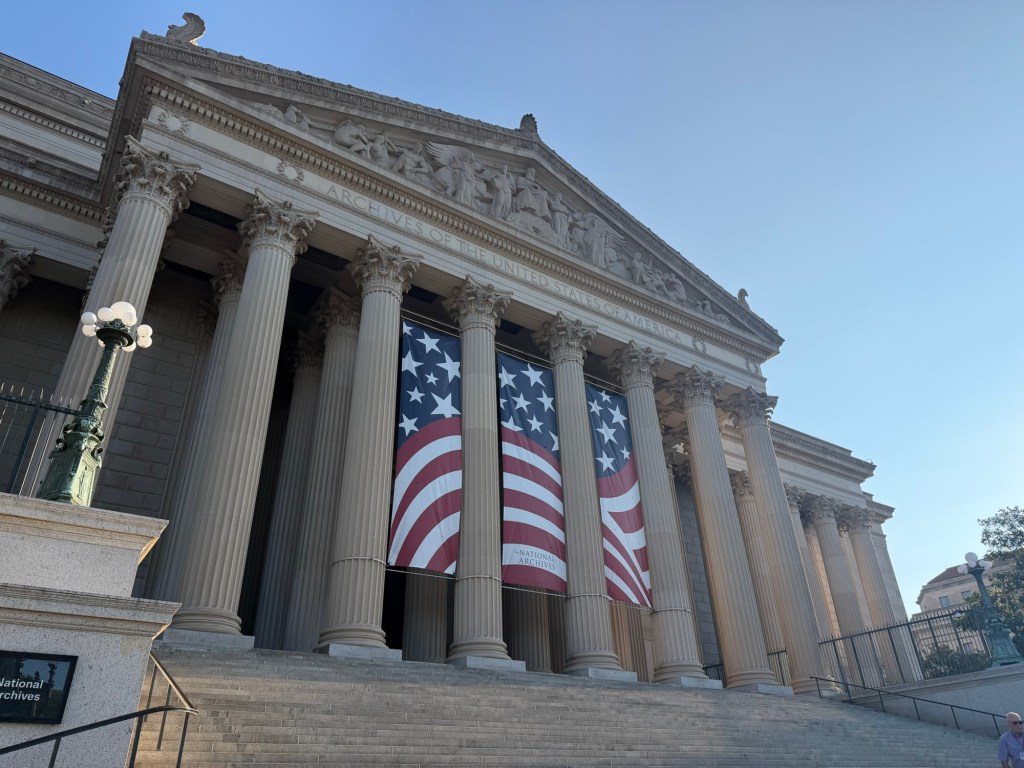
The Archives is open to the public, and on any other morning we would have queued with everybody else. What had required a signature from the Secretary of State was getting in before the doors opened. It is another of those Washington buildings that would be the finest thing in most cities and here is merely one more.
We began in a lecture theatre with a talk on the institution and what it holds, which was a good deal longer and a good deal better than I had expected.
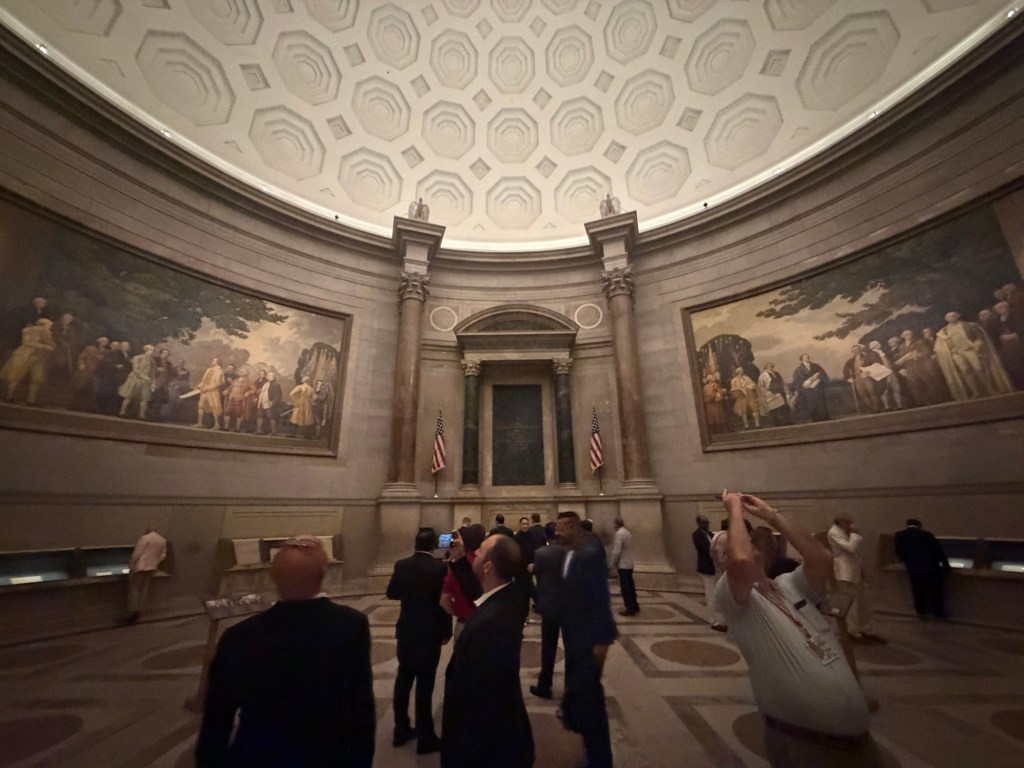
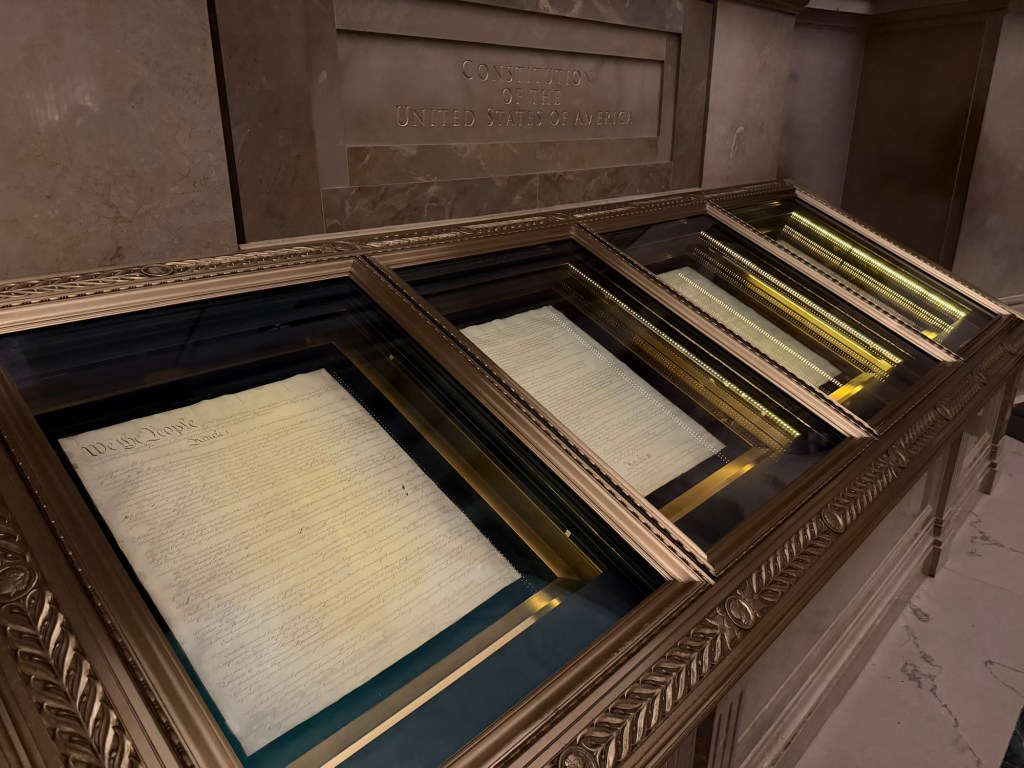
Then the Rotunda, which is the room everybody comes for. The Declaration of Independence, the Constitution and the Bill of Rights, in sealed cases under low light, beneath a dome and two enormous murals. We the People at the head of the Constitution in a hand you can read from across the room.
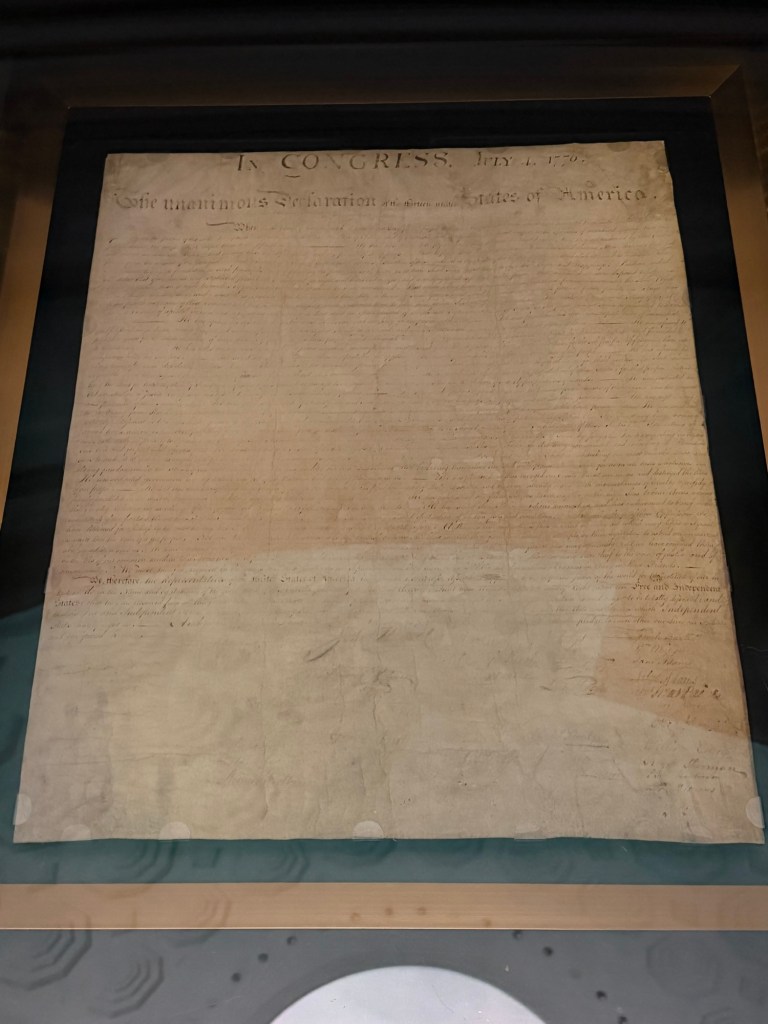
The original Declaration of Independence, however, you can barely read. Hancock just about survives. Most of the rest have faded to a shadow on the parchment.
This is explained to some extent in an adjacent museum room, by a sheet of copper. In 1820 the Secretary of State, John Quincy Adams, commissioned an engraver named William Stone to produce an exact facsimile of the Declaration. It took him three years. The plate is displayed beside a print pulled from it, and that print is the Declaration as everyone pictures it. Crisp, black, every signature clear.
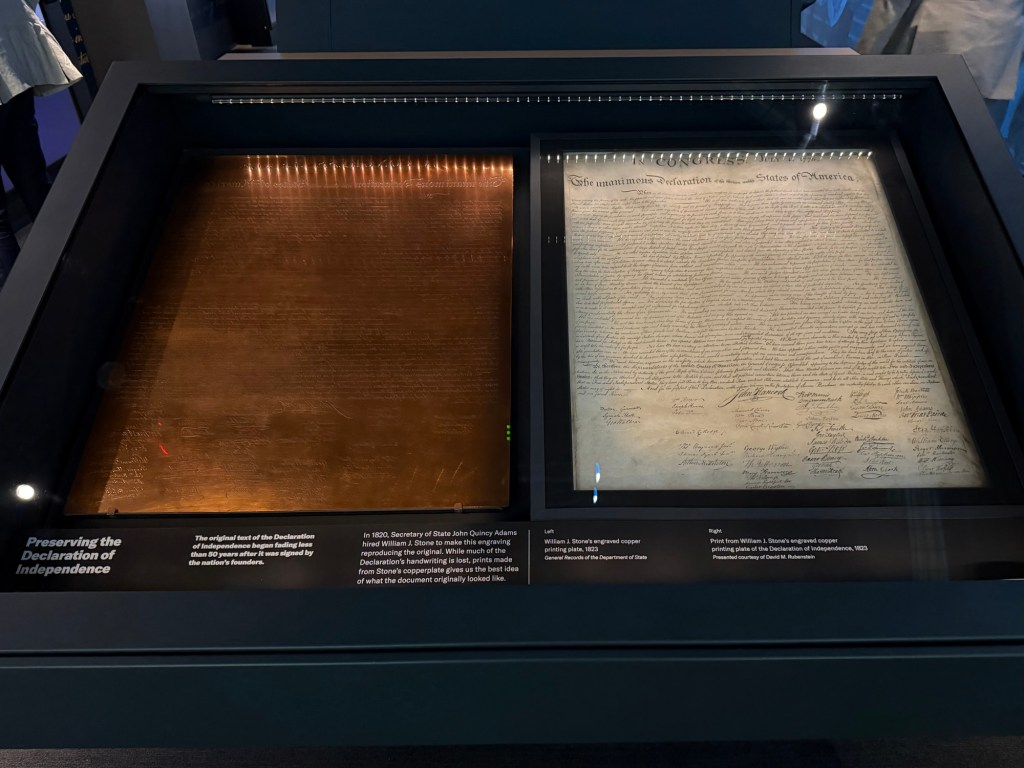
I was told, and it is very widely repeated, that Stone used a wet transfer process which lifted ink off the parchment and did the damage. It may be so. Nobody actually knows. The Archives themselves say nothing is known about his method, and serious people have argued he traced it, or simply engraved it freehand with the original at his elbow. What is certain is that the Declaration was already fading in 1820, which is precisely why Adams ordered a copy in the first place.
The outcome is the same either way, and it is a strange one. The copy is now the original in every head that holds a picture of it. The thing itself has become a nearly blank sheet with a famous signature somewhat visible in the middle.
The remainder of the museum was fascinating, not only for the carefully preserved artefacts, but also for the comprehensive history recorded throughout. I came out of this morning understanding the Civil War, and the struggle for independence that preceded it, considerably better than I went in.
At half past two we go out to the George Washington Masonic National Memorial in Alexandria for a private tour and a rehearsal. The lodge meets there tonight. It is a historic meeting, and being a historic event of some magnitude, it requires four separate dispensations, every one of which must be read aloud in open lodge before anything can begin.

