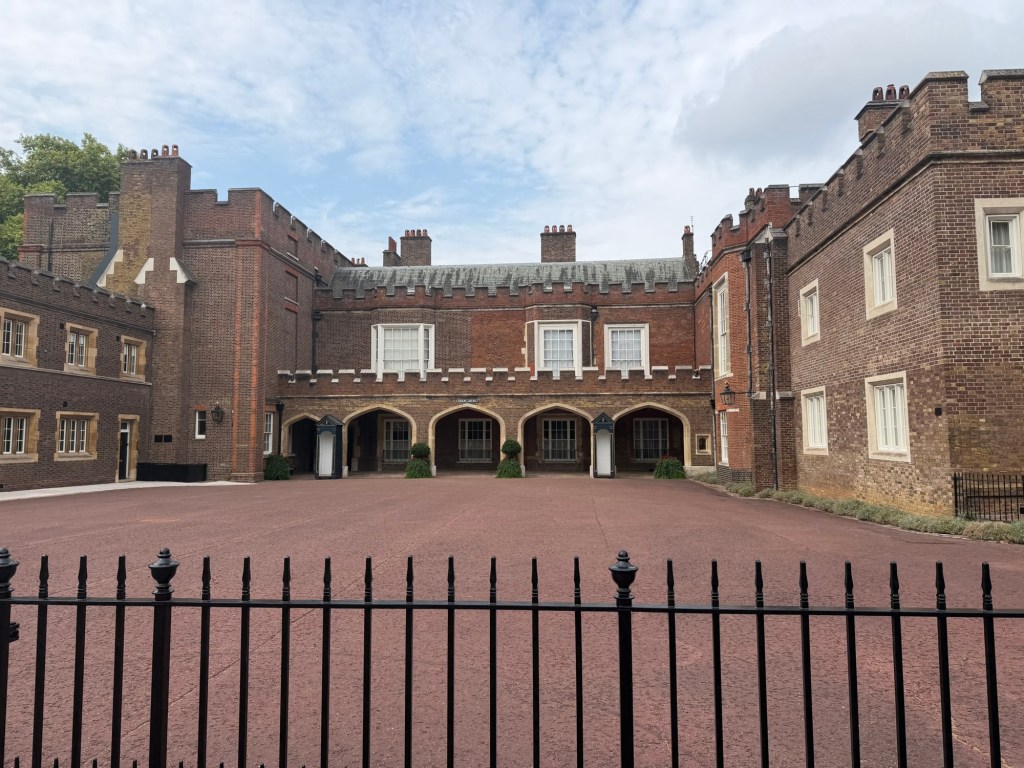
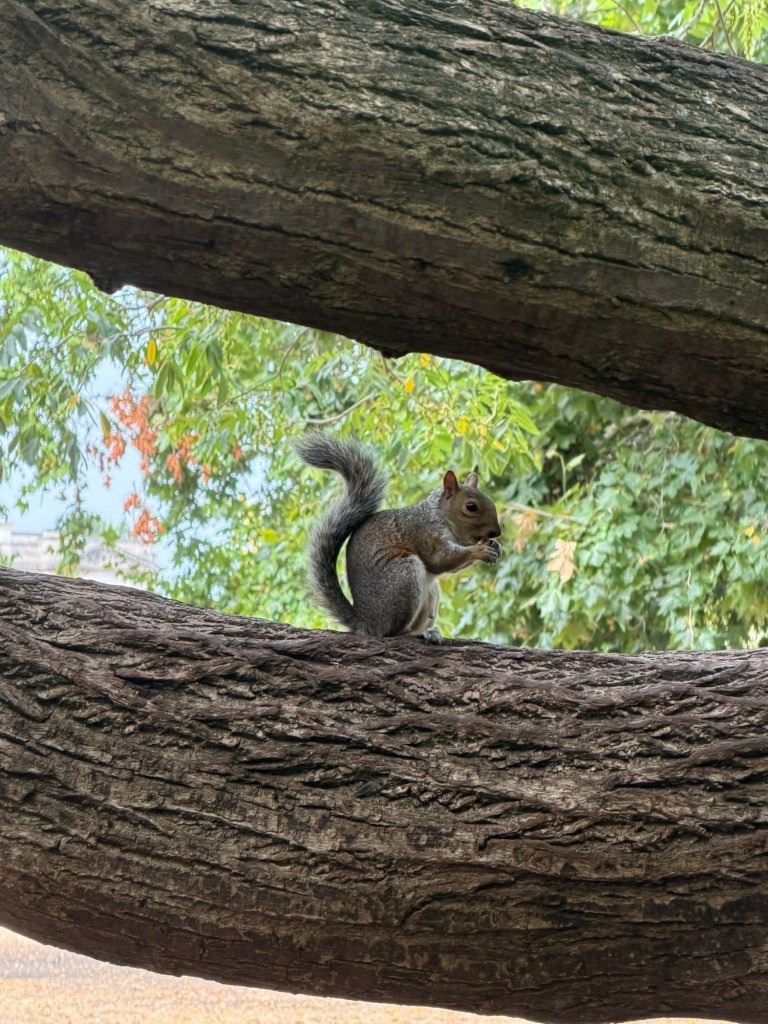
An early start. My girlfriend had breakfast at the East India Club while I got dressed, and we then pottered over to the Royal Over-Seas League to meet my parents. From there we set off on foot through St James’s Park towards the Guards Museum, my mother feeding the squirrels along the way with nuts liberated from the ROSL breakfast table.
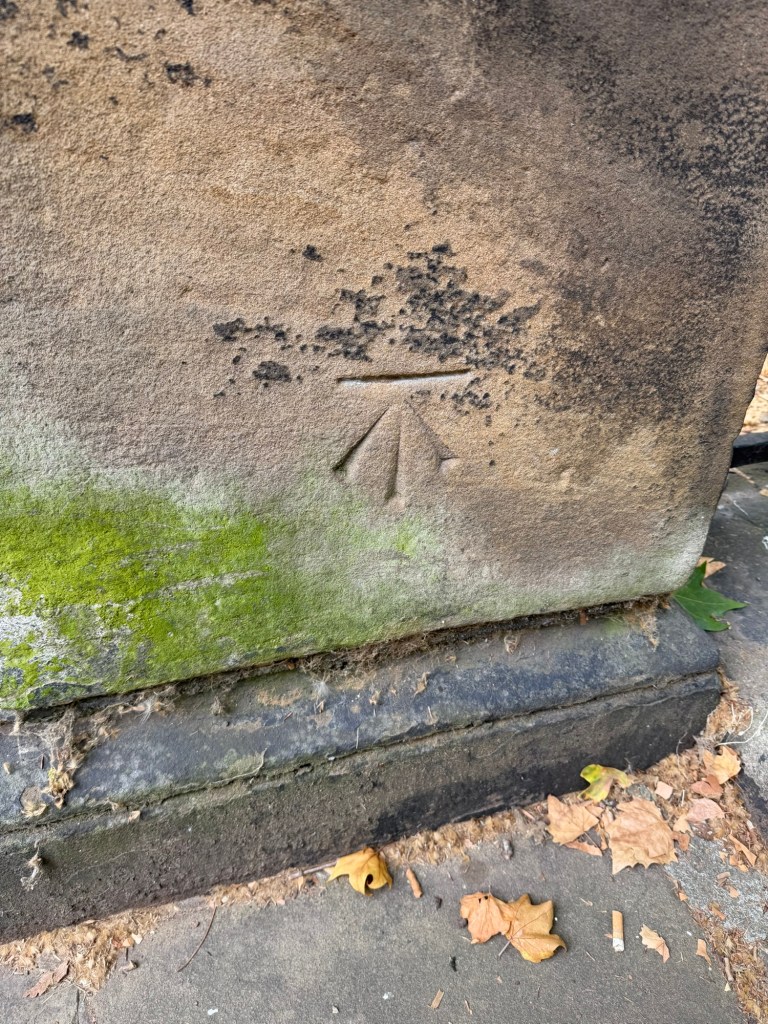
Just outside the Guards Chapel my girlfriend spotted an Ordnance Survey cut mark in the wild, with no map, no guide and no prompting. I was, frankly, amazed. It set the tone for the rest of the day.
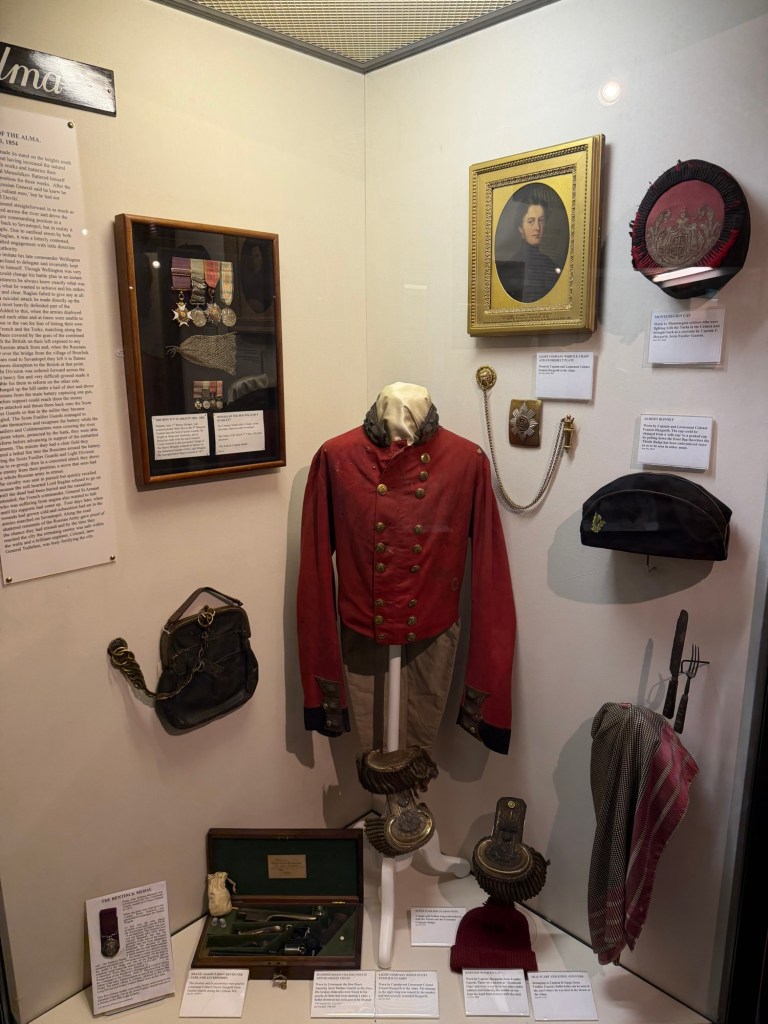
The museum was well worth it. What I appreciated most was that it is built around the combat history of the several regiments rather than around ceremonial. The Crimean material is particularly strong. There is the bloodstained coatee worn by the Hon. Henry Annesley of the Scots Fusilier Guards at the Alma, displayed alongside his pouch and bearskin chain, the chinscales visibly damaged by the ball that shattered his teeth as he shouted ‘Forward the Guards’. Nearby is the silk scarf belonging to Captain R. Gipps of the same regiment, with the bullet hole still plain where he was shot through the throat.
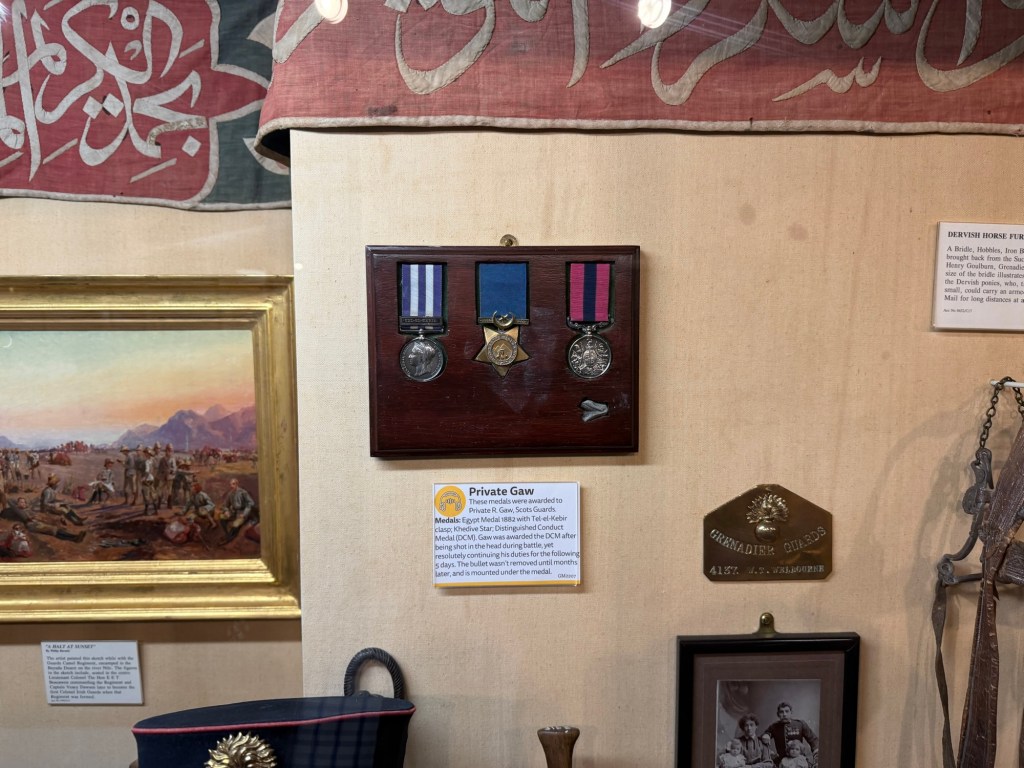
Also in the collection is the medal group of Private R. Gaw, Scots Guards: Egypt Medal 1882 with Tel-el-Kebir clasp, Khedive’s Star, and the Distinguished Conduct Medal. Gaw was shot in the head during the battle and carried on with his duties for a further five days. The bullet was not removed until months afterwards, and it is mounted on the board beneath the medal.
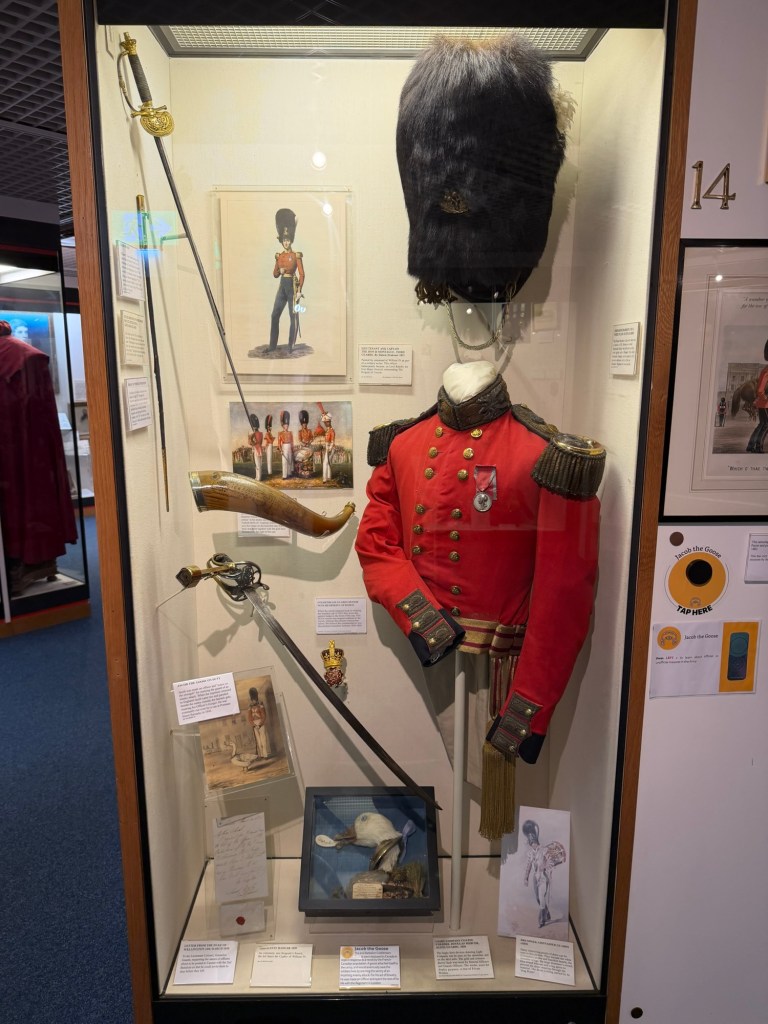
And then there is the goose. Jacob was attached to the 2nd Battalion Coldstream Guards in Canada in 1838, raised the alarm during a night attack and saved the sentry’s life. He was made an officer on the strength, wore a gorget, paraded with the regiment, and came home with them to London, where he lived out his days at Portman Street Barracks until he was run over by a van in 1846.
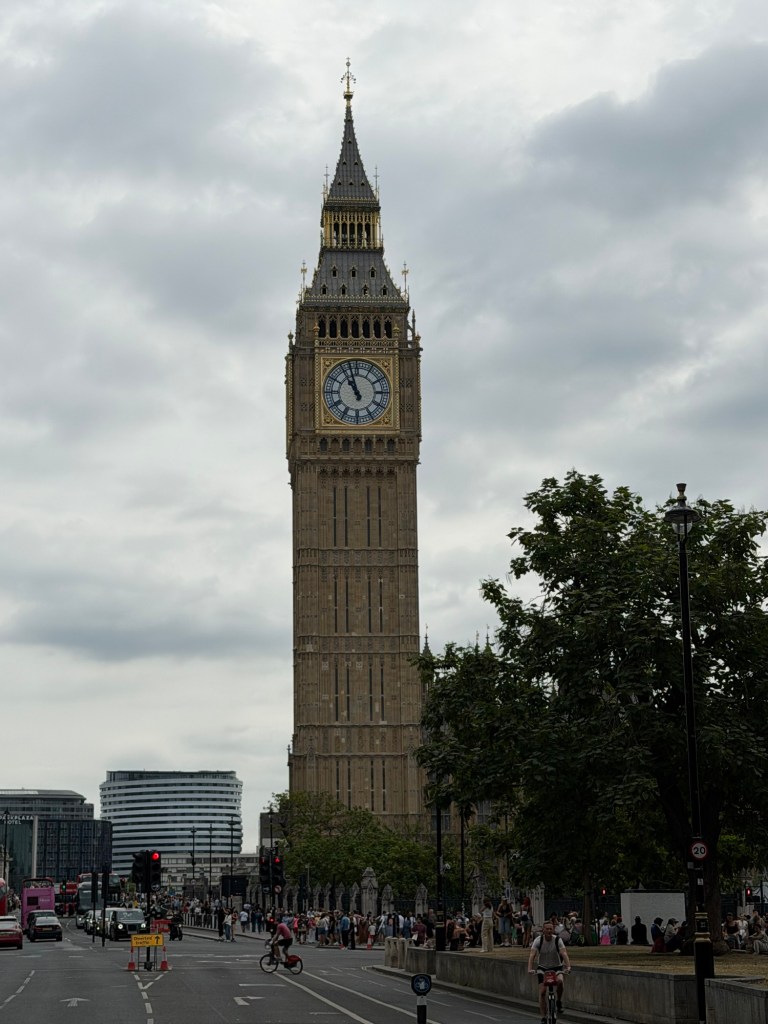
From the museum we walked towards Big Ben and the Palace of Westminster, passing the telephone boxes that are commonly said to feature in Harry Potter. There are three of them, each with its own queue. I suspect most of the people waiting simply want a cinematic shot of a red box with the tower behind, but I also suspect none of them knows which box is meant to be the one, so they queue at whichever happens to be nearest. In fairness to them, the answer is that none of them is. The visitors’ entrance to the Ministry of Magic was filmed at the corner of Great Scotland Yard and Scotland Place, and the box itself was a prop built for the film and taken away afterwards. There has never been a telephone box there at all.
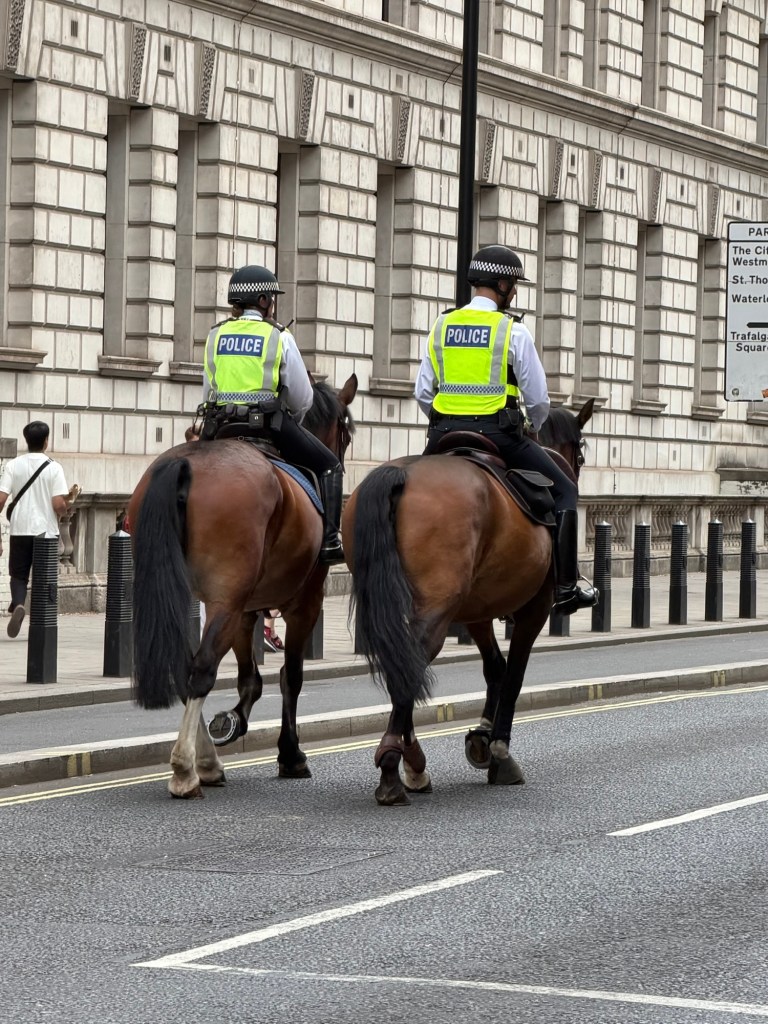
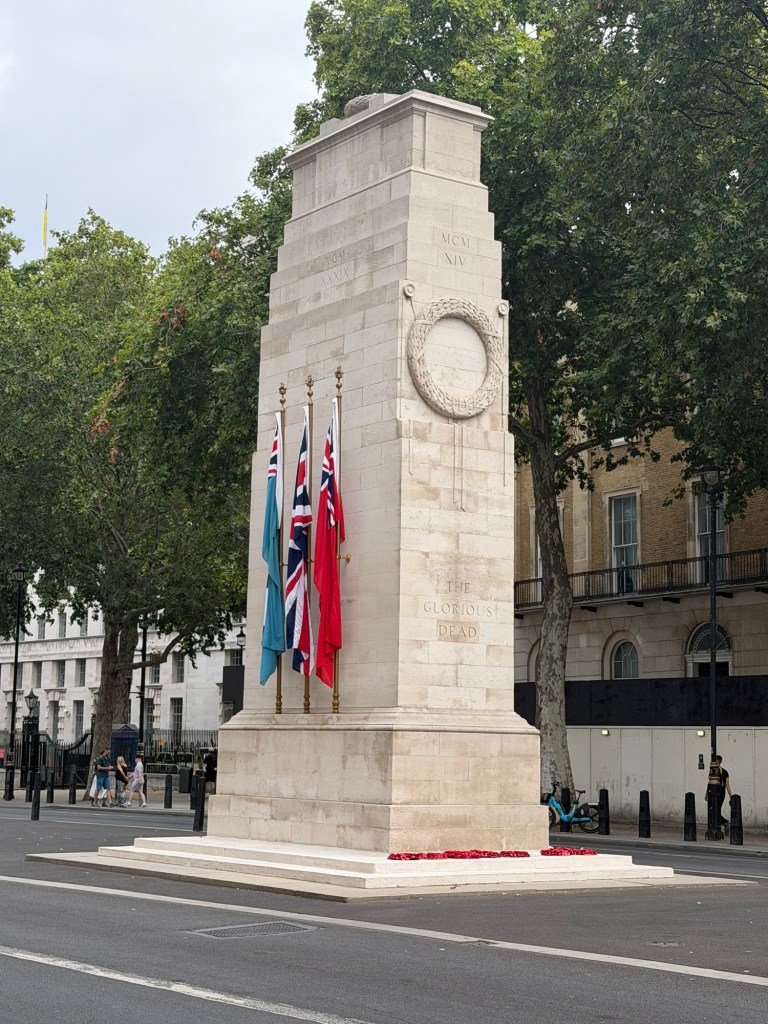
Down Whitehall, past the Cenotaph, and a look for Larry at Number 10. No sign of the Chief Mouser. Shortly before that we passed two mounted officers of the Metropolitan Police.
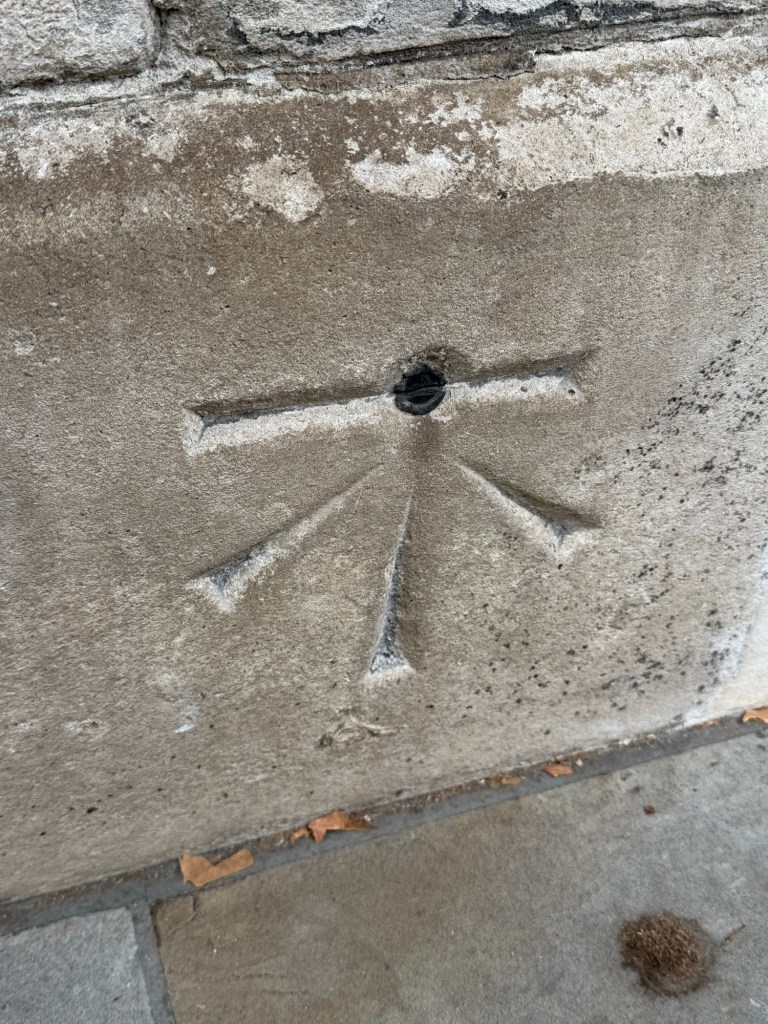
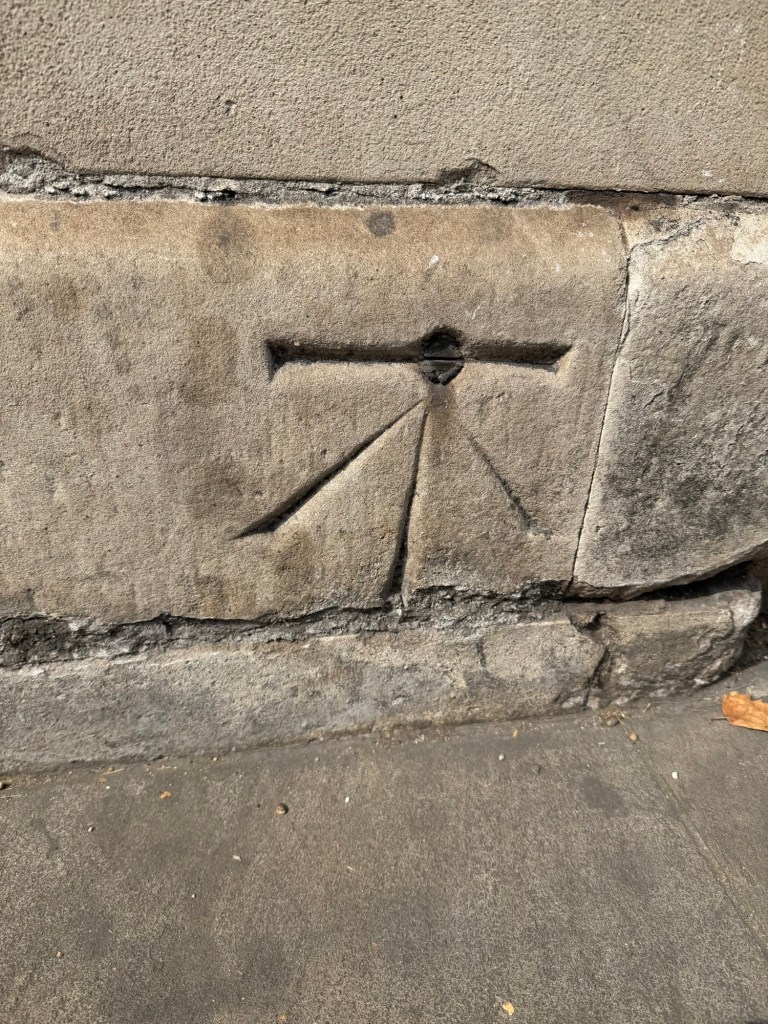
My girlfriend then spotted another fine mark on the wall outside the Scotland Office, this one with a metal bolt screwed into it, which was a first for us. Not long after, I finally found one myself, in the wild, on 22 to 26 Whitehall, the Old Admiralty. I shouted out loud. That one also had a bolt, and the line scored across the bolt head aligns precisely with the horizontal bar of the mark, which is rather the point of it: the bolt gives a defined levelling datum instead of the cut groove.
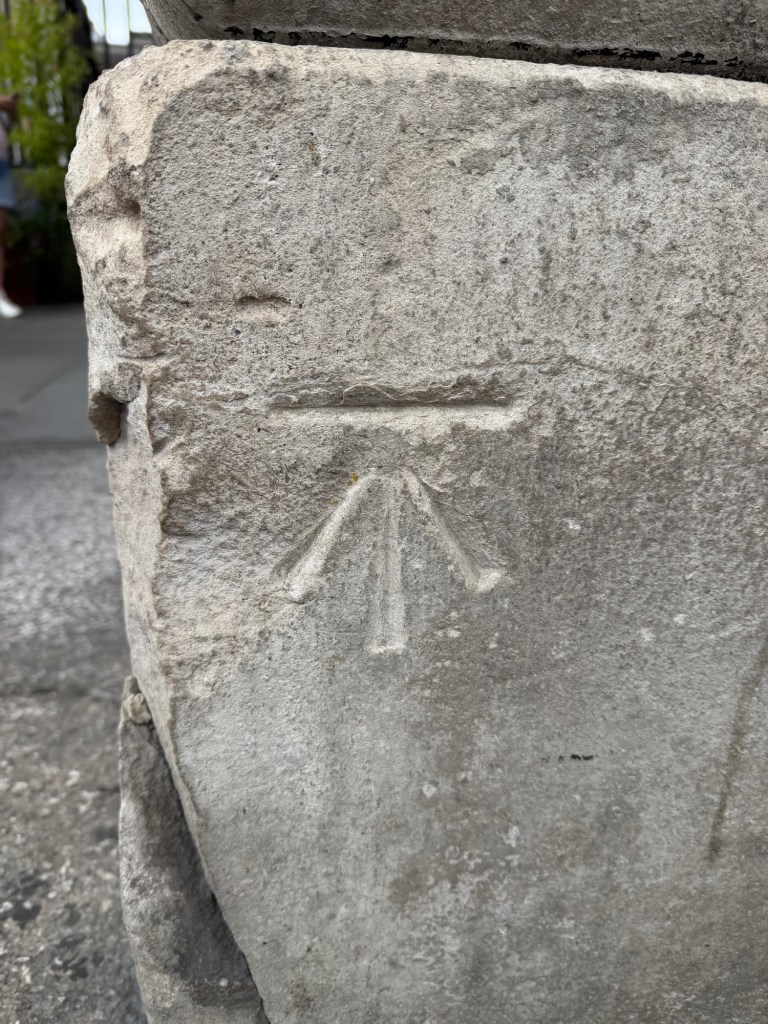
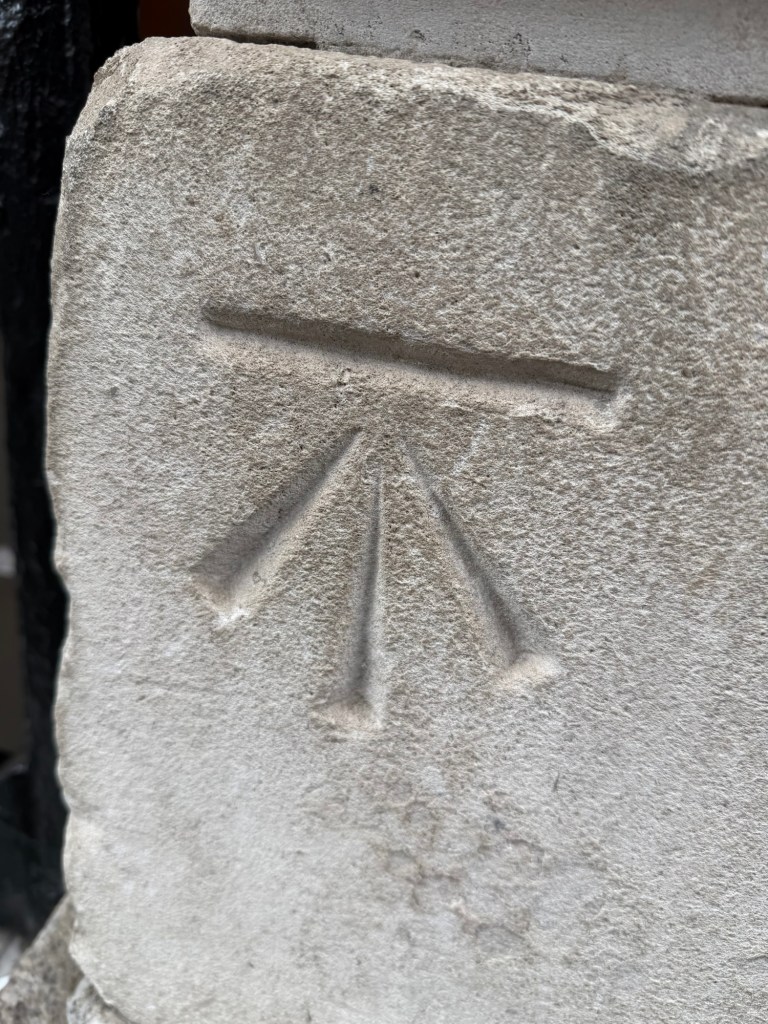
Lunch at The Ivy in Covent Garden, then up to the market. On the church across the road my girlfriend found yet another mark, to the left of the pillars, slightly weathered but a fine thing all the same. I found a very crisp one on James Street, although I confess I found that one by reference to the 1875 map rather than by eye.
We looked in at the Royal Opera House, which I had never been inside. There are some very good bars in there, which I intend to inspect properly next time I am in town alone.
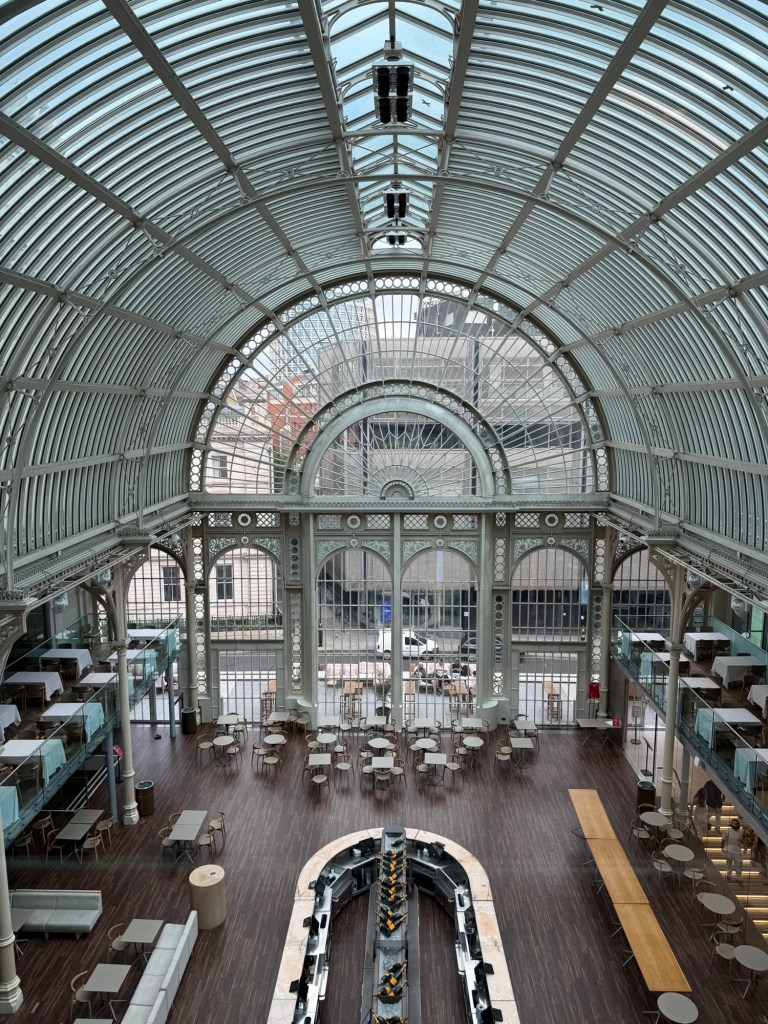
On to Great Queen Street for coffee. I always find it quietly comforting to see the Masonic hall when I am in that part of town. Creature of habit.
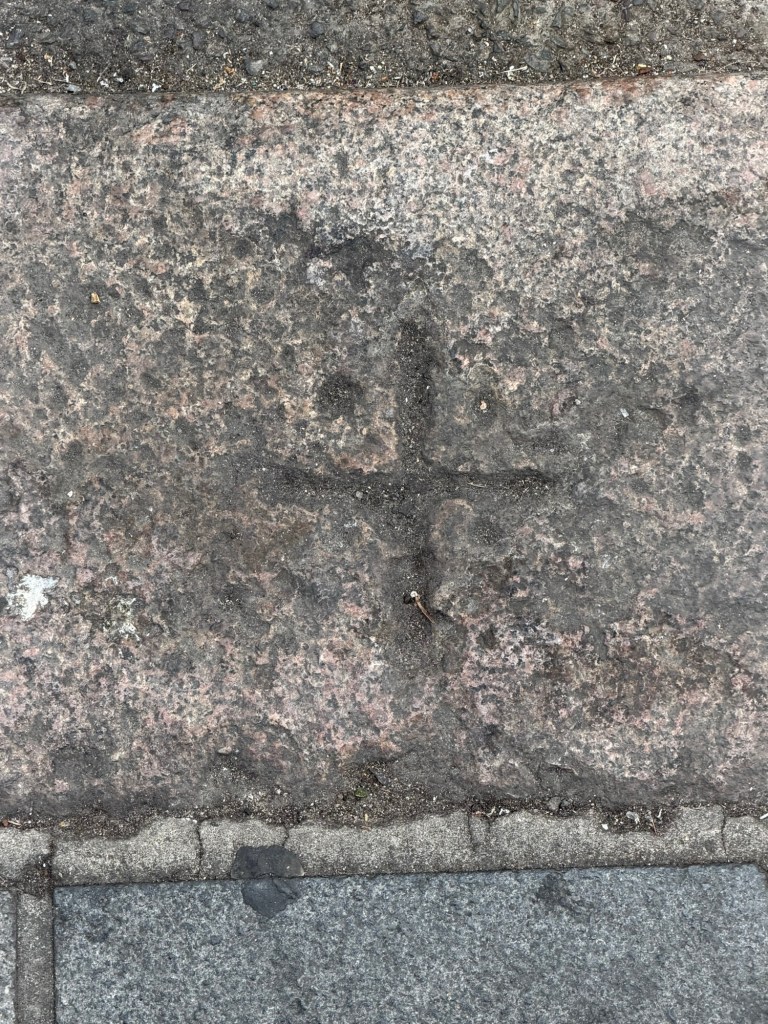
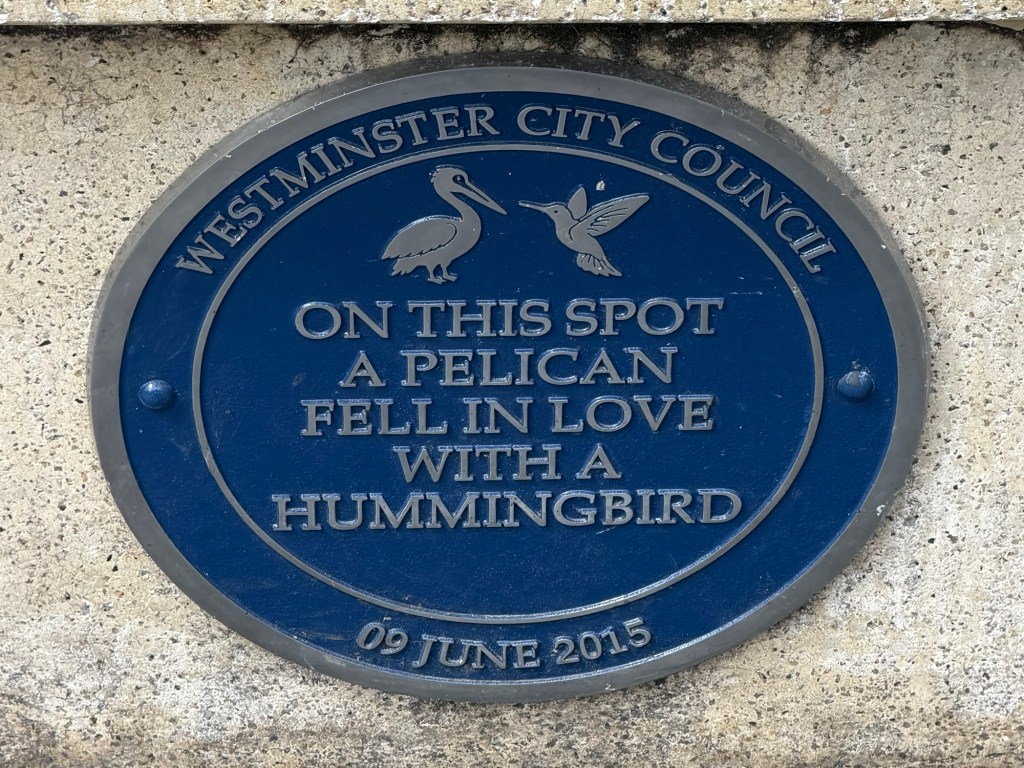
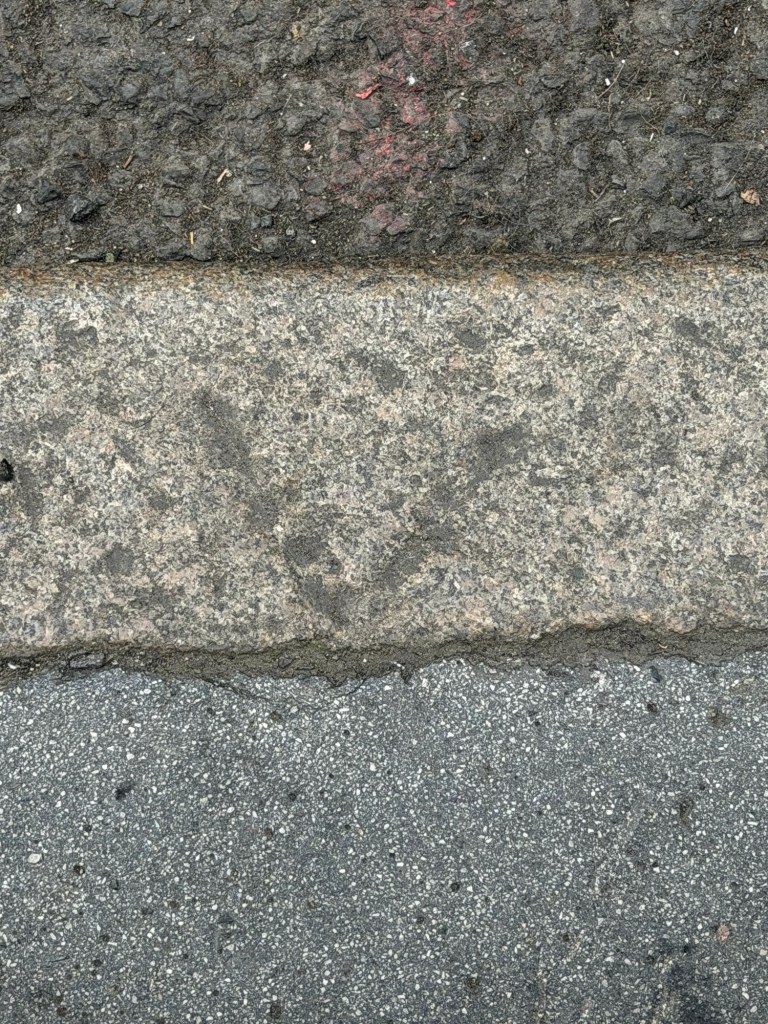
My father spotted an unusual mark on a kerb in Drury Lane, a cross with a dot in each quarter. Three of the four are weathered almost entirely, and I read it as a single dot until I looked again. We sat down in Redemption Roasters, which employs a high proportion of ex-offenders, and I looked it up: a utility mark, privately cut by a local utility company between roughly 1920 and 1930, rather than anything Ordnance Survey. We also came across what looks at first glance like a blue plaque, recording that on this spot a pelican fell in love with a hummingbird, dated 9 June 2015. It is entirely unofficial, a guerrilla plaque, and it has been left in situ, which I like very much.
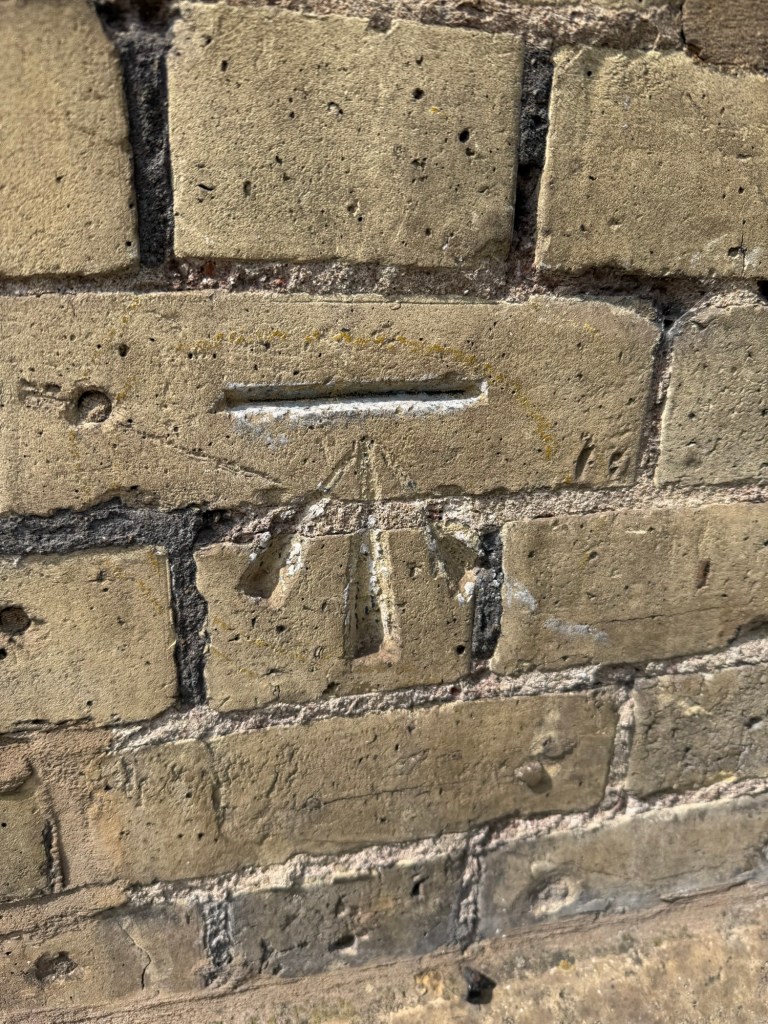
My parents returned to ROSL and we carried on with the hunt, following the 1875 map. Another mark at the end of Drury Lane, cut into yellow brick. More interesting to me was the playground, which appears on the 150 year old map as Covent Garden playground and is now Drury Lane playground on Google Maps.
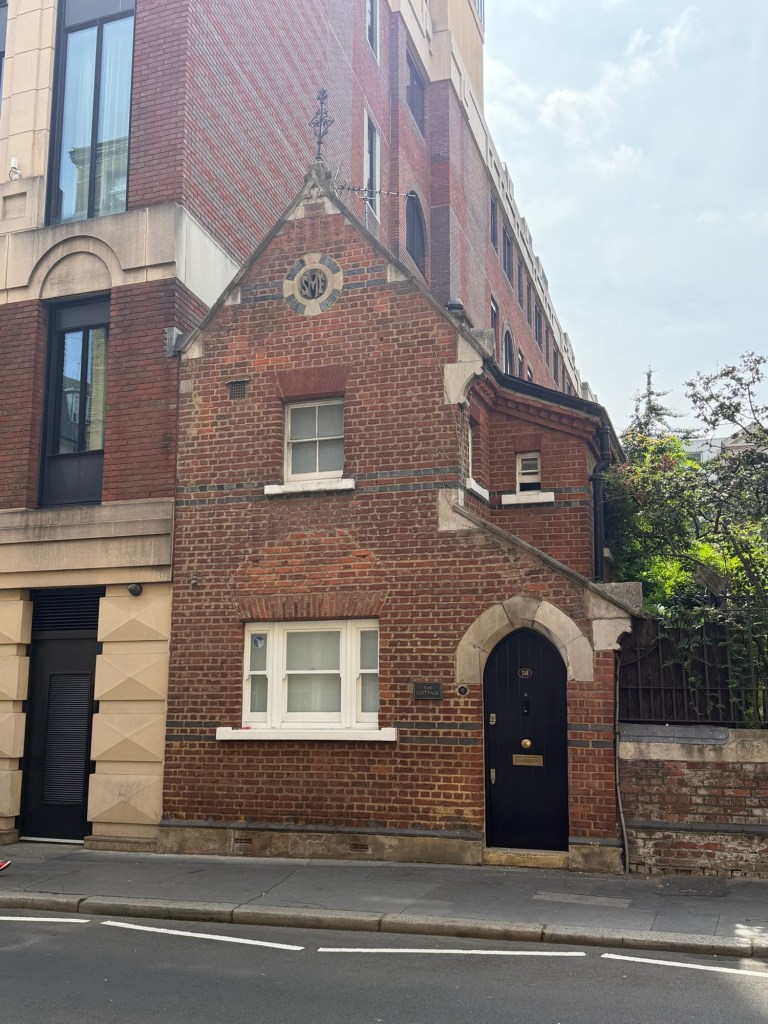
To the left of the playground stands a building carrying an SMF monogram, for St Martin-in-the-Fields. This is The Cottage, 58 Drury Lane, adjoining Drury Lane Gardens. The monogram was built into the gable because the cottage went up under the old parish and vestry of St Martin-in-the-Fields, before those local government responsibilities passed to the Metropolitan Borough and ultimately to Westminster City Council. It was in all likelihood a caretaker’s or park keeper’s cottage for the adjoining public garden rather than anybody’s grand private residence.
It is now an extraordinarily conspicuous little survivor, a late Victorian red brick cottage almost entirely swallowed by later development. Westminster still records the property as part of its freehold estate, although it appears to have been sold on a long lease, with Land Registry derived records showing a transaction of £250,000 in 1997.
Another kerb mark back by the opera house, this time V shaped, presumably another utility mark.
Wangling back towards St James’s along a crooked path plotted off the marks on the 1875 map, we reached Leicester Place, where my girlfriend, studying said map, noticed an odd round form crammed into a square block. A circle embedded in a square.
It turns out to be Notre Dame de France, the French Catholic church, and we went in. My girlfriend is Catholic, of Polish origin. The roundness is inherited: the site held Burford’s Panorama, a rotunda of 1793 to 1794 built to display 360 degree painted views. In 1865 the Marist Fathers bought it for the French community of Soho, and Louis Auguste Boileau converted it into what was London’s first cast iron church, opened in 1868. It took two direct hits in 1940 and was rebuilt between 1953 and 1955 by Hector Corfiato, who kept the circular plan. The Lady Chapel murals are by Jean Cocteau, painted over about a week in November 1959, and are his only work in this country.
The interior is nothing like the narrow brick front suggests. A full circle under a coffered dome with a glazed oculus, the light falling straight down onto the sanctuary. Behind the altar hangs an Aubusson tapestry by the Benedictine Dom Robert, the Virgin in a paradise garden thick with birds and beasts. Organ pipes fill the flanking arches, and the lower walls are set with perforated screens of coloured discs.
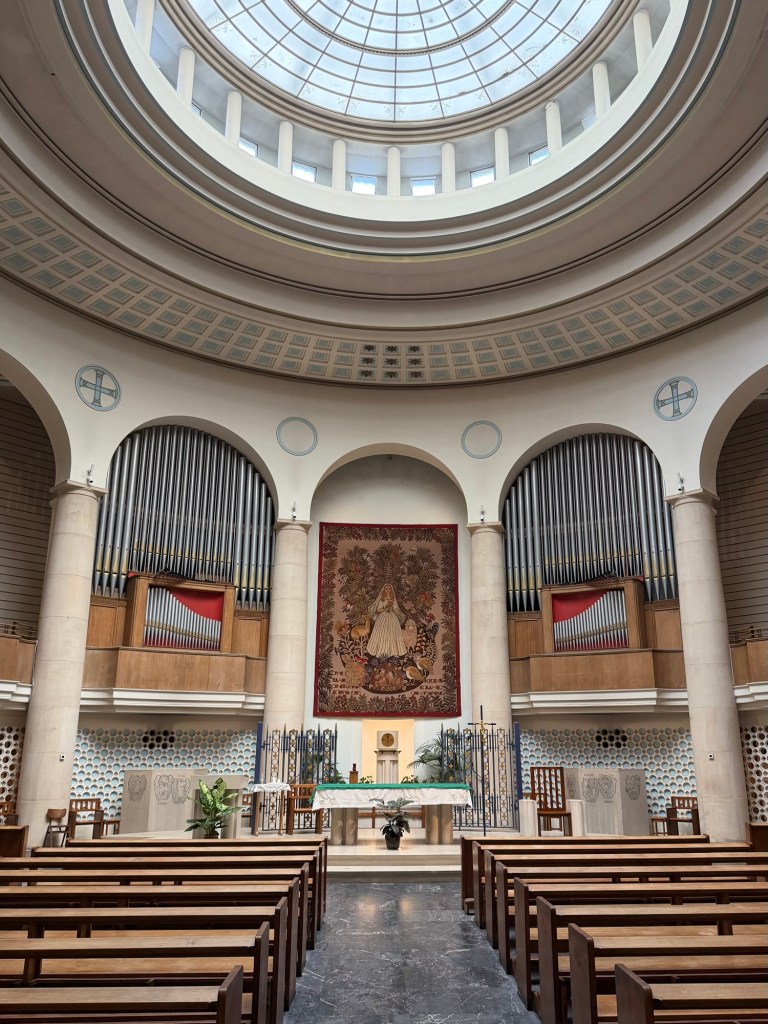
Which rather proves the point I keep coming back to. So much of London that looks very old is in fact early or mid twentieth century, and yet the genuinely old gems are still tucked away, churches in particular having survived almost universally. Here the building is all three at once: a Georgian footprint, a Victorian conversion, a 1950s fabric.
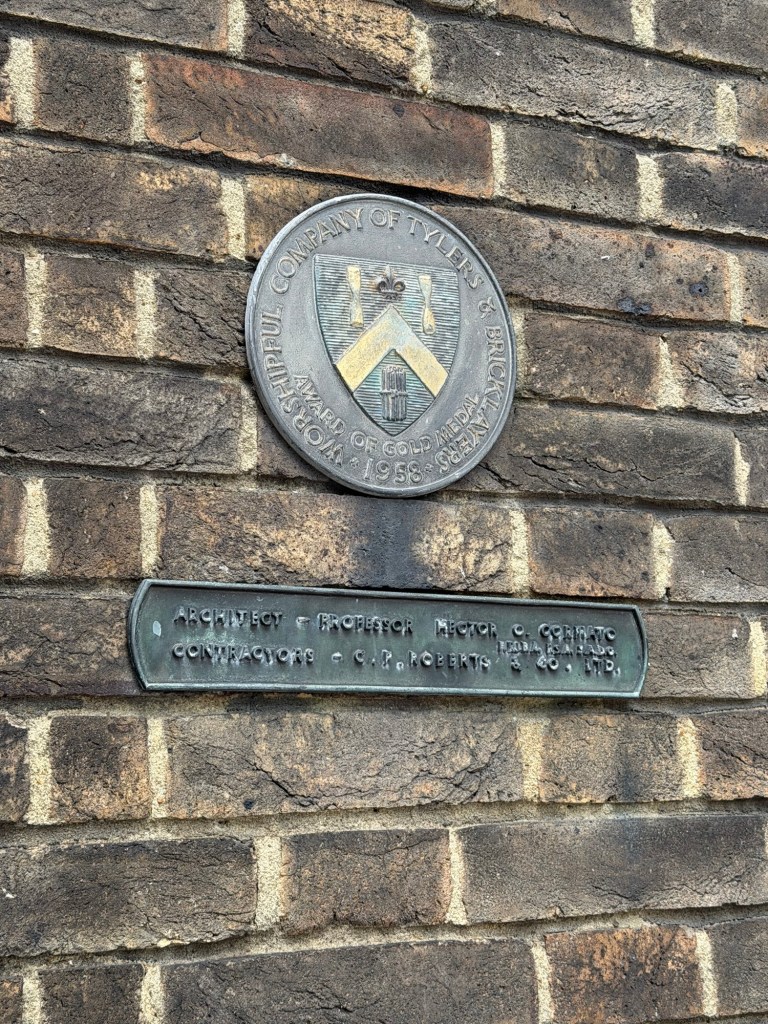
Outside, on the brickwork, a plaque I was pleased to find, being a liveryman myself. The Worshipful Company of Tylers and Bricklayers awarded the building its Gold Medal in 1958, and the strip beneath records the architect as Professor Hector O. Corfiato and the contractors as C. P. Roberts and Co. Ltd. A brickwork prize for a church known almost entirely for what is inside it.
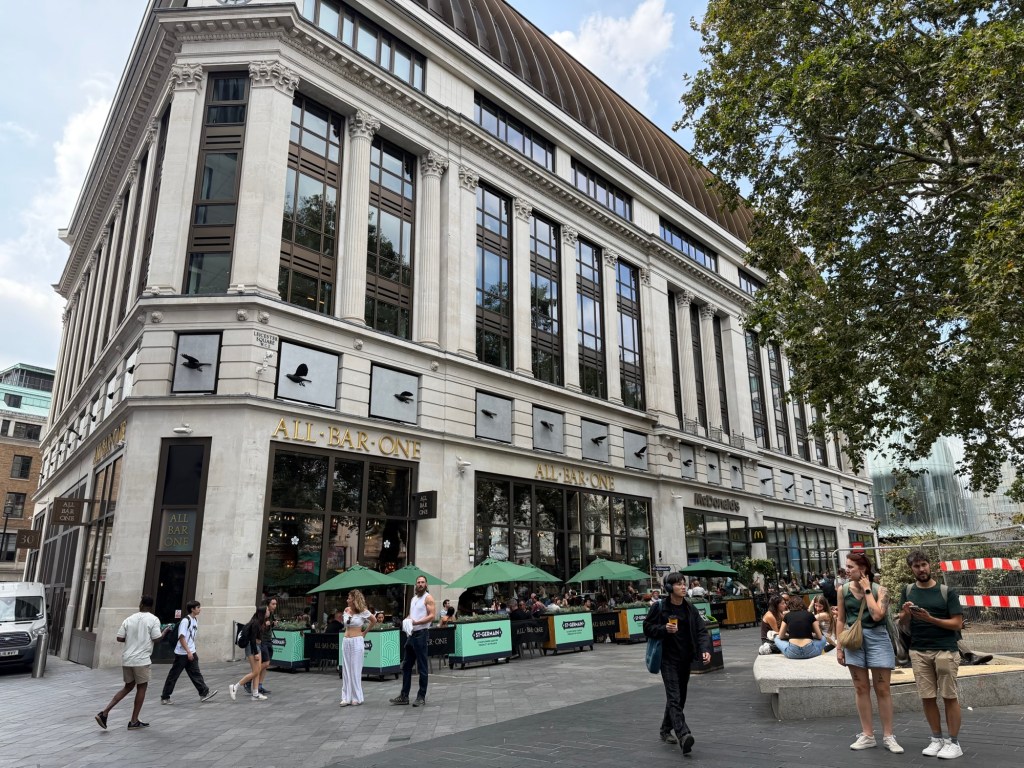
Back through Leicester Square, where we enjoyed the blackbirds wrapped around the corner of the building above All Bar One. The work is by Kenny Hunter, Blackbird (the persistence of vision), installed in 2016: one bird cast in successive positions and spaced along the frieze, so that walking past animates it. A nod to the motion studies that led to cinema, on a square now given over to nothing else.
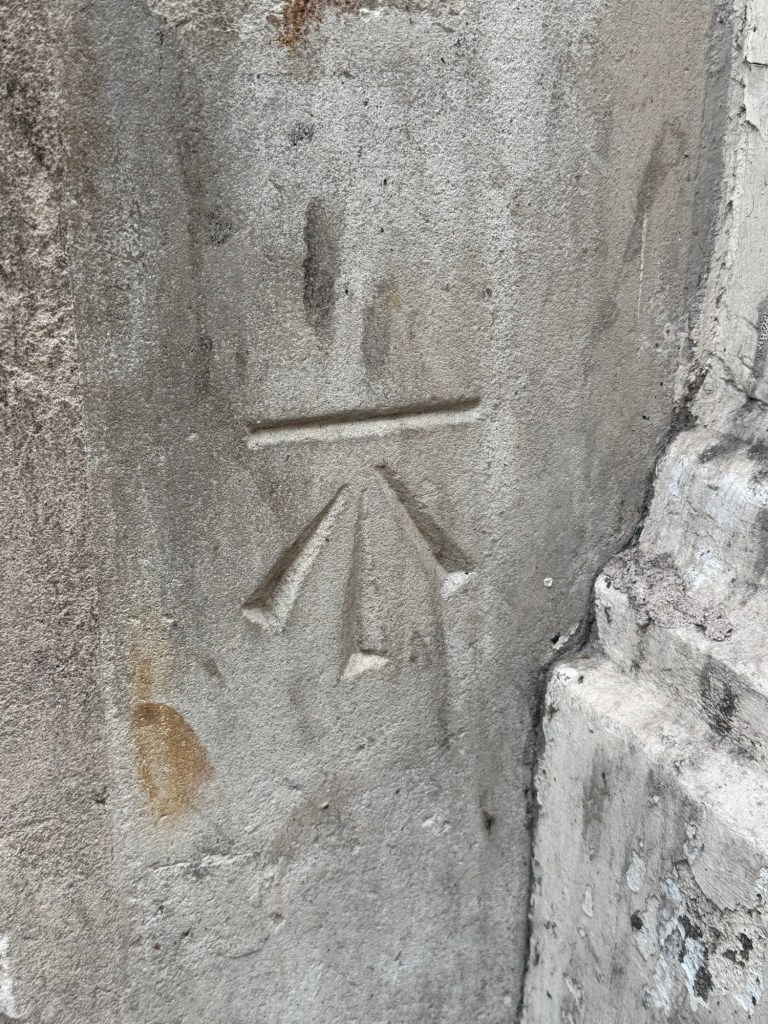
On Jermyn Street, which we have walked several times this trip, my girlfriend found one last mark in the wild. It is not on our 1875 map, so presumably it post dates it. A beauty all the same, and a fitting last find.
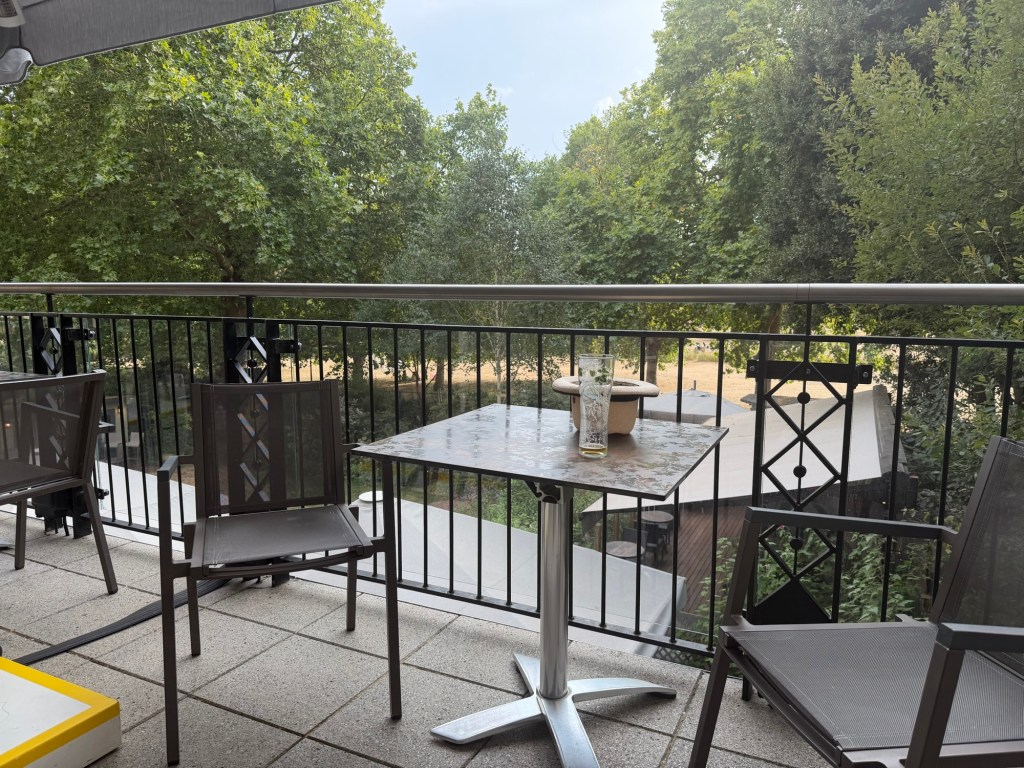
A quick stop in the Golden Lion on King Street, then back to ROSL for a drink on the terrace.
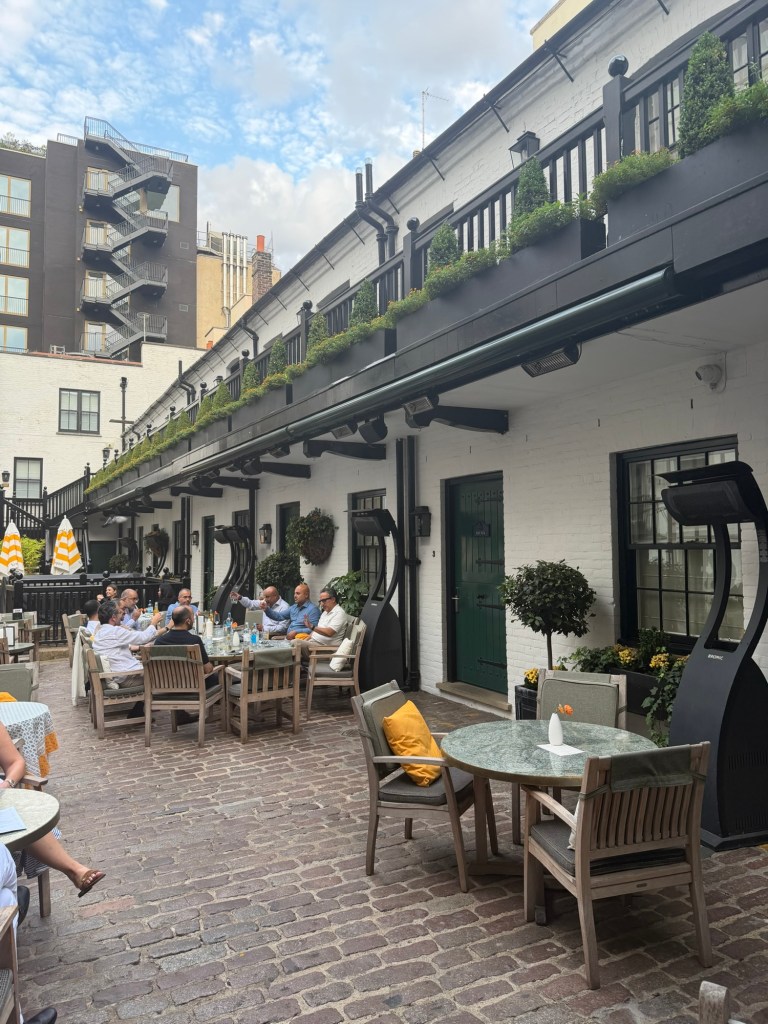
Dinner at seven in the American Bar, which opens onto Blue Ball Yard. The yard has been stabling of one sort or another since the 1670s, and the buildings standing there now went up in the 1740s. They became garages, and in 1990 were converted into hotel rooms. Each door carries the name of a horse, several of them Grand National winners, alongside the likes of Copenhagen, who carried Wellington at Waterloo. A considerable improvement on the arrangements the original occupants had.
The bar itself is hung with ties, caps and assorted club ephemera left behind by a century of visitors. I resisted the urge to contribute.