Peel calls itself the sunset city. Most evenings that is a slogan. This evening it was a plan.
The path of totality ran a long way west of us, across Iceland and down into northern Spain. From the Island we were left with about ninety two per cent of the sun covered, at a little after nine minutes past seven, with the sun still fourteen degrees up over the water. A decent view, from the right side of the right island, with nothing in the way but sea.
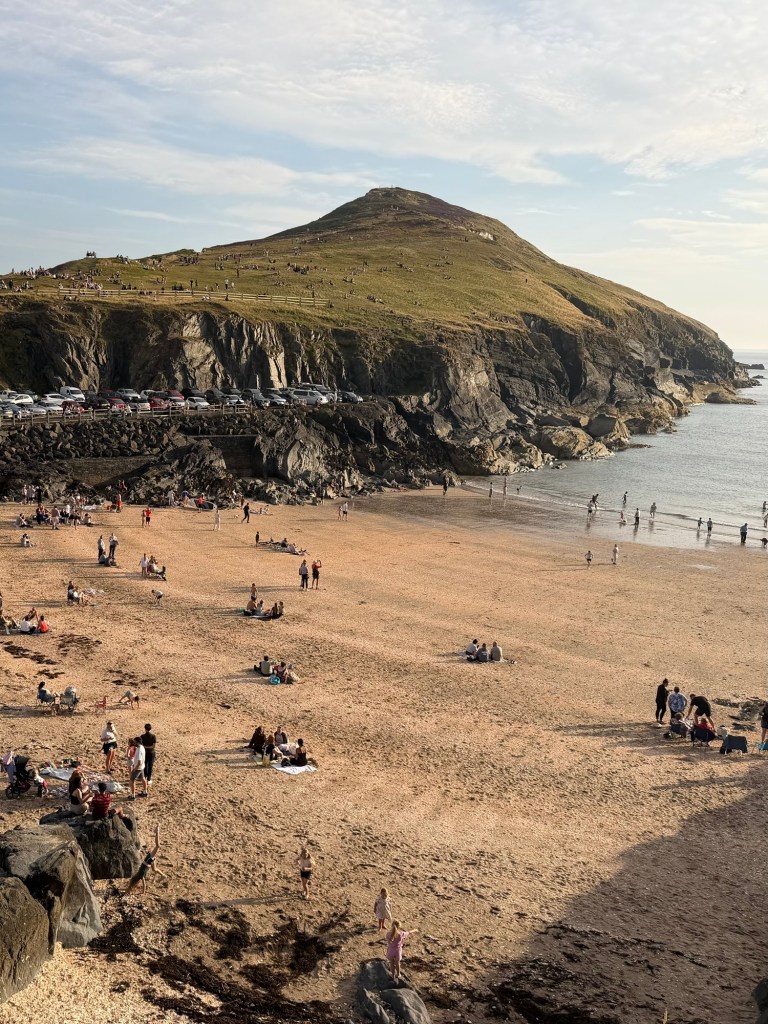
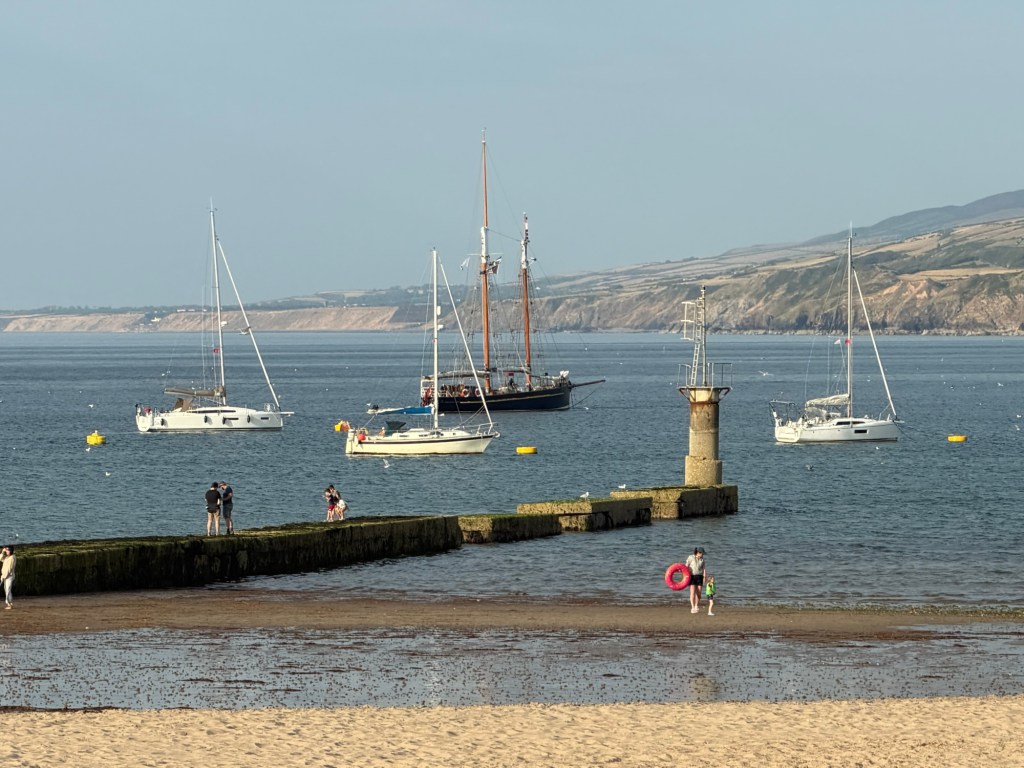
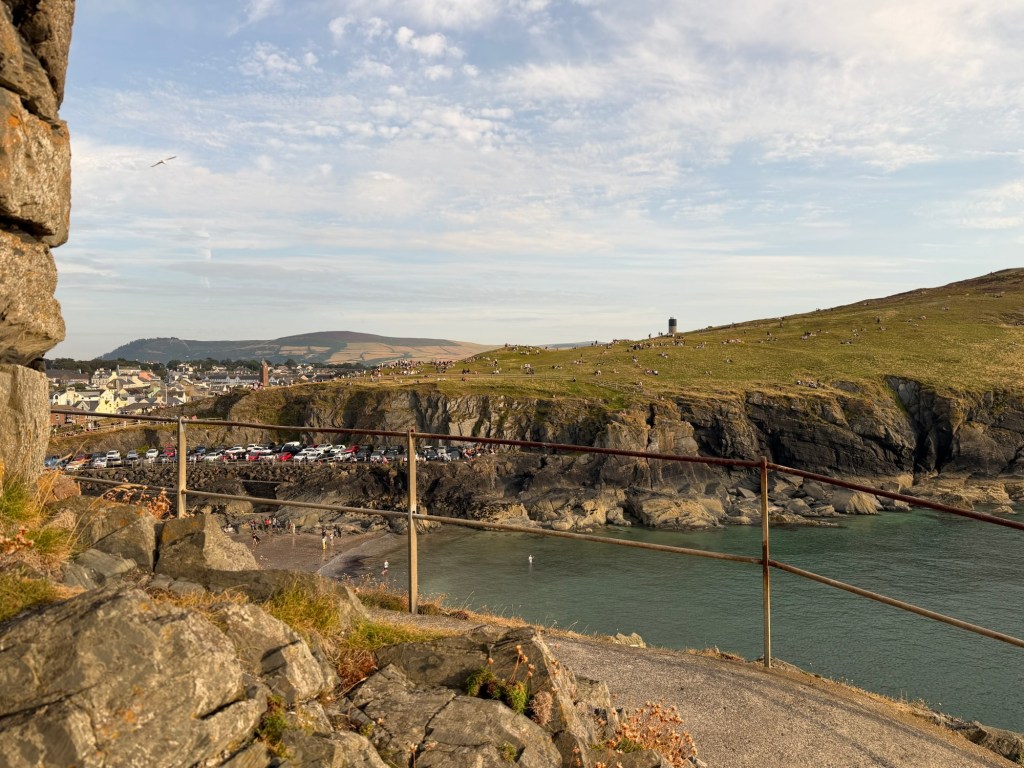
Everybody else had worked this out too. Peel Hill was covered in people sat in the grass, thinning out but never quite stopping all the way up to Corrin’s Tower. Fenella beach was full. There were boats in the harbour and a good number more lying off the beach.
We went up the steps round the castle and settled against the wall at the back, where there were considerably fewer people. Still some, mind. There is nowhere in Peel that is empty on an evening like this one.
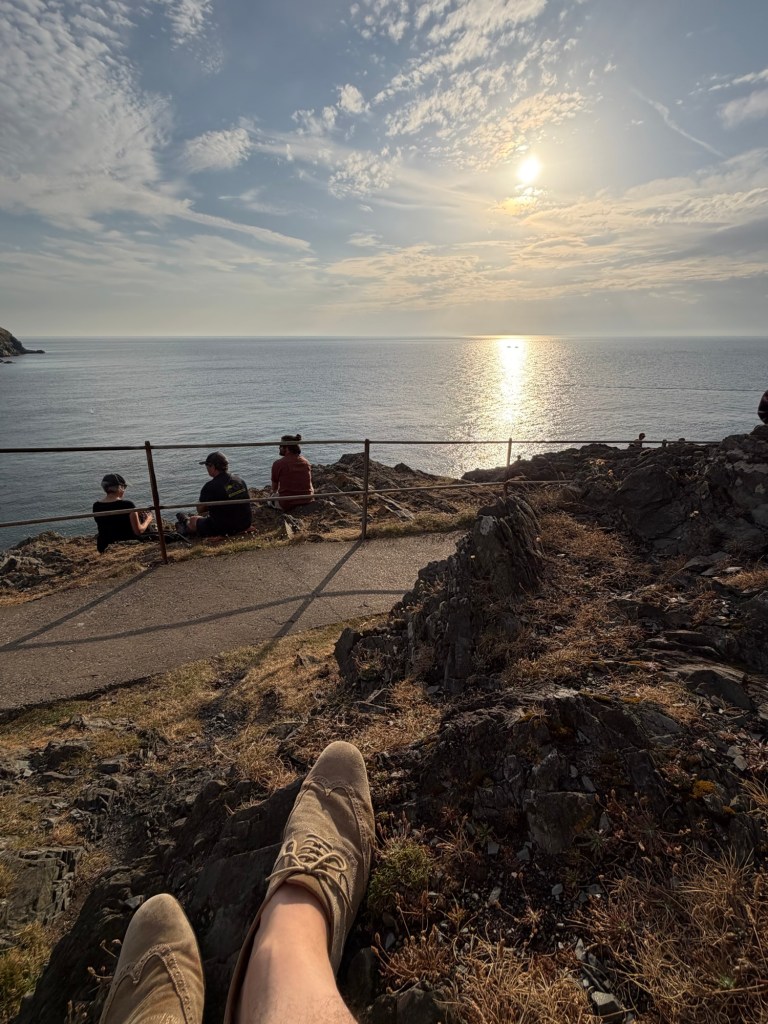
The Island had run out of eclipse glasses some days beforehand. Every last pair, apparently. So we did what everyone around us was doing, pointed our phones at the sun, zoomed in as far as the thing would go, and looked at the screen instead. It is an inelegant way to watch a celestial event and it worked far better than it deserved to.
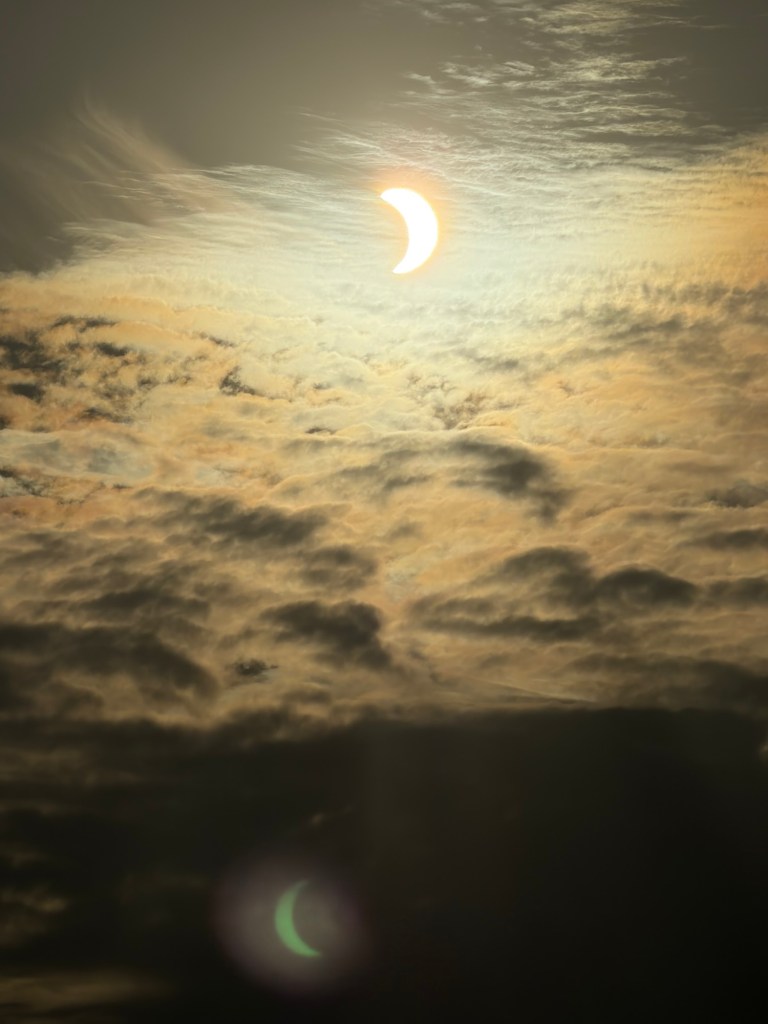
The odd part was the timing. The sun was a thin crescent on the screen long before the light gave up. Then, later than seemed right, it went. Not dark exactly, but twilight, with a red wash sitting low in the sky and a chill coming off the sea that had not been there ten minutes earlier.
I wondered at the time whether that was the light taking a while to reach us. It is not.
Sunlight takes about eight minutes and twenty seconds to get here, but it takes eight minutes and twenty seconds every second of every day, so the delay applies to the crescent and the daylight alike and cancels itself out. What was actually lagging was us.
The eye does not measure light, it adapts to it. It works on something close to a logarithmic scale, so a sun with half of it missing still reads as a bright summer evening. Even at three quarters covered you would struggle to swear to it without being told. The drop only becomes obvious in the last stretch, and by then it comes quickly. So the crescent and the darkness were never going to arrive together. The crescent is what the sun is doing. The darkness is what your eyes finally admit to.
We pottered off quite happily.
On the way back to the car we took a slight detour, and found a bench mark cut into what I took to be an old school hall on Christian Street.
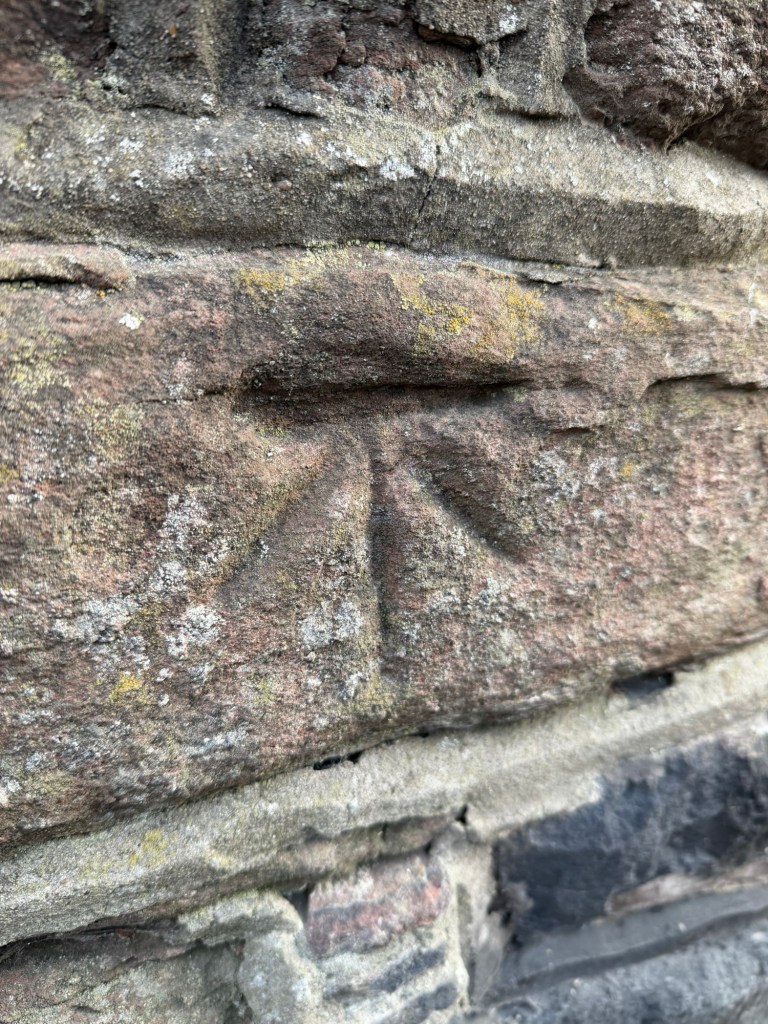
Which is the first proper one. Save one earlier find, where the line had been cut into a surface that was already level and so had little to do, every mark we have found so far has been an arrow left to fend for itself, borrowing whatever horizontal the mason had already provided: the arris of a course or the hard underside of a coping stone. This one has its own line, cut straight into the vertical face, starting and stopping well short of the edges of the block, with the arrow sitting underneath and pointing squarely at it. Textbook. A century and a half of weather and lichen on Peel sandstone and you can still read every stroke of it.
It was an old school hall, too. Christian’s Endowed School opened on that street in 1843, and Christian Street is named for it. The money came from Philip Christian, born in Peel in 1593, who went off to London as a young man, made his money as a weaver, and was admitted a freeman of the Clothworkers’ Company in 1616. He left property in his will for the education of poor Peel boys, and the Clothworkers have been at it ever since. A Peel man, a City livery company and a school still carrying his name. I have some sympathy for the route.
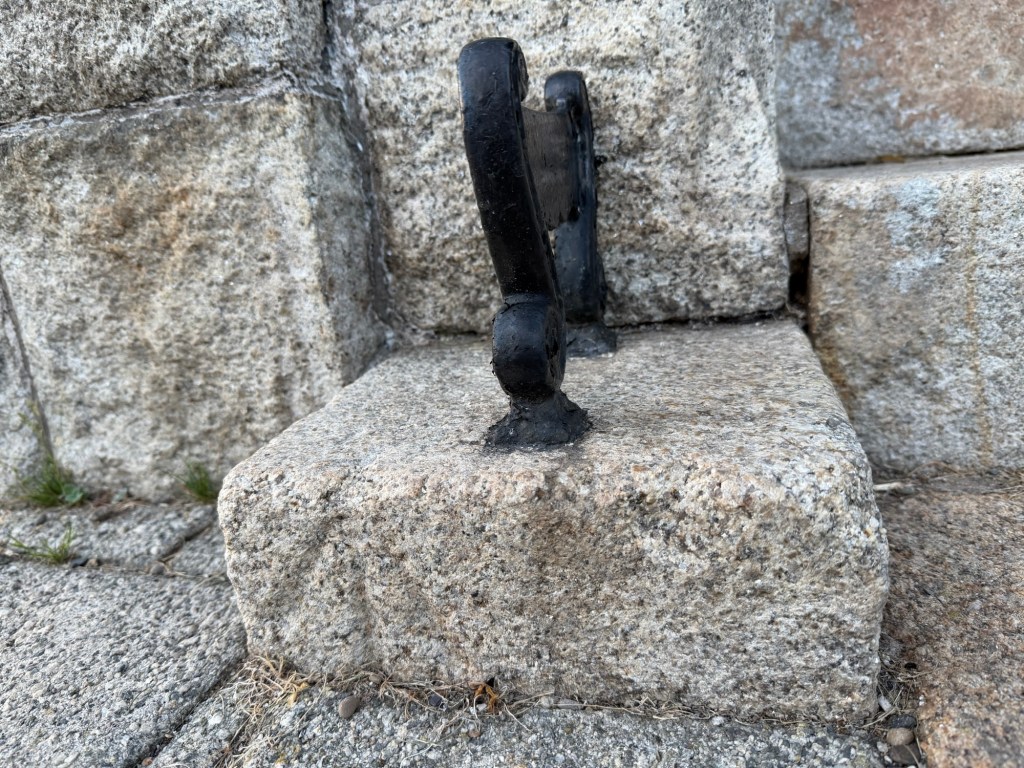
Then we stopped at the church in St John’s on the way through and found another one, very well hidden indeed.
So: ninety two per cent of the sun went out over the Irish Sea this evening, in a clear sky, over water, at exactly the right time of day, and I came home pleased about some lines chiselled into stone by men with a hammer.

