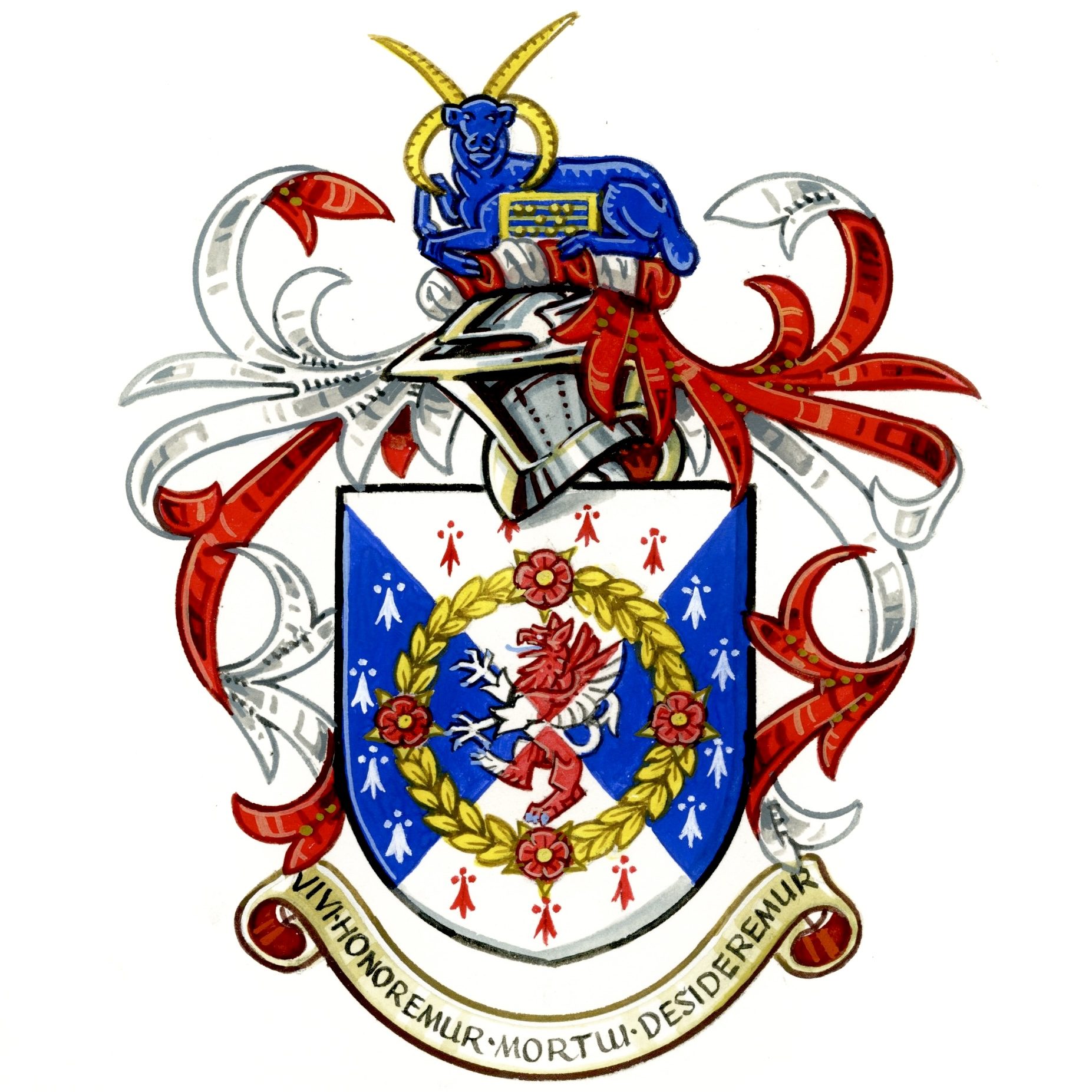
There is a mural in Memorial Hall at Alexandria showing George Washington in full Masonic regalia, laying the cornerstone of the United States Capitol. I stood in front of it yesterday afternoon, a few hours before taking the Junior Warden’s chair in the same building. This morning I was at the Capitol itself, in a group led by Jim Slattery, who represented Kansas in the House of Representatives for twelve years and had given up his morning to walk a party of visiting Freemasons round his old place of work.
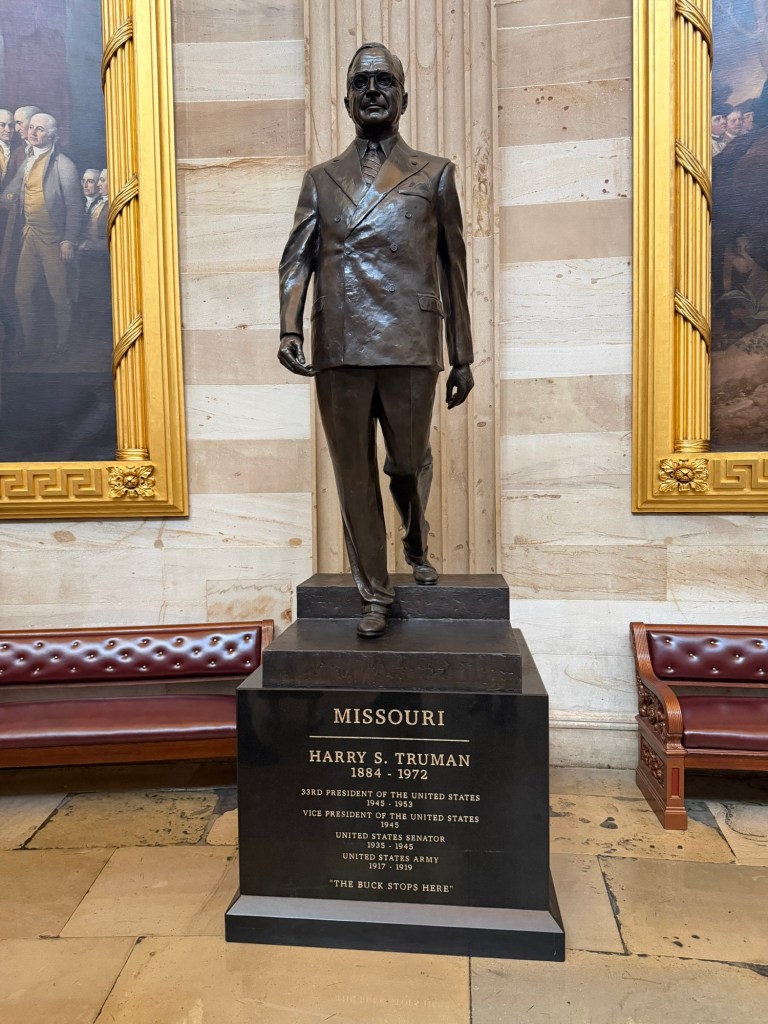
The best thing in Statuary Hall, in my opinion, is the Truman statue, and the ring on his hand. It is a 33rd degree ring and it is there on purpose: a jeweller copied Truman’s own, and the sculptor cast it into the bronze along with his First World War lapel pin. Truman was Grand Master of Missouri in 1940, while sitting as a United States senator. The 33rd president, in the 33rd degree.

Downstairs in the Crypt is Magna Carta, or a gold replica of it, in a jewelled case made in England by Louis Osman, who had earlier made the crown for the investiture of the Prince of Wales. Fifty diamonds, one for each state. It was given to Congress by the British government for the bicentennial in 1976, and for the first year an original charter was lent to sit above the copy before going home again. At the Archives yesterday I had stood in front of an original of 1297. Today, the copy.

Then we went past a marker reading no staff tours beyond this point, and past the point where photography stops being discouraged and becomes forbidden. Cameras and telephones were deposited in a box. We were walked out onto the floor of the House of Representatives.
The public tour of that building does not include the galleries, let alone the chamber. Standing on the floor of it is not something that can be arranged. It had been arranged.
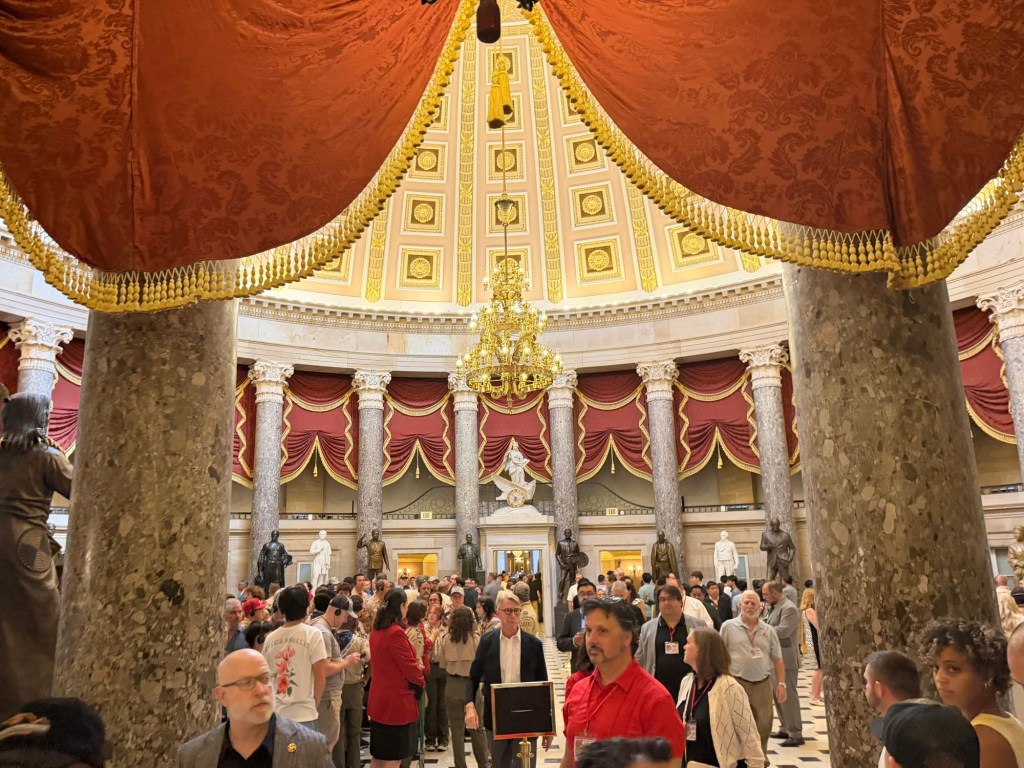
There are only two portraits in the room, Washington to one side of the rostrum and Lafayette to the other, and Slattery talked to us beneath them about how American democracy actually works. That it runs on compromise. That the process is ugly, and is meant to be. That this chamber is the truly democratic one, because every person who has ever held a seat in it was put there by the people, the Senate having been chosen by state legislatures until 1913.
He also said that the principles of Freemasonry plainly influenced those of the founders who were Masons, and that you can hear it in the way Washington spoke. That is a carefully made claim and I think it is the right one. It asks less than the stronger versions and it survives contact with anybody who knows the period.
I have been in a good many old rooms this week. That one I will keep.
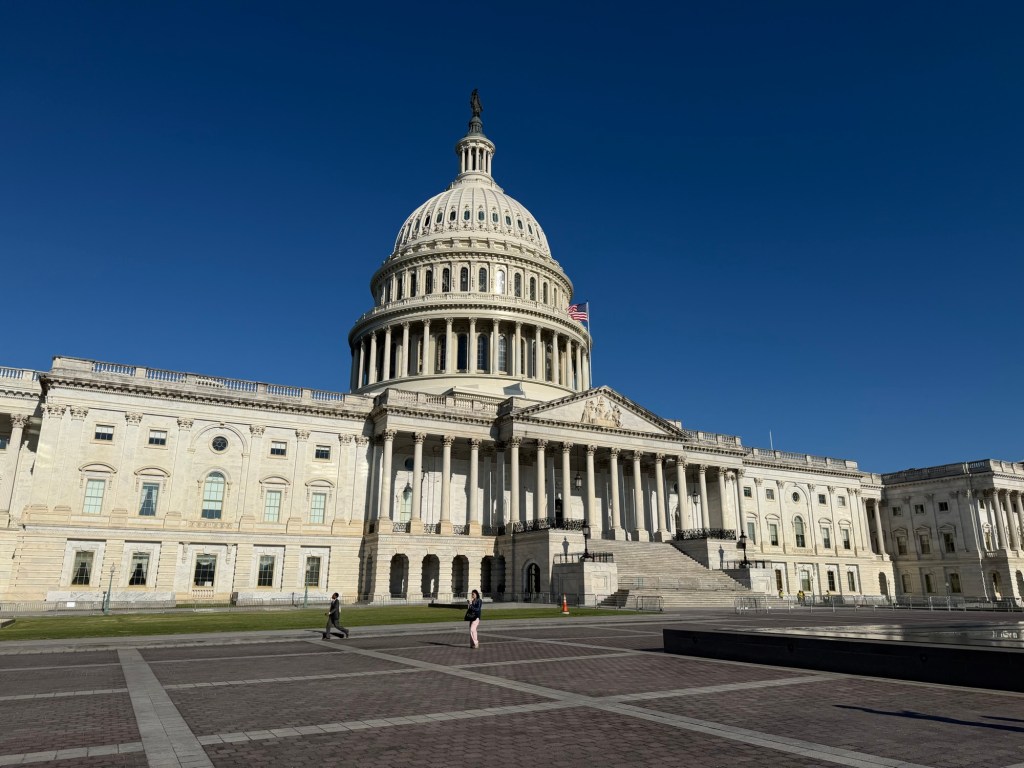
On the way out I bought a paperweight from the shop, cut from sandstone that came off the East Front during the renovations of the 1950s, quarried at Aquia and carried up the Potomac by boat in the 1790s. Having just stood in the chamber, I bought a piece of the wall.
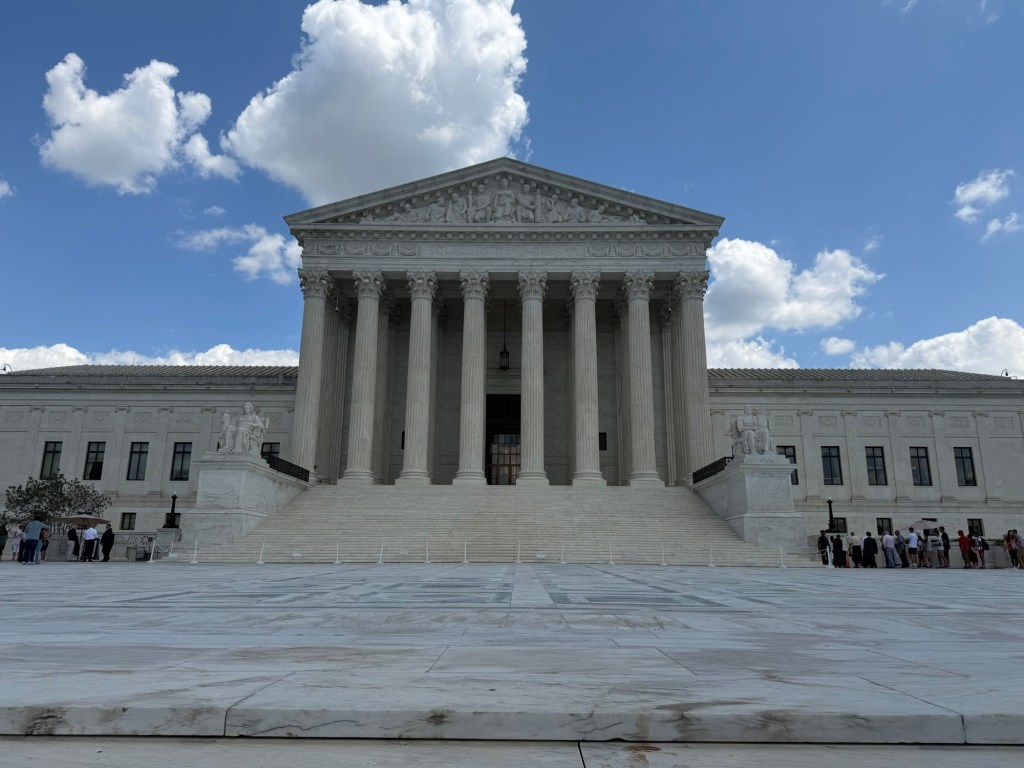
In the afternoon, the Supreme Court. I made my own way there and joined our group at the very back of it, only to find the tour doubled back on itself almost immediately, which put me at the front. There is no lesson in that but I enjoyed it. We saw the courtroom, had a good half hour on how the Court works, and were photographed together on the steps in the sun.
Black tie tonight, at the Library of Congress.
None of today is on an itinerary that can be bought. Somebody spent a very long time on the telephone to arrange it, and I am conscious of that. Two hundred and fifty years ago, the men who built the room I stood in this morning were still deciding whether there would be a country to put it in.

