Half past ten in the morning and I was still at the Airbnb, which was exactly where I intended to be. The others had left earlier for the rebel programme, which opened with a walking tour of the city. I value my sleep considerably more than I value walking, and I have yet to regret the trade.
The essential emails and messages were dealt with from my phone, in bed. The modern equivalent of the correspondence tray, and rather better upholstered.
Two programmes were running this week. The formal one, which was the reason any of us had come, and the rebel programme, which had acquired the gravitational pull that unofficial things always acquire. That evening the formal programme offered a cocktail reception and a dinner at the Masonic Temple. I was going. I was not at all confident that many others would be.
Which produced a small irony. In a city founded on a refusal to do as one is told, in a week given over to marking that refusal, the genuinely contrary position turned out to be attending the official dinner. I make no great claim to virtue on this. I skipped the lectures and anything scheduled before a civilised hour.
Having declined the walking tour, I then went for a walk. Not hypocrisy, I would argue, so much as a preference for setting my own pace.
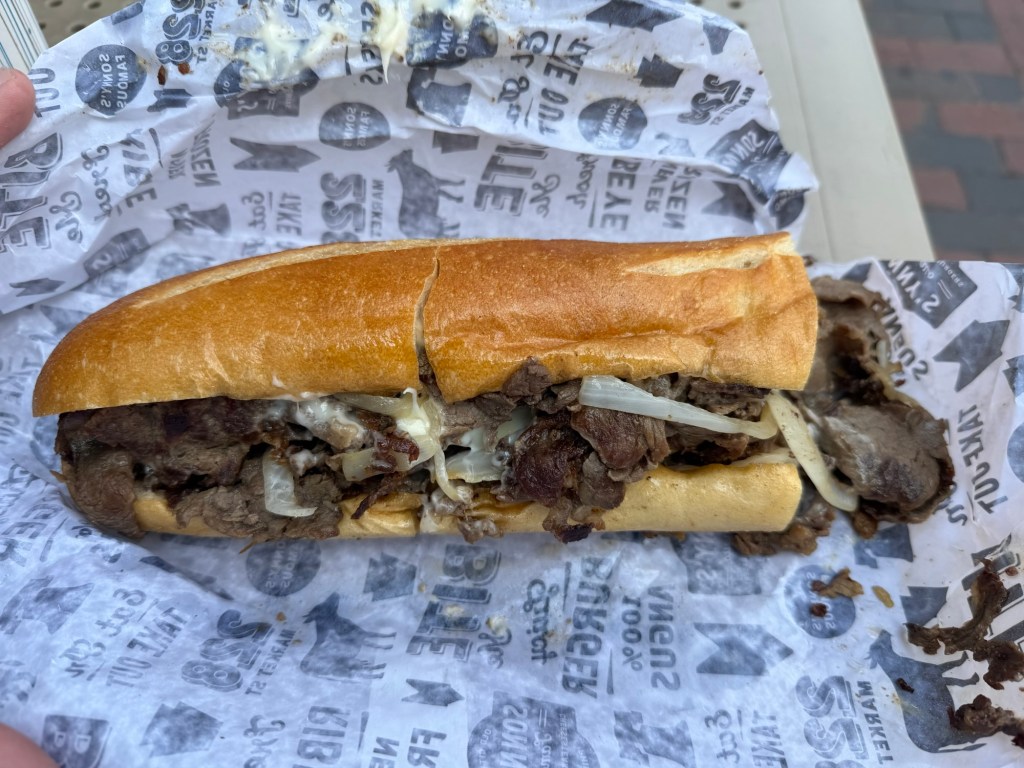
Lunch first, a cheesesteak from Sonny’s on Market Street, taken with Cooper Sharp. It was very good indeed and required a large Coke to cut through the grease. This is not a complaint. The grease is structural.
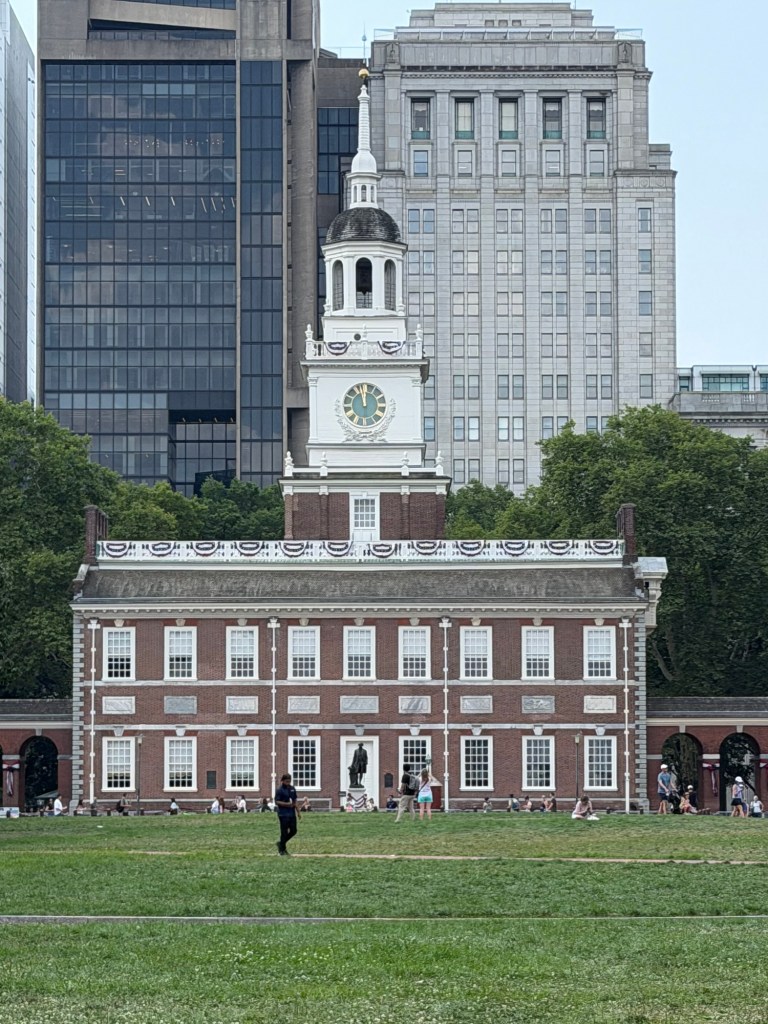
Then Independence Hall. A handsome brick building with a white steeple, dressed in bunting and standing in a green square, and thoroughly overshadowed. Towers of glass and stone loom over it from every side. A nation was declared in a room in there, and the city has since put forty storeys of offices around it and rather buried the thing.
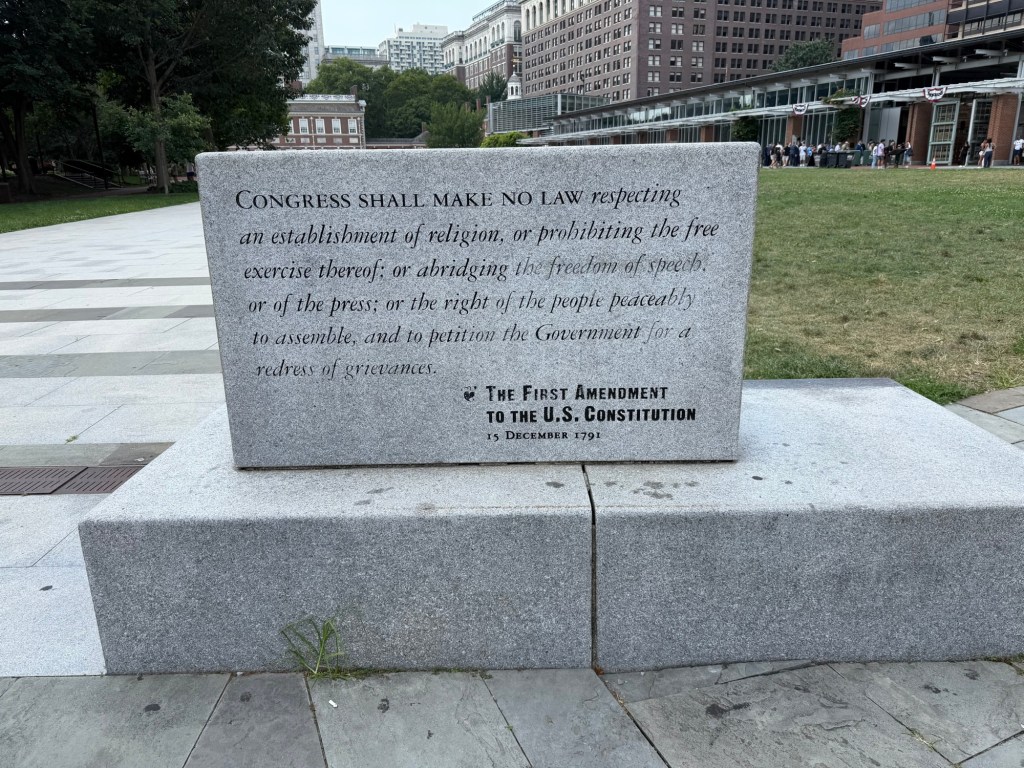
A short walk away, cut into a slab of granite and left out in the park, was the text of the First Amendment. No law abridging the freedom of speech, or of the press, or the right to assemble and to petition. It sat at knee height where anyone could lean on it, weathering quietly in the open, and I found the openness of it striking. My own island has the oldest continuous parliament in the world, more than a thousand years of it, and not one line of that is cut into stone in a park where a stranger might sit on it. We keep our arrangements inside the buildings that make them. The Americans put theirs outdoors, at knee height, and let the weather have a go.
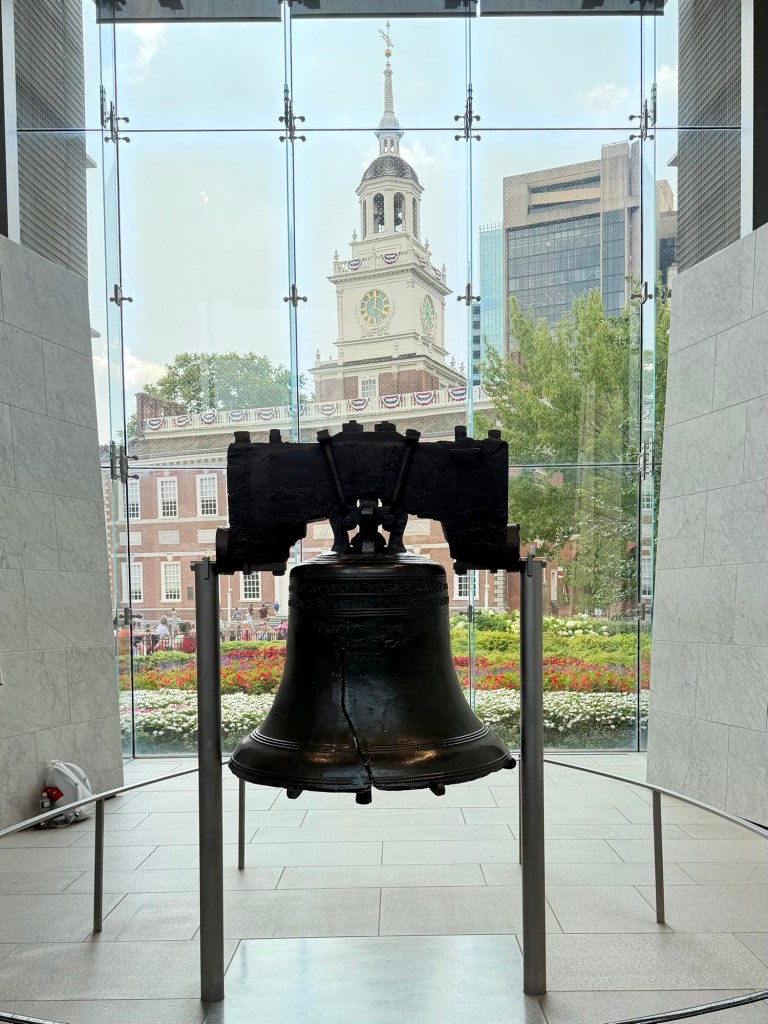
Then the Liberty Bell, which hangs in a glass hall with Independence Hall framed in the window behind it. Very good curation, and it makes the photograph almost impossible to get wrong. What nobody had thought to tell me, and what I enjoyed enormously, was that the thing was made in London. The Pennsylvania Assembly ordered it from a Whitechapel foundry in 1751 at a cost of a hundred pounds. It arrived the following year, was hung on a frame to test the sound, and cracked at the first stroke of the clapper.
Two local men, John Pass and John Stow, melted it down and cast it again. That version was said to sound like two coal scuttles being banged together, so they broke it up and did it a third time. Their names are on the bell still, cast into the side a few inches above the famous crack, which is a later injury altogether.
So the great symbol of American liberty was ordered from England, broke on arrival, and had to be remade twice by Americans before it would ring. I would not have dared invent it.
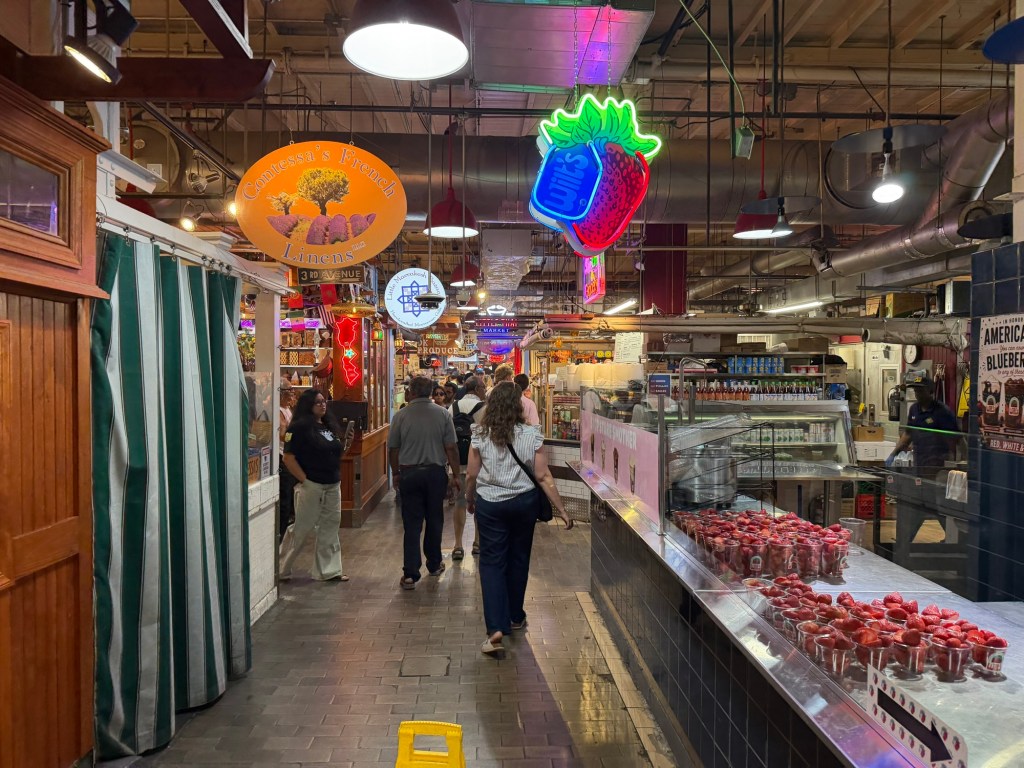
Then Reading Terminal Market, trading under the old railroad shed since the 1890s and now home to stalls selling produce, cheese, Amish baking, Moroccan lanterns and, for reasons I did not establish, French linens. All of it under one roof and all of it shouting at once.
A sign at an ice cream counter announced that, in honour of America’s 250th, blueberries could now be added to any of the cups. The strawberries and the cream had the other two colours covered. A nation’s semiquincentennial, marked by a topping.
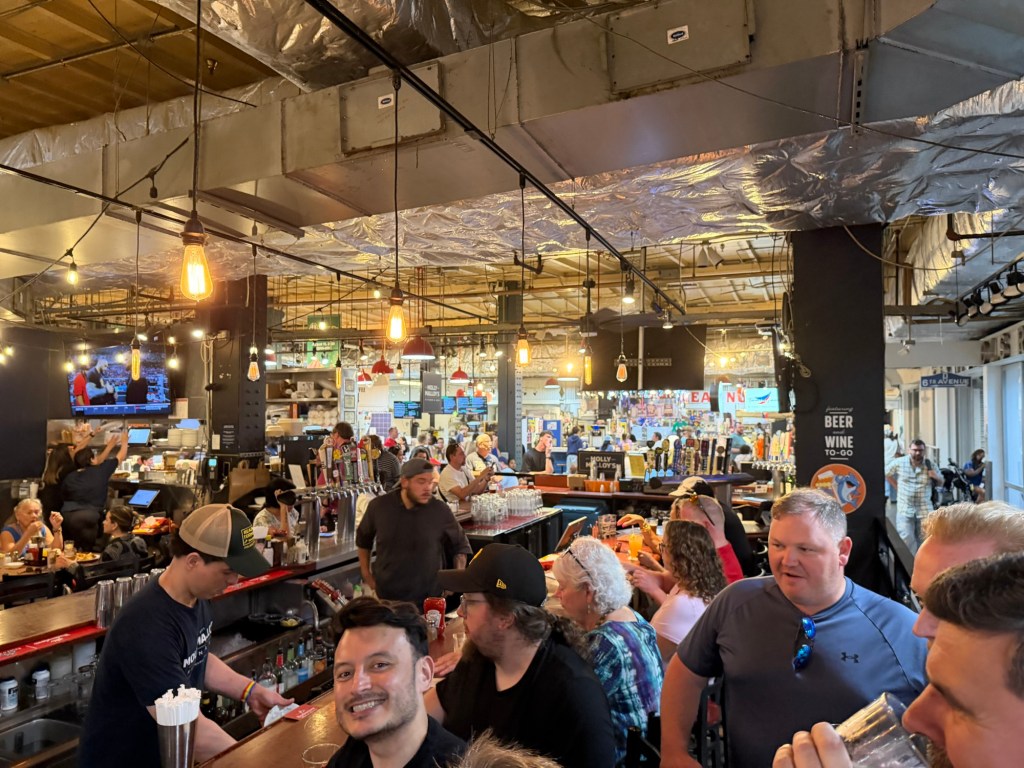
I found the others at Molly Malloy’s, the bar in the middle of the market. They had spent the day on the rebel programme and I had spent it on my own, and we arrived at the same bar regardless.
One extra stop on the way back, the steps of the Philadelphia Museum of Art. A shower came through as we set out and did nothing whatever except turn the heat into something you could swim in, and by the time we arrived it had cleared and dried out completely. Behind the steps sits one of the great art collections in America. In front of them is a flight of stone stairs made famous by a film about a boxer, and it was quite clearly the stairs people had come for. There were more visitors on the steps than going through the doors at the top of them. A banner across the portico advertised an exhibition called A Nation of Artists, which nobody appeared to be reading.
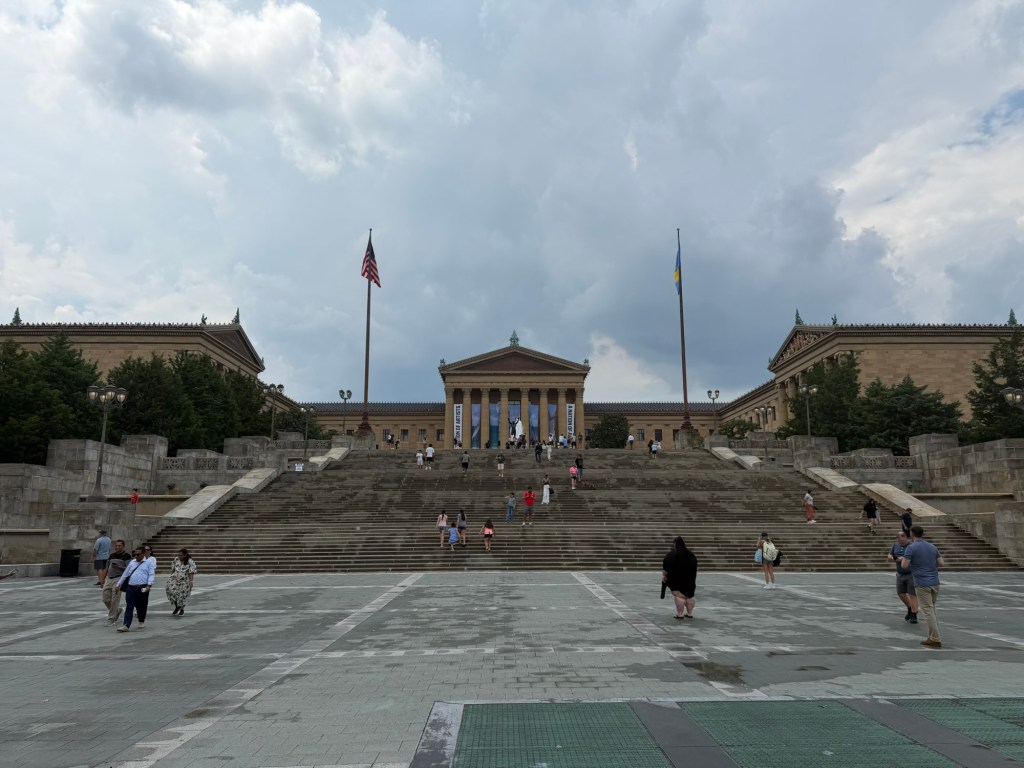
I went up with a splinter group, the rebel programme having by that stage generated a rebellion of its own. We walked. At a leisurely pace, in the heat, with conversation. Nobody ran, nobody punched the air at the top, and the city will have to take that as it finds it.
At the foot of those steps, comprehensively ignored by everybody charging up them, stood the Washington monument and fountain. Washington sits at the top on his horse, some forty feet up, facing away down the parkway towards City Hall. The base is populated by bison, moose, elk and a bear, together with reclining figures representing the peoples of the new country.
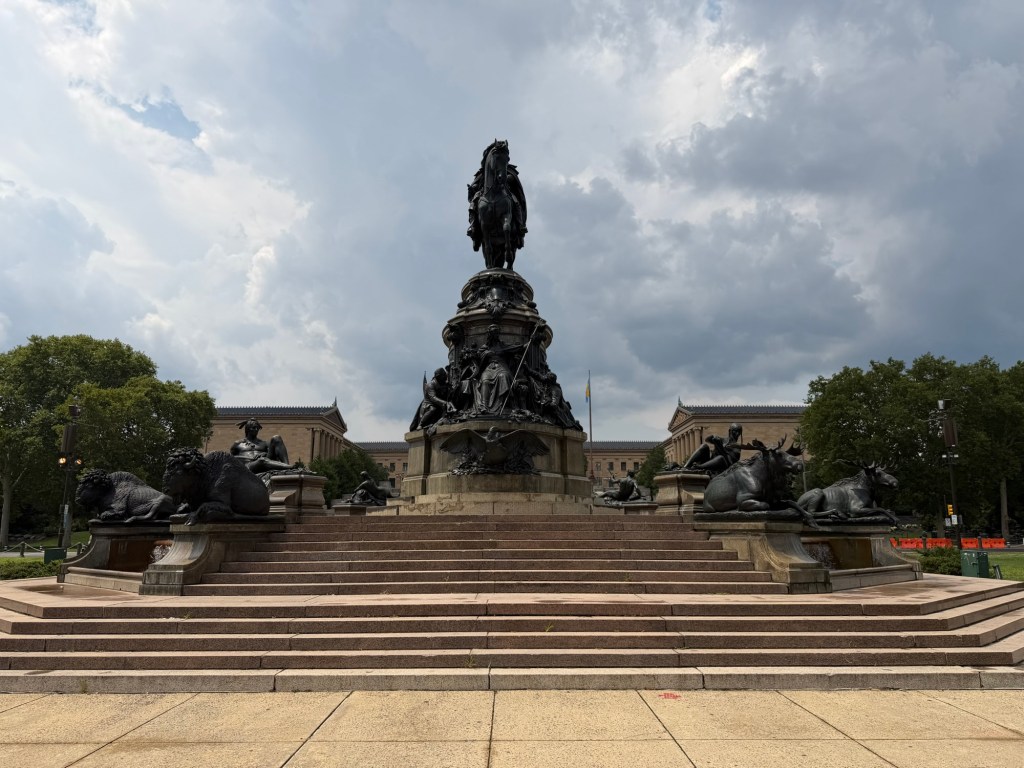
It was commissioned in 1880 by the descendants of the officers who had served under him, and the man they engaged was a German sculptor from Königsberg. He worked from a life mask for the face and, one assumes, from imagination for the moose. It was dedicated in 1897. So the memorial to the founding of the American republic was executed in Prussia. My father’s side is German and I hold the nationality, and standing in front of it I allowed myself a quiet moment of proprietorship. One of the best things I saw in the city, and not one word of it American.
A few beers at Con Murphy’s on the Parkway finished the afternoon, and then the sky made up its mind properly. By the time I was in the car back to the house it was chucking it down, thunder over the whole city, and the temperature had fallen away to something a person could stand upright in.
The car was a black GMC Yukon XL, roughly the size of my first flat, summoned to move one man in shorts a couple of miles across town. Somewhere along the way a man went past on an electric bike wearing a black bin liner as a raincoat. Not elegant. Dry, though, and free, and doing exactly the job asked of it. He had a bin bag. I had two and a half tonnes of American engineering and an entire spare row of seats. On the whole I think he came out of it rather better.
Decent of the weather to break when it did, since I was about to change out of shorts and into a dinner jacket. Cheesesteak grease at lunchtime and black tie by six. This week does not do things by halves.

