An early flight
My girlfriend and I flew to Liverpool at seven on Friday morning, hired a car and drove the hour and a half or so to Shrewsbury. We had come to see my best friend from school, his wife and their children. His eldest daughter is my goddaughter. The youngest gets spoiled as well, though. The last time he and I saw each other was a night out in London two years ago.
On the way out of Liverpool we stopped at Smyths, and I bought a load of toys for the children, including a karaoke machine. More on that later.
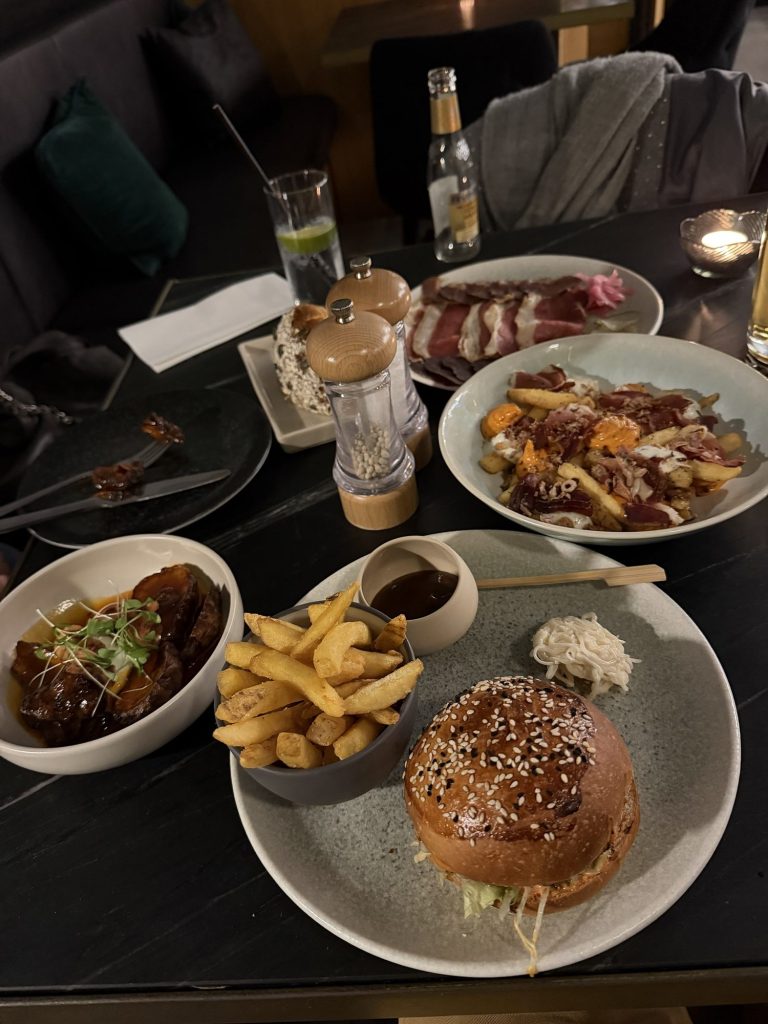
On Friday my girlfriend and I saw the town, then nipped up to Ruyton-XI-Towns in the evening to say hello. We got back just in time for a bite at the Walrus. The kitchen had closed, but they fitted us in for the bar menu, and it was genuinely brilliant: a feast of four dishes, and a wagyu burger that was divine. Possibly the best I have had.
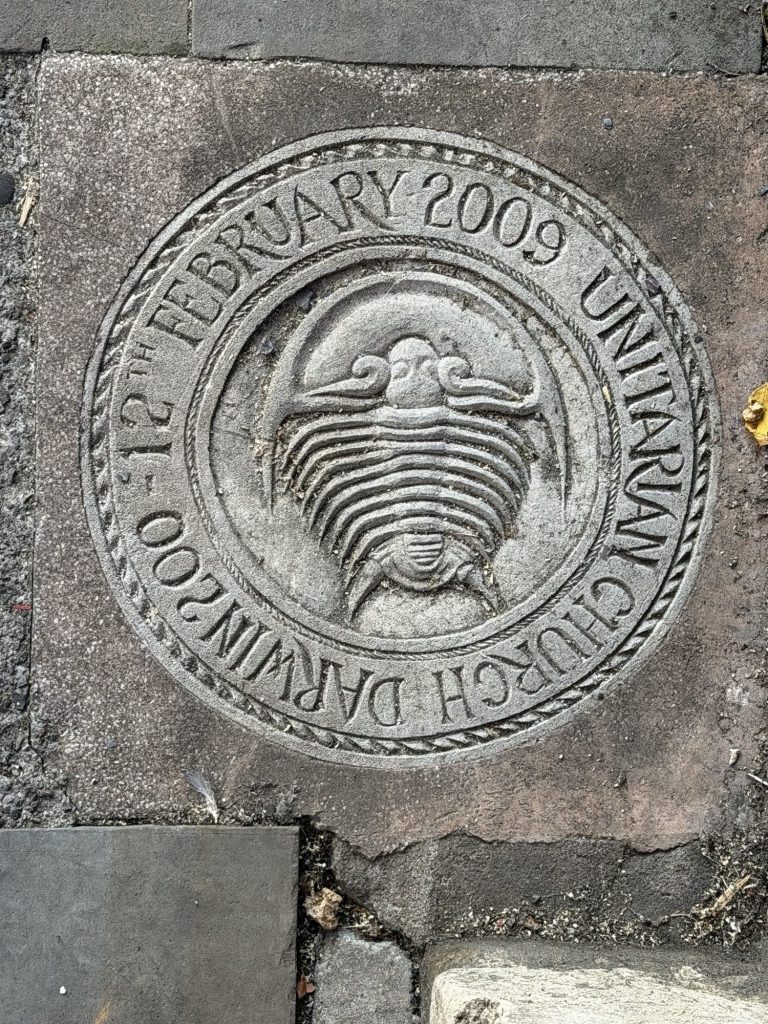
We stayed at Darwin’s Townhouse, a Georgian house that is very quaint and that we loved. After seven the staff all go home and there is an honesty bar. Charles Darwin was born in the town in 1809, and the town keeps count. A roundel set into the pavement outside the Unitarian Church marks his two hundredth birthday with a trilobite.
After dark
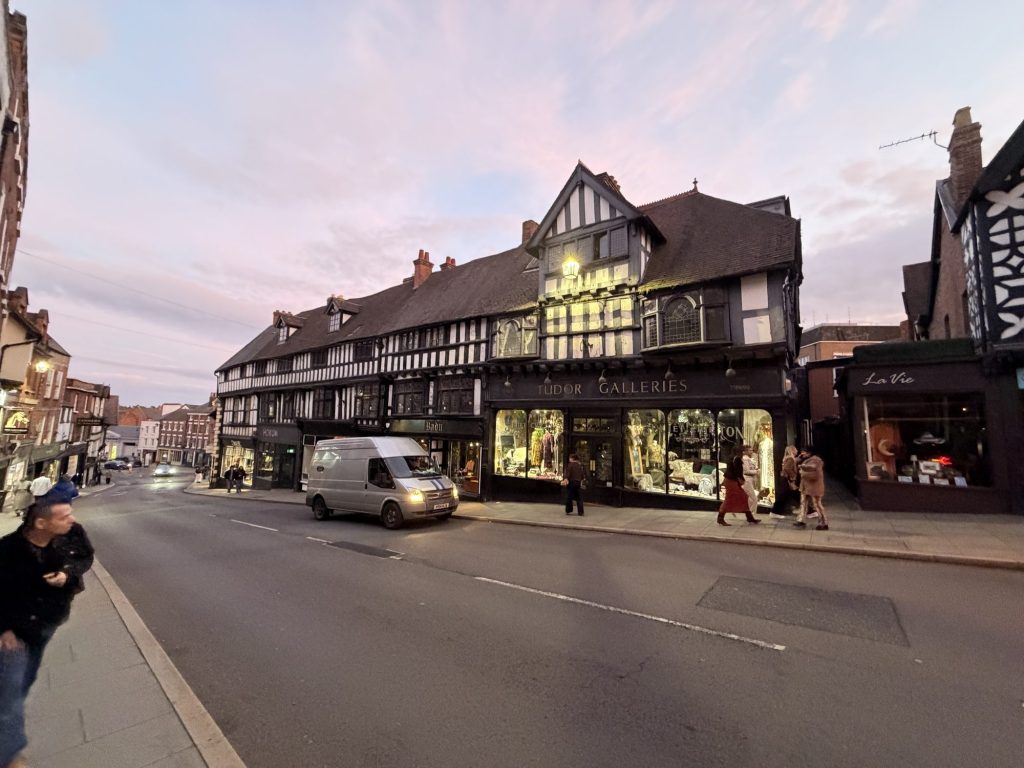
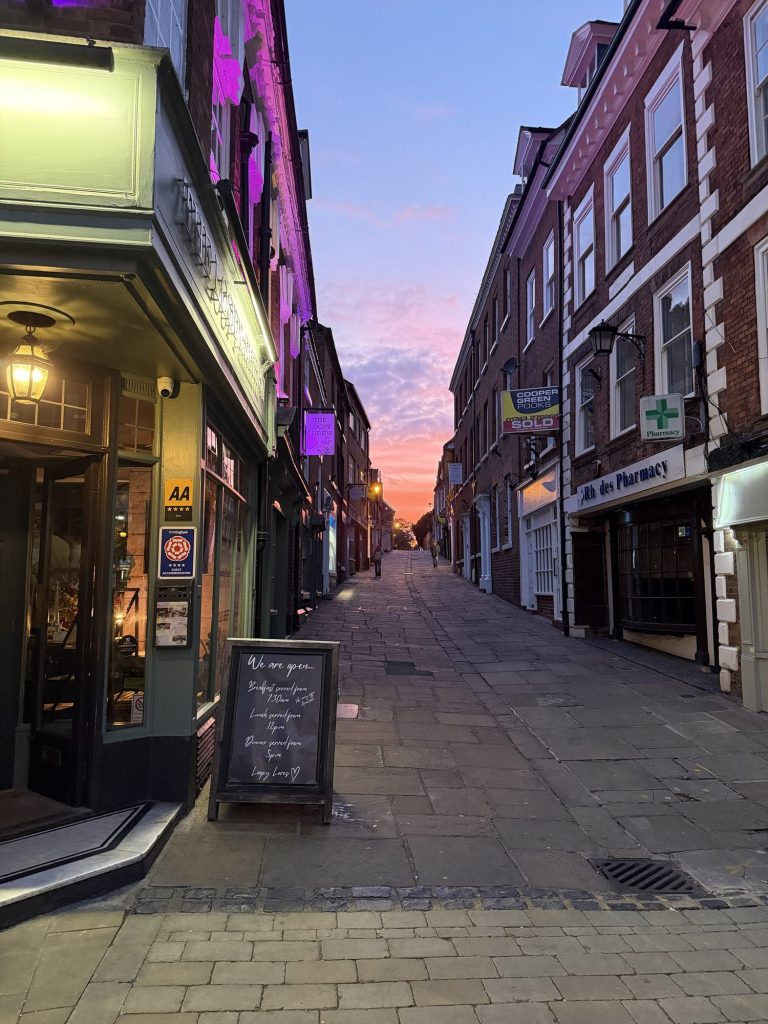
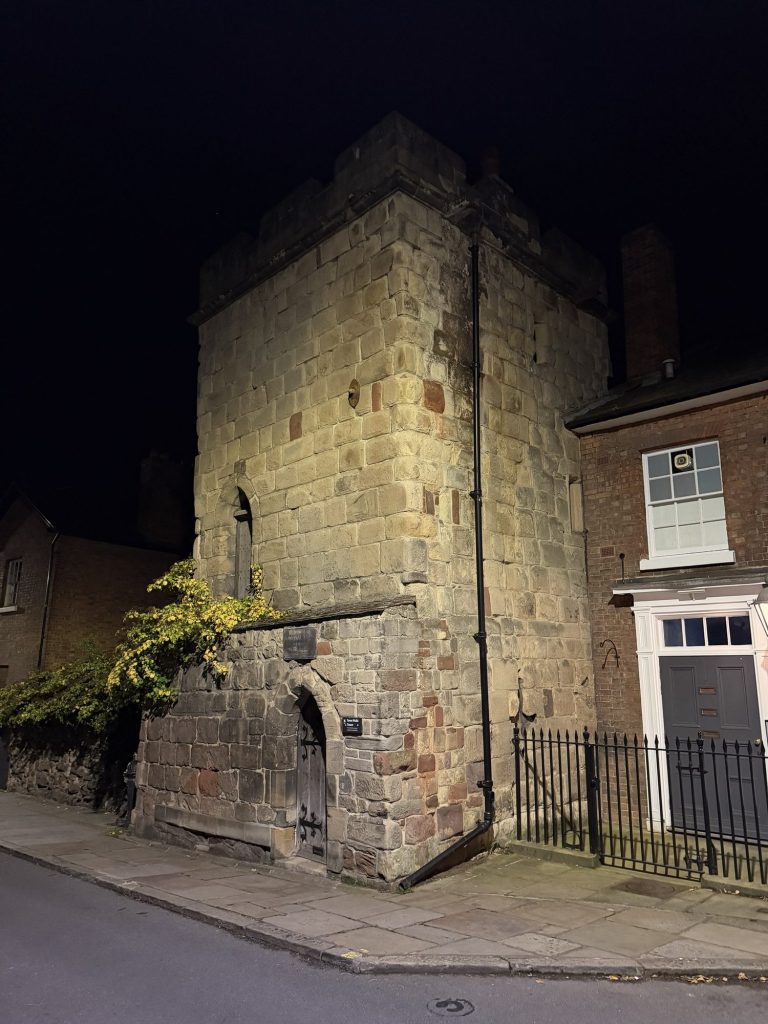
In the evenings the timber fronts lit up, Claremont Hill went pink at sunset, and floodlights picked out a tower on the old town walls.
The town
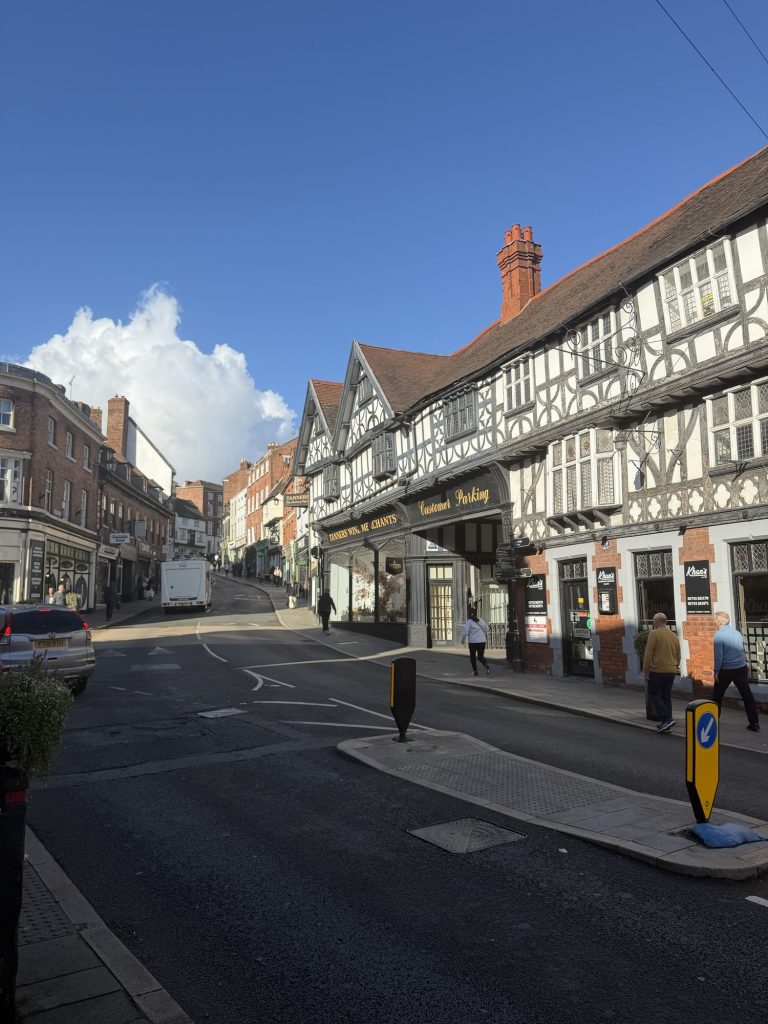
The town is extraordinary, with a thousand years of history visible in its streets. Timber frames lean out over cobbles, and every other building seems to carry a plaque.
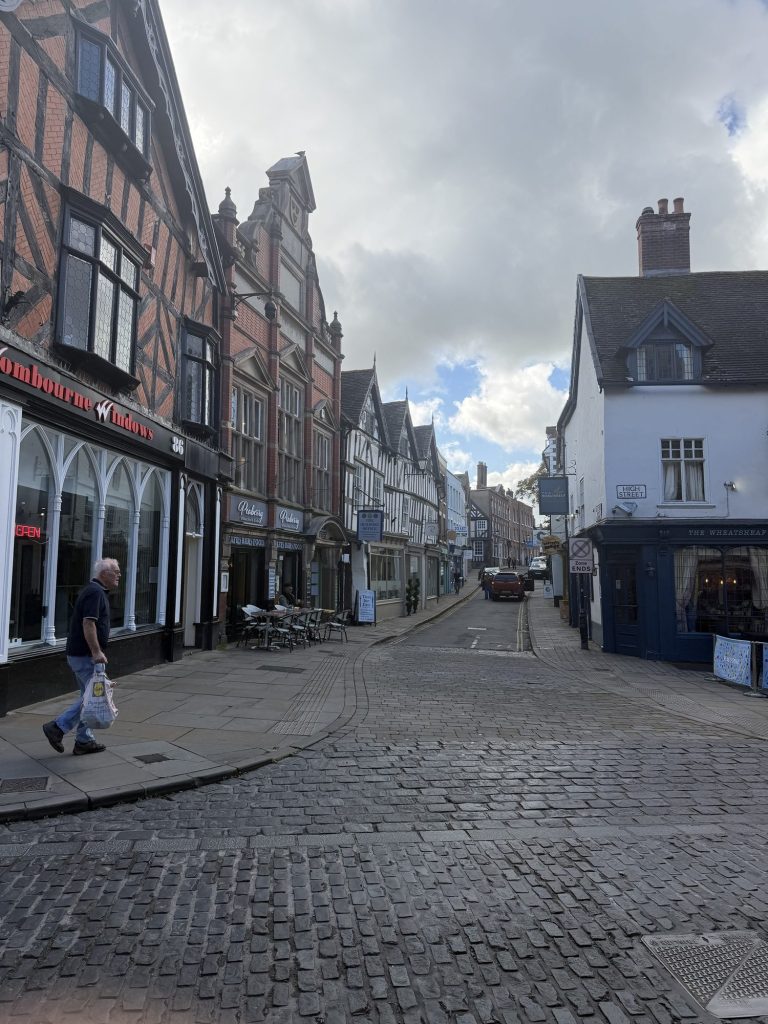
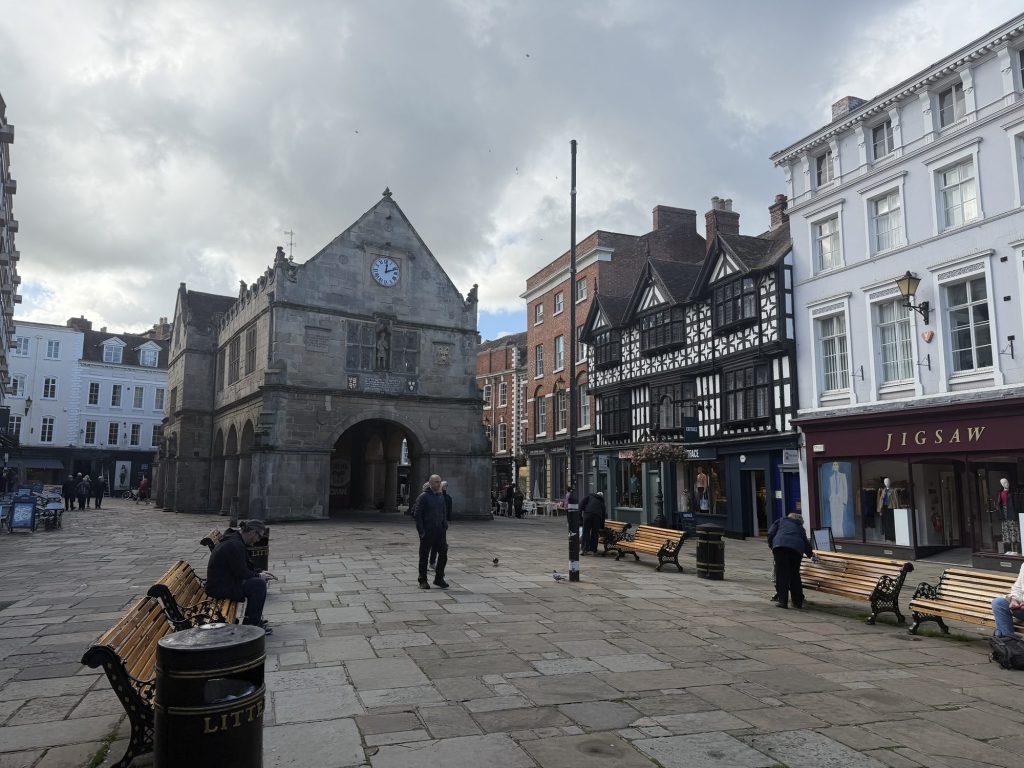
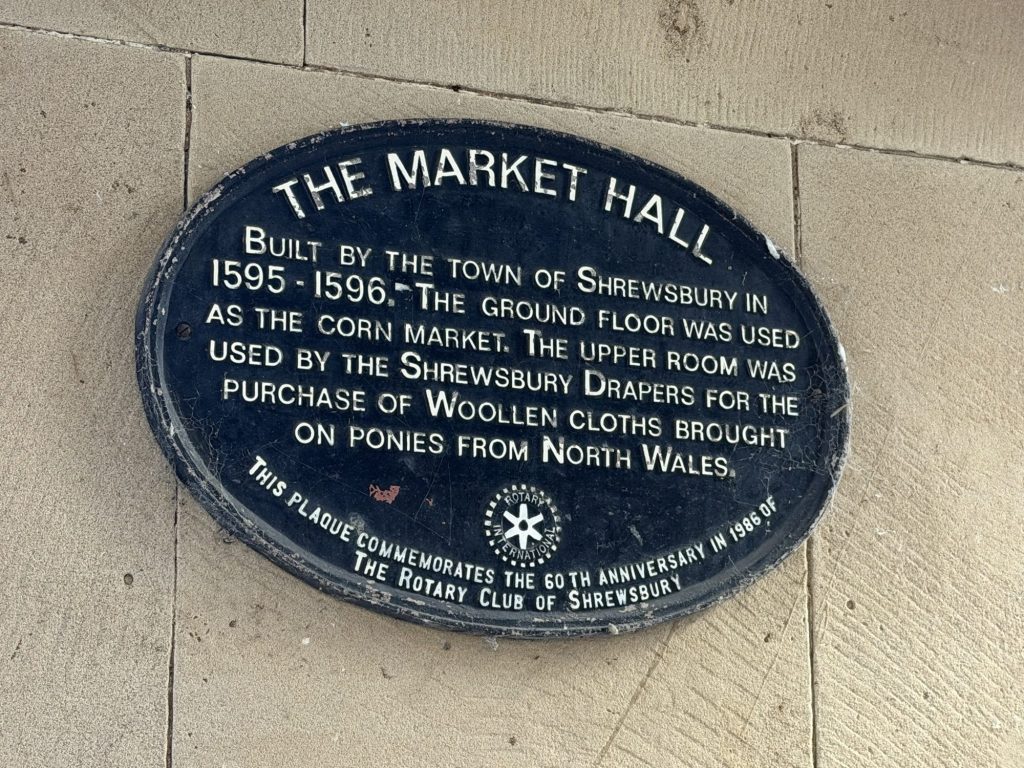
The plaques kept saying the same thing in different ways. The Market Hall was built by the town in 1595 to 1596, with corn sold on the ground floor and, upstairs, the Shrewsbury Drapers buying woollen cloth brought on ponies from North Wales.
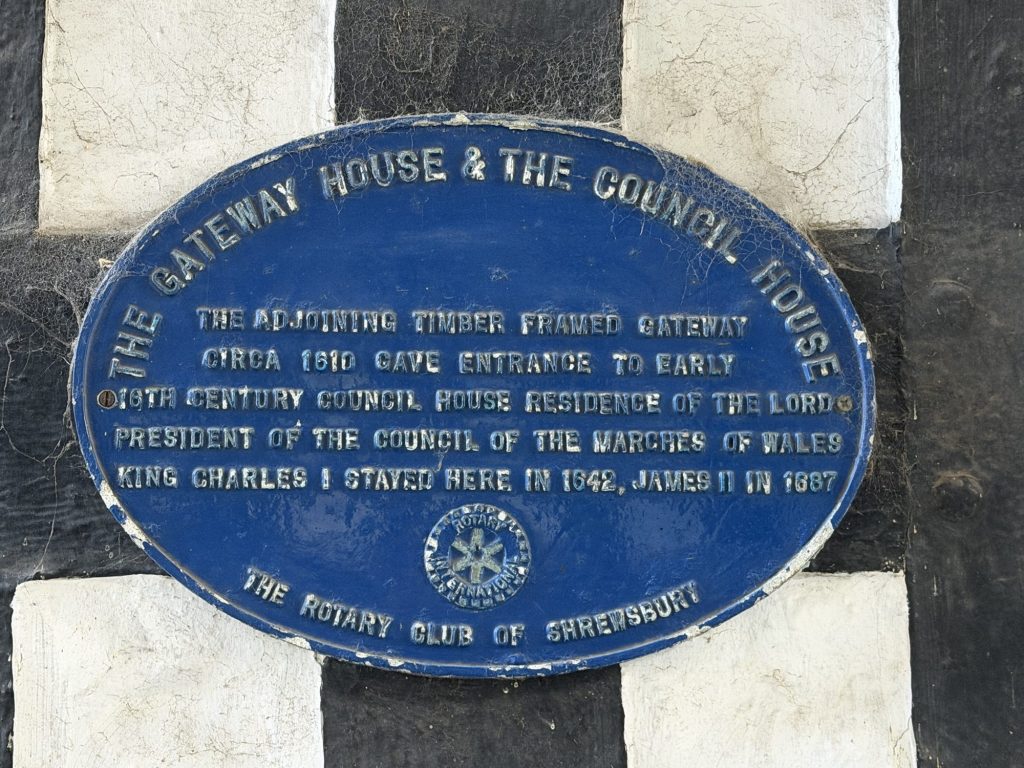
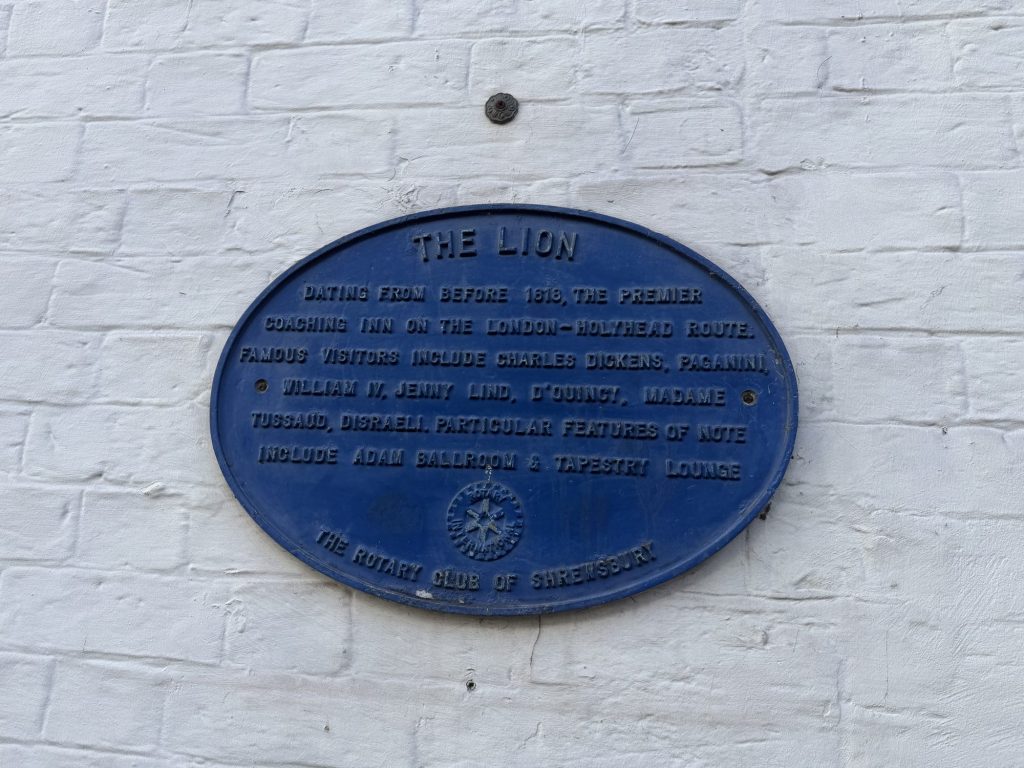
A timber gateway of about 1610 led to the Council House, the residence of the Lord President of the Council of the Marches of Wales. Charles I stayed there in 1642 and James II in 1687. The Lion has been a coaching inn since before 1618, the premier stop on the London to Holyhead route, and its plaque lists Dickens, Paganini, William IV, Jenny Lind, De Quincey, Madame Tussaud and Disraeli among its guests.
Wales begins not far to the west. I had never been, but the town has spent centuries looking towards it: its cloth, the council that governed it, the coaching road to its far end.
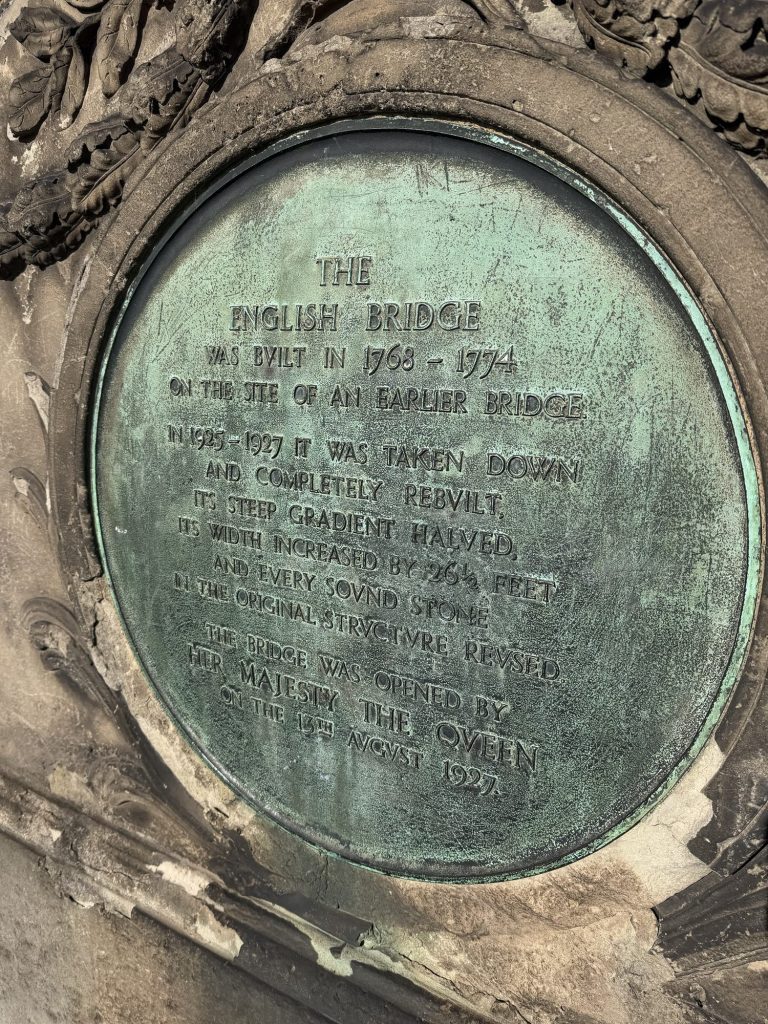
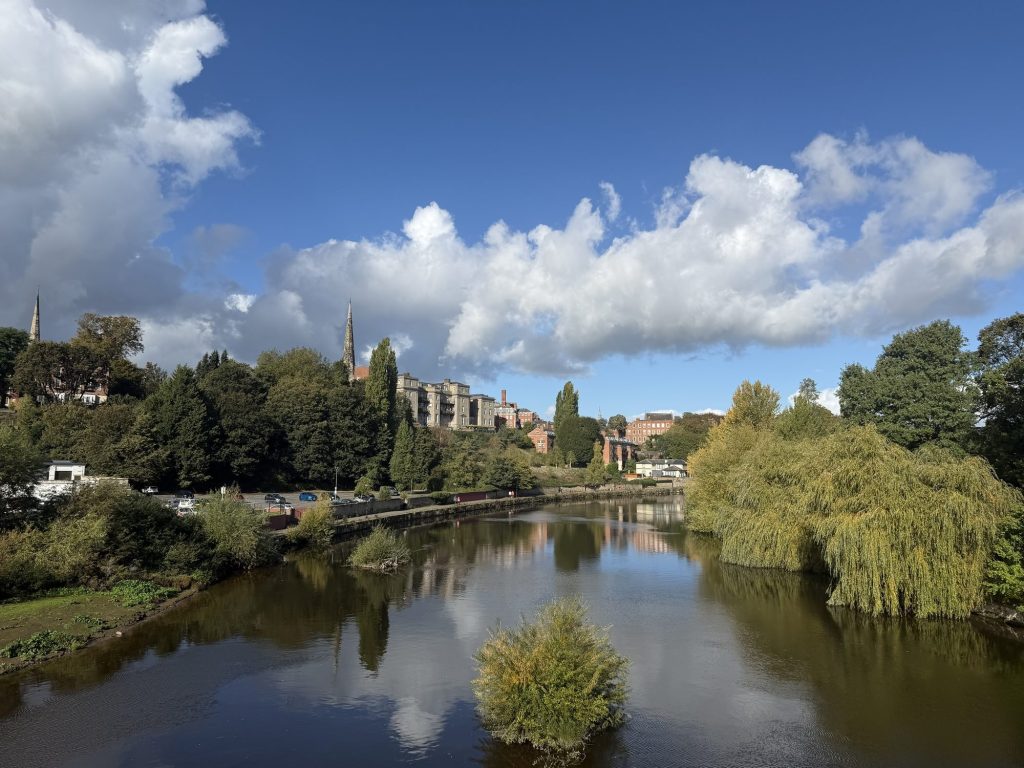
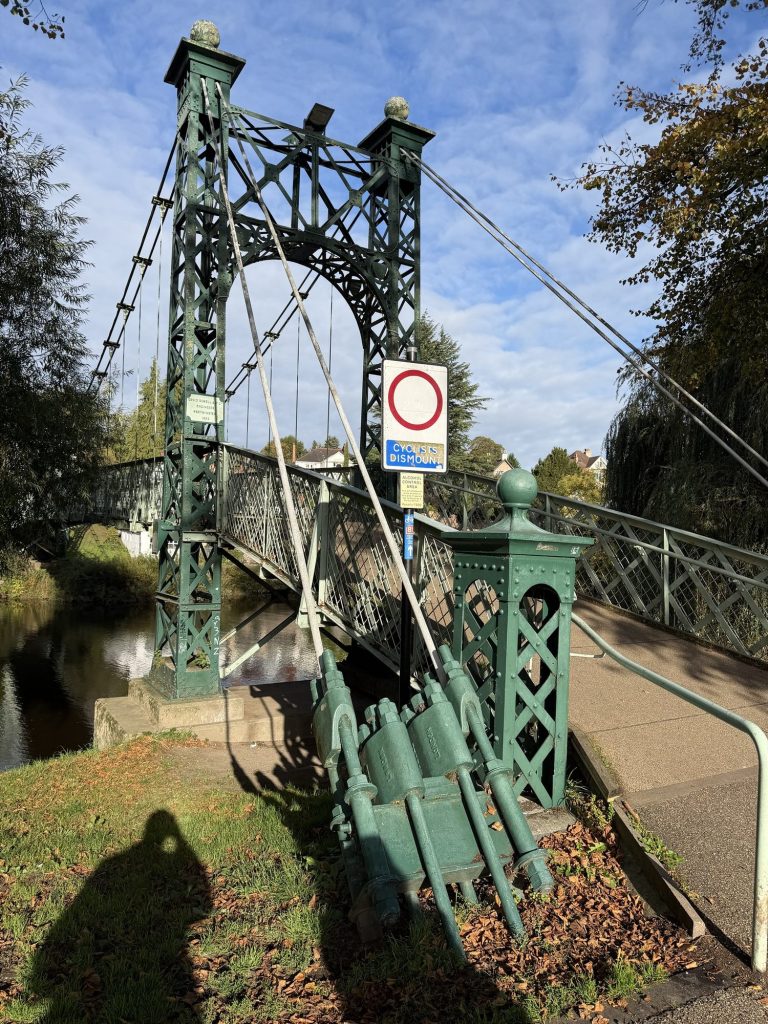
The Lion stands on Wyle Cop, which runs down to the English Bridge. It looks every inch the Georgian bridge, and the plaque agrees that it was built in 1768 to 1774. Then it carries on. In 1925 to 1927 the bridge was taken down and completely rebuilt, its steep gradient halved, its width increased by 26½ feet, and every sound stone of the original structure reused. Queen Mary opened it in 1927. So the stones are Georgian and the bridge is younger than the suspension footbridge at Porthill, round the loop upstream, whose plate reads 1922.
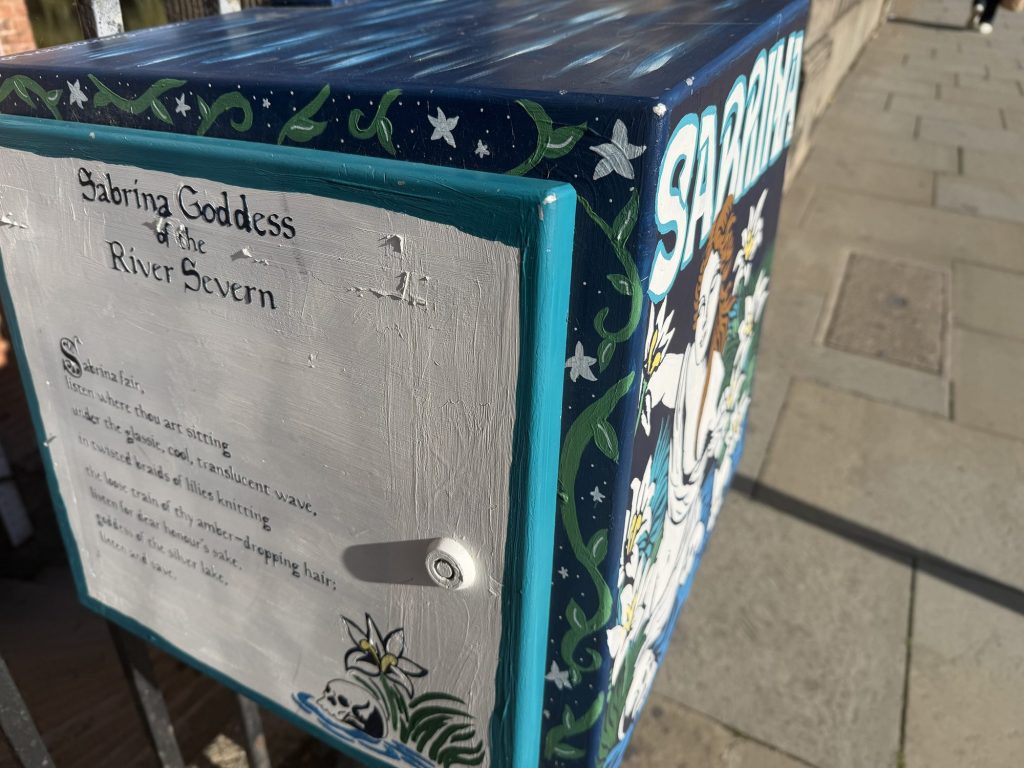
By the river, a box is painted for Sabrina, goddess of the River Severn. She belongs to the same story as the Council House. Milton put her on stage in Comus, a masque first performed at Ludlow Castle in 1634 to celebrate the Earl of Bridgewater becoming Lord President of Wales, the office whose holder lived at the Council House. In it, Sabrina rises from the river and frees the heroine.
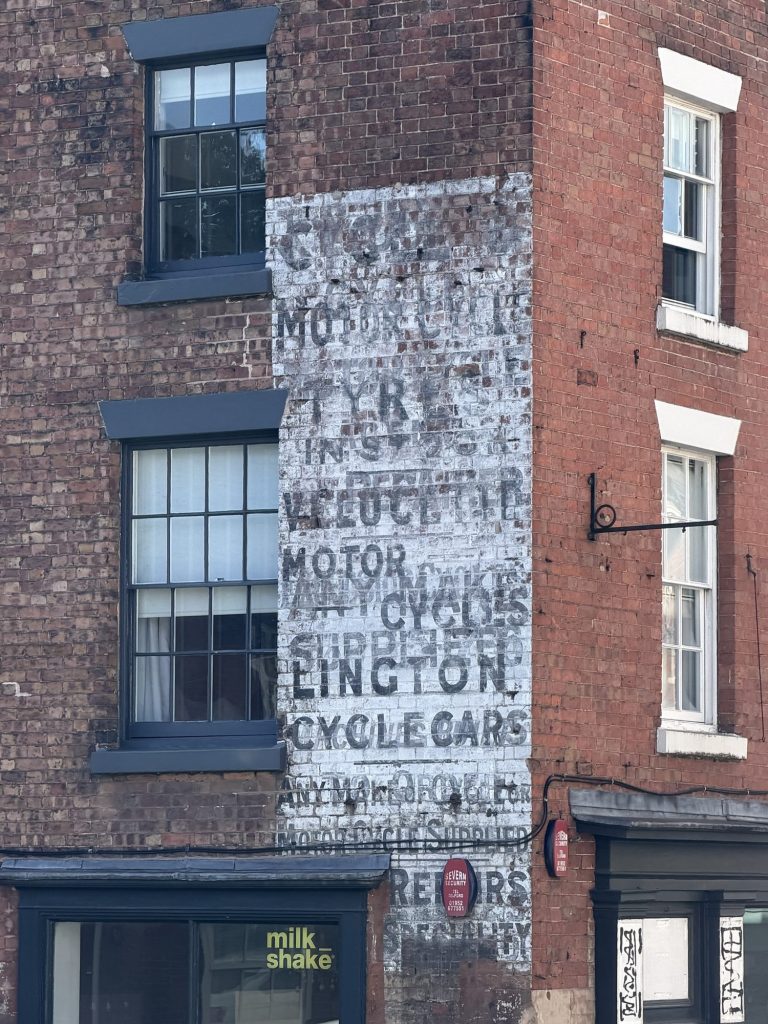
Up the hill there was a ghost sign. This one is a whole wall of a cycle shop’s ambitions: motor cycles, tyres in stock, what looks like Velocette, any make of cycle or motor cycle supplied, repairs a speciality. Like the Peel one, it is more than one sign. Any make runs straight across motor cycles, the newer layer painted over the old. LINGTON, painted large above cycle cars, is not a shop’s name but a make. The Lington was a ten horsepower cyclecar from Bedford, announced under that name in 1920 after starting out as the Elfin. Cyclecars, the tiny two seaters that filled the gap between a motor cycle and a car, were finished by the end of the decade, so that coat of paint is a little over a century old.
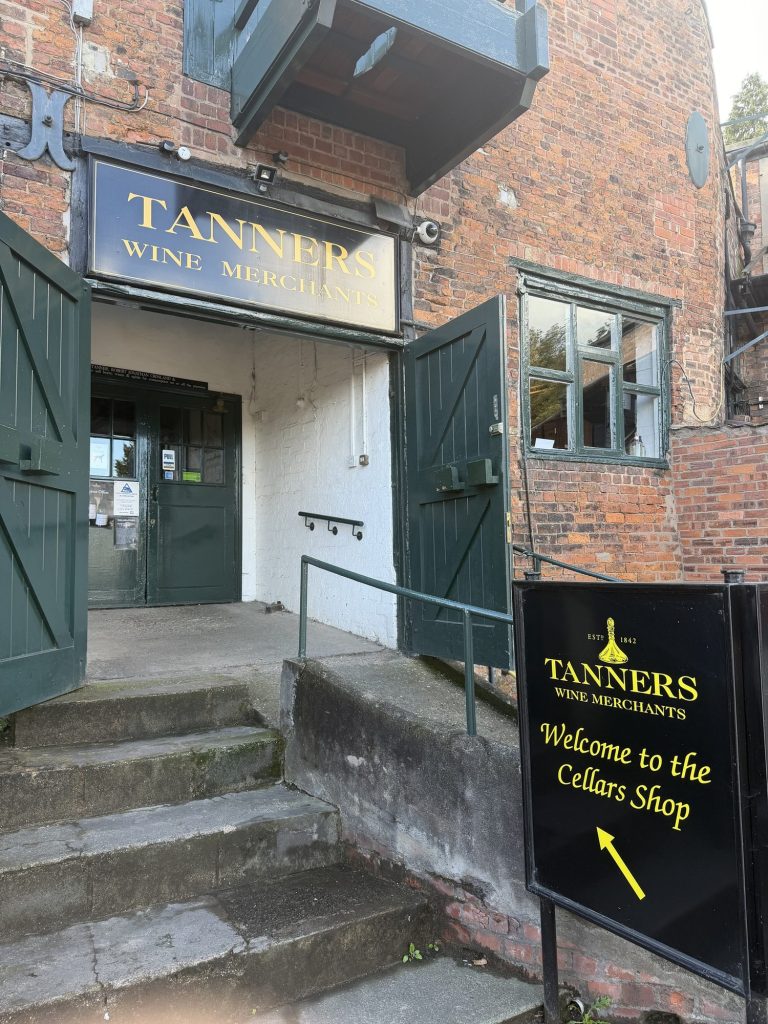
Tanners the wine merchants point the way down to their cellars shop.
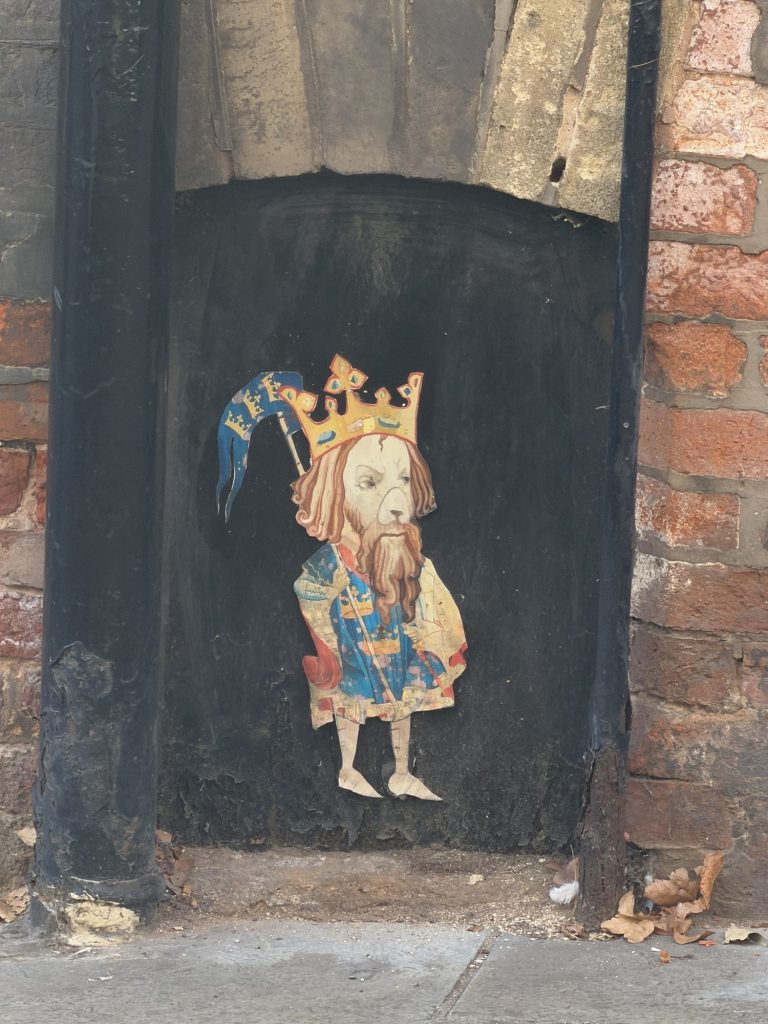
I also liked a weird little drawing of a king, pasted into a dark niche in an old wall.
The castle
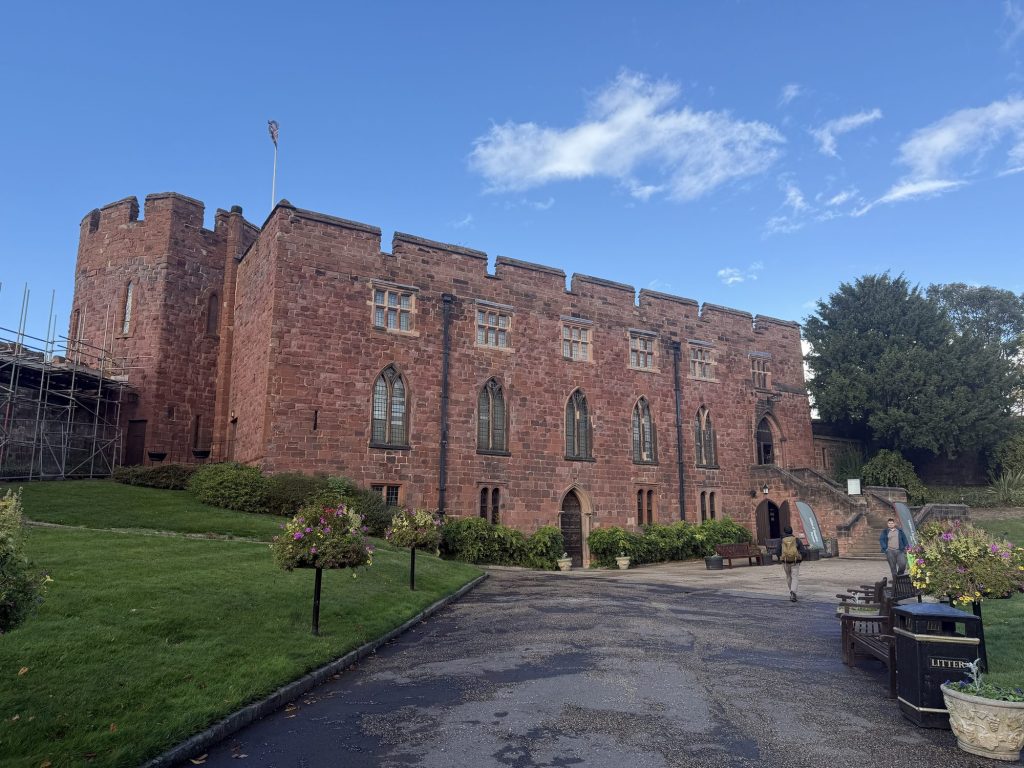
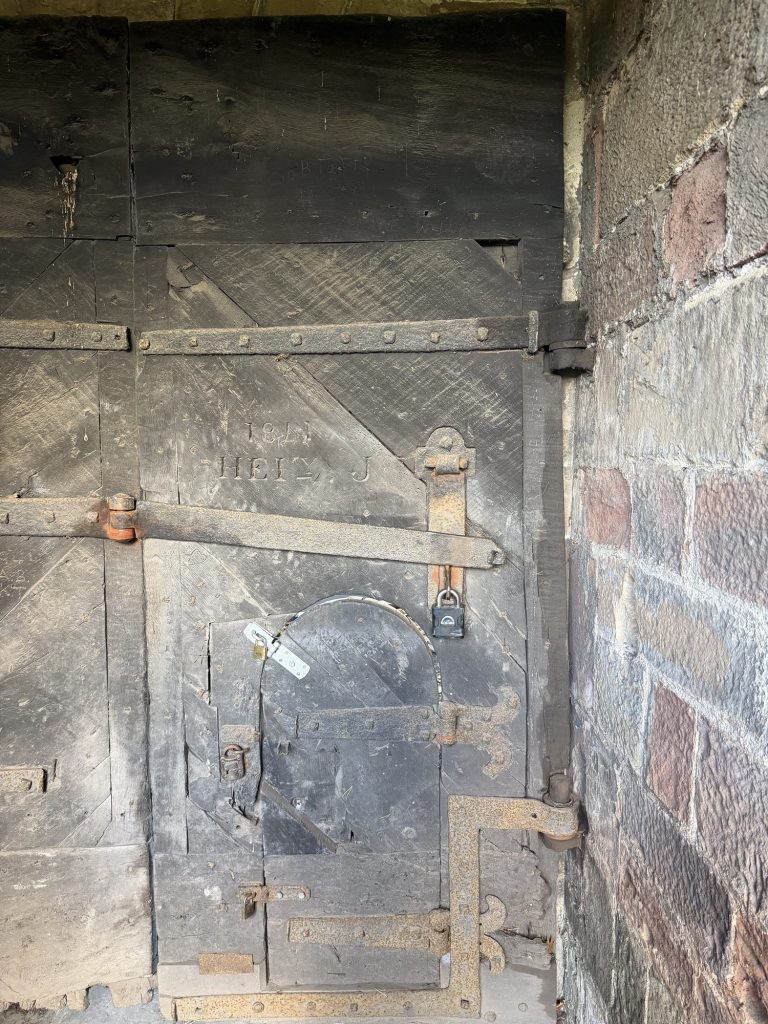
The red sandstone castle holds the Soldiers of Shropshire Museum. One of its gates is carved with the date 1841 above a set of letters I could not make into a name, with later scratchings higher up the boards.
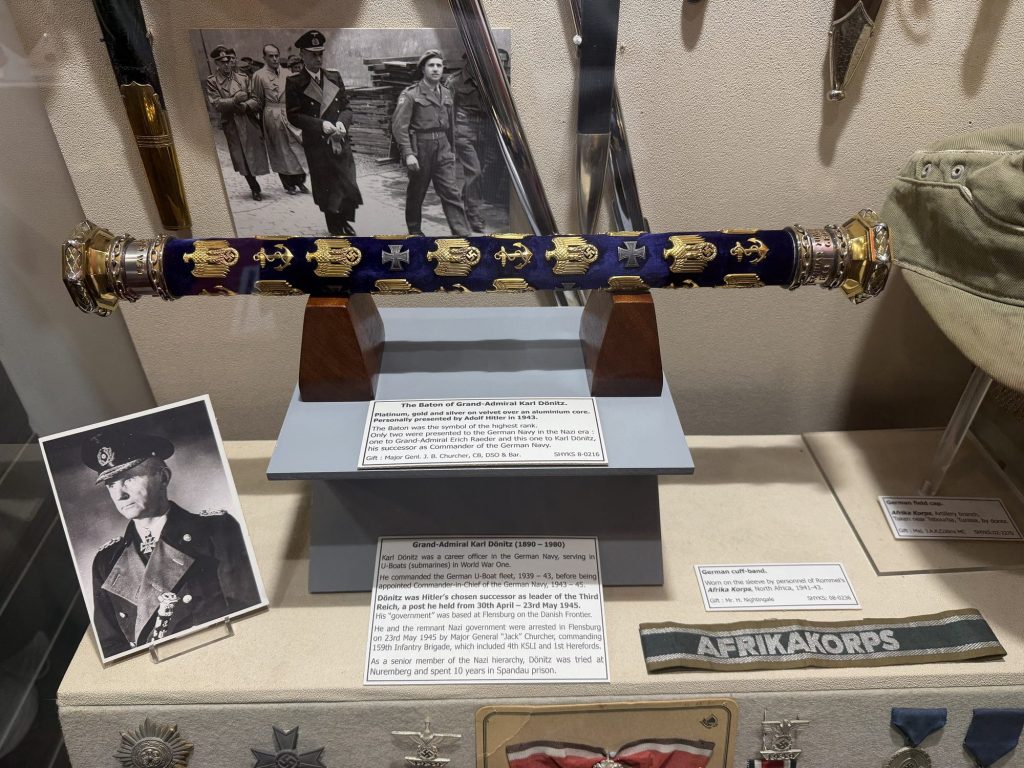
Some months ago I watched a documentary about Grand Admiral Dönitz’s baton, and had totally forgotten it was in Shrewsbury. Coming across it in the museum was a bit of an omg moment. The label describes platinum, gold and silver on velvet over an aluminium core, personally presented by Hitler in 1943. Only two went to the German navy in the Nazi era: one to Erich Raeder, and this one to Karl Dönitz, his successor as Commander of the German Navy.
Dönitz was then Hitler’s chosen successor as leader of the Third Reich, from 30 April to 23 May 1945. On that last date he and what was left of his government were arrested at Flensburg, in an operation launched on the word of “Jack” Churcher, then the brigadier commanding the 159th Infantry Brigade, which included the 4th KSLI and the 1st Herefords. Churcher kept the baton, retired a major general, and gave it to the museum. After the summer’s posts from Masuria, this is where that story ends up, in a glass case in a Shropshire castle.
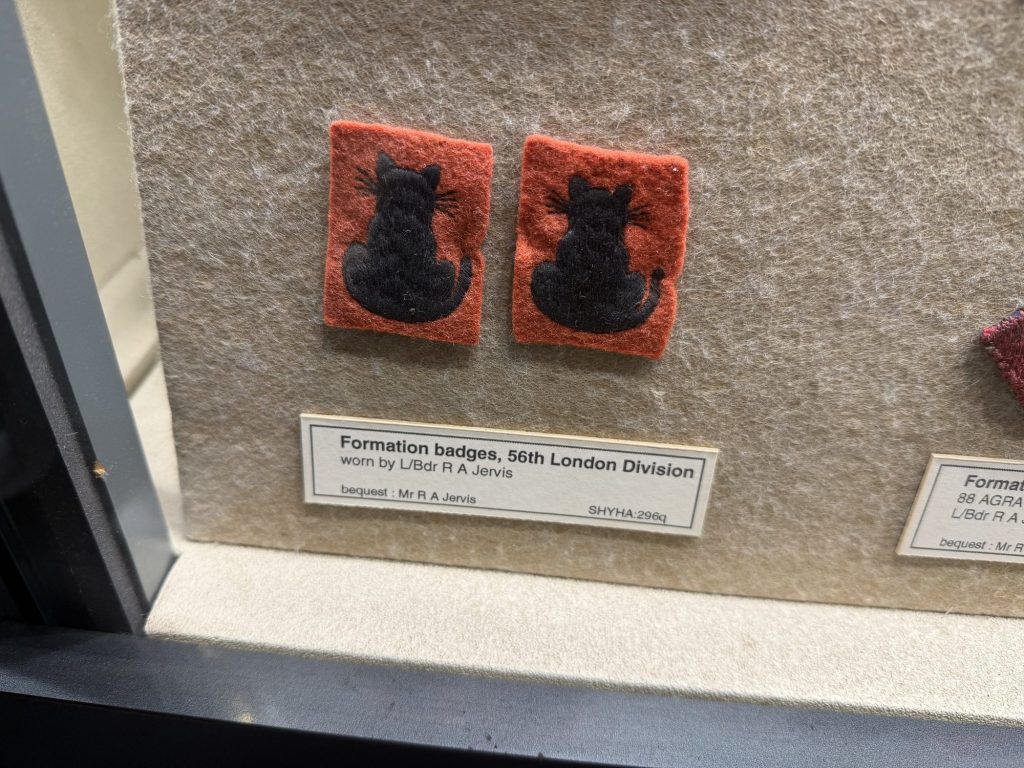
As a devout cat fan, I also liked the formation badges of the 56th London Division, worn by Lance Bombardier R A Jervis. The black cat is Dick Whittington’s, the division’s emblem of London, although Whittington, four times Lord Mayor, almost certainly never kept a cat.
The Abbey
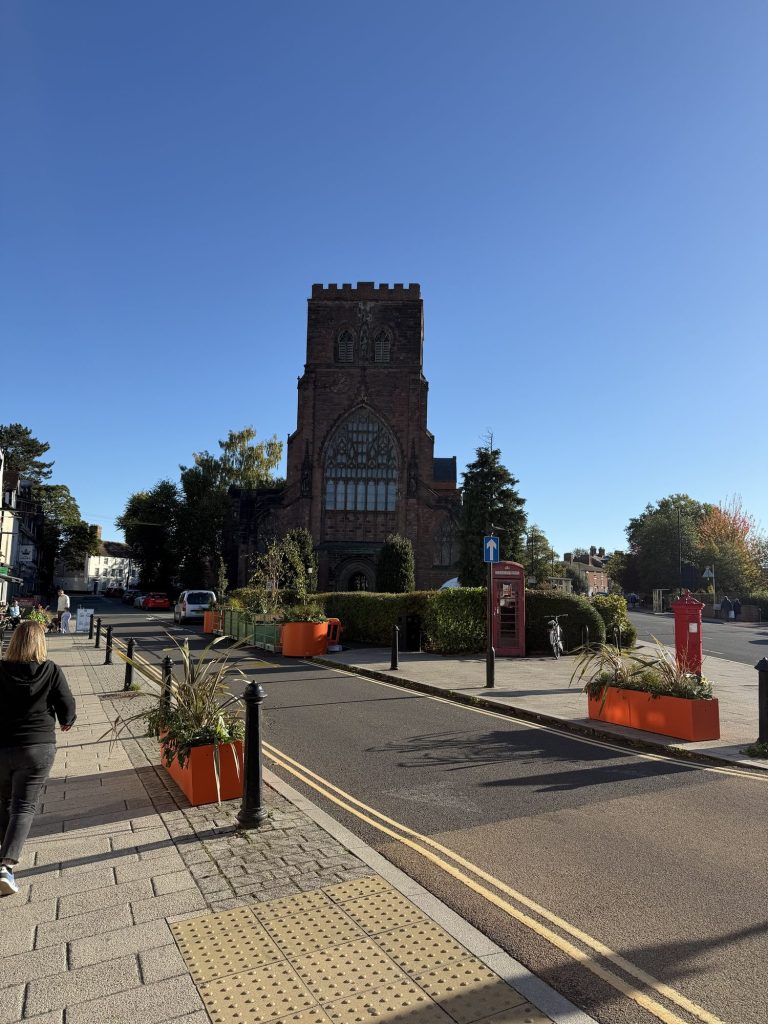
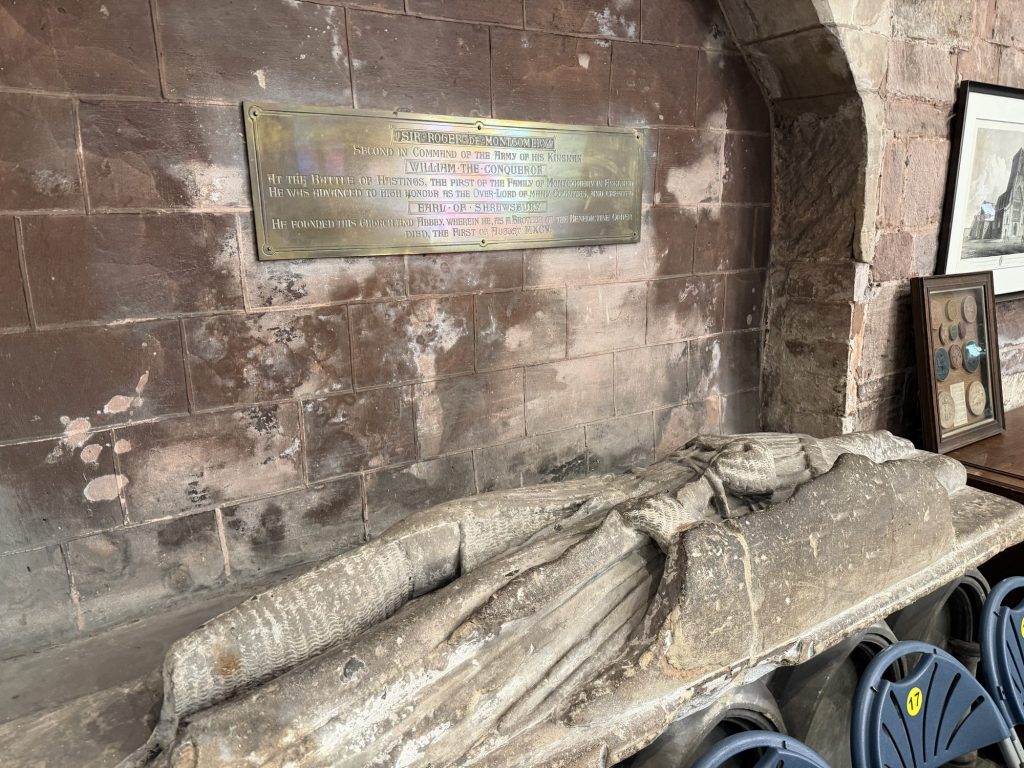
On Saturday we did the Abbey. Roger de Montgomery founded it in 1083. A brass plaque above a worn effigy calls him second in command of the army of his kinsman William the Conqueror at Hastings, created Earl of Shrewsbury, and says he died here as a brother of the Benedictine order on 01 August 1095. Readers of Ellis Peters will know the place as Brother Cadfael’s.
I loved the tombs. Richard Onslow and his wife Katherine lie painted on a chest of shields and praying figures. He was Speaker of the House of Commons, Recorder of the City of London and Solicitor-General under Elizabeth I, and he died in 1571. The tomb stood in the old church of St Chad until it was moved to the Abbey in 1788.
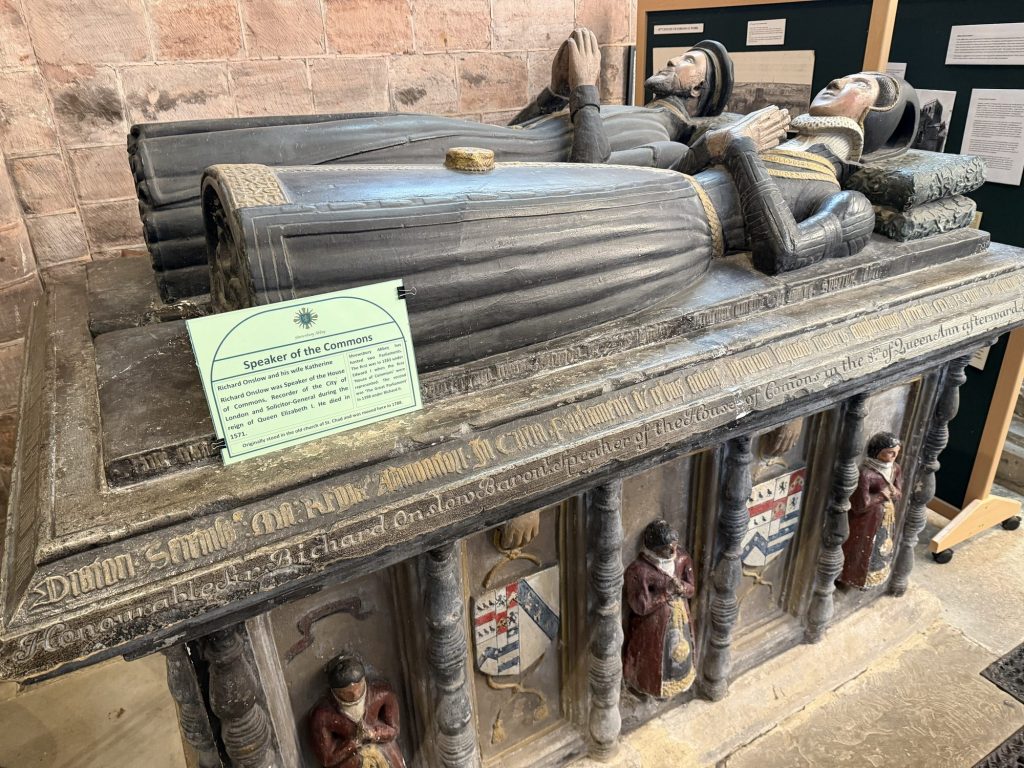
The card beside them adds that the Abbey has hosted two parliaments: one in 1283 under Edward I, when, in the card’s words, the first “House of Commons” was represented, and the Great Parliament of 1398 under Richard II. Tynwald had been sitting for three centuries by the first of them, if you take the traditional date of 979.
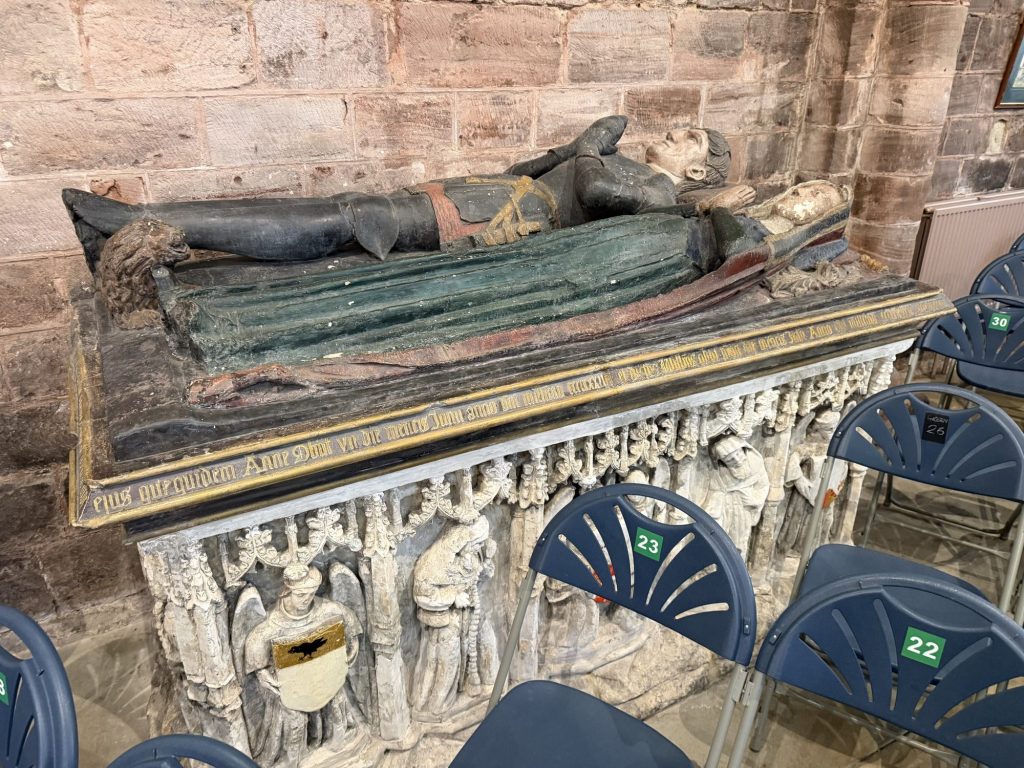
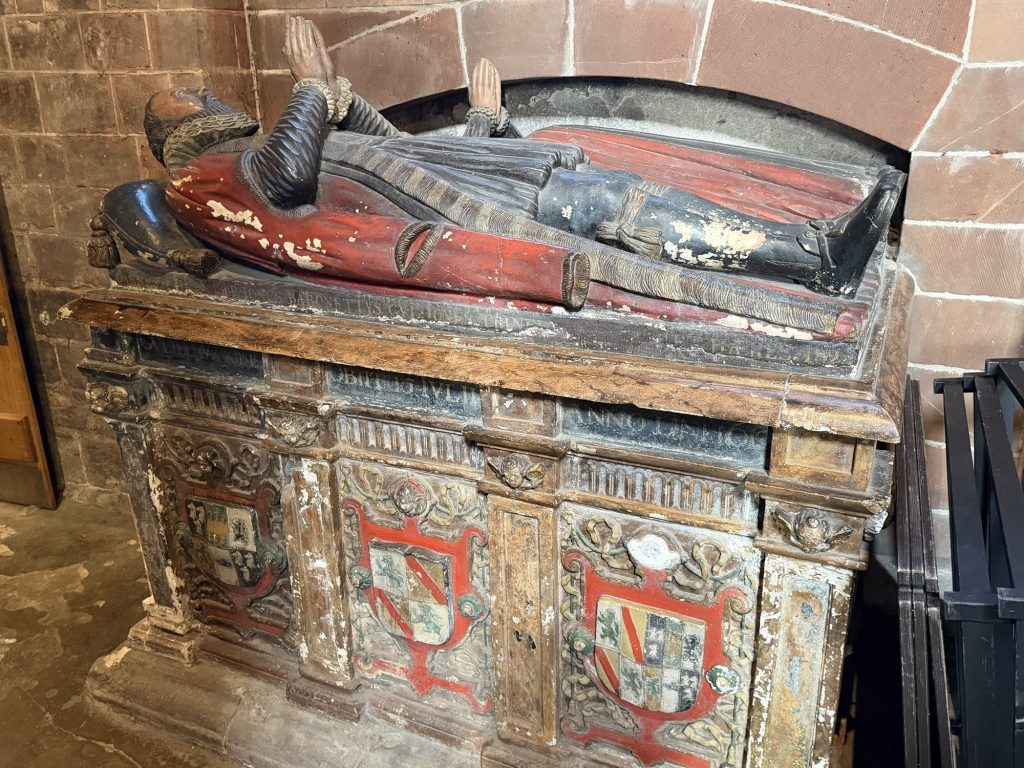
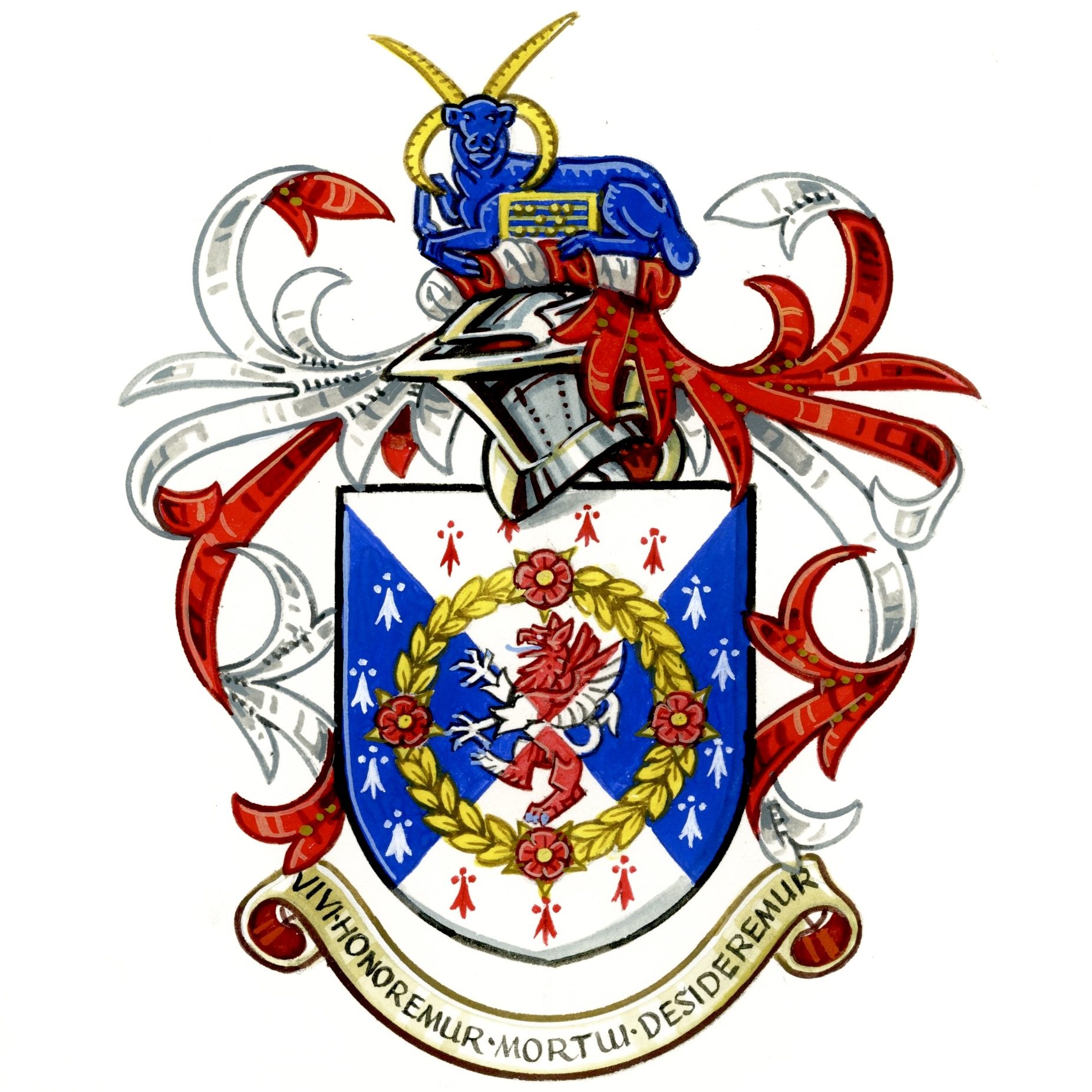
Each of the painted tombs has the same arrangement of shields on its chest: his arms, hers, and a third that joins the two into one. The usual way to join a husband’s and a wife’s arms is impalement, splitting the shield down the middle with one coat on each side. Quartering, splitting it into four, is how later generations carry the arms of the families they inherit from.
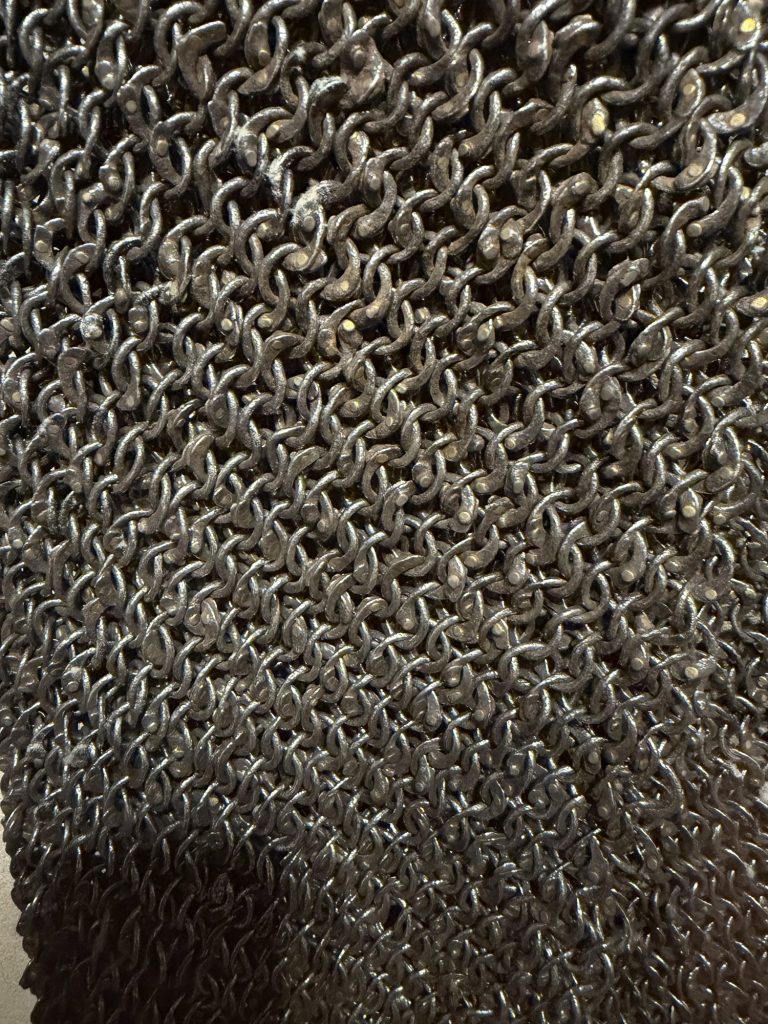
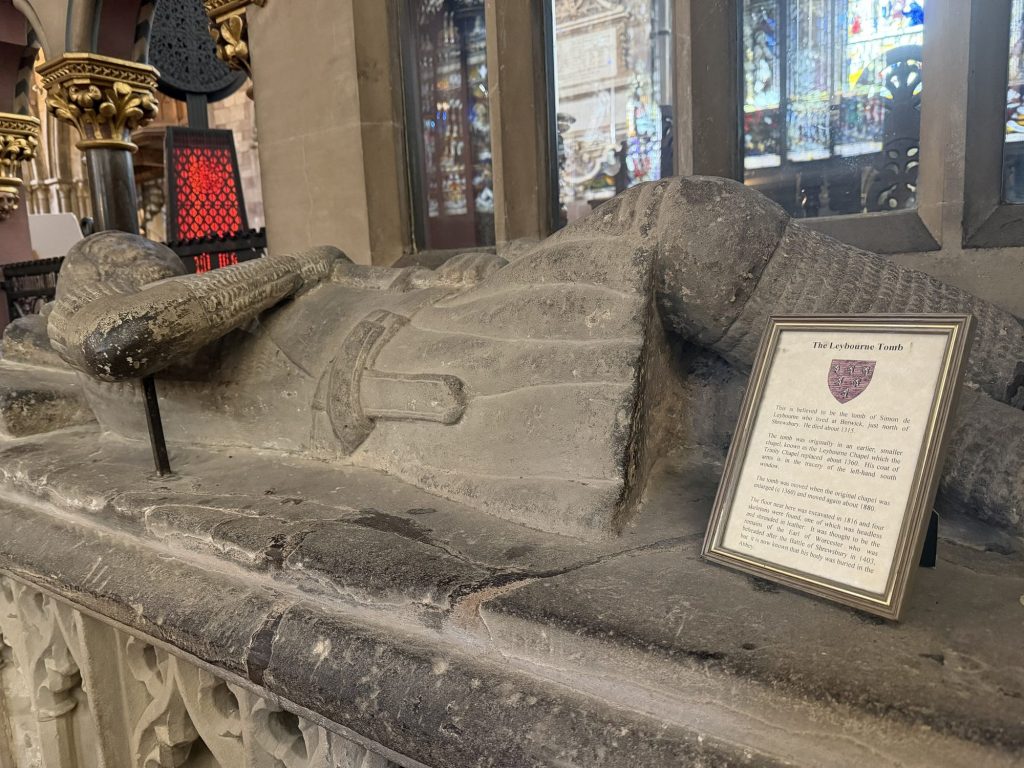
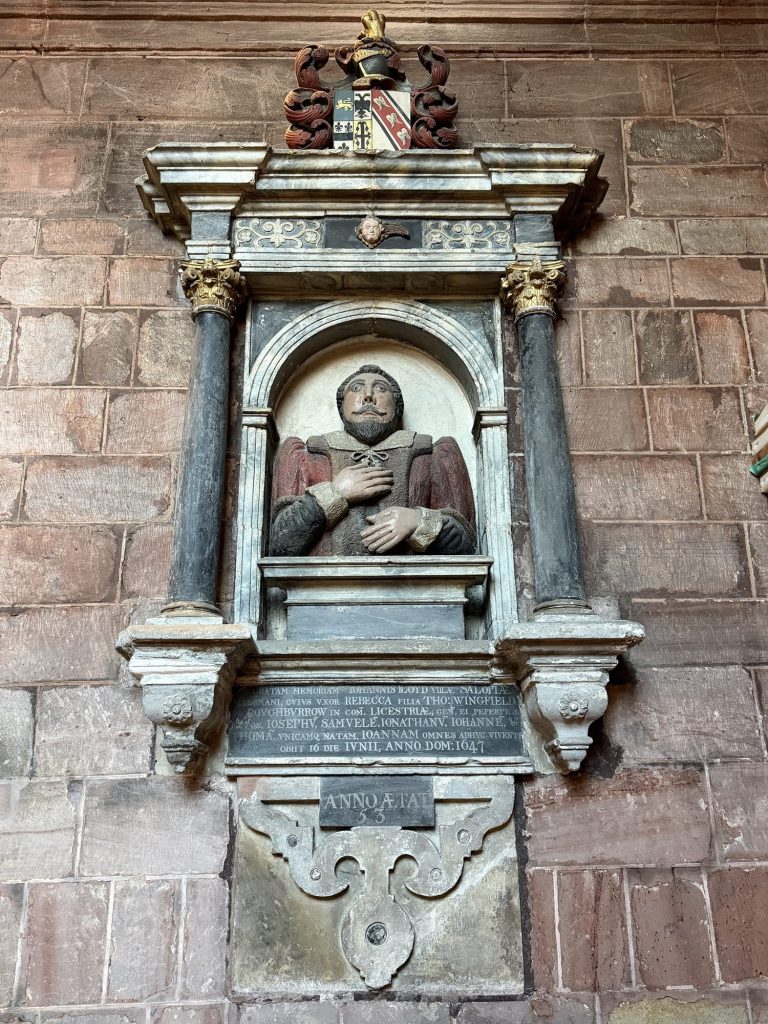
Simon de Leybourne, who lived at Berwick just north of the town and died about 1315, lies in mail with his sword. John Lloyd looks out of his niche with a hand on his heart. His Latin inscription records that he died on 16 June 1647, aged 53, with every one of his children still living.
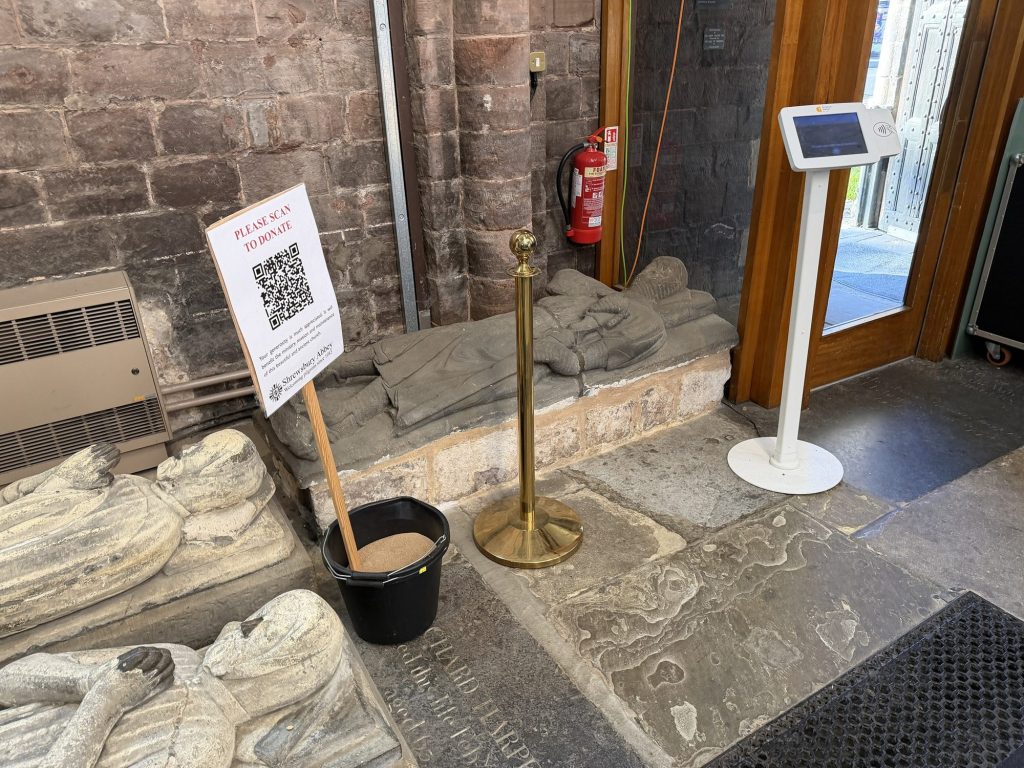
One thing I found sad was the eighteenth century memorial slabs set into the floor, big slabs laid as paving, their inscriptions slowly wearing away underfoot. In a consecrated place it seems paradoxical. On my island this month I had seen gravestones stood up along a churchyard wall. Here they are under the feet of everyone who comes in at the door.
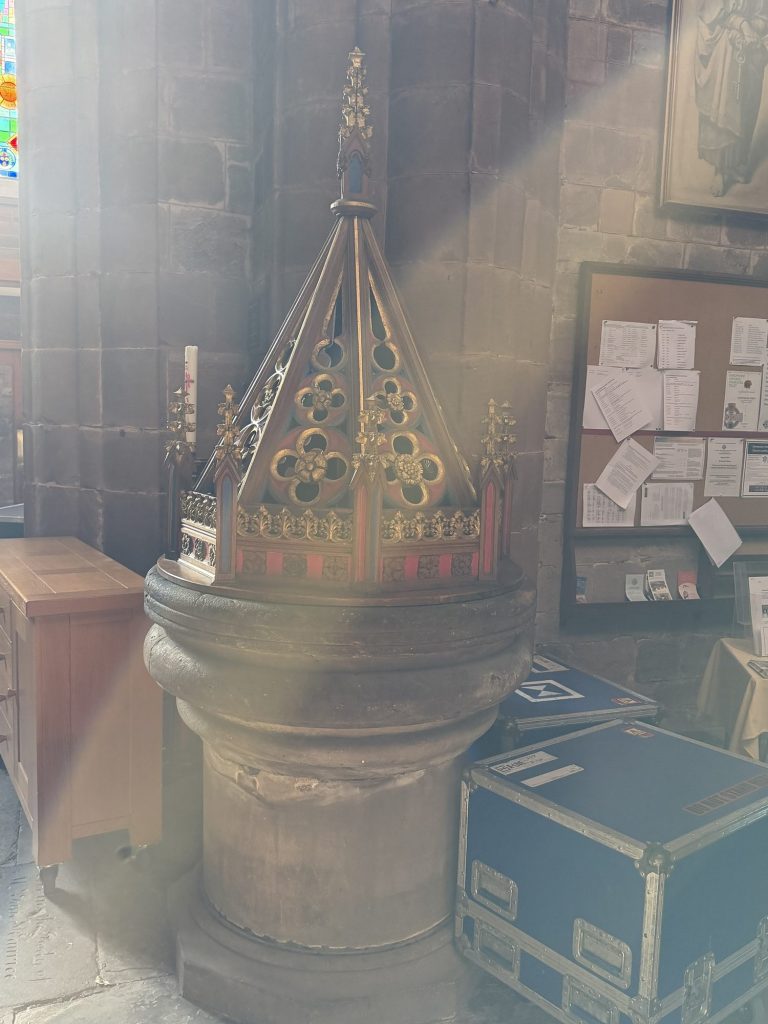
The old font bowl was made for the church in 1653 for nine shillings and sixpence, which the card helpfully converts to 47½p.
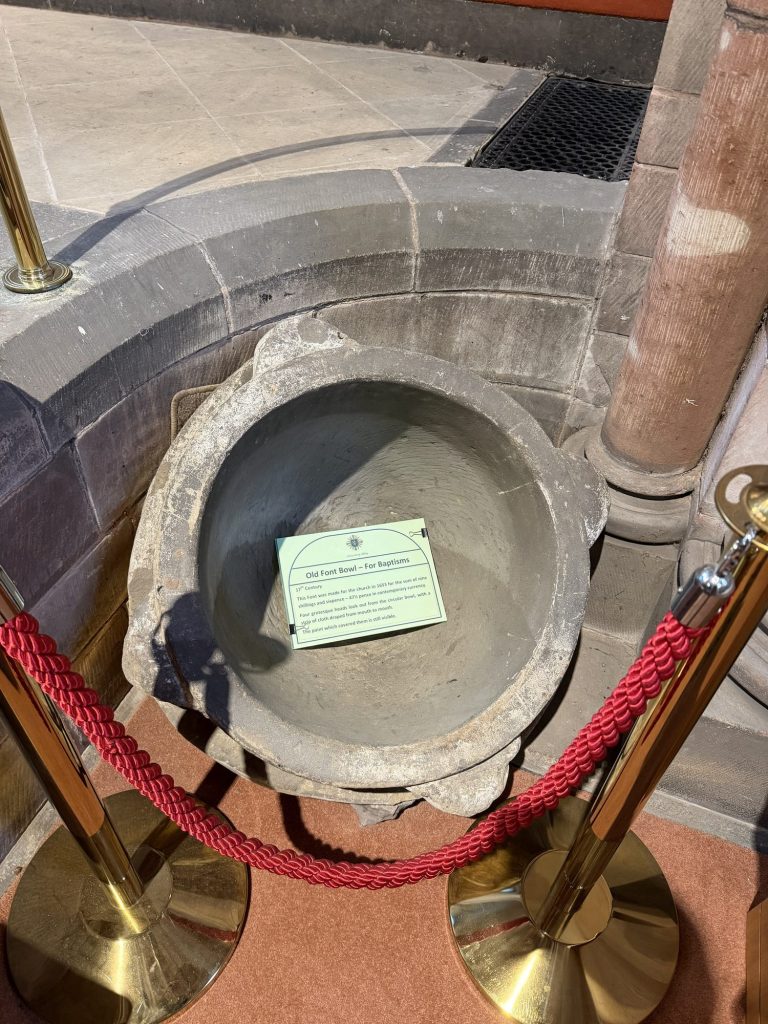
The nine shilling bowl is the newer of the Abbey’s two fonts. The older one is a huge block of hand-hewn stone, possibly Roman, a column base or capital put to use as a font in the eleventh century or earlier. The nearest Roman stone was at Wroxeter, the Roman city a few miles down the Severn, where the parish church’s font is also cut from a Roman column.
Saturday in town
Then my friends came to town. We had coffee at the very quirky café at the top of the Bear Steps, which is all wonky, and I had to crouch down inside. After that we had a potter round the local shops and the market with my friend, his wife and the children.
There is a certain type of fashion in Shrewsbury. Hippy, vintage, chic. The market is where I found some vintage Burberry and Aquascutum coats. The totally mad modern knitted cardigan from Saltrock was a separate purchase. Very Shrewsbury. It was much colder than I thought.
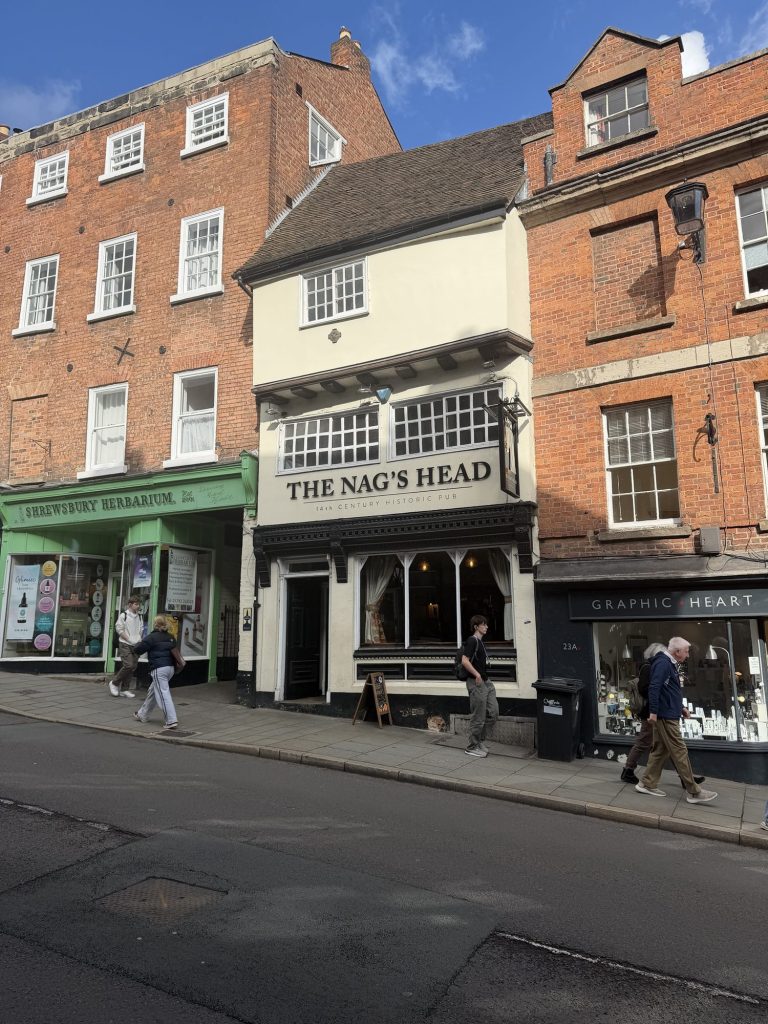
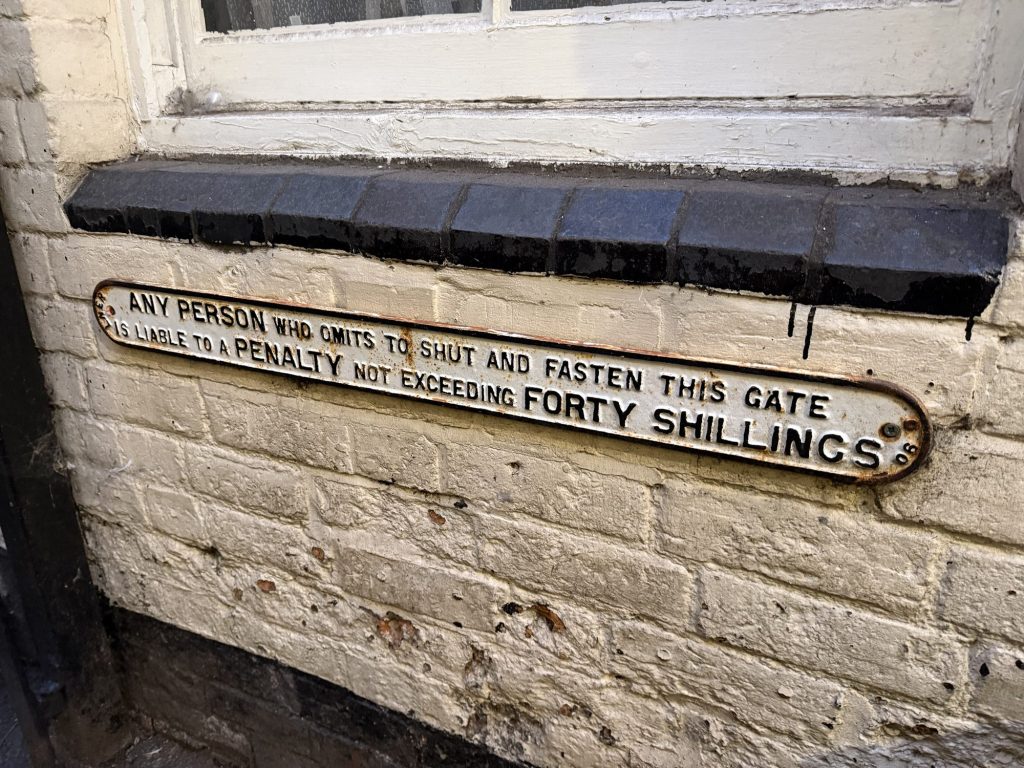
We had lunch at a French chain on the Square, by the old Market Hall, which was surprisingly nice, and then his wife took the children home. My friend, my girlfriend and I carried on round many a pub. One of them was the Nag’s Head, where a cast iron sign at the back still warns that any person who omits to shut and fasten this gate is liable to a penalty not exceeding forty shillings. The wording comes from the Railways Clauses Consolidation Act of 1845, which set exactly that fine for leaving open a gate at the side of a railway. The sign does not say how a railway’s gate notice came to be on the back of a pub.
We stopped for dinner just in time, before things got too out of hand, and refuelled at a nice Italian, again on the Square. After that, pubs. Many pubs. Shrewsbury has a lot of nice pubs.
St Chad’s
St Chad’s is round. The tower of the old church fell down in 1788, the same year the Onslows left it for the Abbey, and George Steuart’s replacement opened in 1792. Darwin was baptised here in 1809.
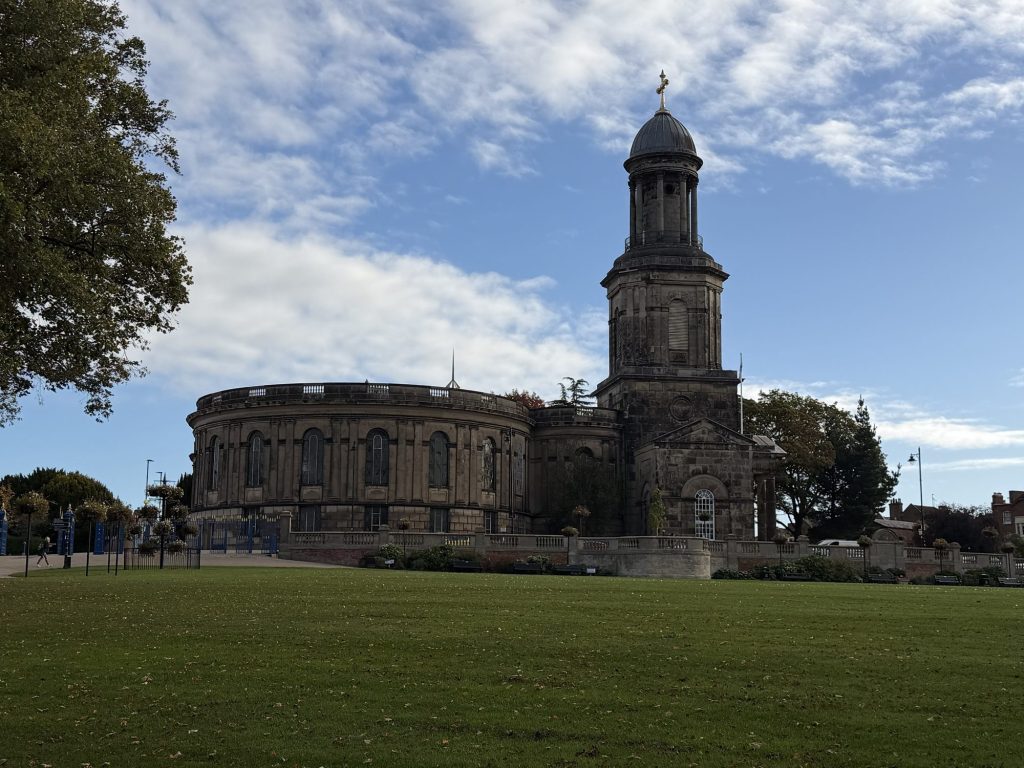
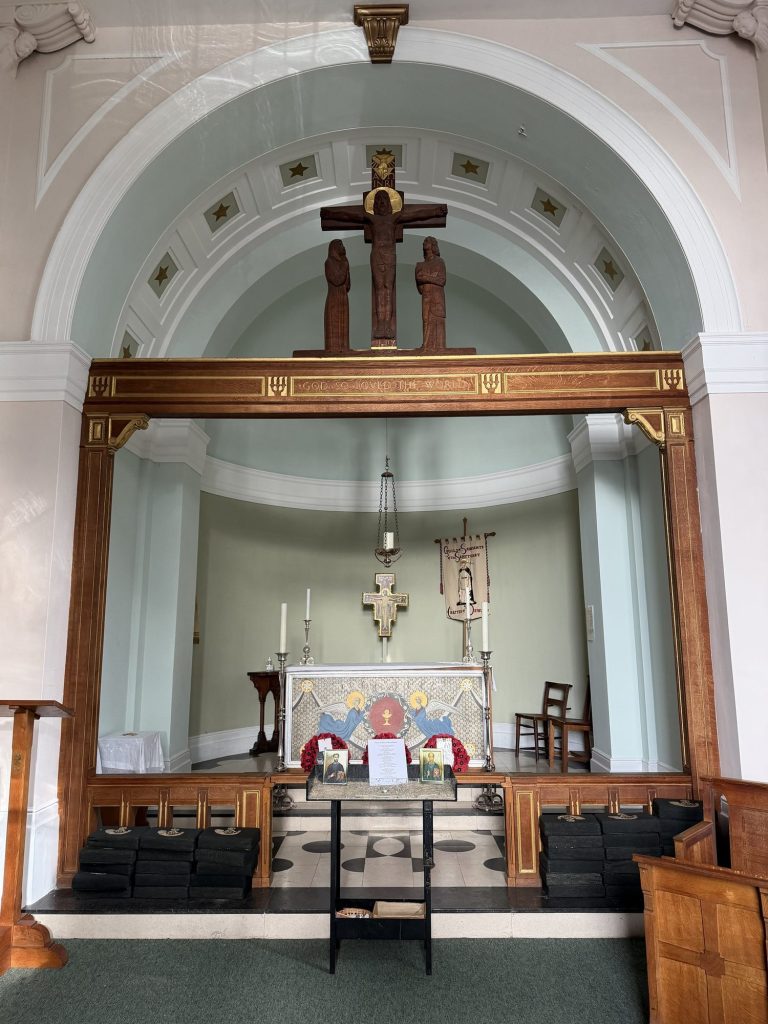
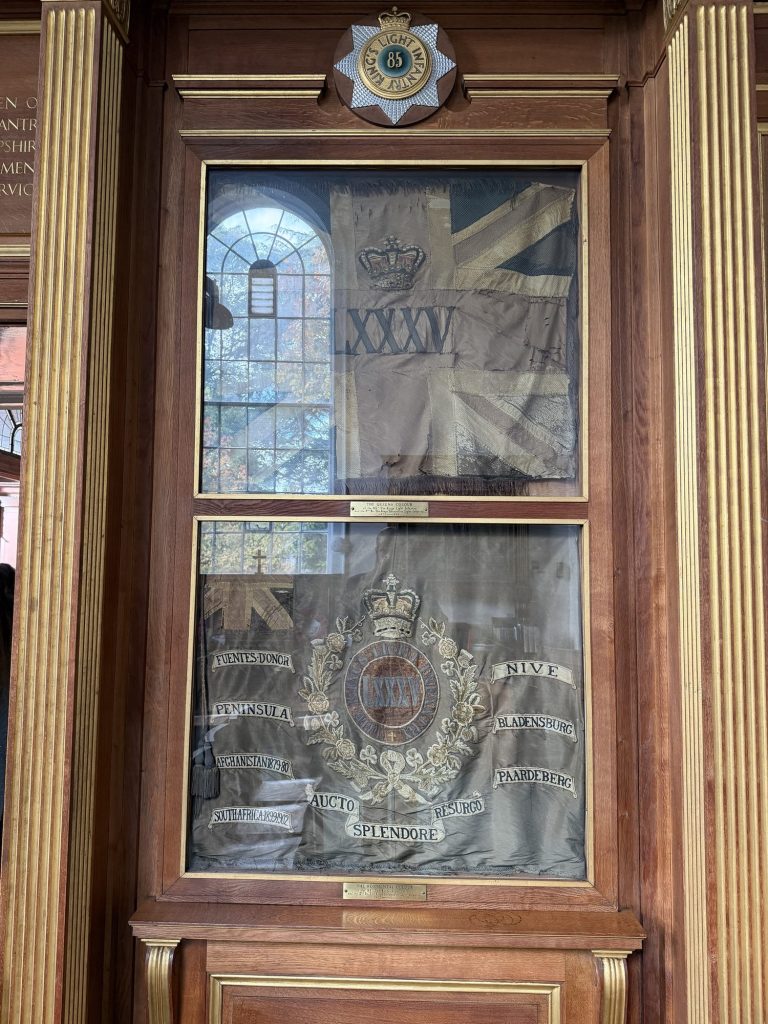
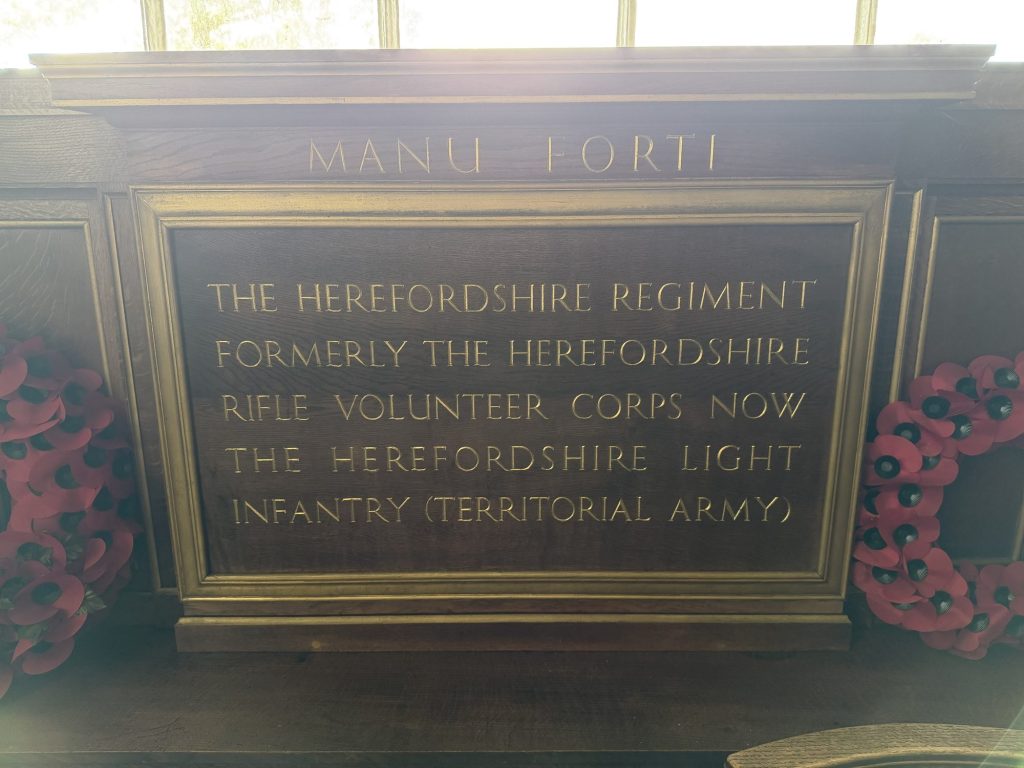
A vestry became the regimental chapel of the King’s Shropshire Light Infantry in 1951. The colours hang in cases, and beside them is a board for the Herefordshire Regiment under its motto, Manu forti. The KSLI and the Herefords: the same two names as on the label beside the baton.
The Quarry
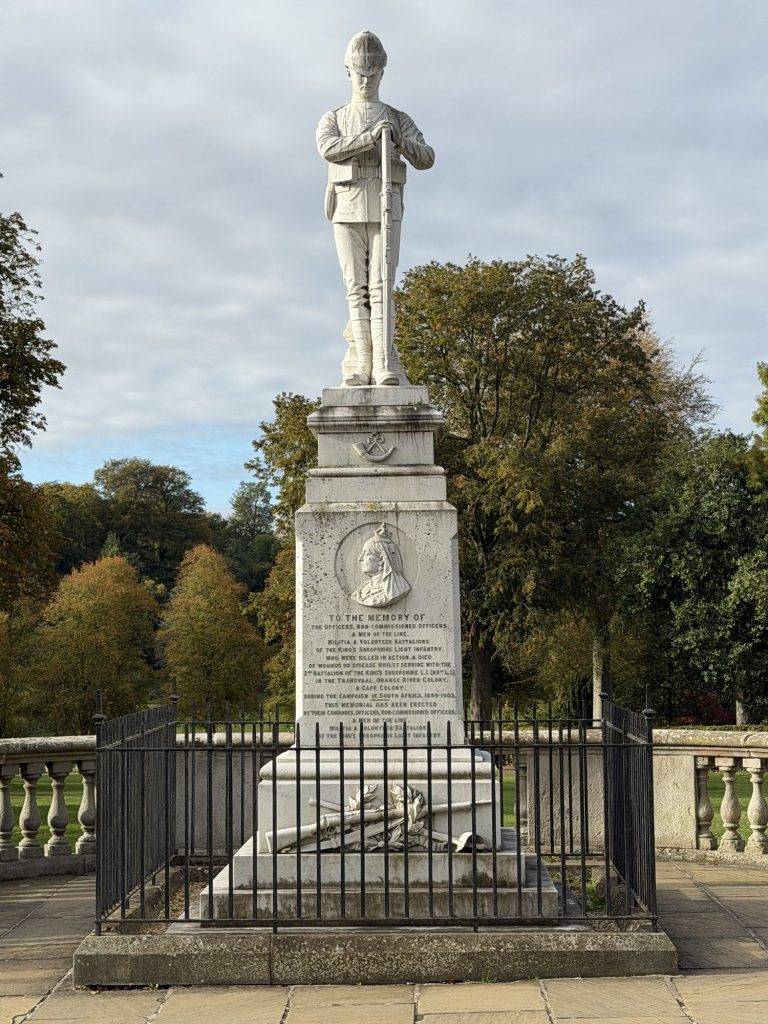
Below St Chad’s, the Quarry runs down to the Severn. The KSLI memorial there remembers the men of the 2nd Battalion and the militia and volunteer battalions who died in the Transvaal, the Orange River Colony and the Cape Colony between 1899 and 1902, with Queen Victoria in relief on the pedestal.
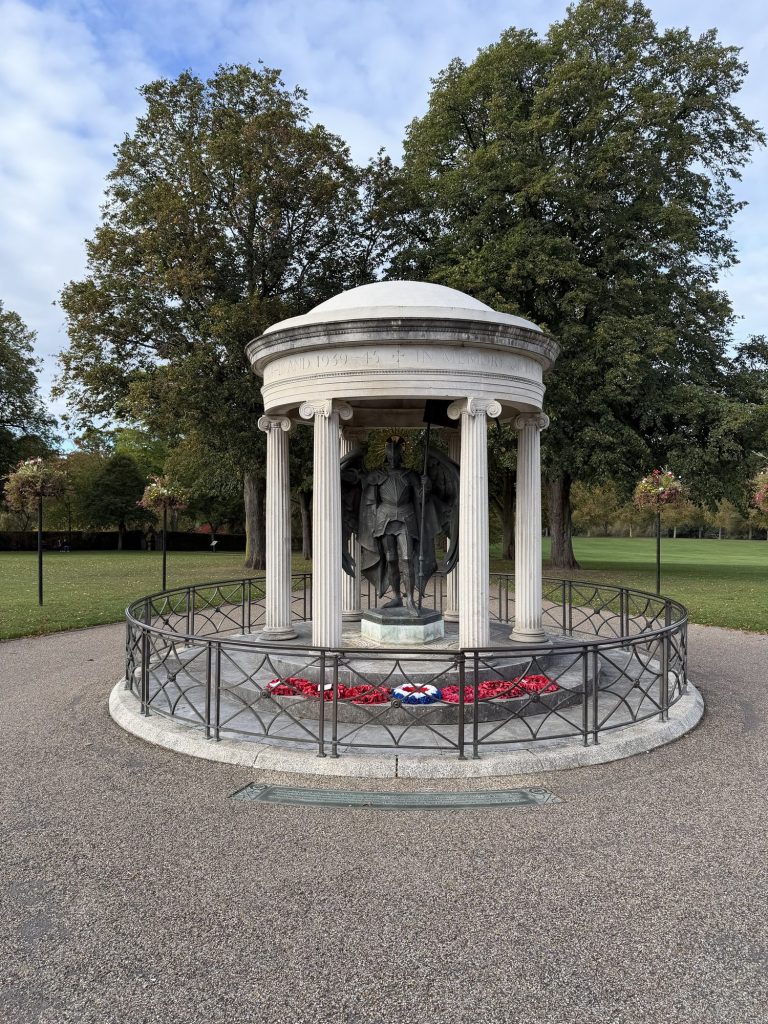
The Shropshire War Memorial, a domed rotunda of 1922 to 1923 by George Hubbard and Son, shelters a bronze St Michael by Allan G Wyon.
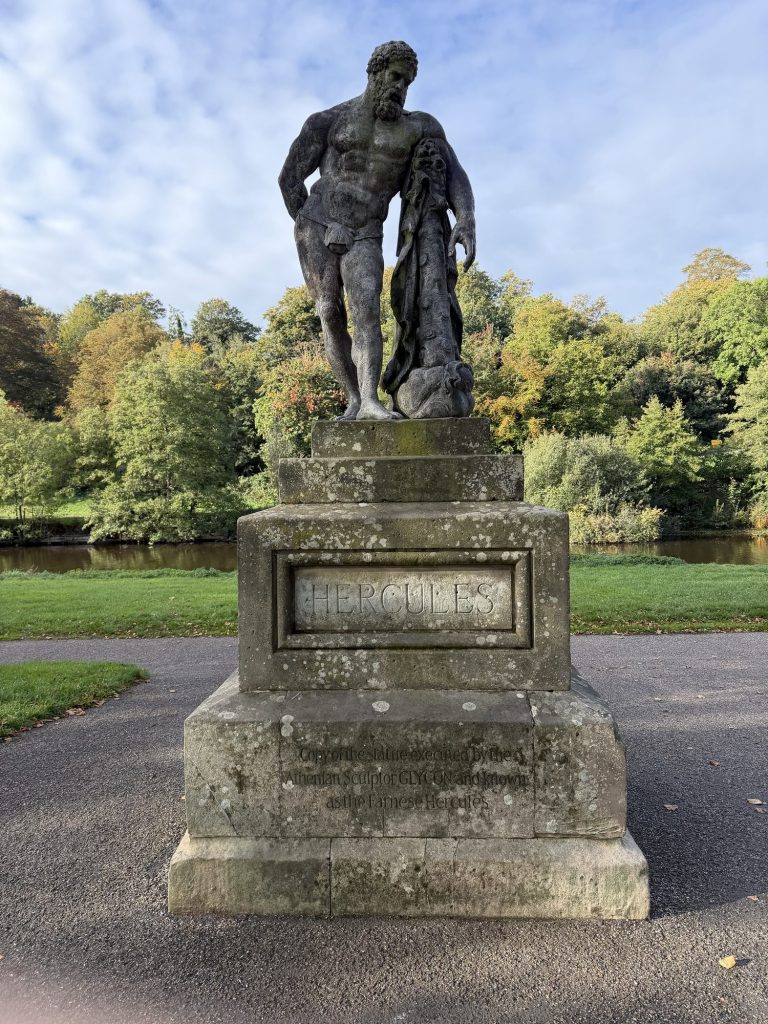
Hercules leans on his club by the river. The pedestal calls him a copy of the statue by the Athenian sculptor Glycon known as the Farnese Hercules.
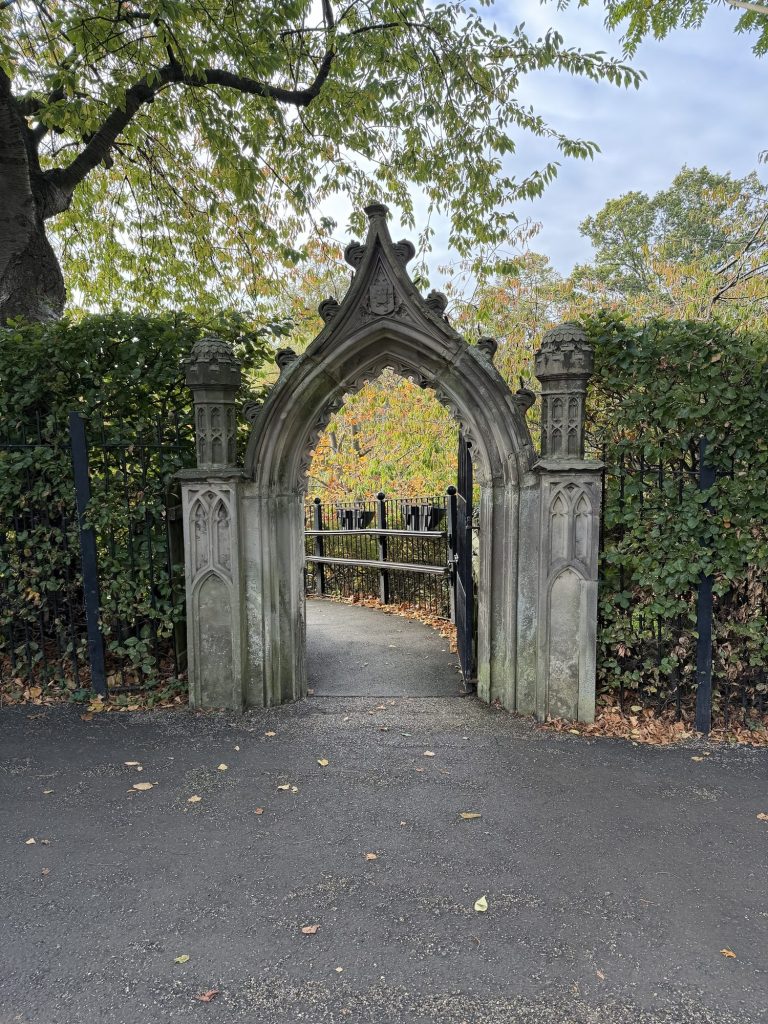
The Dingle, the sunken garden in the old quarry pit, has a Gothic arch for a gate. Porthill Bridge crosses to the far bank, and its plate reads David Rowell & Co, Engineers, Westminster, 1922.
Two more churches
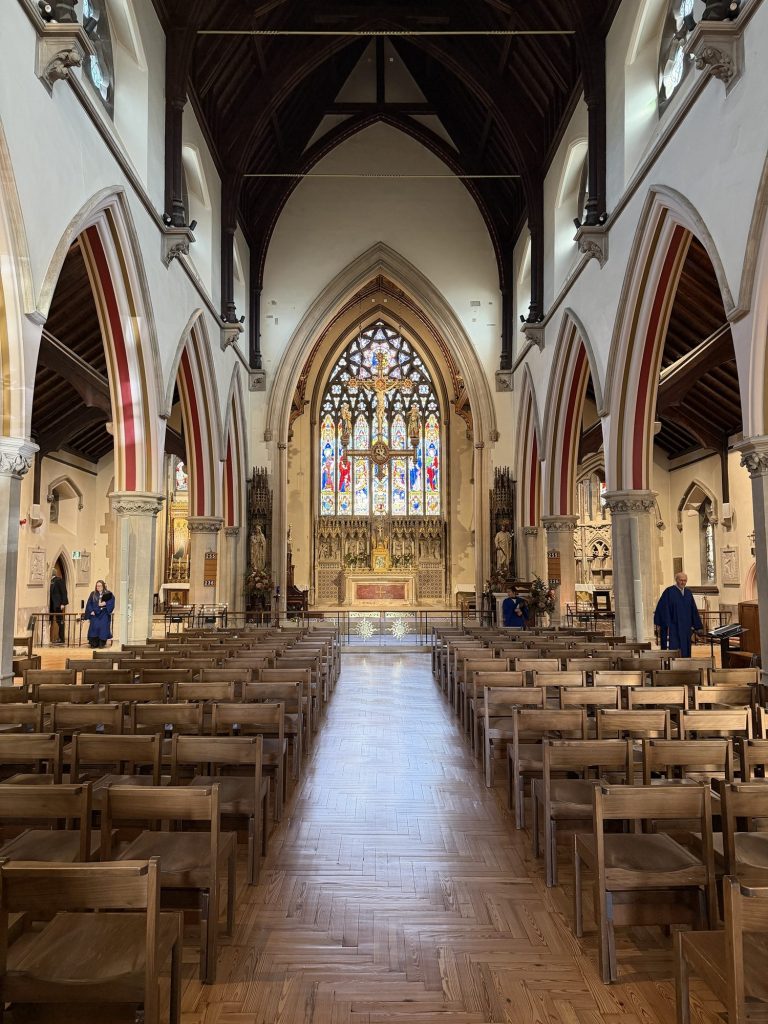
The Catholic cathedral on Town Walls is by Edward Pugin and opened in 1856. It was meant to be larger, with a tall spire, until a layer of sand turned up near the foundations.
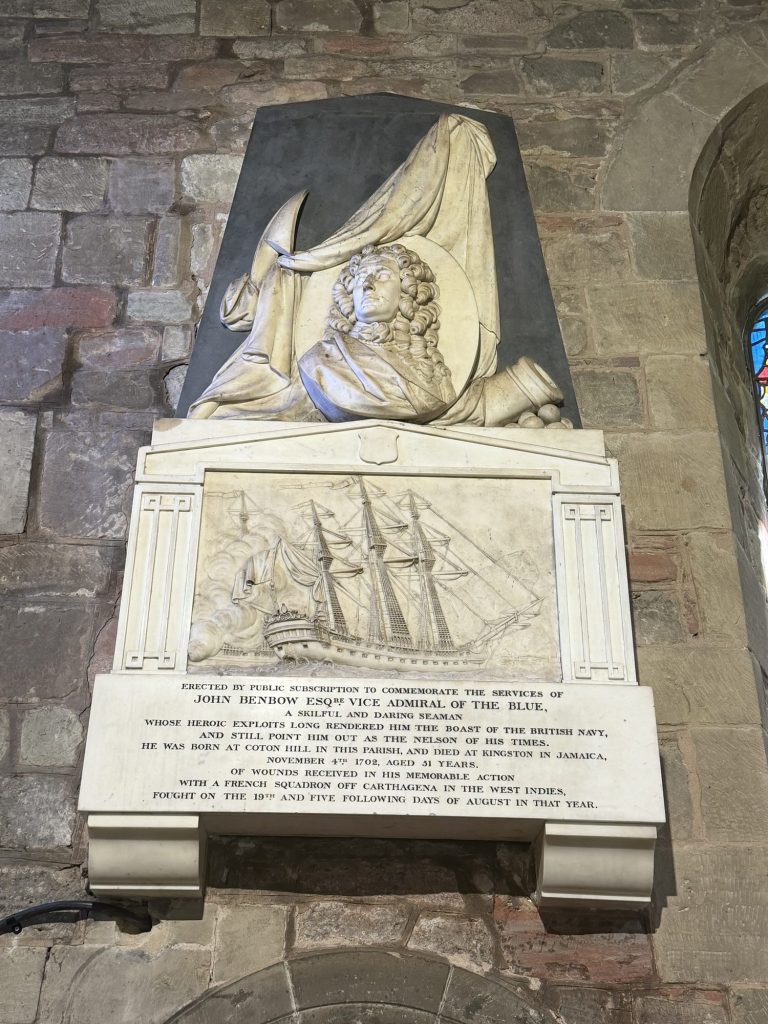
In St Mary’s, a monument raised by public subscription remembers John Benbow, Vice Admiral of the Blue, born at Coton Hill in the parish and dead at Kingston in Jamaica in 1702, of wounds from an action against a French squadron. The inscription calls him the Nelson of his times.
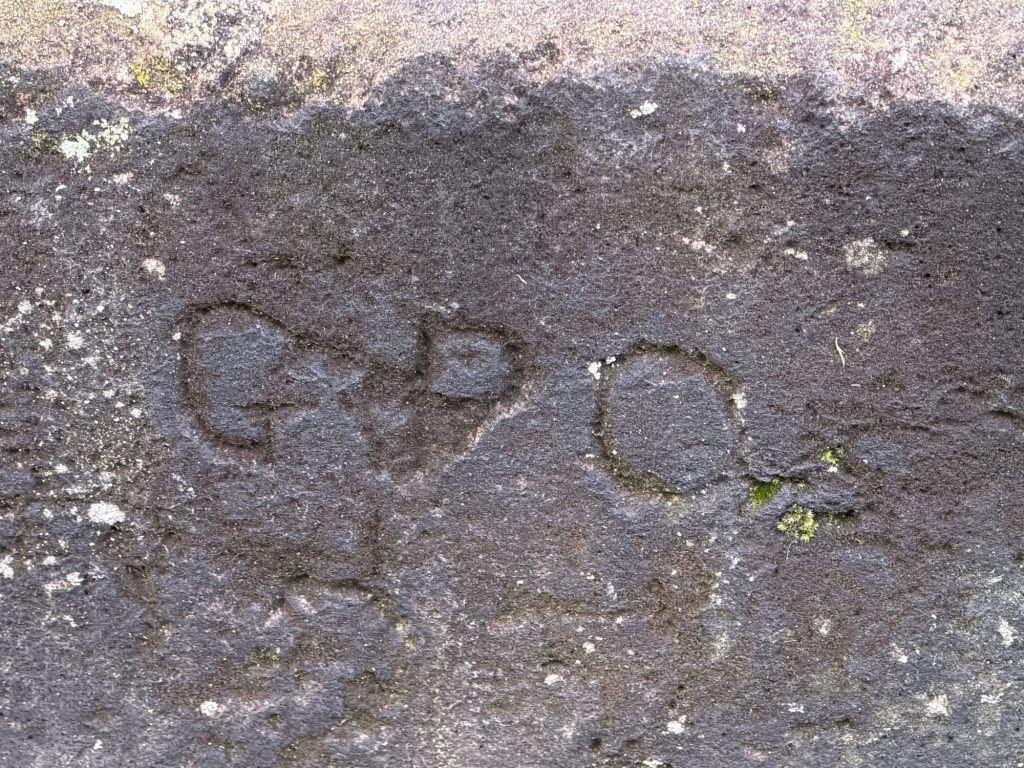
Outside, the Post Office had cut its own initials into the stone: GPO, in all likelihood marking the run of a telephone cable.
Abbey Station
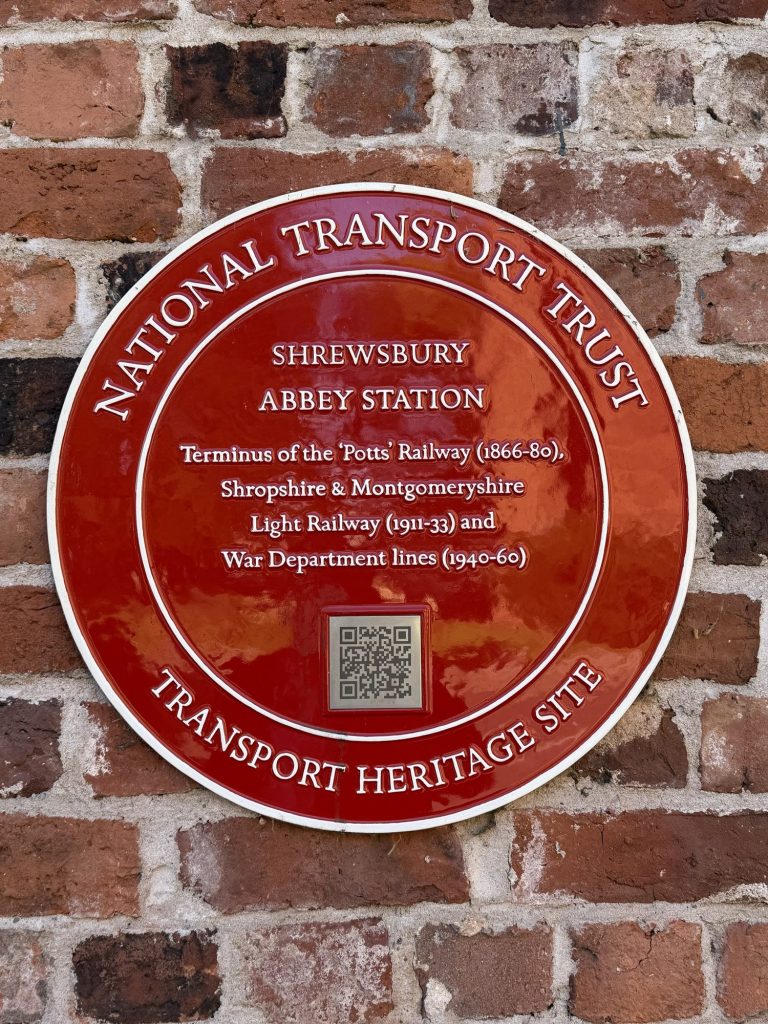
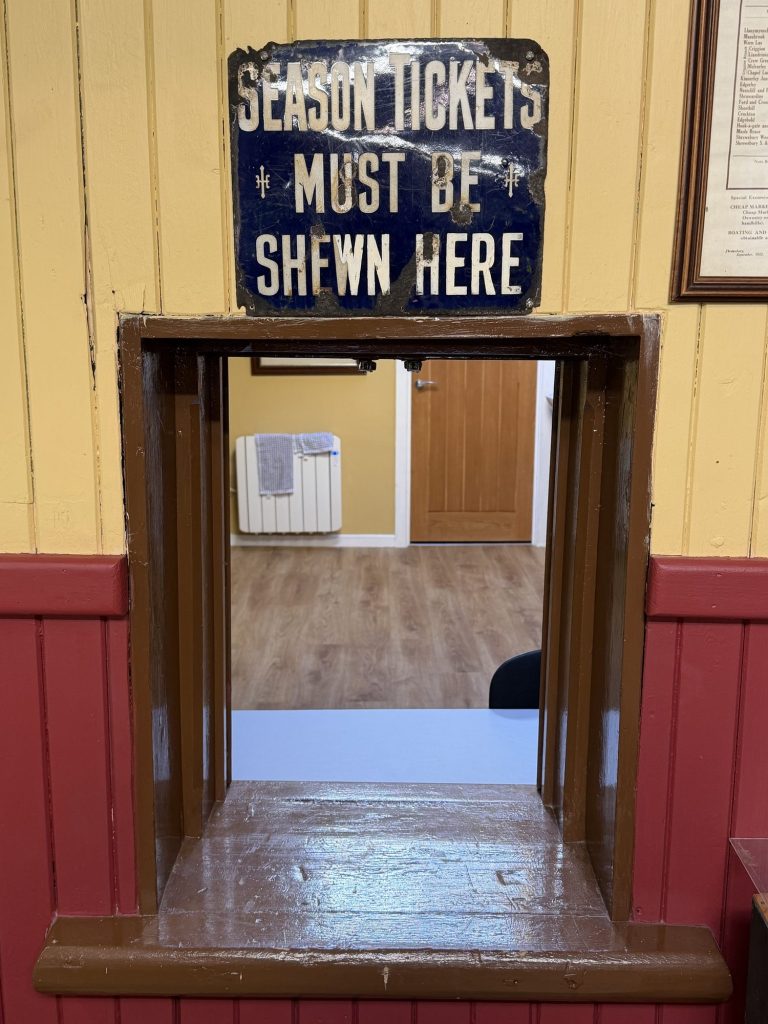
Abbey Station was the terminus of the “Potts” Railway from 1866 to 1880, the Shropshire and Montgomeryshire Light Railway from 1911 to 1933, and War Department lines from 1940 to 1960. Montgomeryshire is Welsh, and the plaque makes it one more line pointing west.
Bench marks
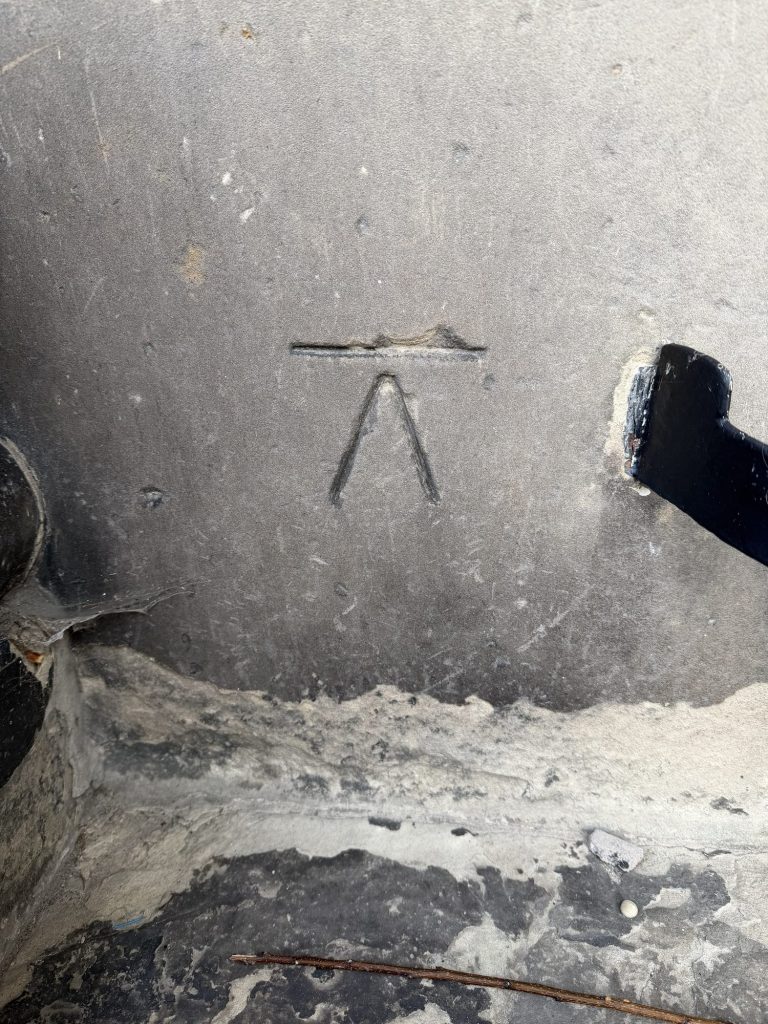
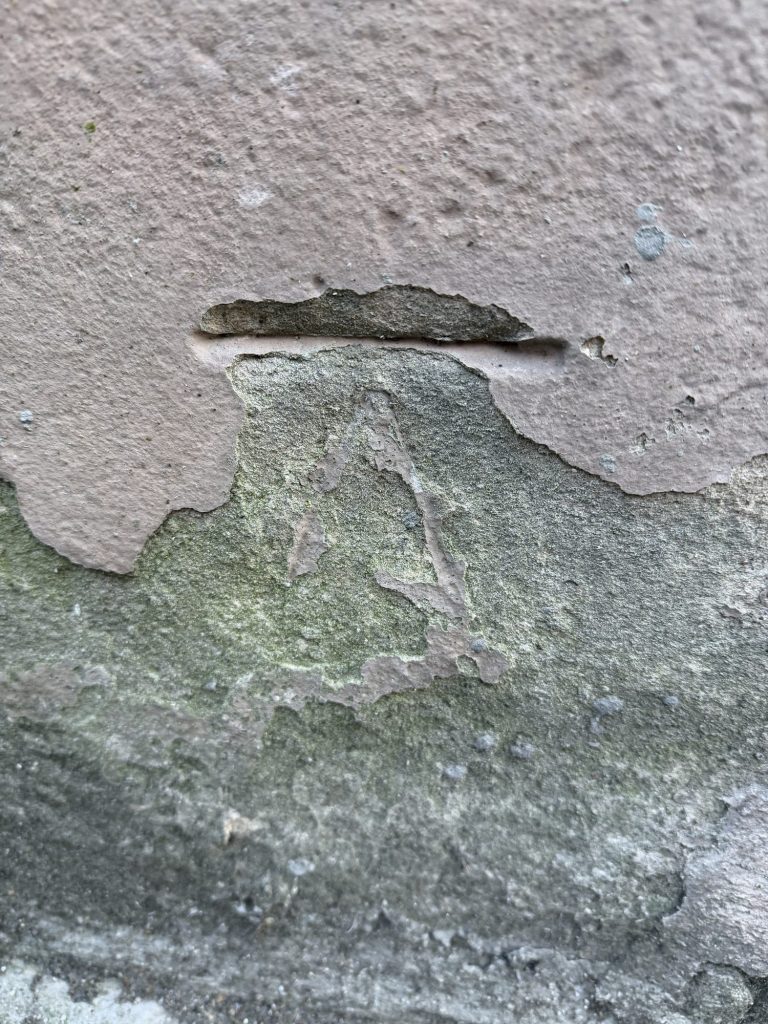
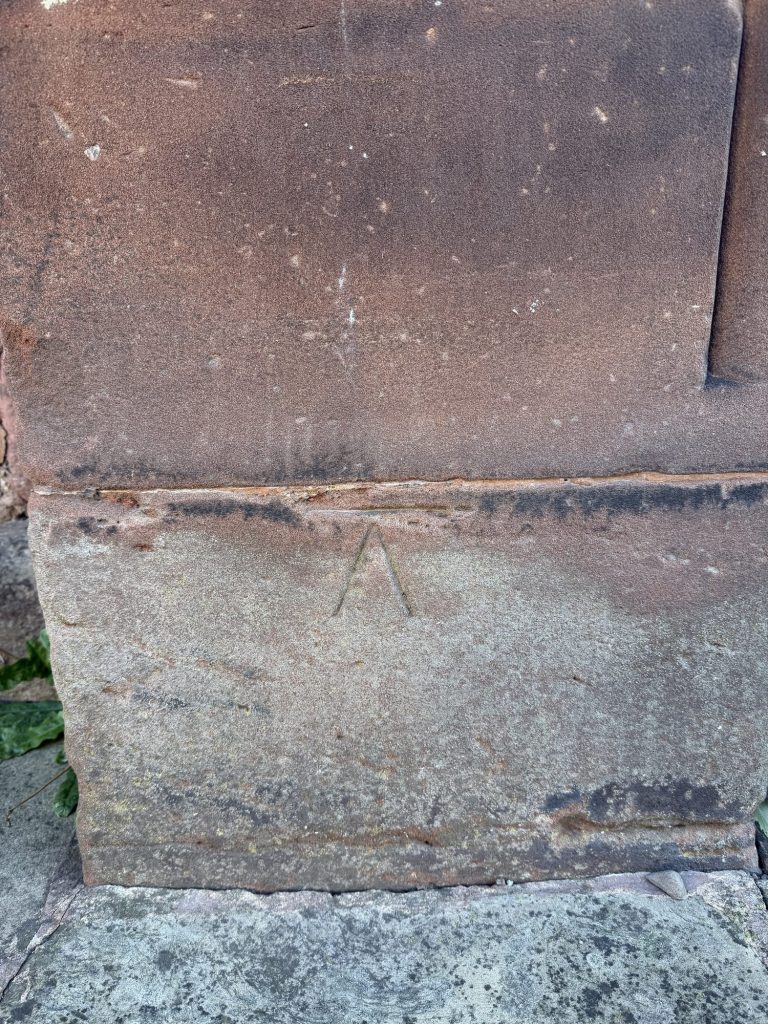
There were loads of OS marks as well. As per usual, my girlfriend spotted most of them, not me.
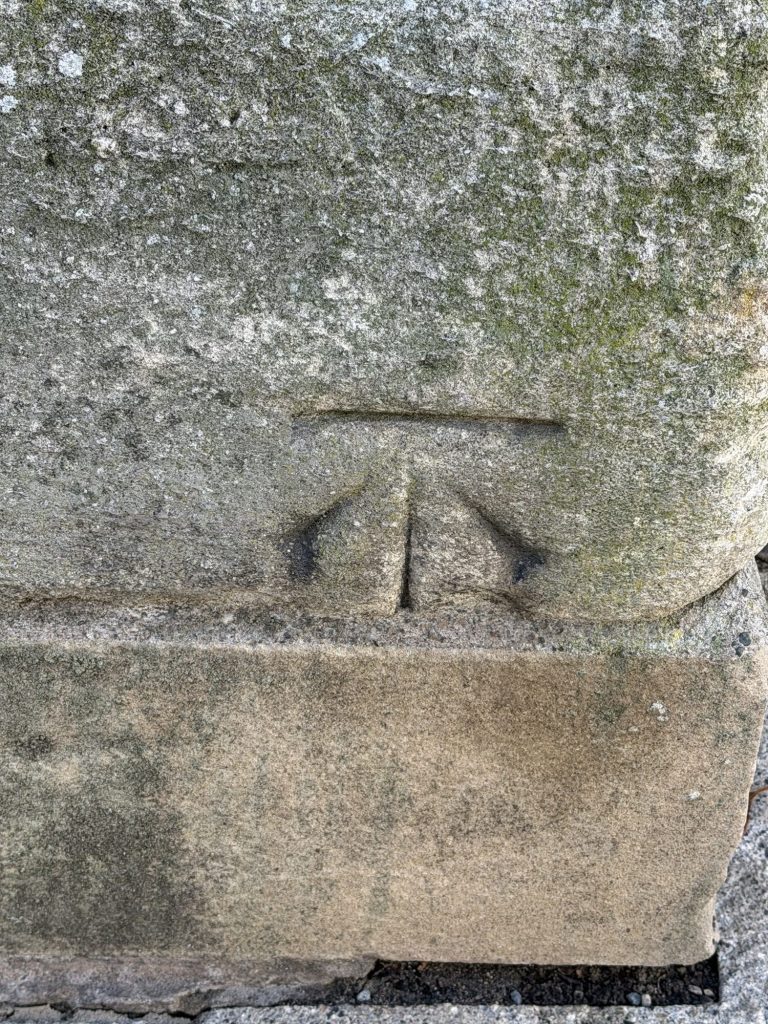
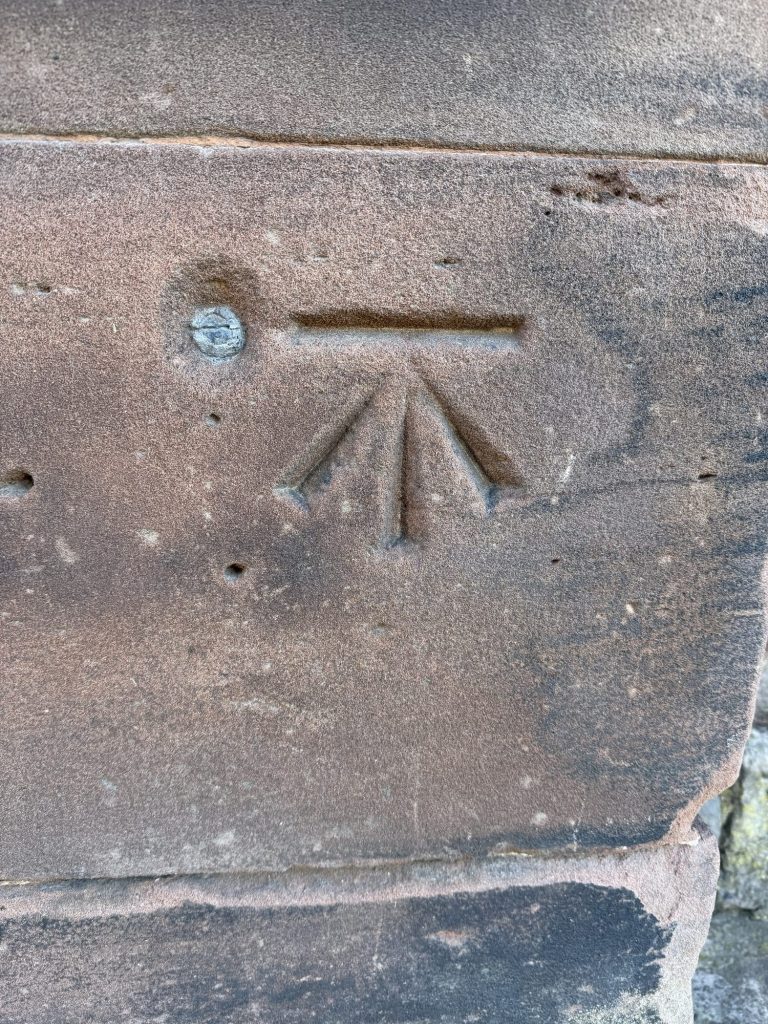
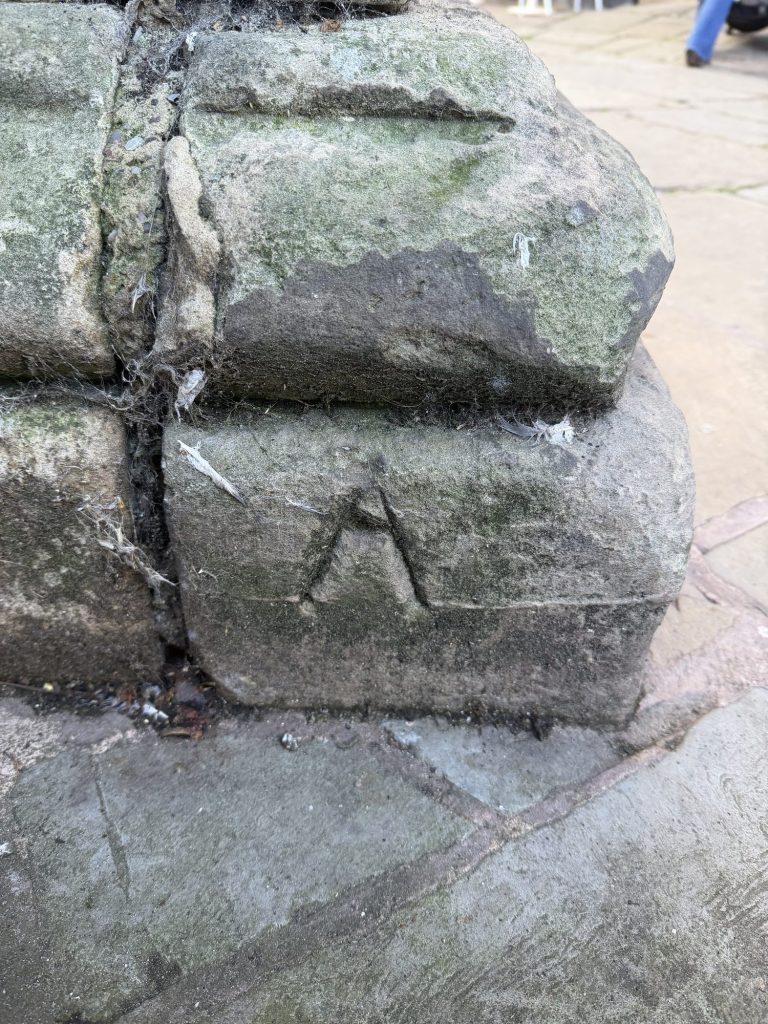
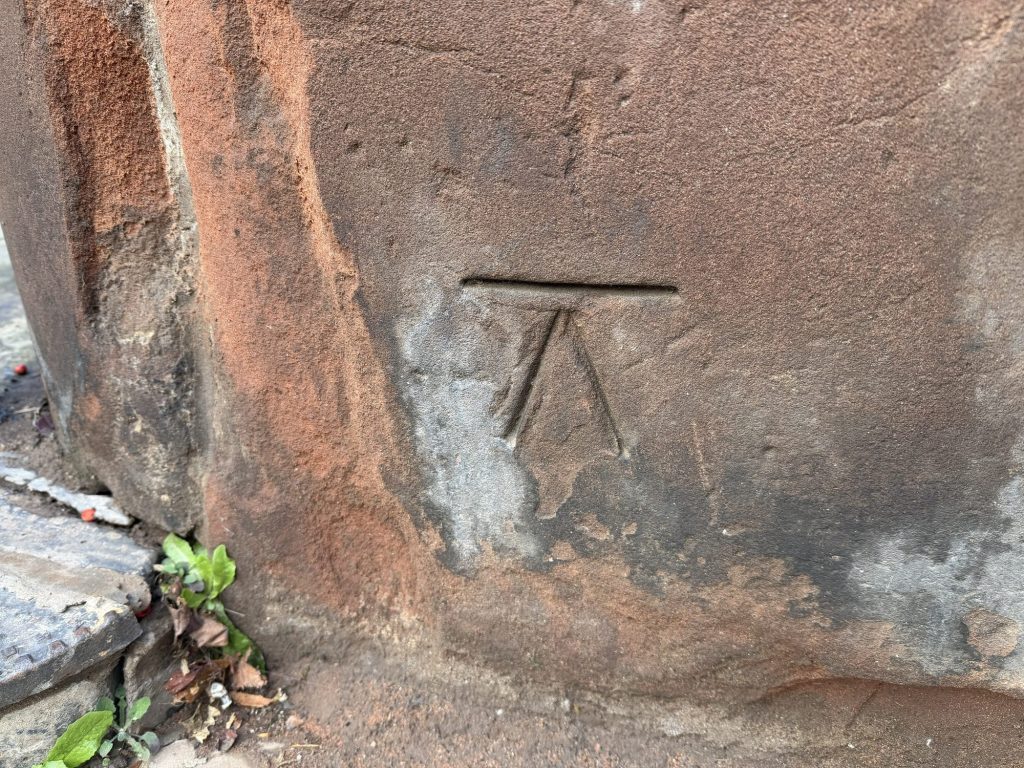
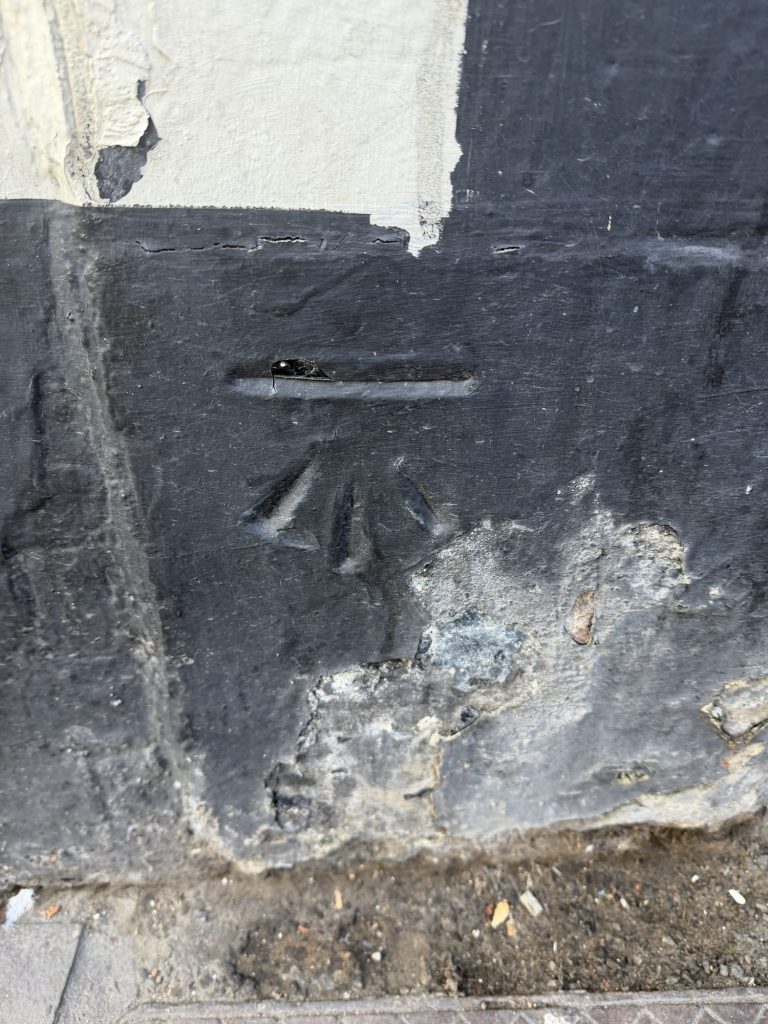
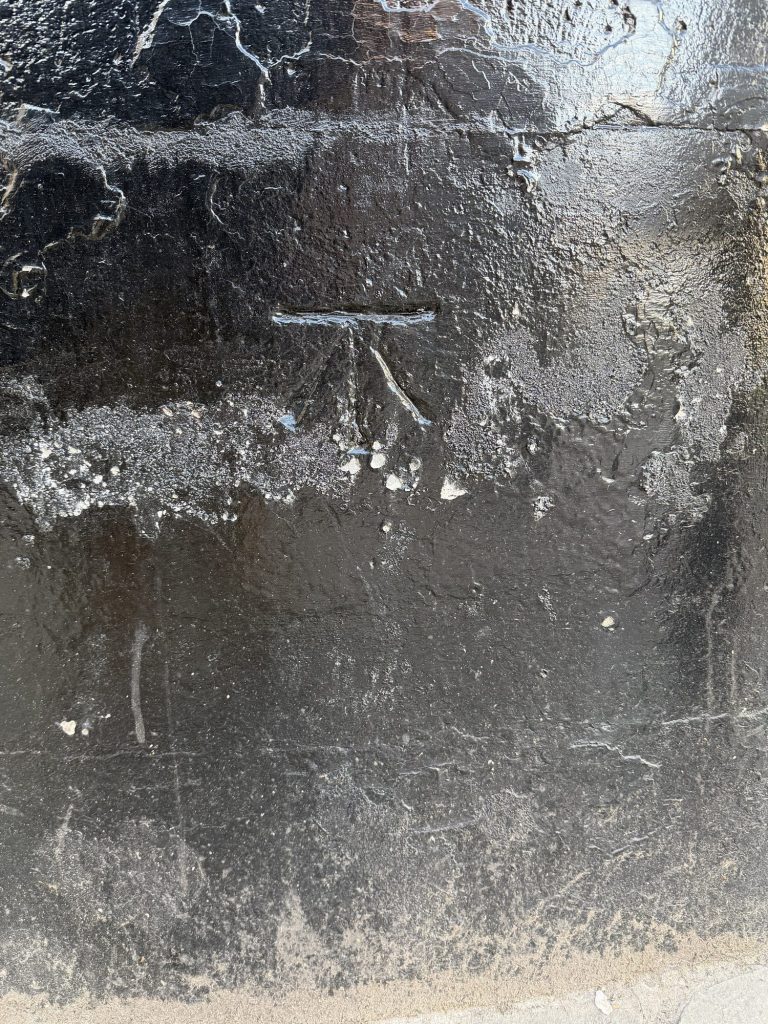
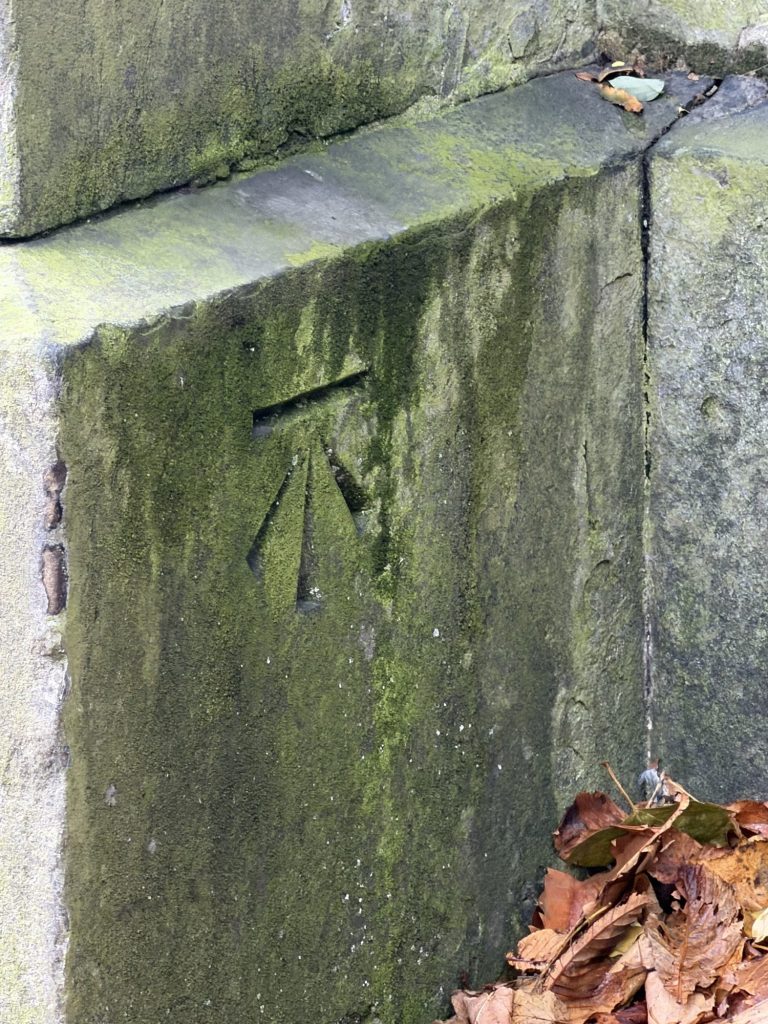
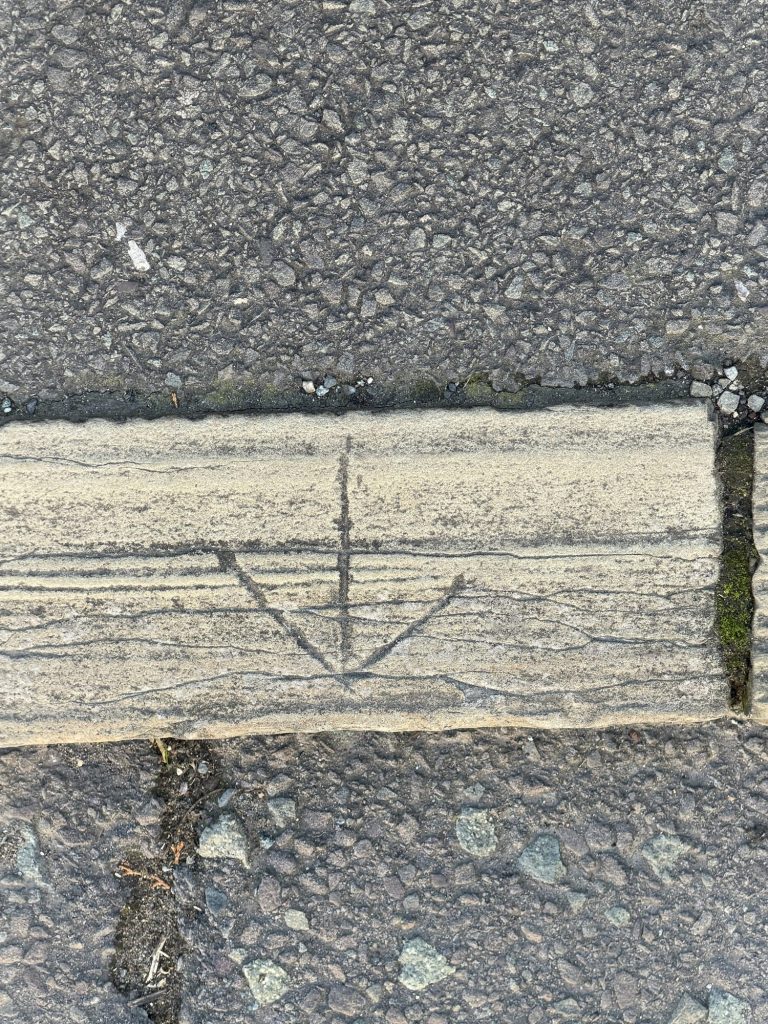
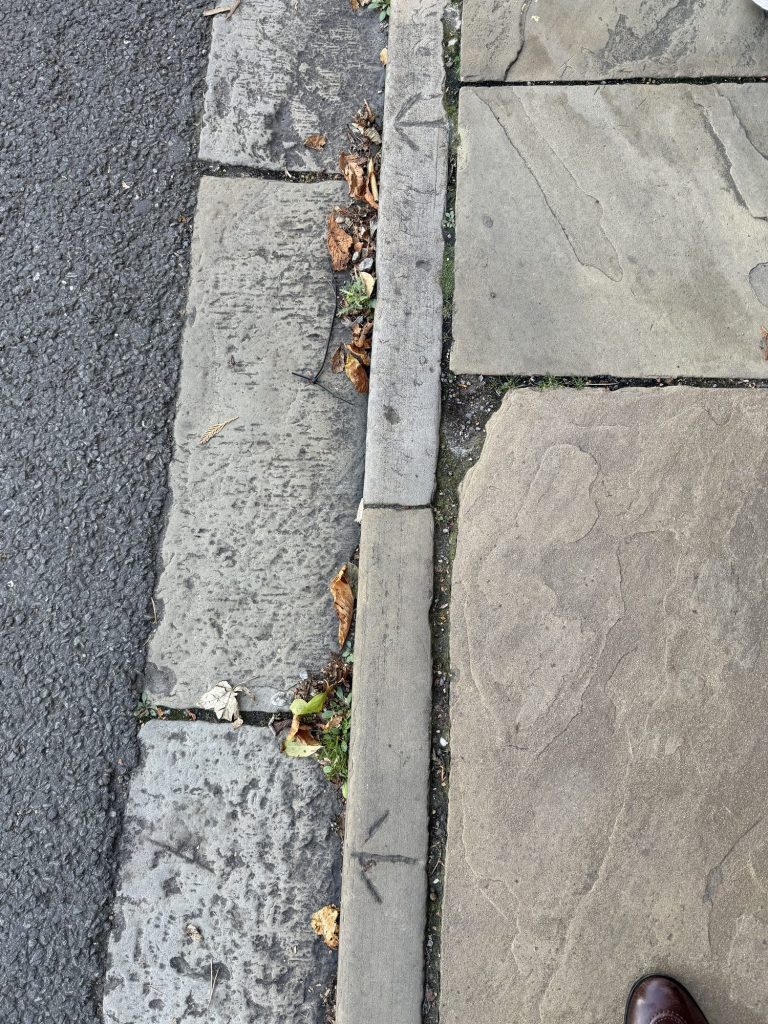
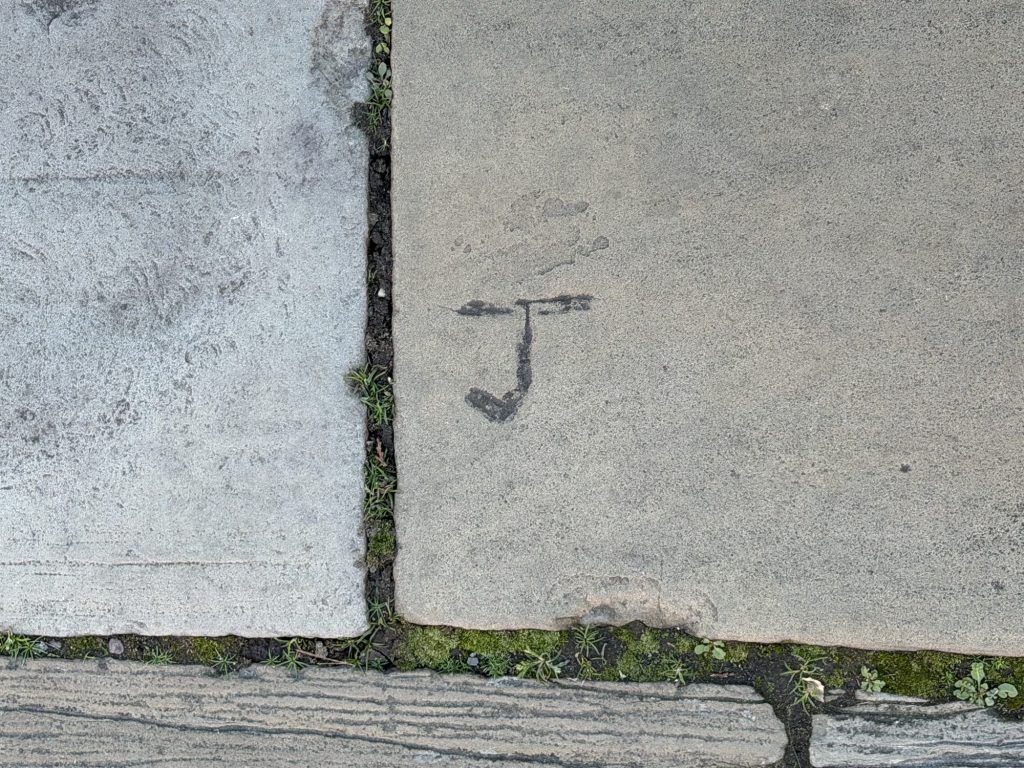
The kerbs had arrows too, but these are not bench marks. The centre line runs far too long, and there were several in a row along the same kerb, which makes them almost certainly private utility marks, cousins of the ones on Southampton Row. A J cut into the stone nearby points the same way, and there were quite a few more of those on the old town wall.
Sunday
On Sunday we popped in at Ruyton-XI-Towns just before leaving, and I was delighted to find the children shouting into the karaoke machine. Exactly what I wanted. A very irritating gift for the parents. Then a final lunch with them all at the Dog.
The drive back to Liverpool for the flight home took us through Wales, where I had never been. My first steps on Welsh soil were brief, unscheduled, and at the side of the road.
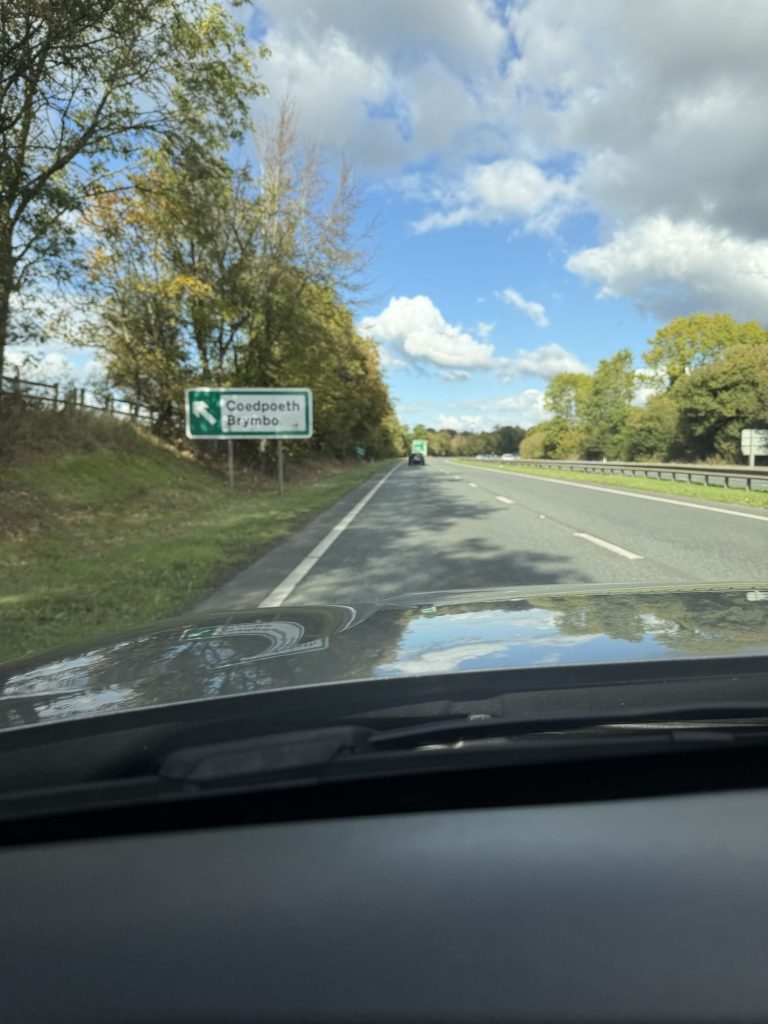
The drapers of Shrewsbury once waited for Welsh cloth to come over on ponies. We went the other way in a hire car, and caught the plane home.

