St James’s Palace
Sunday, and back to St James’s Palace, where on the last visit scaffolding had swallowed the bench mark. This time the scaffolding was gone.
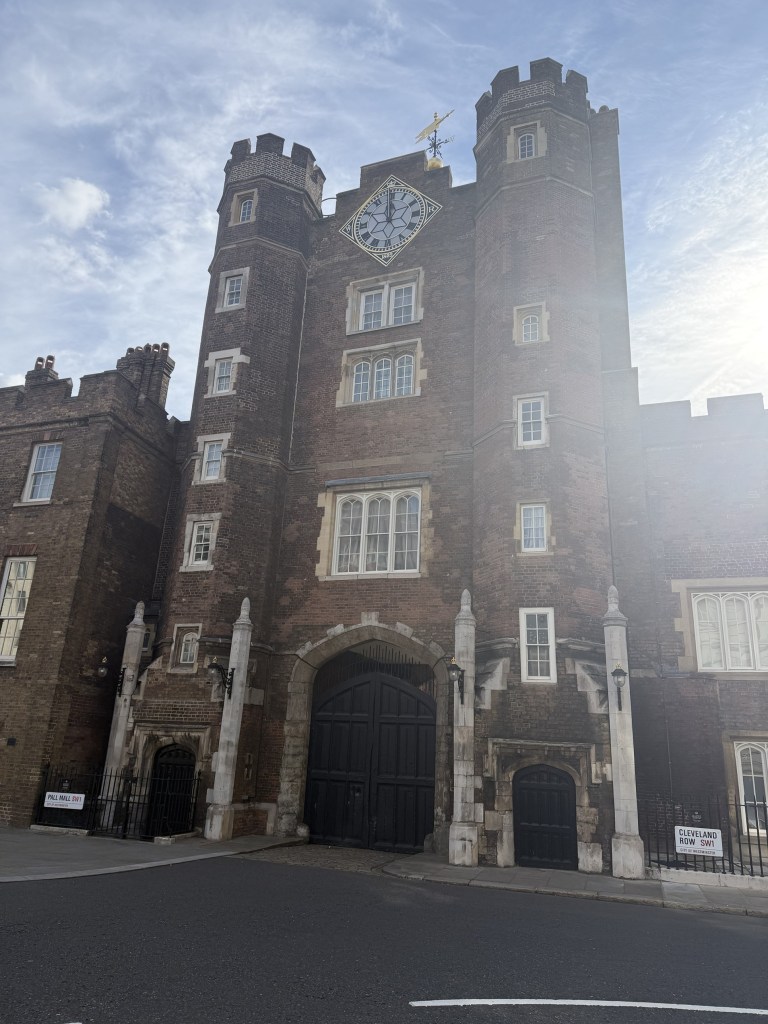
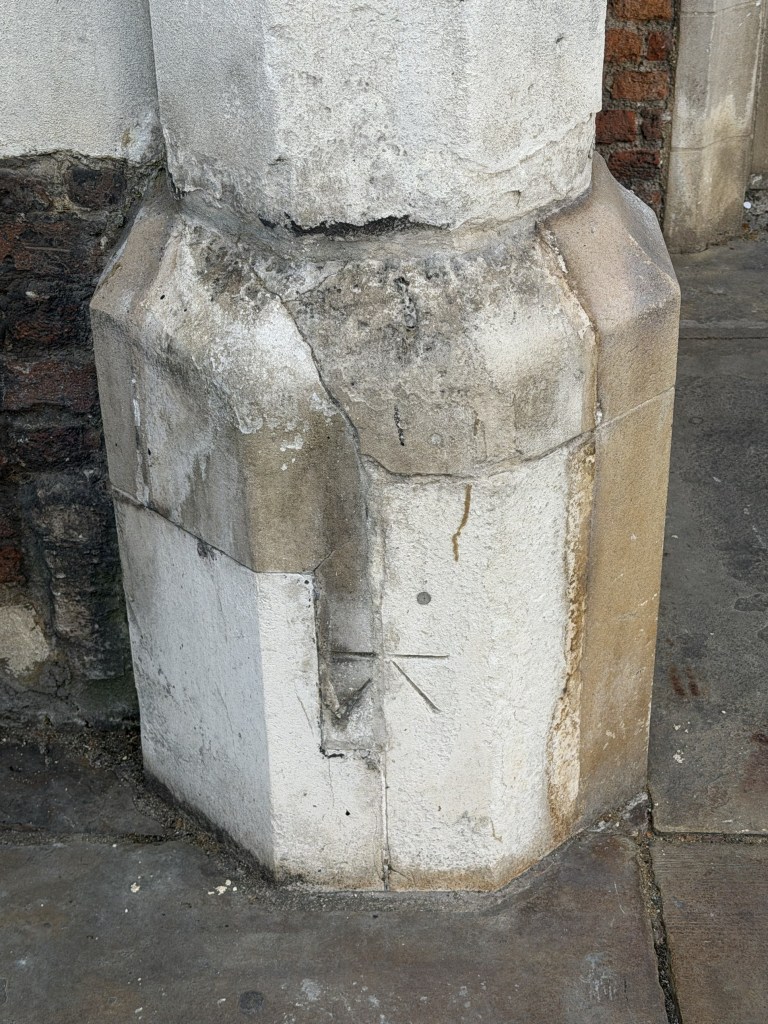
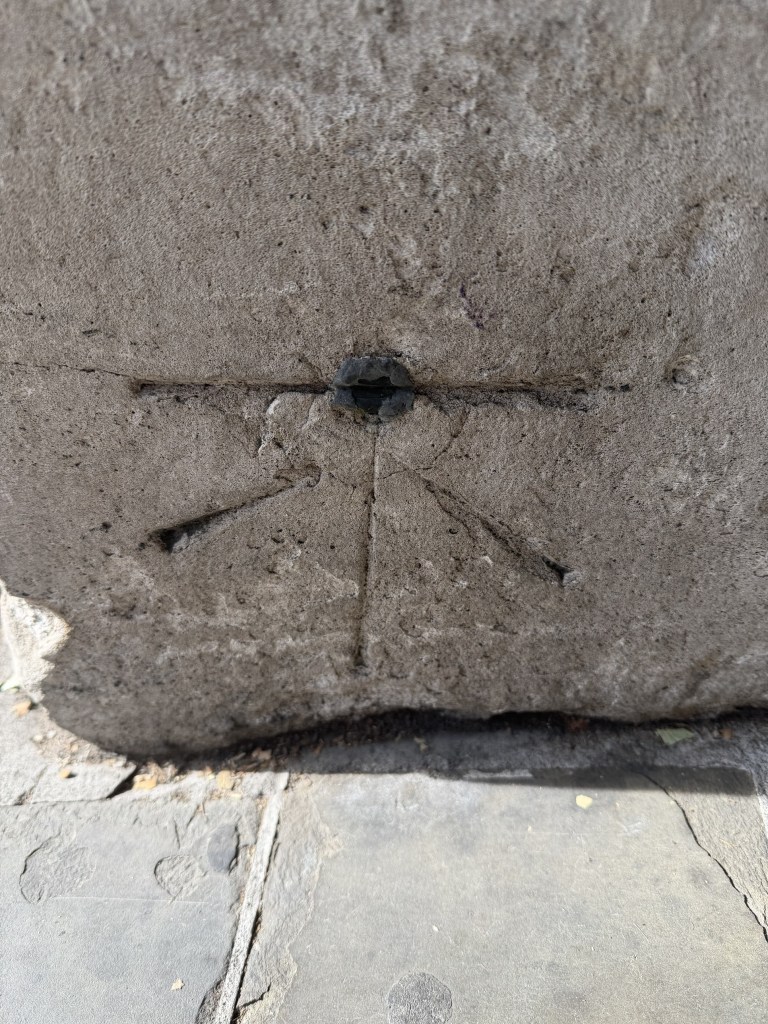
It is a super one. The bar runs straight across a joint in the plinth, so one arm of the arrow sits on the original stone and the other on a darker piece let in beside it, with a small round stud above. The gatehouse is Henry VIII’s, built between 1531 and 1536, and the clock above the gate carries the cipher of William IV.
The National Gallery
From there we walked up towards Cecil Court, passing the National Gallery on the way. On its side, facing St Martin-in-the-Fields, I spotted what seemed to be a bench mark abandoned before the final stroke of the arrow had been put in.
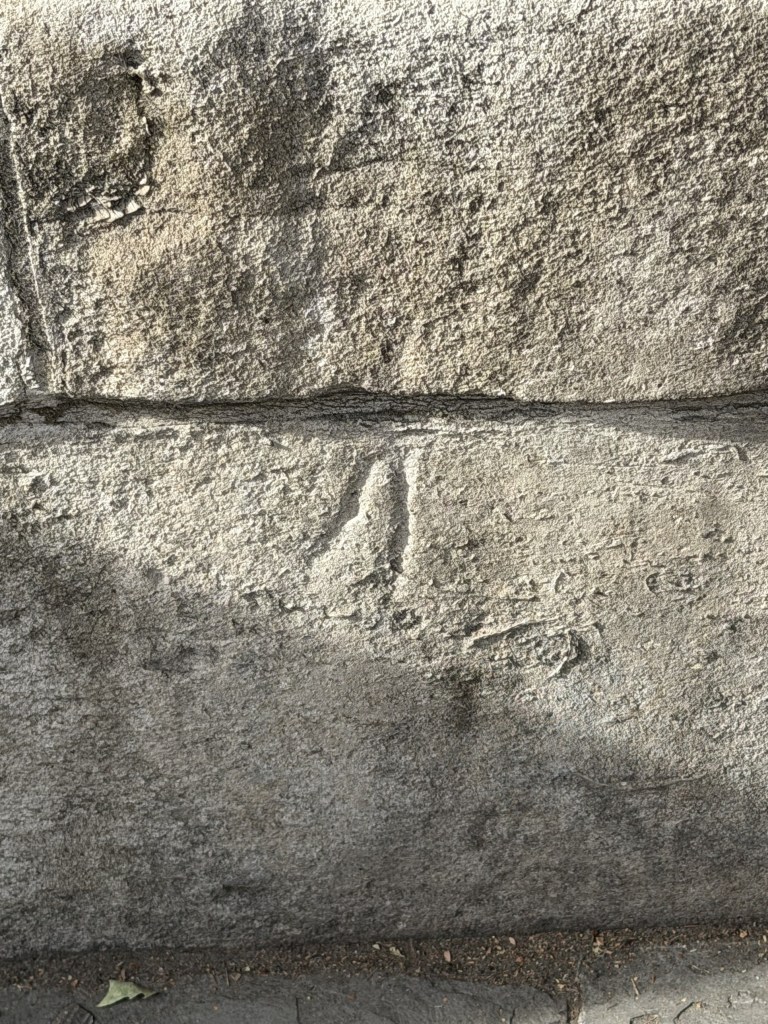
Curious, because a few metres further up there is a full arrow, with a bolt set into the bar.
Cecil Court
Most of Cecil Court was closed, it being Sunday, but it is a pretty and fascinating street regardless, lined with antique shops and book dealers. It is also the only street I know of that has its own website.
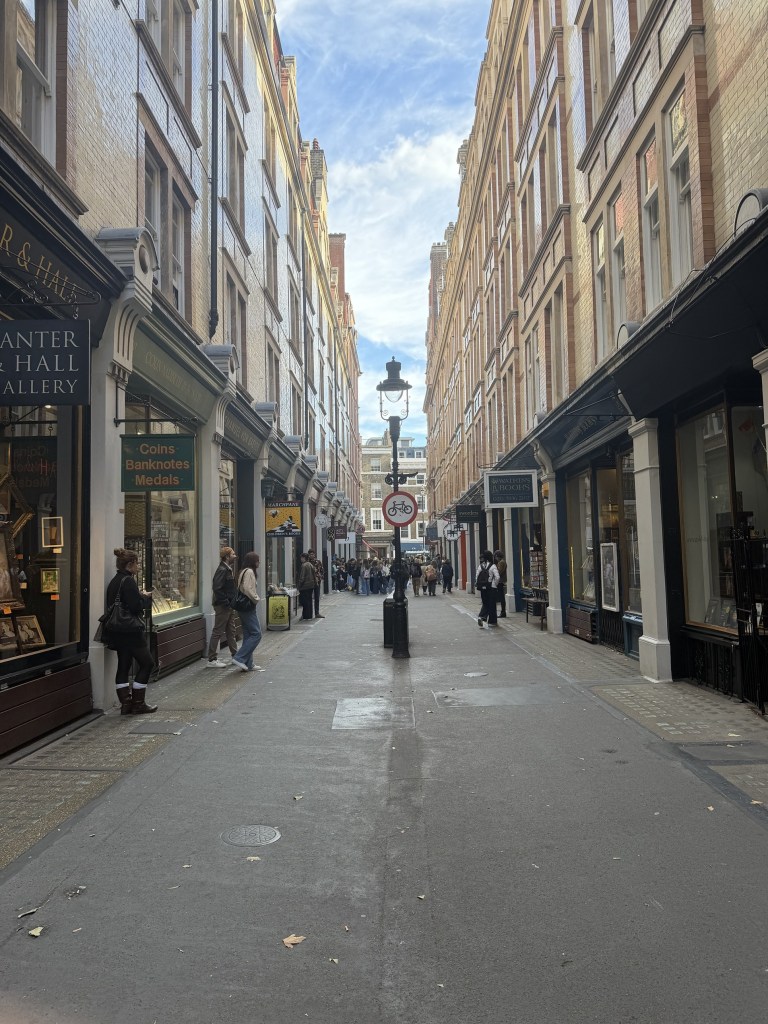
The buildings were laid out around 1894, and the street still belongs to the Cecil family, the Marquesses of Salisbury. Watkins Books, on the right of the photograph, has been at number 21 since 1901. Before the booksellers took over, the early film companies were here, enough of them that the street was known as Flicker Alley. And in 1764 an eight-year-old Mozart lodged in the court for nearly four months, with a barber who sold the tickets for his first London concerts from the shop.
Simpson’s
Lunch at Simpson’s in the Strand. They were full, but popped us upstairs into Romano’s, and we had an incredible lunch. Lemon sole for my girlfriend, and a roast for me. The fat literally melted in the mouth.
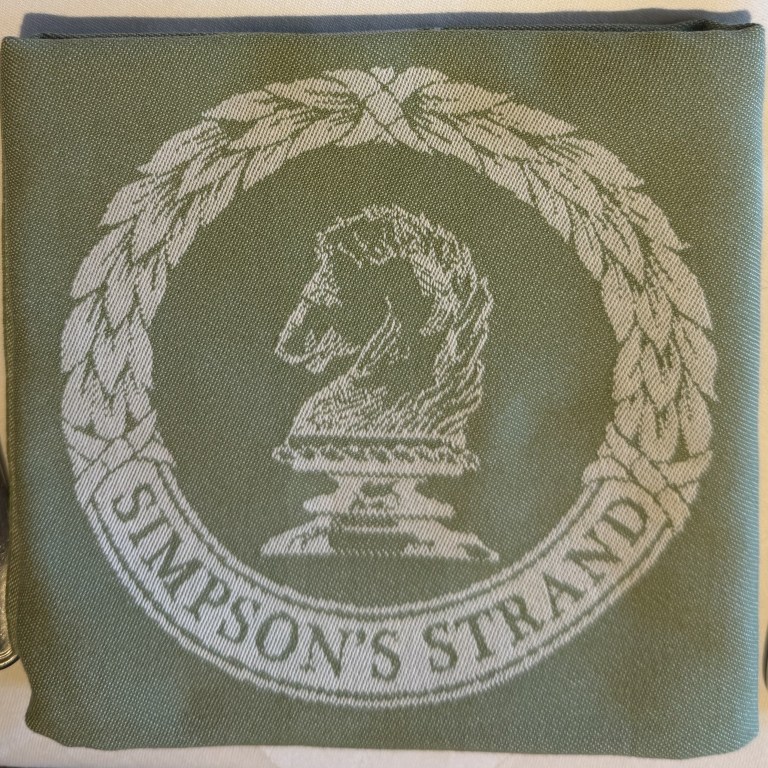
The knight on the napkin is the clue to the place. Simpson’s began in 1828 as the Grand Cigar Divan, a smoking room and coffee house that became the home of chess in England, and the custom of wheeling the joint to the table on a silver trolley is said to have started so that the players would not be disturbed. It closed in 2020 and reopened only this March.
All around Romano’s were portraits of people we did not recognise. We asked. They are all playwrights, and the restaurant has a booklet about them, a copy of which they furnished us with.
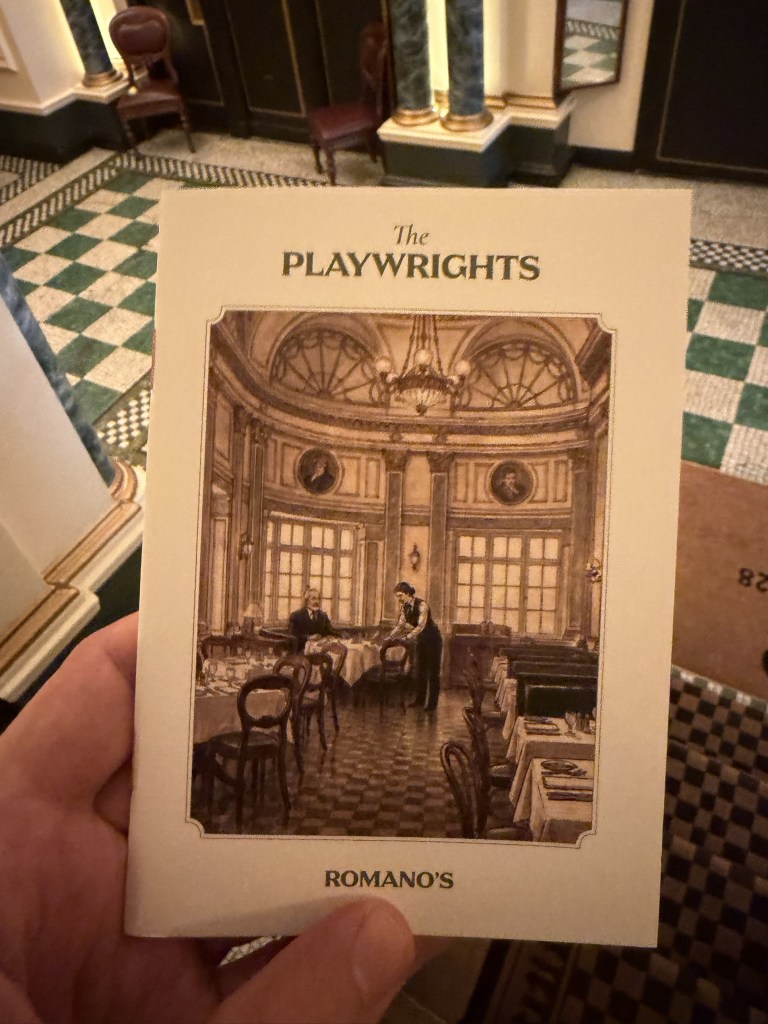
The booklet explains the portraits. In 1904 the rebuilt Simpson’s had newly opened at 100 Strand, and the proprietors took to commissioning a portrait of each playwright who enjoyed a successful run in the West End. Most of the faces belong to the ten years before the war. Some of the names have lasted: Shaw, Barrie, Galsworthy, Somerset Maugham, Pinero. The booklet freely admits that others have slipped from public memory. Among the less familiar are Cicely Hamilton and Christabel Marshall, who wrote the suffrage comedy How the Vote Was Won together in 1909.
Pinero ties this lunch to the night before. The Second Mrs Tanqueray, one of the successes the booklet credits him with, was staged in 1893 by George Alexander at the St James’s, the theatre whose plaque I had found beside the Golden Lion.
The room takes its name from the original Romano’s, a Strand restaurant of the Edwardian theatre world, where the Prince of Wales dined and deals were struck, until the Blitz destroyed it in 1941. The new one has been open since the spring.
The Actors’ Church
After lunch, the big church on Covent Garden, St Paul’s, which I had somehow never been into before.
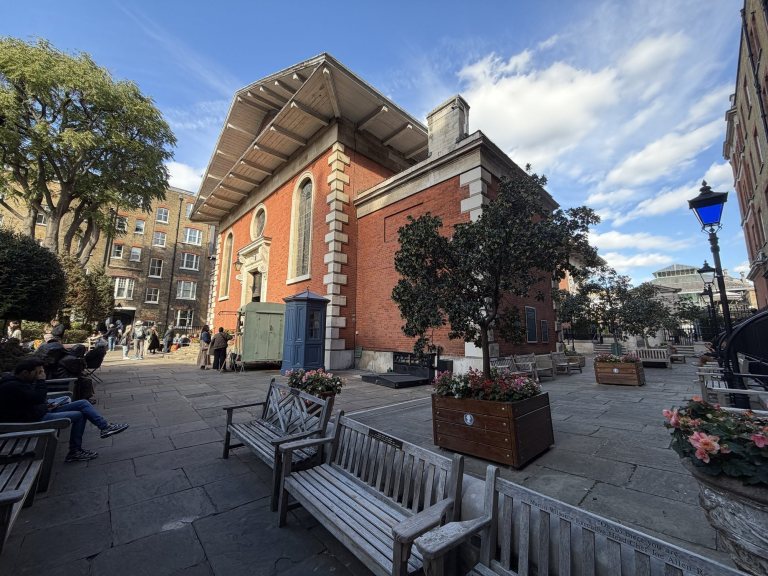
Inigo Jones built it for the Earl of Bedford between 1631 and 1633, as the centrepiece of his piazza. The grand portico facing the market has a door that is a fake: the altar sits at that end, so the real way in is round the back, through the churchyard. Fire gutted the church in 1795 and Thomas Hardwick rebuilt it much as Jones had left it. Its ties to the stage are old ones. In May 1662 Pepys watched an Italian puppet play under that portico, the first recorded Punch and Judy.
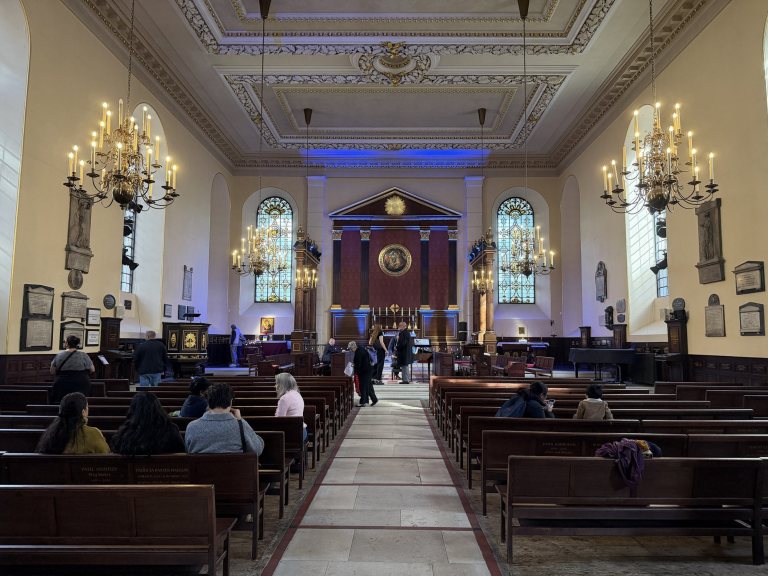
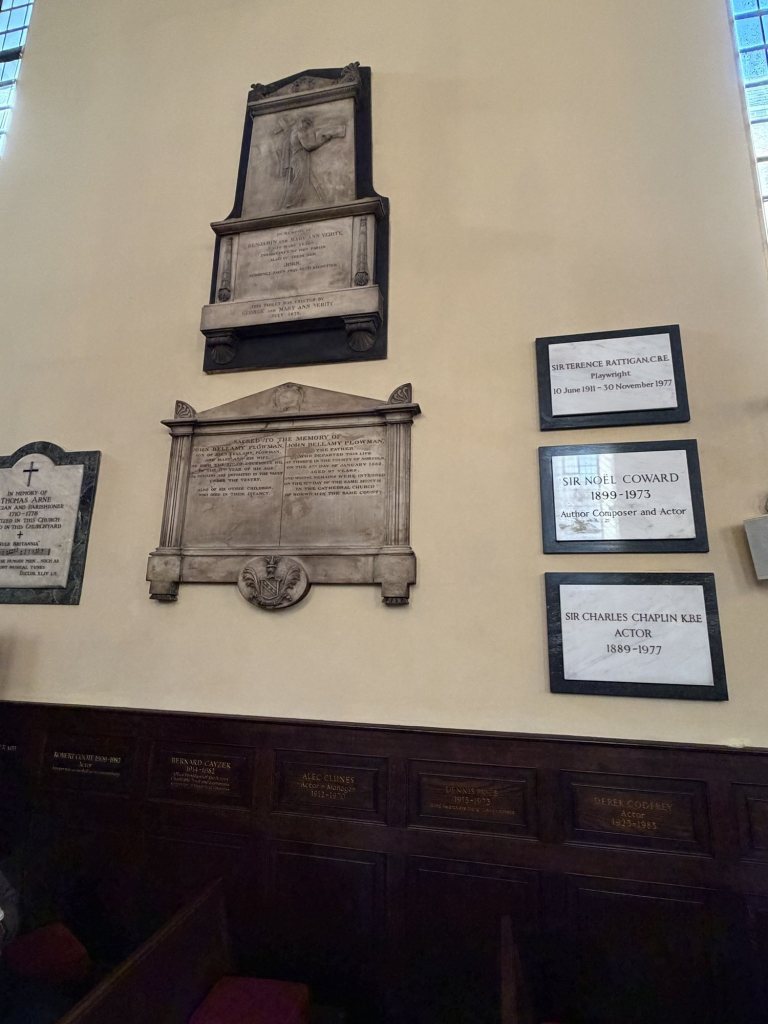
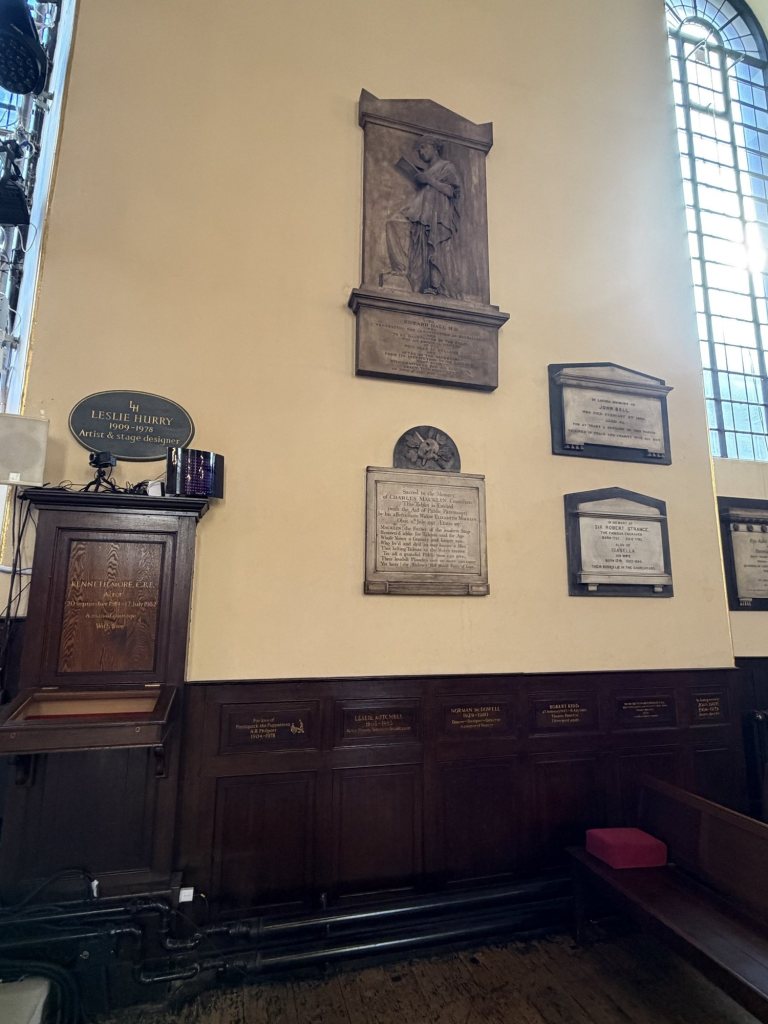
The memorials are full of remembrance to people in the performing arts, very fitting given our lunch. Noël Coward, Charlie Chaplin and Terence Rattigan share one stretch of wall. Below them the oak panelling is lettered with actors, dancers and a lighting designer, the pew backs carry a wig maker, and one panel remembers a Punch and Judy man who was also a member of the Inner Magic Circle.
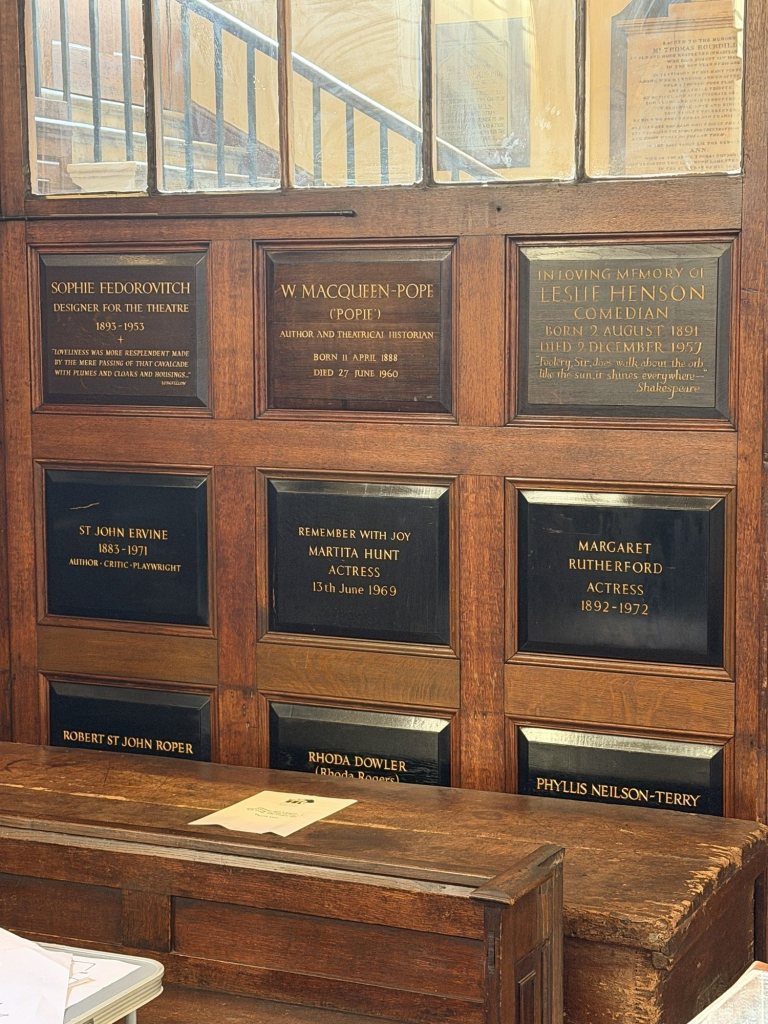
One panel went straight back to the restaurant. W. Macqueen-Pope, “Popie”, author and theatrical historian, ran publicity at Drury Lane for twenty-one years. He is also the man quoted in the Romano’s booklet, the one about the Bohemians, the men and women of the greasepaint, and the crooks as well.
The one I especially like is a wall-mounted stone for Charles Macklin, with a mask and a dagger through it. Macklin was the Irish actor who changed how Shylock was played. Until his opening night in 1741 the part had been done for laughs; he played it dark and in earnest, and the couplet “This is the Jew that Shakespeare drew” is attributed to Pope. The dagger is said to point to something darker. In 1735, in a quarrel over a wig backstage at Drury Lane, Macklin thrust his cane into the eye of a fellow actor, Thomas Hallam, who died the next day. He conducted his own defence, and the jury found him guilty of manslaughter rather than murder. He went on acting for more than half a century and died on 11 July 1797. His widow, Elizabeth, put up the tablet with the aid of public patronage, and it gives his age as 107, calling him the father of the modern stage, whose years a century and longer ran. By his own reckoning he was 97.
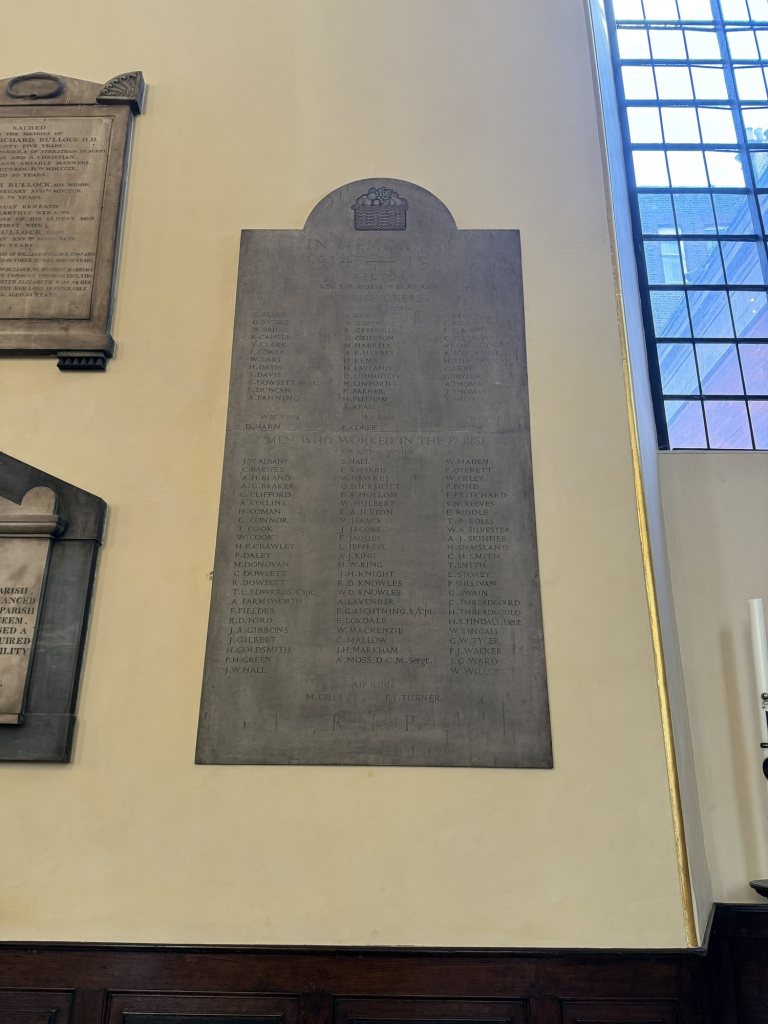
Not every name is theatrical. The parish war memorial lists the parishioners and then the men who worked in the parish, and at its head is the rector, the Reverend E. H. Mosse, killed in an air raid. He died on 29 January 1918, by one account while standing in a doorway encouraging and consoling people who had taken shelter.
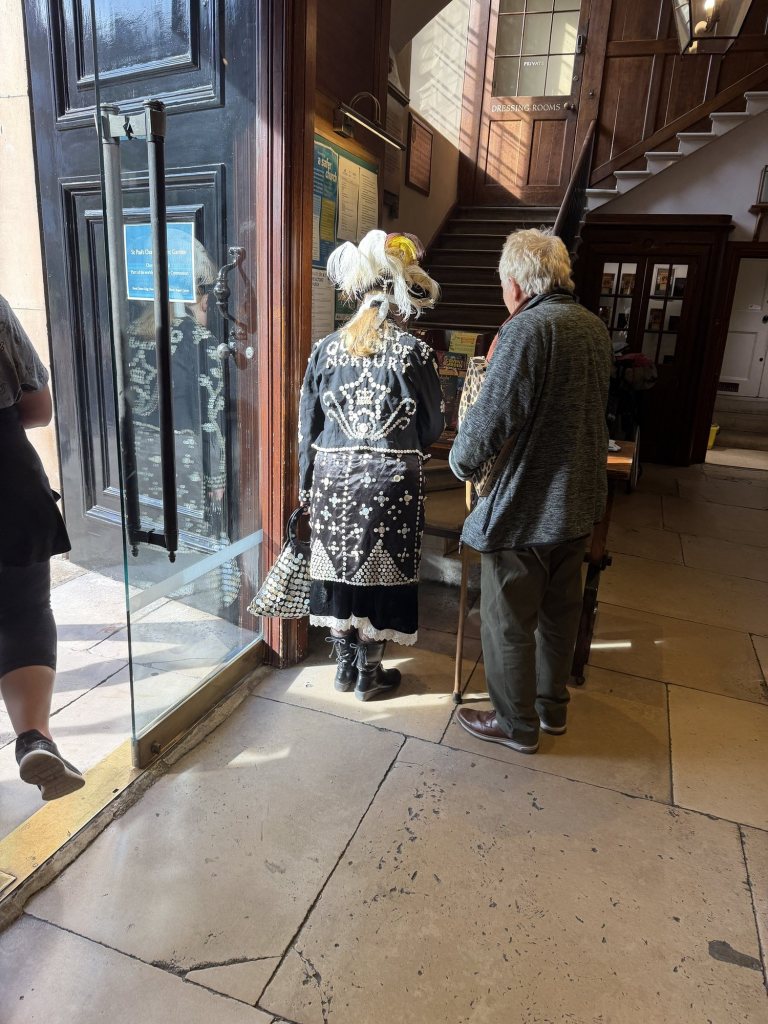
On the way out, in the doorway, a pearly queen, Norbury picked out across her back in buttons. The last pearly to appear here was Henry Croft, the original pearly king, in stone, down in the crypt of St Martin-in-the-Fields. This one was very much alive.
King Street
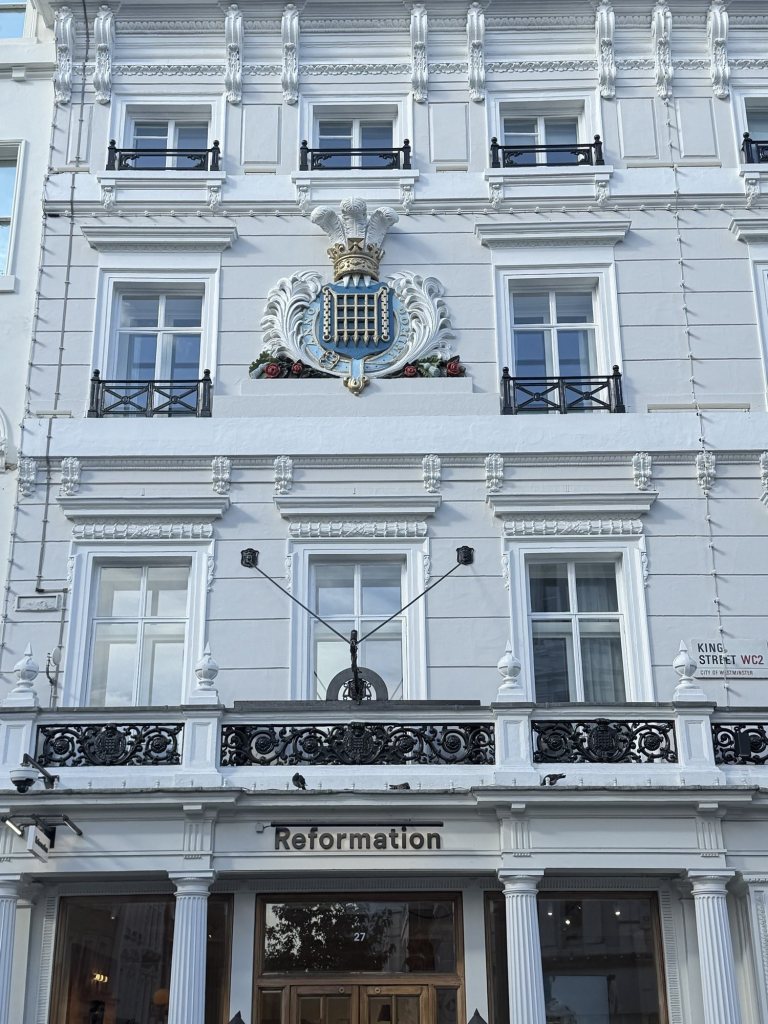
Leaving the piazza along King Street, a portcullis under the Prince of Wales’s feathers, painted and gilded on a white front above a clothes shop. These were the offices of the Westminster Fire Office, founded in 1717, and the portcullis is its badge, taken from the arms of Westminster. Small cast versions of it, fire marks, went up on the houses it insured. The front itself is a rebuild of the 1850s.
St James’s
Then on to Wren’s church at St James’s, Piccadilly, whose bench mark has already appeared here. I have been in many times, but I never fail to spot something I have not noticed before.
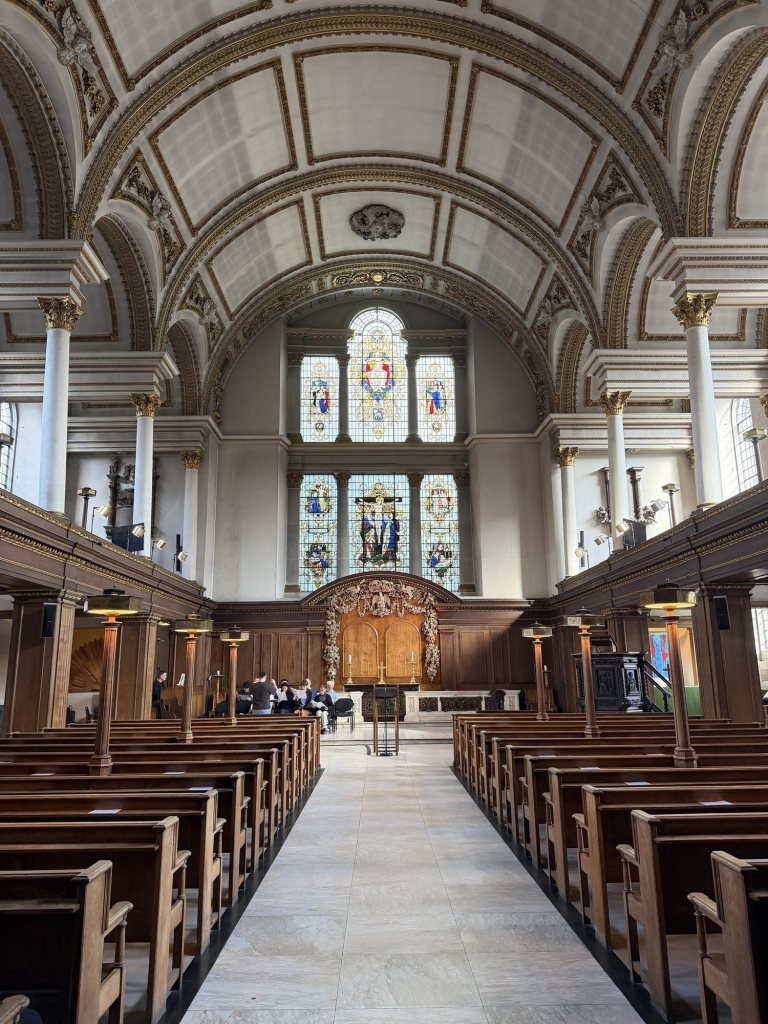
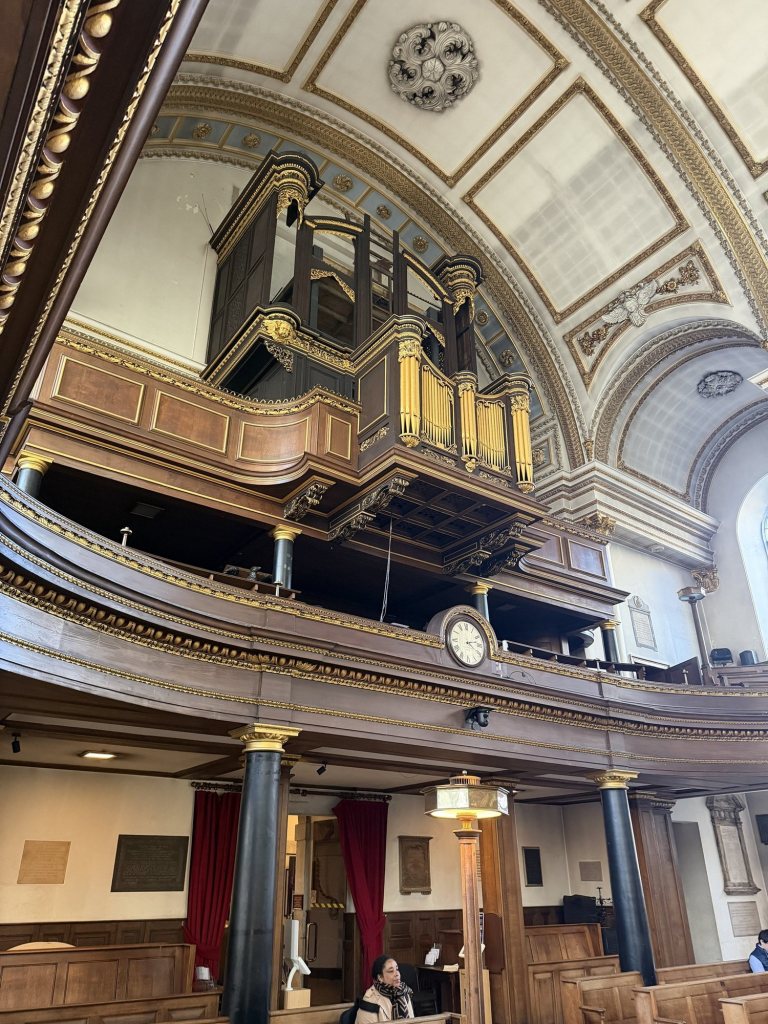
This time it was more of the artists. William Blake was baptised here in 1757, and his memorial sits beside the parish war memorial. The reredos and the font are Grinling Gibbons’s, and so is the case of the organ, which Renatus Harris built for James II’s Catholic chapel in Whitehall Palace. When William and Mary had the chapel dismantled, the organ was sent here, in 1691.
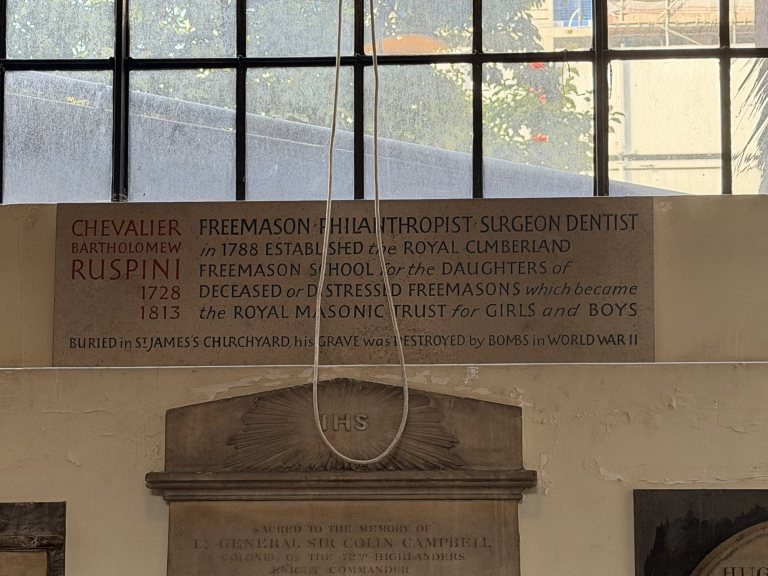
And a tie to Freemasonry. A stone below one window remembers Chevalier Bartholomew Ruspini, freemason, philanthropist and surgeon dentist, who in 1788 established a school for the daughters of deceased or distressed Freemasons. It became the Royal Masonic Trust for Girls and Boys. He was buried in the churchyard, and his grave was destroyed by bombs in the Second World War.
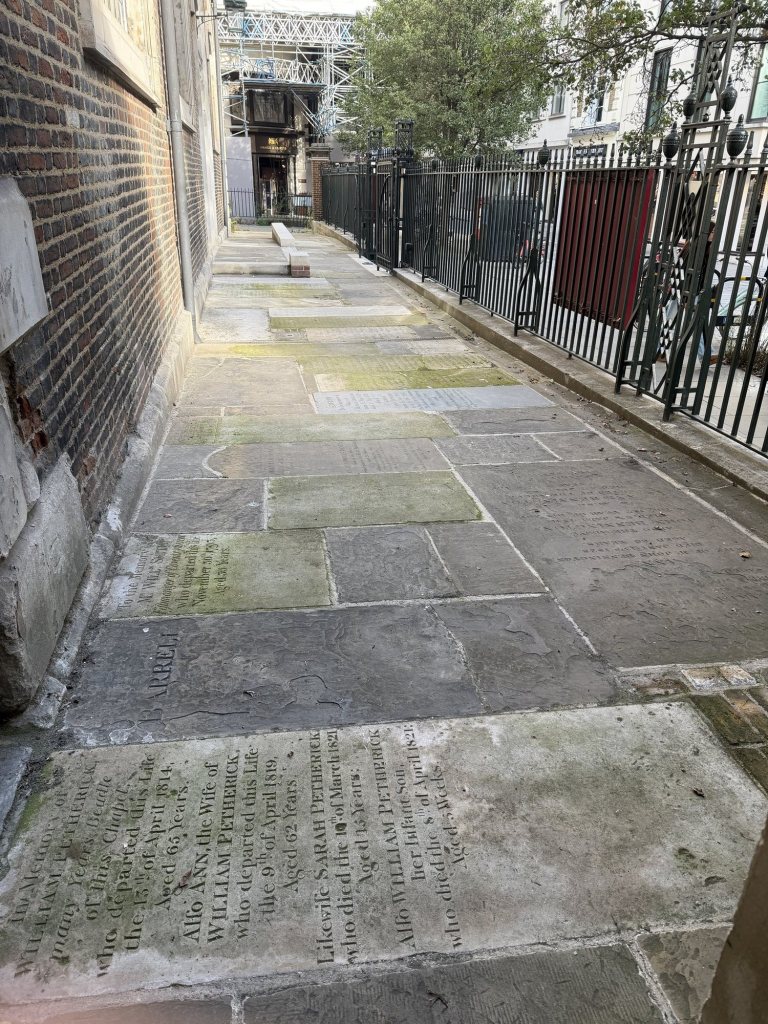
Outside, the path along the Jermyn Street side is paved with old gravestones, one of them for William Petherick, many years beadle of this chapel, who died in 1814. As in the crypt at St Martin’s in August, the dead have become the floor.
Burlington House
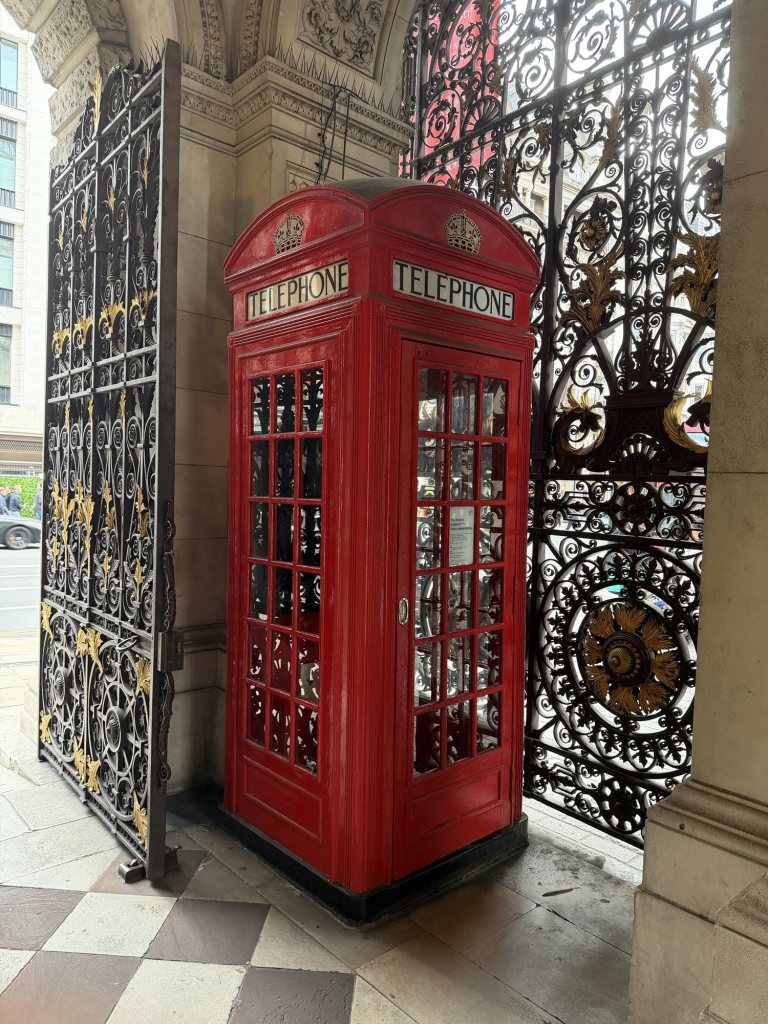
My girlfriend, having cottoned on to my recent fascination with phone boxes since my discovery in Ramsey, then led me across Piccadilly to the Royal Academy, where two supposedly rare phone boxes adorn the entrance to the courtyard. Giles Gilbert Scott won the competition for a new kiosk in 1924, and one of the boxes in the arch is his wooden prototype, the only one known to survive, still standing where it was first put. The tired K8 in Ramsey was the last of the line. This is where it started.
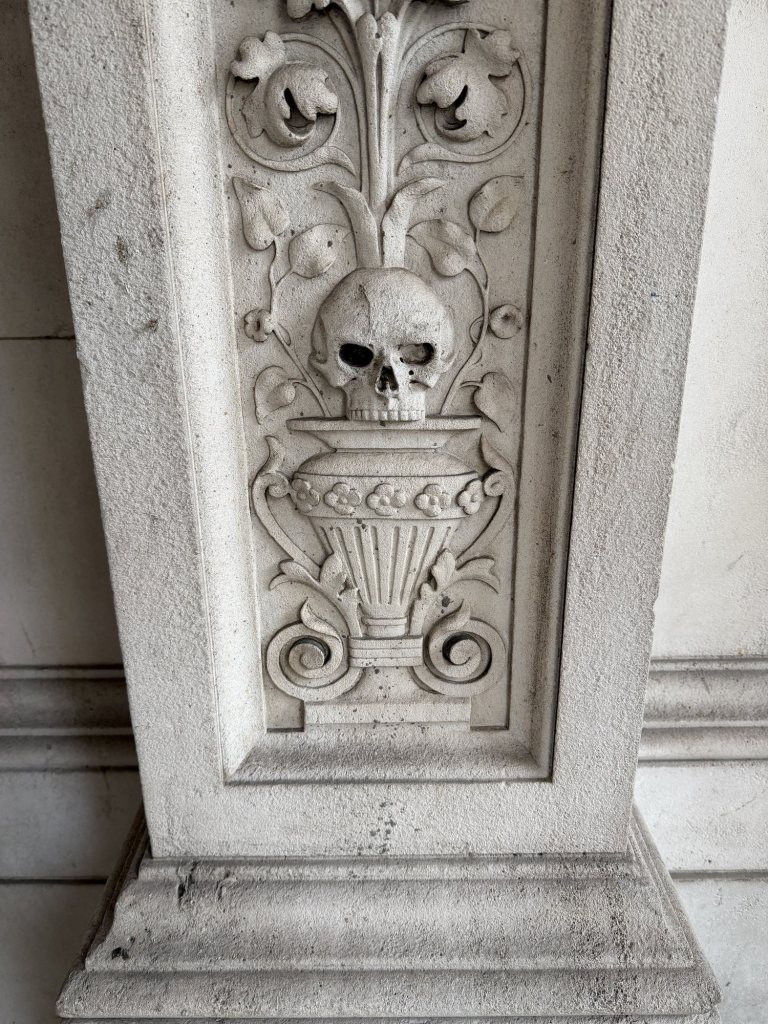
Here I also spotted one of my favourites, on the left of the gateway as you go in: the emblems of mortality, a skull resting on an urn, carved in stone. I am saddened to say they still interest me more than phone boxes. They are very Masonic, although they certainly do not take their origin there, and they are not the first I have found in this part of London. The door beside them belongs to the Linnean Society, which is less about old things than living ones. It is named after Carl Linnaeus, who gave plants and animals their two-part Latin names, and it was at a meeting of the society in 1858 that Darwin and Wallace’s papers on natural selection were first read. The ones who look at cool old stuff are the Society of Antiquaries, a few doors further round the same courtyard.
St James’s Place
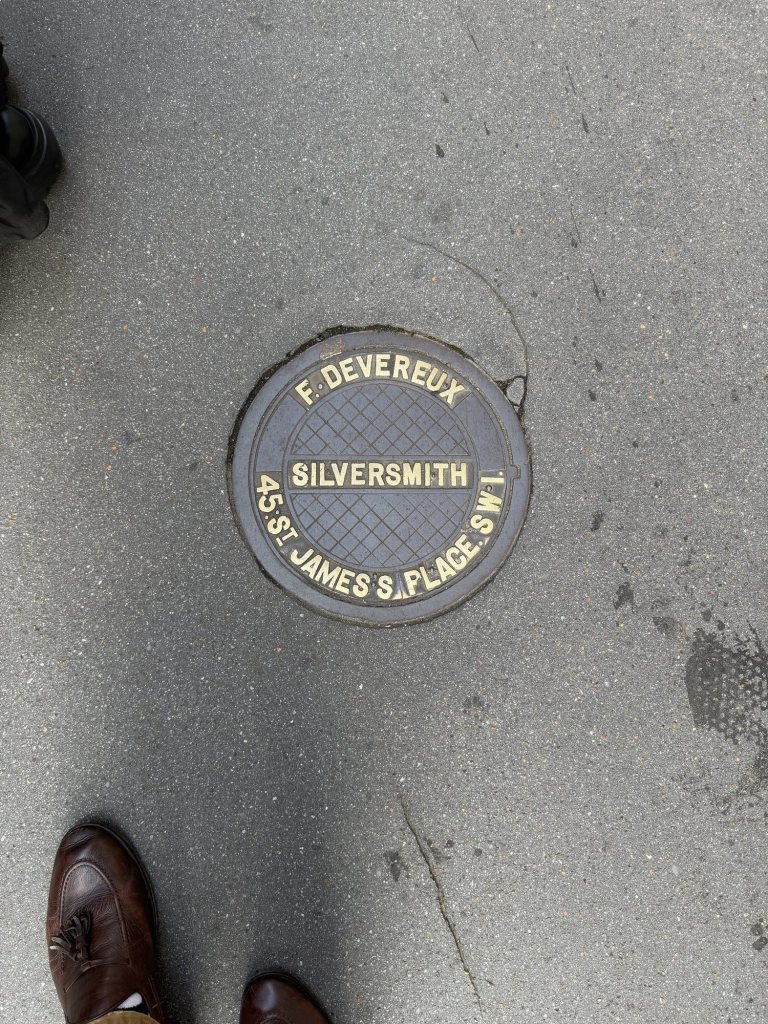
In St James’s Place, a cover set into the pavement: F. Devereux, silversmith, 45 St James’s Place. Anyone who collects old silver, as I do, will look down at that.
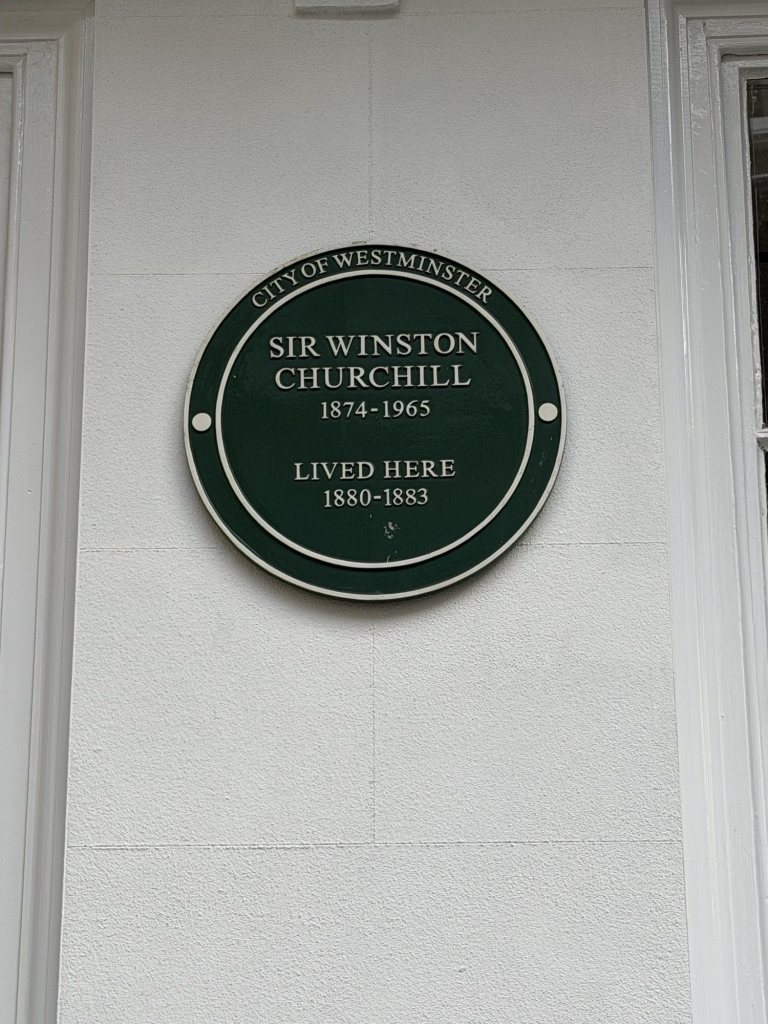
A few doors along, a City of Westminster plaque: Sir Winston Churchill lived here, 1880 to 1883. He was a small boy, and it was his father’s house.
Spencer House
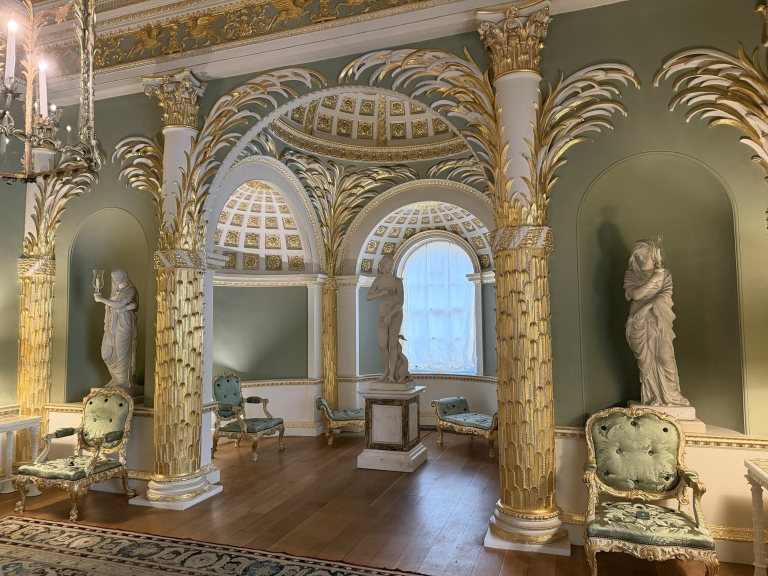
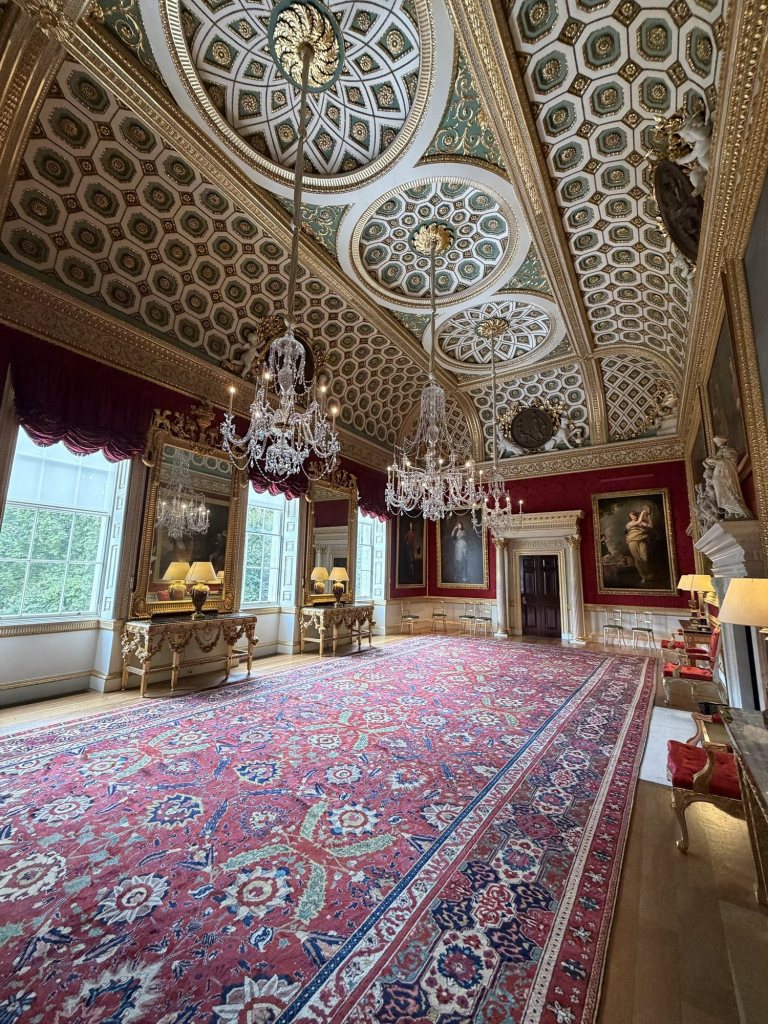
Then into a booked guided tour at Spencer House, which stands on the same street. Magnificent. It was built between 1756 and 1766 for John Spencer, later the first Earl Spencer, by John Vardy, who was replaced on the state rooms by James “Athenian” Stuart. Vardy’s Palm Room has gilded palm trees for columns.
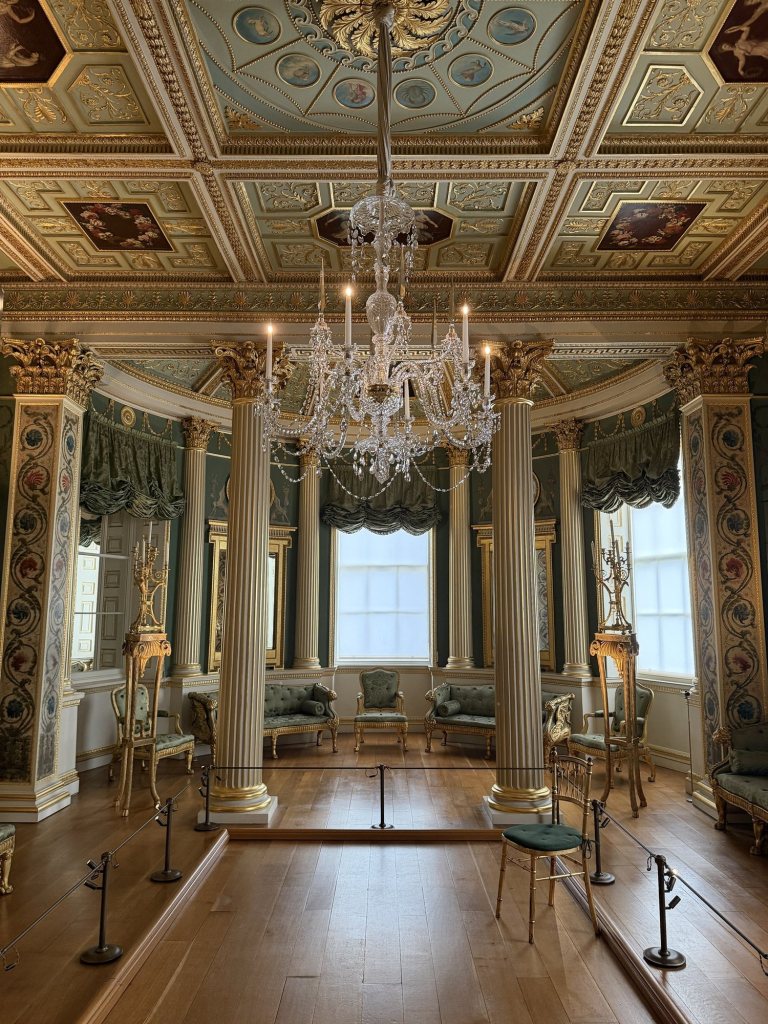
Stuart’s state rooms are early neoclassical, and in the Painted Room the furniture was made for the room, sofas with winged lions for arms. The house was later let as a club, used by the government in the war and turned into offices, and has been leased since 1985 by the Rothschild company RIT Capital Partners, which restored it. Diana, Princess of Wales, reopened it in 1990.
My favourite thing was the grotesque comic statue. It is a marble of the 1790s by Giovanni Pierantoni, known as Sposino, commissioned in Rome by the Earl of Bristol, who was also Bishop of Derry. It shows the infant Hercules strangling the two serpents sent to kill him, except that Hercules has the full-sized head of William Pitt the Younger, and the serpents have the heads of his rivals, Lord North and Charles James Fox. It is taken from a Rowlandson cartoon of 1784, marking the fall of the Fox and North coalition and the arrival of Pitt as prime minister at twenty-four.
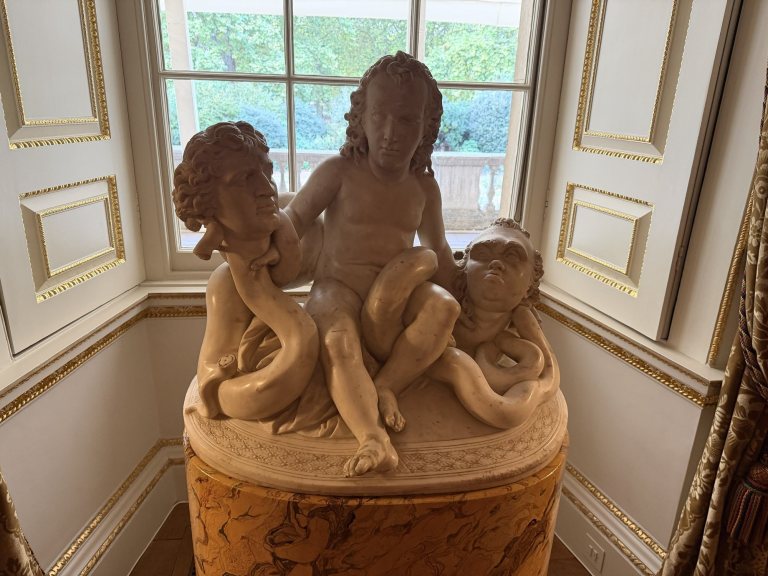
Not everyone admired it. Lady Holland, a Fox sympathiser, saw it in Sposino’s studio in 1796 and called it a lasting monument of Lord Bristol’s bad taste, adding that the English artists had all, to a man, refused to execute this puerile conceit. Fox, the same Fox who was a member of Brooks’s on Saturday, has been strangled in marble ever since.
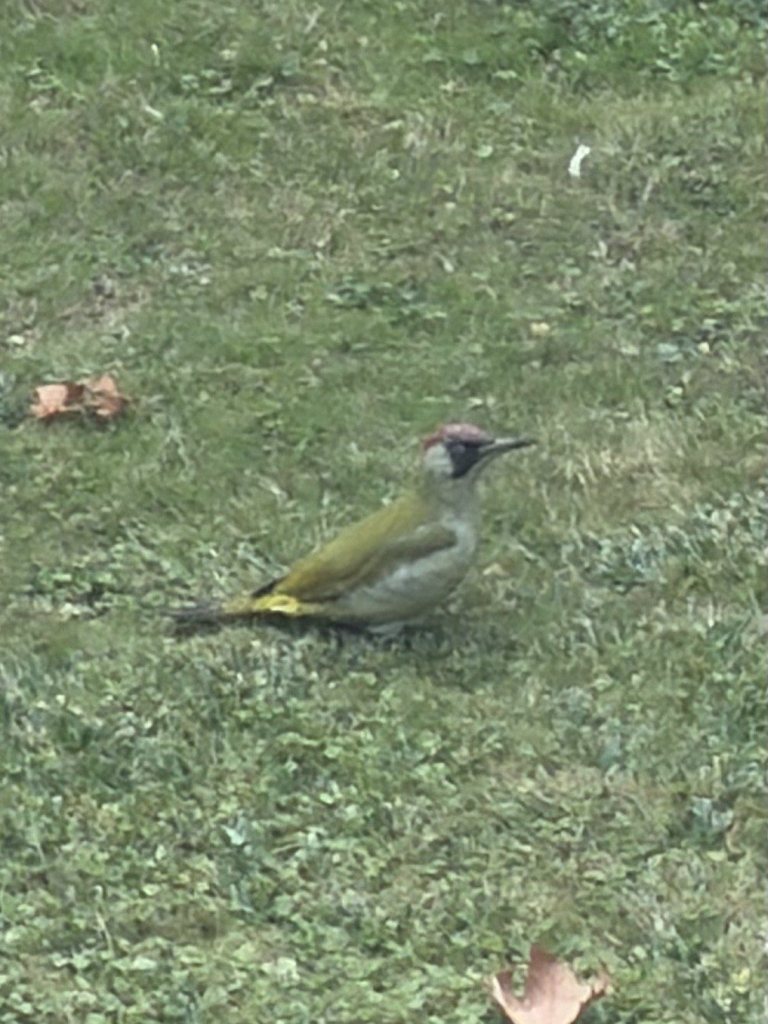
I also spotted a green woodpecker out of the window, happily frolicking in the garden.
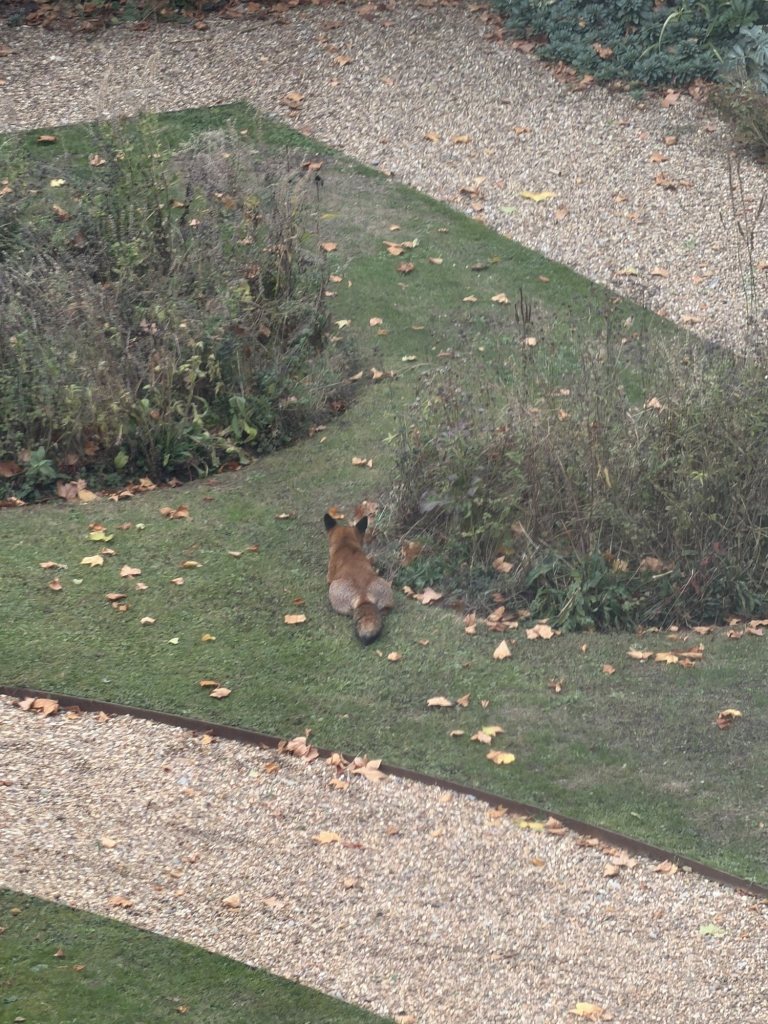
It was disturbed shortly afterwards by the arrival of a fox with a voluminous bottom, which then proceeded to stalk a squirrel, unsuccessfully. A better showing from a fox than the one in the marble, if not by much.
Burlington Arcade
Then through Burlington Arcade, in which I always whistle out of principle. It opened in 1819, built for Lord George Cavendish, and its beadles still enforce the arcade’s own rules against singing, hurrying and whistling, the last because a whistle was once a signal to pickpockets. It is a house rule rather than any law of the land, which makes the principle easier to keep.
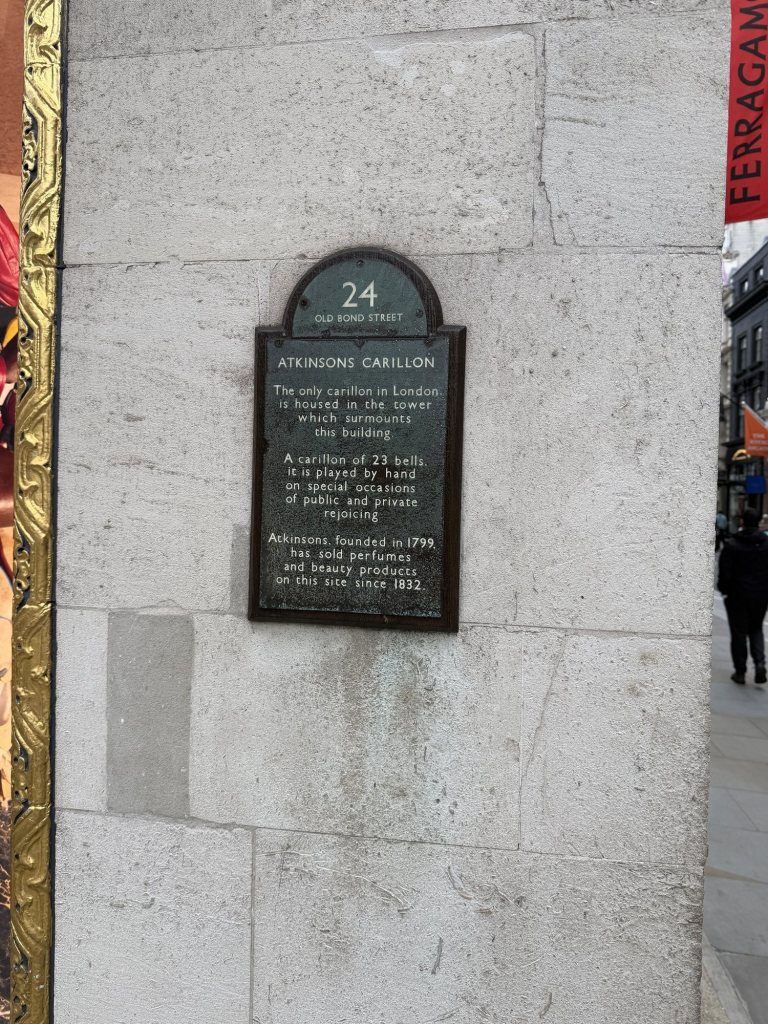
At the far end, on Old Bond Street, a plaque on the Atkinsons building: the only carillon in London, twenty-three bells in the tower above, played by hand on special occasions of public and private rejoicing. Atkinsons, founded in 1799, has sold perfume on this site since 1832.
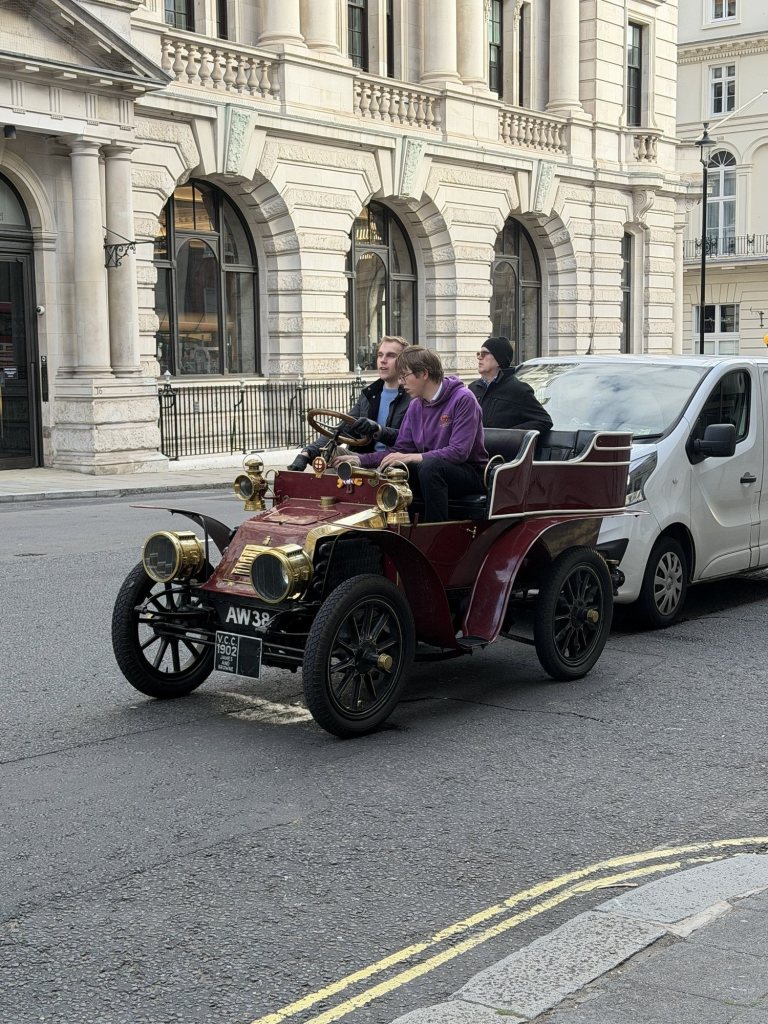
Somewhere along the way, a car carrying the Veteran Car Club’s dating plate: 1902. Only cars built before 1905 may enter the run to Brighton, which is on the first Sunday in November, three weeks after this one.
Carting Lane
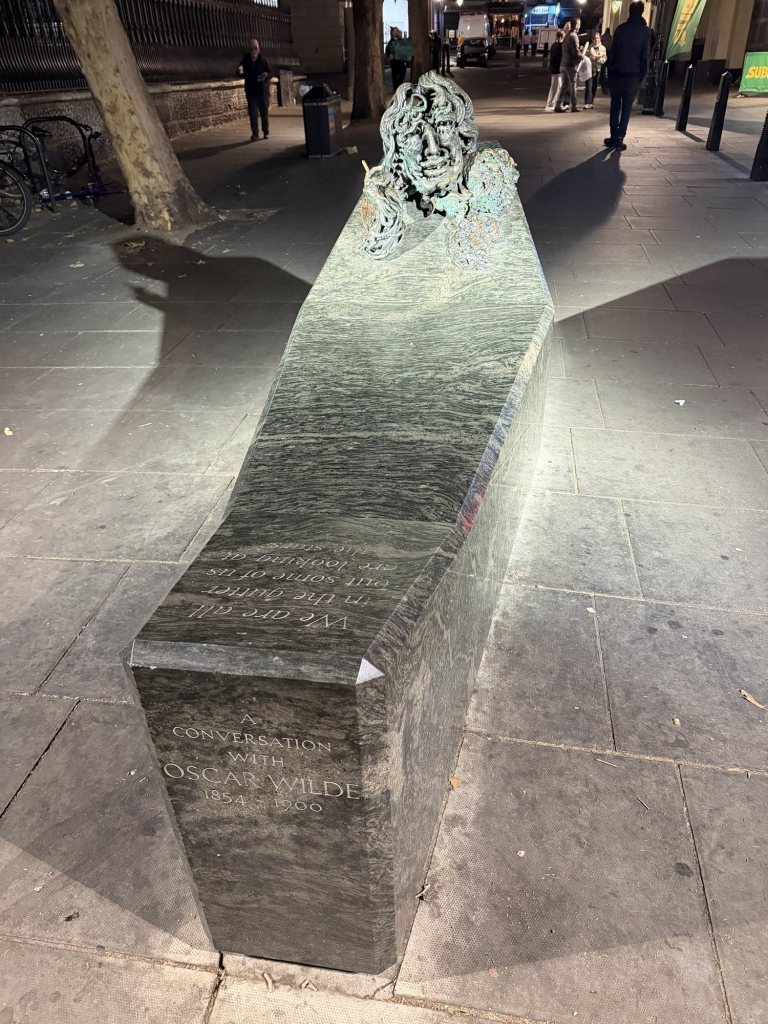
And then the final mission of the day, back towards Simpson’s. On the way, behind St Martin-in-the-Fields, Maggi Hambling’s A Conversation with Oscar Wilde, a green granite sarcophagus with Wilde rising out of one end, cigarette in hand. Along the top: We are all in the gutter, but some of us are looking at the stars. The line is from Lady Windermere’s Fan, one of the two Wilde first nights named on the St James’s Theatre plaque I found beside the Golden Lion on Saturday.
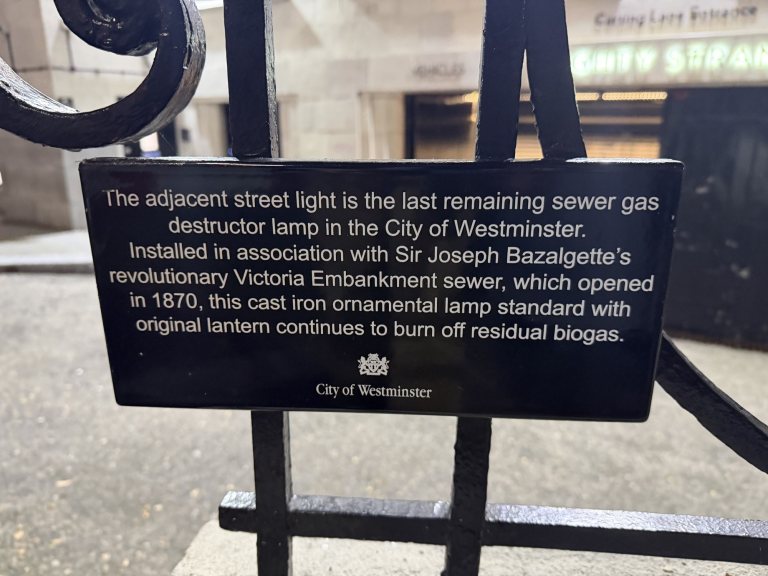
The mission itself was the last remaining waste gas lamp, on Carting Lane beside the Savoy, which locals have long called Farting Lane. Joseph Webb of Birmingham patented the sewer gas destructor lamp in 1892. It burned ordinary town gas, and the heat of the flame drew foul air up from the sewer below and burned it off high above the pavement, rather than leaving it to seep out at street level. The City of Westminster’s plaque says this one was installed alongside Bazalgette’s Victoria Embankment sewer, which opened in 1870, and that it continues to burn off residual biogas.
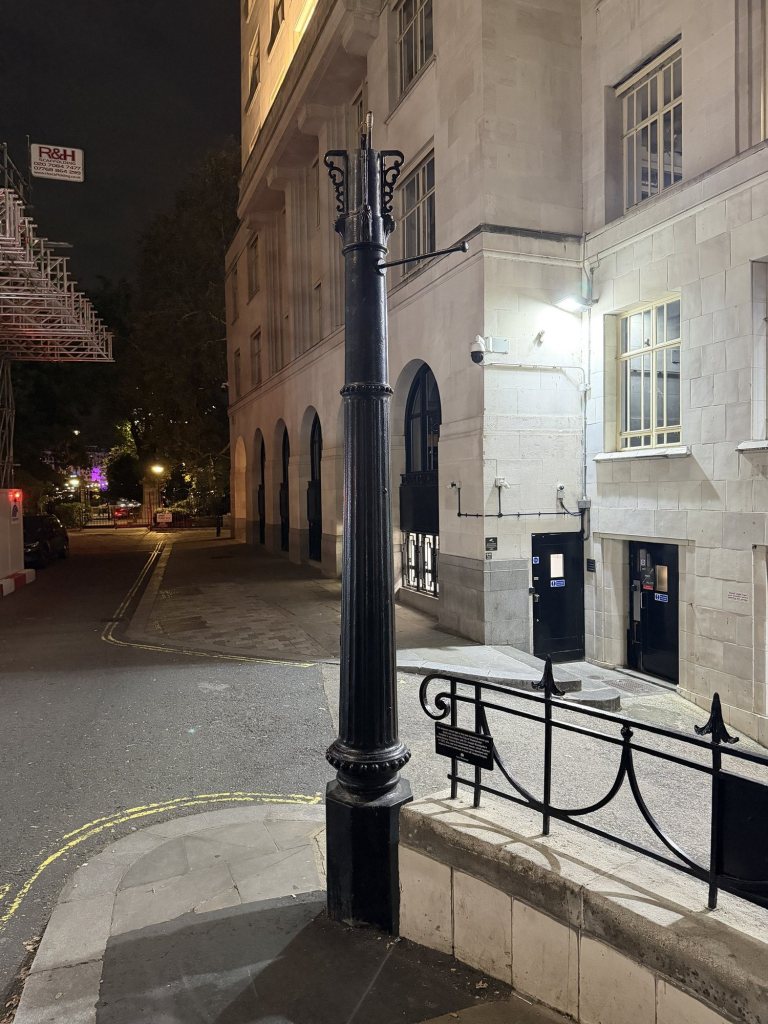
Sadly, when we saw it, the glass top had been removed and there was no flame in sight. I do hope it is maintenance only, and I will revisit it next time.

