The Marquis de Lafayette was nineteen when he turned up to fight in somebody else’s revolution, and he never really left. On Friday I stood on the floor of the House of Representatives underneath his portrait, one of only two in the room. On Saturday evening I watched his letters change hands.
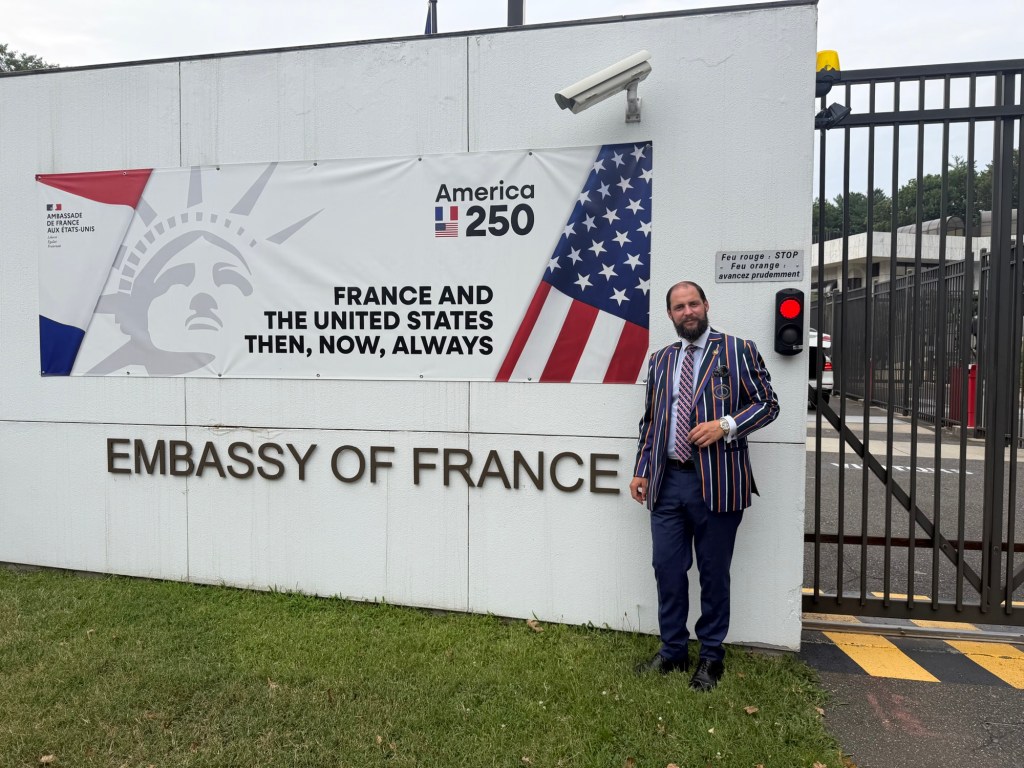
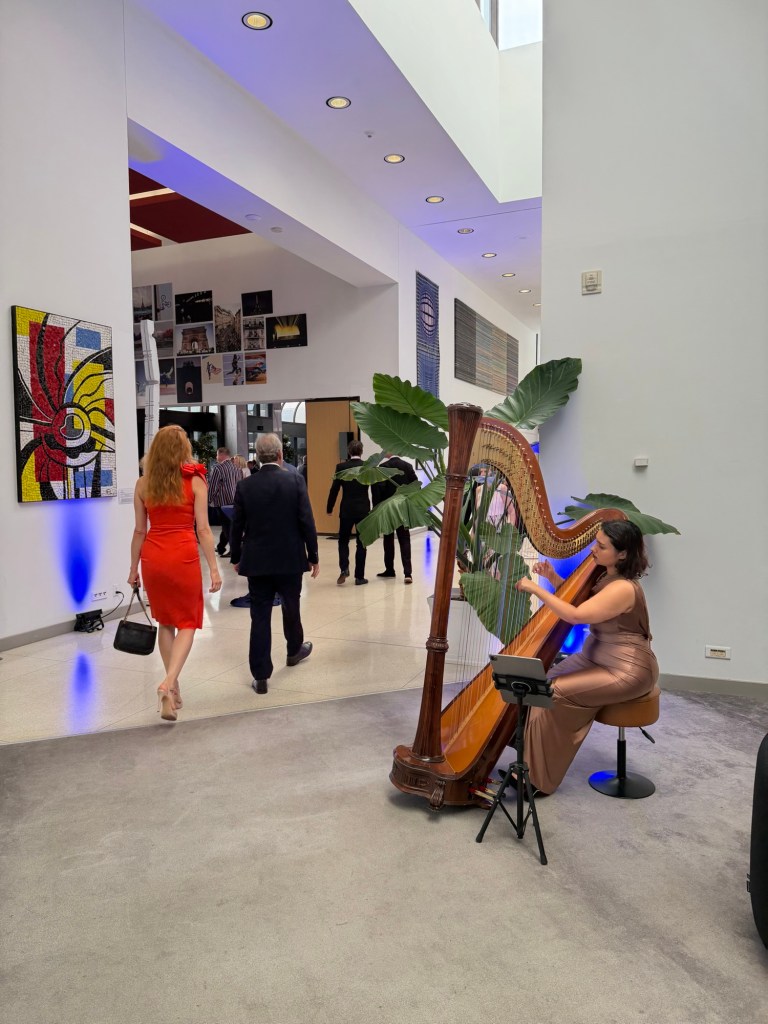
The Embassy of France sits on Reservoir Road behind a gate and a banner reading France and the United States, then, now, always. Inside there was a harpist in the lobby, a drinks reception either side of the formal part of the evening, and a room filling up with people who had spent the week telling one another what their country was for.
There were three European beers on offer at the Embassy of France, two of them Belgian and one French. There were also the best canapés I have eaten anywhere, cheese balls rolled in breadcrumbs with onion running through the middle. I would still like the recipe.
The French Ambassador spoke. The Grand Master of the Grande Loge Nationale Française spoke, in French, to a room that mostly did not, and it did not seem to matter. The Grand Master of Pennsylvania then gave him copies of the Lafayette letters and a medallion, and shook his hand. It reads as ceremony written down. In the room it was two men returning something to the country it came from, long after the argument was settled.
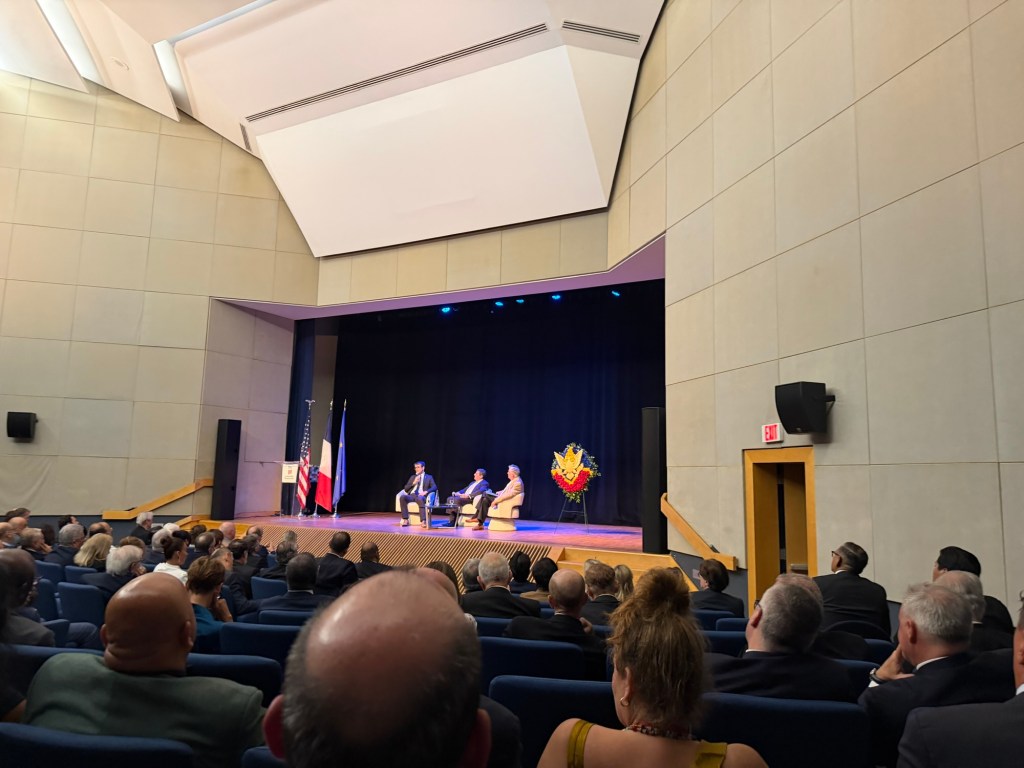
The panel afterwards was about the present rather than the past. Not what the alliance had been, but what anybody intends to do with it now. It was opened by a government speaker. Akram Elias spoke, as he had at the Library of Congress the night before. So did Julien Icher, who has spent years driving the length of America marking the places Lafayette stopped on his farewell tour, and who travelled to Washington with the French president at twenty-four. He is the rare sort of historian who has done the mileage.
Then everybody went back to the beer, and the evening stopped being about any of that.
We went on to the Hamilton at about ten and I sat with the guys and drank beer and talked about nothing. Afterwards I took an Uber back to the hotel, a distance of half a block, which somebody later described as paying twenty-two dollars for a U-turn. I do not accept the characterisation. I cannot dispute the geography.
On Sunday morning eight of us went to join four others who had already installed themselves at Lincoln’s Waffle Shop, opposite Ford’s Theatre. Two of us walked in, looked at it, and walked straight back out into the Hard Rock Cafe a few yards up the road, where I bought the customary guitar pin and ordered lunch.
The other ten were with us inside five minutes, the original four included.
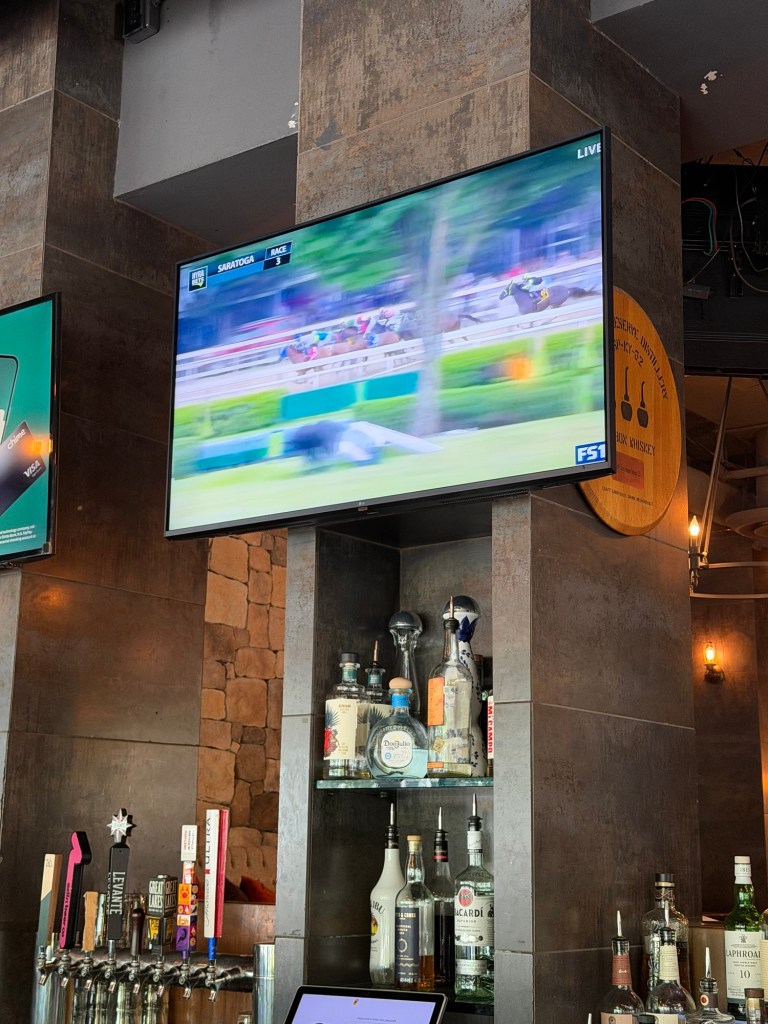
Later, in another bar, I put money on a horse I knew nothing about and it won, which felt like the week deciding to square things up.
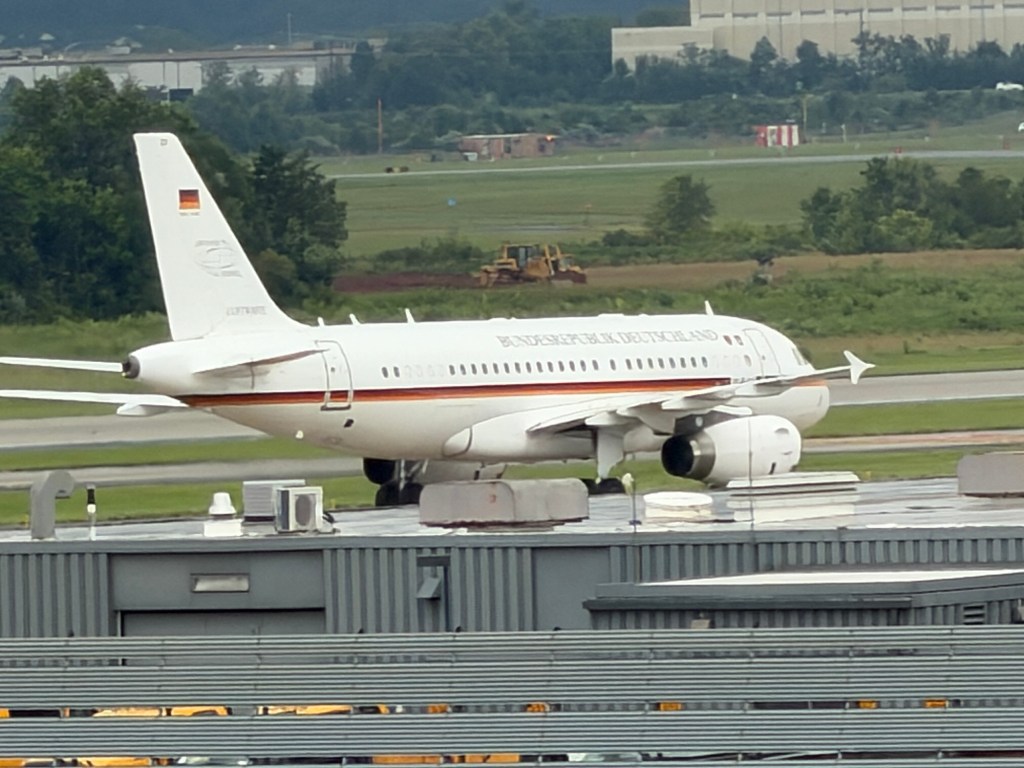
At the airport there was a German government Airbus on the apron, Bundesrepublik Deutschland along the side of it. I photographed it for the same reason I photographed Luxembourg’s name on the kerb at the Korean War Memorial, and for the same reason the sculptor of the Washington Monument at Eakins Oval turned out to be a man from Königsberg. America is a country full of small doors back to the rest of us.
I liberated several beers from the lounge on the grounds that they were there and I was leaving. Dinner came somewhere over the Atlantic at what my body was certain was four in the morning.
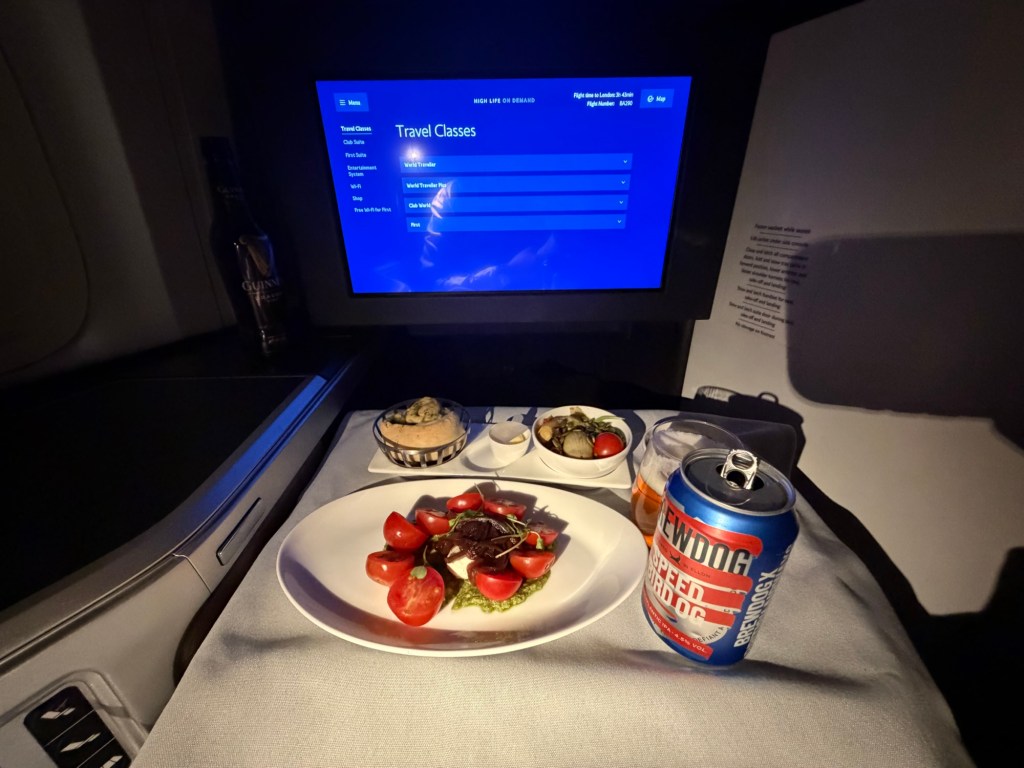
Landed at eight. Out of club class, onto a turboprop small enough to feel every gust over the Irish Sea, and home.
I spent eight days in a country celebrating two hundred and fifty years of itself, and it was a genuinely moving thing to be near. They have every right to make a noise about it. They can still point at the room where it was decided, and the stone the first of them laid in an apron in 1793, and the men who signed. Quite right.

